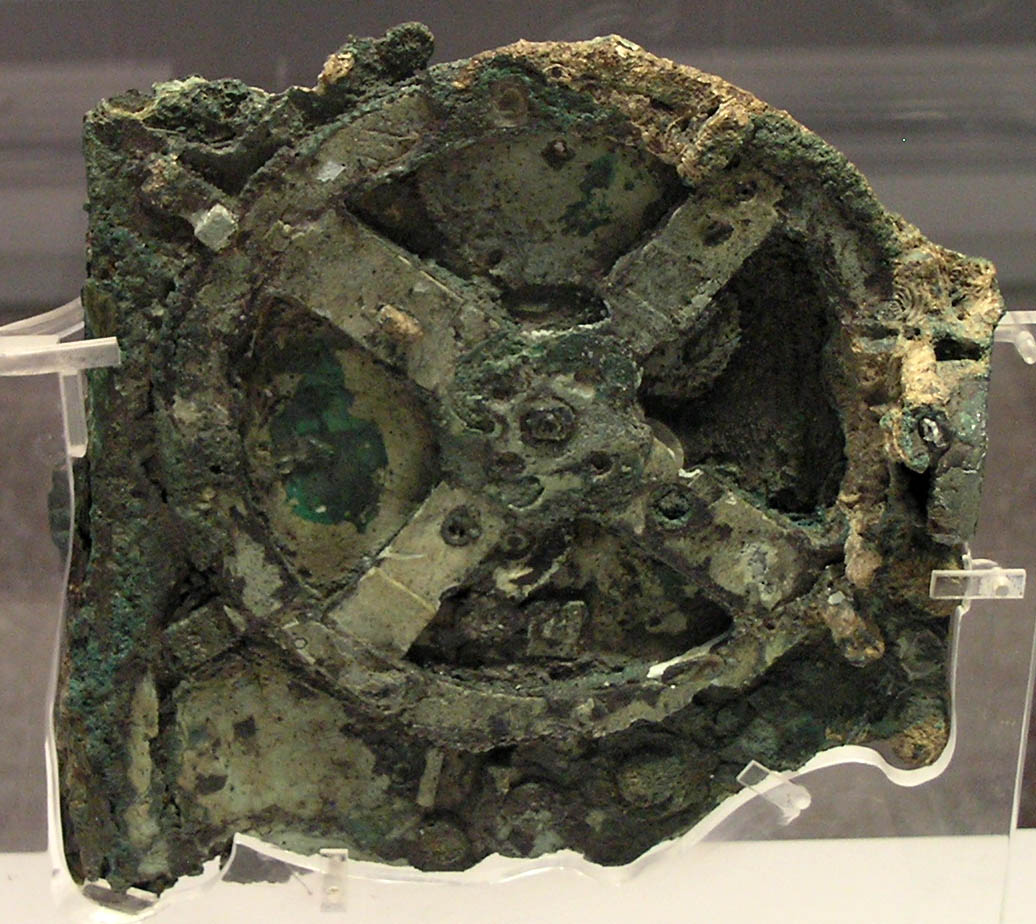
The roundtable explores Donald Rumsfeld's framework of "known knowns," "known unknowns," and "unknown unknowns." Participants examine how we identify gaps in knowledge, transform unknowns into knowns, and consider whether mystery serves essential roles across scientific, religious, and philosophical domains. The discussion addresses cognitive bias and psychoanalytic perspectives on understanding.
Speakers




Watch
Media
Related Roundtables


Transcript
This roundtable brings together a philosopher, cosmologist, scholar of Jewish mysticism, crime novelist, and Romanticist literary critic to explore the nature of mystery across disciplines. The discussion begins with Carol Rovane outlining philosophical approaches to the limits of human understanding, from Kant's a priori knowledge to Chomsky's view that cognitive architecture sets boundaries on what we can comprehend. Michael Turner offers the cosmologist's perspective, distinguishing pragmatic scientific mysteries like dark matter and dark energy from potentially unknowable questions such as the origin of physical laws and the multiverse hypothesis.
Elliot Wolfson draws on Jewish mysticism and Freud to argue that mystery inhabits a liminal space between concealment and disclosure, where revealing a secret paradoxically deepens rather than eliminates the mystery. Megan Abbott discusses how crime fiction exploits the tension between solvable puzzles and the larger unknowable dimensions of human psychology. Susan Wolfson traces the Romantic poets' engagement with mystery through Wordsworth's powerful childhood memories, Keats's negative capability, and the limits of language in conveying consciousness.
The panel converges on several key themes: whether mystery is merely a temporary gap in knowledge or something more fundamental to human experience; the role of language in both approaching and failing to capture the ineffable; the generative quality of mystery where each answer spawns new questions; and the deep connection between curiosity, mystery, and human survival. Audience questions push the conversation toward death as the ultimate mystery, the relationship between understanding and the sublime, and whether continuity or discontinuity best characterizes the human encounter with the unknown.
Show discussion topics
- 00:00:00 Opening remarks, announcements, and introduction of panelists including Carol Rovane, Michael Turner, Elliot Wolfson, Susan Wolfson, and Megan Abbott.
- 00:03:10 Carol Rovane introduces philosophical approaches to mystery, from Kant's pure thought to Chomsky's cognitive limitations on human understanding.
- 00:07:17 Michael Turner presents the cosmologist's pragmatic view of mystery, distinguishing known unknowns like dark matter from unknown unknowns like dark energy.
- 00:11:28 Elliot Wolfson draws on Jewish mysticism and Freud to explore the paradox of concealment and disclosure in the experience of mystery.
- 00:14:31 Megan Abbott discusses mystery in crime fiction, from the puzzle-box tradition to hardboiled novels where larger existential questions remain unanswered.
- 00:18:11 Susan Wolfson examines mystery in Romantic poetry, including Wordsworth's spots of time, Keats's negative capability, and Coleridge's willing suspension of disbelief.
- 00:22:55 Panel debate on the relationship between scientific control and mystical relinquishment, and whether different disciplines seek different kinds of mystery.
- 00:41:10 Discussion of whether mystery is merely something not yet answered, or whether some mysteries regenerate new questions upon being solved.
- 00:53:38 Ed Nersessian pushes the panel on whether there is something more fundamental about mystery beyond sequential problem-solving, leading to discussion of the etymology of mystery as initiation.
- 01:25:31 Audience questions on entering mystery through preparation and practice, synchronicities, death as the ultimate mystery, and the sublime relationship between understanding and awe.
Show full transcript
00:00:00 she at one point wanted to be a physics major but so the only complaint was that um well physics in particular is so Lous that if you don't decide till your sophomore year it's almost hopeless to to Major and okay we're going to get started welcome everybody I'm Rob penzer I'm the associate director of the Helix Center welcome to today's uh Round Table the realm of mystery which is funded by John Templeton Foundation Grant uh before I introduce today's participants I have a few announcements first please turn off your cell phones
00:00:32 as their activity interferes with our live streaming of this event and uh please follow us on Twitter and Facebook go to our website Helix center.org if you're not already signed up for um email notifications please do so it also gives you the opportunity to uh use our discussion board and leave comments we really want a lot of feedback from uh from our audience um following uh uh
00:01:02 today's program on Saturday November 7th we have speak memory with NYU neuroscientists Christina alberini and Tom kuu UC Irvine philosopher Sven berer City University London cognitive psychologist Martin Conway and University of Manchester neuroscientist Penelope Lewis then on Saturday November 21st translation matters with princet and professor of French and comparative literature David Bellos Sarah Lawrence professor of comparative literature Bell
00:01:32 Brodsky UC Santa Barbara translation studies director Suzanne gavine Metropolitan Museum of Arts publication program director Mark pooti and uh Sunni news English Professor Michelle Woods then on December 4th 5th and 6th a Freudian perspective on what alss the world today this is a special colloquium uh of the Helix center with the association to as the amid passage committee Freud and
00:02:04 please uh go to our website for for more details uh we have something like 18 en counting participants uh an international roster which should be very exciting so I'd like to introduce today's participants and uh please refer to the handouts or for those of you watching on the web uh to the event page to read uh more on our participants biographies and please raise your hand when I introduce you mystery author Megan Abbott philosophy Professor Cal
00:02:36 Roan theoretical astrophysics Professor Michael Turner Jewish studies Professor Elliot wolson and English Professor Susan wolson so now we'll begin you want ah so I'd be happy to start is everything okay yeah again is everything okay yeah is it
00:03:10 is it okay now yes okay so um Ed said this would be a conversation so I'm told not to be too dactic so I'm not going to speak for too long um but just suggest a few things we could come back to in so far as they provoke a little conversation but I'm not sure what among the things I mention will will be most interesting to this very very varied uh group in the Inner Circle and I assume throughout the room uh right now in
00:03:41 contemporary philosophy that was spooky yeah um in philosophy if you asked uh a working philosopher do you think you're confronted with any Mysteries right now they would probably say yeah to Consciousness and freedom uh but you probably shouldn't um just dive into those topics but rather ask them what they take a mystery to be and the question what are limits on
00:04:12 human understanding and how do we know about them has been a very longstanding question for philosophers and I suppose Emanuel Kant is a is a very big Pioneer in this in this Enterprise of thinking about it the old way kant's way assumed that we know from the inside the nature of our own minds because we can't think without knowing what it is to think and somehow from the inside knowing what you're doing as a thinking being you could work your way to conclusions about the limits of what you're able to do
00:04:43 that way and he really thought he could do that so that's topic number one how could you just from your armchair know these things which K thought so pure thought pure thought yeah um but another model for thinking about these limits uh would come from uh more a more naturalistic perspective like the perspective of Nome Chomsky and a lot of philosophers are very taken with a fairly scientistic worldview and that's why they regard Consciousness and freedom in particular as Mysteries because they don't know how to integrate those things within their
00:05:14 scientism but chomsky's view I think is really worth taking seriously because it's very clearheaded even if you don't agree with it it's it's very clear how he gets to where he's going and he's not waving his hands He suggests that cognitive abilities are basically biological abilities and that it's in the very nature of a biological ability to be uh limited so he thinks take a motor ability like running if you're if you're built so that you can run you're probably not built so that you can
00:05:45 slither like a snake you know it's just one of those things the things that enables you to do it makes you suited to do those to do those things in contrast with something else and so his working assumption is that there's no reason to think cognitive ability ities are any different from motor abilities and so if we have cognitive abilities the tasks they suit us to do will will be the ones we can do and in being suited to do those tasks we will not be suited to carry out other tasks which could still be called cognitive and would deserve to
00:06:16 be called cognitive and so that picture really does give um something besides uh armchair reflection a like to stand on when you start talking about limits on human understanding this is now an empirical hypothesis that we are limited beings and then the question is still even if even if you have this scientific basis for thinking you're limited how could you know which of the things you're now thinking about and can't
00:06:46 understand are ones you can't understand because you lack a good theory as opposed to don't have the right cognitive structure right so so those that would be the framework within which I would I would pursue these questions and conversation and add in that Colombia where I teach is the home of pragmatism and pragmatists always say never throw roadblocks in the path of inquiry so their ideas even if there are limitations proceed as if it's not true you know and and there's a question about the merits of that attitude which
00:07:17 would be worth discussing so I like the pragmatic approach and I'll add the word arrogant um because the last thing you were saying is I mean cosmologist I'm I'm a cosmologist and cosmologists are extremely arrogant why because we think we can understand the universe and that's kind of what you were saying is it may well be that we can't understand the universe but it is certainly true that if we think we can't understand the universe we will never understand it even if we could did that make sense yes
00:07:49 it did yes and and um and our questions are a little more pragmatic so um and and they're more along the lines of a mystery so there are Mysteries that we know that we need to solve so going with the uh so the the known unknowns what is dark matter what is dark energy uh we don't need to really talk about them but those are Mysteries that we really know um then there are the uh
00:08:19 unknown Mysteries um and I won't give any examples of them because we don't know them but uh but Dark Energy would be ones so that was a mystery that we we didn't know and it came upon us when we found that the Universe the expansion was speeding up and then the the last bucket also sort of aligns with what you were saying which is the UN the the Mysteries that may be unknowable and so I one of the one of
00:08:50 the ones that that's easy for for me to articulate uh is the laws of physics so um I'm quite confident we will figure out the laws of physics I'm quite confident I I'm not telling you when but I'm saying that we'll be we live in an ordered universe and we make observations and do experiments and we'll figure out the laws of physics but the one that may be unknowable is where did they come from and uh I don't think um I don't
00:09:21 think there's any experiment that you could do or that I could even imagine where you could differentiate them coming from God whatever that means or that they came from a uh freshman physics experiment of a very Advanced civilization where all the students were asked write down a set of rules and make them go and see what happens and uh you know maybe we're the C+ universe that uh and so there's a category uh the other one that probably everyone has heard of
00:09:53 is the Multiverse so the idea that the universe is disconnected pieces and that gives people like me a headache because our brand the science brand is falsifiability um and you know when you deviate from your brand uh when you get into matters of Faith well you know I don't need to prove that there's a Multiverse cuz I Know It uh so that's not our brand but so here the Multiverse is one of those possibly unknowables that could be the
00:10:26 biggest idea since cernus right so not only uh is Harvard not the center of the universe or even New York City uh but there's many universes but we might that might be an unknowable thing don't think of yourself as arrogant think of yourself as The Little Engine That Could well no uh I don't know is this
00:10:56 working I think cuz I [Music] now it's [Music] working pull it a little closer to your mouth what am I pulling closer to my mouth is the [Music] question it's okay is that better yeah that's fine um so I know I was introduced to some of in Jewish studies which is a a label that is difficult for me because while I
00:11:28 did uh I did decide to put my philosophical training to the study of uh in particular Jewish philosophy and Jewish mysticism it's also the case that I do you know comparative mysticism and um I think from my study here's where I think there is a little bit of a difference between between the approach of religious studies um and both the philosophical
00:11:58 and and scientific viewpoints and I want to Lumin Lumin that with a with a statement of Freud because of the building we're in which is very often forgotten and I actually wrote it down if you don't mind I'm going to read Freud's exact words every dream has at least one place where it is unfathomable the naval as it were by which it is connected to the unknown now this is Freud so there's no way that he
00:12:29 understands by the unknown some appeal to a Transcendent being call it God as we do in the theistic Traditions so his unknown is not some entity um which you um we could pursue through knowledge or through faith but can never know what he's really saying here that there is some kind of notot um which is the naval and the metaphor of the naval is kind of significant because it conveys the
00:12:59 Paradox of being bound and Unbound so the dream is both connected to yet separate from the unconscious and to me this is where Freud is that he the most mystical I wouldn't necessarily say religious but his most mystical because what I found over and over again in the case of of Mystics and different Traditions is that the mystery or the secret is like a dream and that it's positioned somewhere between
00:13:30 uh conscious and unconscious between concealment and disclosure and to me to me that's I think the greatest lesson I've learned about about the sense of mystery from the text that I study I think it's a slightly different model because it means you know not this it is a little bit arrogant to think that somehow we'll ever be able to peel away to peel away all the veils and let
00:14:00 me conclude by saying one other thing at this moment is that what I learned from the Sufi tradition the Sufi tradition Islamic tradition the task is to unveil to pull away all the veils to see the the face of truth but when you read deeply into the Sufi Masters they've they've articulated over and over again that the greatest Veil is to think that we can remove all veils well um speaking of arrogance I'm the
00:14:31 one who's supposed to be creating the mystery which may be the most arrogant position of all but it's interesting we talked a little bit about this when we were getting ready but if you look at the history of the genre which is not a very uh old genre as far as gen goes if you date it back to you know POS detective novels or certainly Sherlock Holmes the original tradition was to create a puzzle box for the reader where ostensibly the rules that PO set out were you C you couldn't cheat as a writer there had to be a way that you could actually figure it out and that
00:15:03 there would be a solution at the end um american crime novels and Mysteries of the hardboiled era really sort of exploded this notion they were not so interested in the puzzle box or the drawing room uh they were really more interested in in what I see of psychology as the detective like Philip Marlo Raymond Chandler's famous detective as a sort of you know a a damaged man and what matter Ms more is his personal psychology and our attachment to him and often the plots
00:15:35 don't quite line up there is an answer to why who you know why how the bullet got in the body in the room but other issues larger ones are are unanswered and Marlo famously says at the end of The Big Sleep the the first Marlo novel that you know he who tries to be this night amid the corrupt rich and the and the gangsters that he had become a part of the nastiness Now by entering into that mystery and I think you know when I create what I think is becomeing those of you who read more recent Mysteries
00:16:06 the ones that linger with us the most are the ones that that you know I try to do this are do that do both that try to have some uh for the the person that's reading it to to feel that they have that there's an answer to the puzzle they will feel satisfied um so if you if you would differentiate in terms of Secrets and Mysteries the secrets are revealed but but then you want to leave something for the other readers who don't know why they care so much but they do and and mystery readers are like this and you somehow you're trying to
00:16:37 find a way to hook into something in their in their in themselves if you look at the success of something like Gone Girl one of the most recent you know smash crime novels of the last 30 years people you know they liked the TW the twists and terms but it essentially it's a novel about marriage and everyone was seeing their own marriages in it somehow or their own relationships and that's what makes it linger larger and in that case the unknowable becomes a question of the reader what is the reader uh why
00:17:08 the reader feels cares so much is the is the real unknowable that me as the writer can't guess I just try to to tap into that I think there's a reason I always teach Freud's Dora and mystery uh novel classes for the same reason that's so much about levels of of your investment in this thing [Music] um I I I'm thinking of Robert Frost's two line poem called The Secret we dance around in a circle and suppose or is it
00:17:39 a ring and suppose but the secret sits in the middle and knows and it's a big joke about um what can you know what what actually knows is just a placeholder the important action is is what the affected produces of dancing around and trying to suppose and suppose is to project an activity of mind that is conjectural investigative intuitive um I've loved your um bringing up that that Freud quotation because I've actually used that in my own
00:18:11 literary criticism about William woodsworth who writes his great epic poetry and trying to come to terms with the freakout mysteries of his Boyhood very powerful memories that he calls spots of time that are enshrouded in Mysteries he steals a boat goes for a joy ride in Moonlight in the lake and then Returns the boat but he has an optical illusion as he's rowing out to the middle of the lake that there's a big peak that has suddenly risen up to come after him and after that event for
00:18:44 many days he's troubled by uncertain and unknown modes of being indistinguishable shapes he's writing epic iic pentameter and only Wordsworth can put indistinguishable into epic I Amic pentameter and get away with it but he could do it and he spends his entire life wanting to write about those Mysteries and it's not solving the mystery but the activity of being possessed by it wanting to write about it turning it into his poetic Muse even though he tells himself that the reason
00:19:15 he's writing this autobiography is to prove to himself that he is the Epic poet for the 19th century not the dark poet of the 19th century his best reader in the next generation of Romantics um John Keats who didn't read the pray lude um but read other Wordsworth um said that wordsworth's power was in the dark passages not in the light and not in the dactic poet that Wordsworth was trying to shape himself into and keiths formulated some a phrase that has really
00:19:45 been taken up called negative capability it is a capability of being in a state of negative knowledge and he thought Shakespeare was the one who exemplified this um uh you know most powerfully and it's what went into literary achievement it's when a man he was gendered about this is capable of being in uncertainties Mysteries and doubts without an irritable reach after fact and reason you will always reach after fact and reason but it's um the irritable reach that dispels the creative power of mystery at the same
00:20:17 time Samuel Taylor colid who wrote the rhyme of the Ancient Mariner his most famous poem talked about the genre of that in another famous sound bite um that he wanted to procure for these Shadows of imagination these dream states that willing suspension of disbelief which for the moment constitutes poetic Faith now it's not just being diluted it is a contract that you make when you read to enter into a willing suspension of your normal
00:20:48 systems of understanding uh in in an act that's called poetic Faith poetic faith is really important because faith in an absolutely um uh Transcendent God who was the explanation for everything was being dislodged by the end of the 18th century and probably well before and other kinds of propositions about the mind's search for understanding were becoming the fuel for literary and scientific Endeavor the vitalist debate was really strung completely across about whether
00:21:20 Consciousness was a biological epop phenomenon or was a kind of super added electricity in Soul and you know huge debates of people lost university positions for arguing what arguing the more Mo modern side of that which was that it was a um a kind of chemical um epiphenomenon inheriting a lot of this was Mary Shelly um in a spectacular month of June in 1816 that people in my field are going to be celebrating the bicentenary of but it was about um a
00:21:51 young undergraduate student who doesn't keep in touch with his advisor and decides to create a life form uh to to overcome a trauma of his life which is the loss of his mother to scarla fever so he wants to create a human being or a creature immune to any kind of um destruction except some sort of violent physical catastrophe and this turns out to be Victor Frankenstein's creature um that is a search for the origin of life that is hooked by Mary Shelly to a question that we haven't yet put on the
00:22:22 table which is the social responsibilities and social consequences that come with the enthusiasm for scientific research um so that's what I've been thinking very hard about as we get ready for all sorts of bicentennials next year so I have a question about mysticism um and its connection with the idea of a mystery and how the word under goes some kind of change in meaning
00:22:55 compared to say when someone like Kant is using it or a chsky so so people like kanton chsky think of cognition I would say as an attempt to really find order in a way that presupposes a whole lot of control and so so cognitive success of some kind really is is making sense of it in a way that doesn't resist you or get away from you it's going to now be
00:23:26 very predictable and you to technology as well and my understanding which is limited of mysticism um seems to want to dispense with that notion of control so especially if there are techniques of meditation or other kinds of discipline that that are used in order to get into the kind of state that only a Mystic can achieve say the
00:23:57 Sufi were very interested in that um it it it sounds as though you have to give up a certain aspiration to control even if you use discipline to achieve the kind of experience that Mystics aim to achieve and that's very different from letting go of something in a scientific sense so the scientist might well say I've got a good toolbox I can find a lot of order uh by using the scientific method and you know what it doesn't answer the ultimate why questions but those turn out then not to be scient
00:24:28 ific questions and maybe we're not as gripped by them as we once were uh partly because science seems to do so so well in the things it tries to do um and anyway I think people are less gripped by that that root into mysticism you know that well what is the ultimate answer because if it's through mystical experience that you're getting a different relation and getting into a different relation to these issues it's not as though the things that used to Res exist control of intelligibility now
00:25:00 yield to it right it's very it see it strikes me that it's a it's a different aspiration but I'm not sure and I thought maybe you could illuminate me about that contrast well um I I do agree with the distinction you're drawing um clearly [Music] um what Mystics well it's a little it's a little complicated because you know because of histo you know historical contextualization so you know and like
00:25:32 there's so much now running through my brain so um but if I bring it to this moment um I I would agree with you it's there is um a relinquishing of control in the way that the scientific Quest um demands and succeeds quite well although of course we should have a footnote here for the vast majority of
00:26:04 human beings there's no understanding of all of the changes that have been brought through science I mean who understands how anything really works so that's something we also have to keep in mind so from a point of view of if you're looking at a at a a larger swath of humankind um I'm not sure that the scientific actually has you
00:26:35 know has really has really imparted to people a real sense of control over their lives and I guess I would just say this that um from the mystical standpoint what does what does mysticism have to contribute well you're you're quite right when you say that there there is a loss of some kind of control but it's very it is a matter of great discipline yeah I know and um I just think it's a sense of there is a
00:27:07 kind of humility here um that the mystical mystical path introduces and somehow it does maybe like poetry or dreams it somehow does relate to something very fundamental about the human experience which can Simply Be discarded and I I I again I think that there's something about Paradox which is
00:27:38 very powerful and here might be a point where mysticism in science do have something to contribute to one another right um I so from my standpoint the secret a secret can only be revealed to this to the extent that the secret is concealed because if the secret is truly revealed it's no longer a secret that's being revealed and Mystics have lived as as I
00:28:11 put it origin they live in this kind of Lial space between concealment and disclosure and it's not a linear process going from concealment to disclosure it's much more paradoxical that the mystery is disclosed in the concealment of its disclosure and concealed in the disclosure of its [Music] concealment well I have a question for
00:28:42 every something I think about a lot is I I grew up as a Drew crime off ficado and what about the Mysteries that we actually may inside not want solved um which I think is the uh the cases that haunt us is we we talk you know once once you know Jack is definitively identified that's gone forever and I've talked to some people who have devoted their lives to different cases and you do have this lingering sense I think the movie Zodiac touches this very well that that there would be a grave disappointment to actually have an answer because that
00:29:13 Pursuit has consumed them sort of get some some of what you're talking about that they would rather remain in the state of of not knowing but always the possibility of reaching an answer in this case but to be in that suspended state it can't be true for science from a as a discipline but but um but certainly seems that remaining in that state because you know if it's a it's it's Obsession from a psychological point of view you don't want to if you have an answer you have to let go of the
00:29:45 obsession presumably well yeah it's interesting that the uh one question that's often asked of scientists is um do you think we'll understand it all all by the end of your time and would you want it to be that way because the adventure the quest but I want to come back to the the isn't the grand mystery that's driving all of this uh kind of like in a play right so why are we here
00:30:15 so all of a sudden we're in this room well we're in this universe and we're trying to figure out why we're here and as scientists we're kind of the lowbrows we're the plumbers so we're going to figure out how it works cuz I think that's going to shed light on things that number one it's orderly they're rules it isn't random uh that and the rules are very very precise and so we were talking about this earlier well do the rules hold everywhere in all times and and that's an answerable question and we've tested
00:30:45 that that the rules are the same here as they are uh 20 billion light years away and back in time 13 billion Lighty years that's pretty amazing and and so isn't that the grand mystery that we're all trying that that we don't we all want to know why we're here and you know and and I OT the other thing you were saying is that that science doesn't affect people um and or not everyone is I'm not sure
00:31:18 imp Parts orderliness in so far as you know it's so beyond the reach of of most people so it is beyond the reach of most people but we we said set the I mean not everyone understands quantum mechanics uh including myself but uh we we do set I think you know a large fraction of the people know we live in a big universe and there are lots of stars and there are other planets and and that sets a very big context that uh and I think a
00:31:48 large number of people uh think that it's a very interesting question to know if there's intelligent life elsewhere and oh my goodness so if if we plumbers came back and told you guess what there's intelligent life elsewhere that changed the framing of a lot of the you know so then I'm going to be so low brow on I'm shouldn't look at Elliot here when I comes to religion so then boy does that affect religion you know so we
00:32:19 have all of our religions are kind of based here and now right are are about us and so uh you know you take the Christian face so did Christ visit all the planets uh I guess if you're a Mormon that's kind of built right in but uh so but we're all struggling to answer this Grand question and um the mysticism so I I didn't like when you were saying that the well actually I
00:32:50 liked everything you said but the scientific method um how many people here know the scientific method I'm going to put my hand down CU I don't know if you ask most scientists we don't know the scientific method if if you would ask them it involves uh falsifiability and it's not so linear and some of it involves I don't know if it involves mysticism but um getting uh when you're exploring the unknown you need crazy ideas so we know how to test
00:33:20 ideas and that's why the older scientists like myself are really good at testing anybody can test an idea you just there's a list does it agree with that exp getting the new ideas and you know that's where the brain you have to free the brain to think crazy to think to leave yeah Fineman was one of my teachers When I Was An undergraduate and I just absolutely worshiped him so anything he said I just oh yes yes sir U and he said you know I really Envy you because you're so ignorant and it took me about 20 years
00:33:53 to well actually it didn't take 20 years but it it took me a while to figure that out is that I had had an open mind and so I could create new ideas and the trouble and I see this a graduate student comes to me or a postt out comes and says couldn't things be like this and before the words are out of their mouth no no no instead of well maybe you know maybe that's not quite right but if you know too much you sometimes it's it's the it's the tyranny of knowledge that if you know
00:34:24 too much you can't get to the next big idea and so maybe freeing the mind um so I think the scientific method uh where I was disagreeing with you a little bit is we don't have a book and we don't carry I mean uh let me let me okay let me say something with greater care then I when I I use apologize for being I didn't oh no philosophers like it I mean that means you were listening and you you know engaged and so now actually we're the ones who are always rude you know because we're we think it's a nice
00:34:55 thing to say actually I'm not convinced by what you said because you know I mean that's that's what we do for a living is talk to each other that way um so when I brought in the idea of control uh I was bringing in an idea that I don't have full control over in fact and I was being a little bit speculative but the I but the thought I had was that there were definitely goals in science and the goals have to do with explanation even if there's no one
00:35:26 uniform method for coming up with an an hypothesis or the form of a theory even or even the form of a good question there still our goals that drive scientists to want to find order where they they couldn't see it before and you keep saying the universe is an ordered place and we know that it's an ordered place and finding that order and putting it in a way that makes it very usable by us I I think of that as kind of a form of control that scientists aim at why
00:35:56 would shift it a little little bit and say what we're really interested in we've discovered that there's order and that there are rules but I would say what science is all about is how the universe works and rather than wouldn't take but you wouldn't take it as finding out that there is no order sure we would you would absolutely okay uh and there are systems that don't have order where the uh uh chaotic systems and systems that are very difficult to describe but I would
00:36:26 say if you had put it in you know what what is our mission it's to understand how the universe works in a way that renders it intelligible or not no I think I would just leave it at that understand how the universe work might not be as far from mysticism as I thought then because it it strikes me uh and it maybe because philosophers always are using old science you know we're behind uh but I I think of science
00:36:58 when it inspires philosophers to say things in a scientific Spirit as as not just openness but pretty confident that um that you can find stuff out rather than be permanently mystified and when you find it out you you have I mean a theory is something that's taking a lot of things and bringing it under something general right there's something going on on which is
00:37:31 uh I was using this metaphor of control and I don't want to dominate too much but it strikes me as as a very active form of submitting to understanding in so far as it can which is rather different from a mystical uh a mystical aspiration I was just trying to draw a contrast between we think we go in open-minded and we found order and in science you build upon what you know but would it be recognizably science if you said well there's no order maybe you could think so I think
00:38:03 that um natural philosophy observing the world doing experiments finding out how it is finding that it's not finding that there aren't rules would have been a path but that's not the path we found ourselves on and so that's I would say that would be the end of science I guess that's my little assumption but well it wouldn't be the end of science but we might not be as successful as we are I mean if if if we're successful cuz we can predict stuff yeah and if we couldn't predict we it started with eclipses right and and astronomical things are you people wouldn't have
00:38:34 called us up if we couldn't predict and so part of our power is that we're good at doing Plumbing I mean if you had a plumber who couldn't fix plumbing yeah but that's control or if you didn't have Plumbing you wouldn't need a plumber but but surely you would you would acknowledge that part of the orderliness is disorderliness or Randomness I mean that's that's basic to our experience in the world there remains things that are inexplicable even within the parameters of orderliness and
00:39:06 scientific verifiability so you can have a system that's governed by rules and we think our universe is governed by a simple set of rules that we can put on a t-shirt I should have worn such a t-shirt well you you might think that and U and and the rules are so rich that the outcomes um are remarkably I mean so for a game that isn't rich is tic-tac-toe right so it's kind of it has
00:39:37 very simple rules it's a trivial game it's not the outcomes are not rich it's not interesting a game that is Rich that also has Simple Rules is chess right so our universe is more like chess the outcomes are very rich and hard to predict and so having fixed rules doesn't mean that you have outcome comes that are easy to predict and then sometimes they can look random and I would just call that richness if we could I mean if we go
00:40:07 from the deterministic you know the Newtonian deart to Heisenberg's and deter is that no longer feasible in the mind of any scientist well um Heisenberg is different because again it's rules but what what we discovered in quantum mechanics is that uh what we can predict and I I don't want to go off on this tangent but is correlations but it's still predictable and even but even if you go
00:40:38 back let's forget about quantum mechanics because this unpredictability if you have a sufficiently complicated system even though in principle You can predict the outcome Its Behavior is chaotic and so in practice you can't and that allows richness which is a good thing because if there were only five personality types if you you know if there were only five human behaviors that wouldn't be a very interesting world but the laws of science the laws of physics and science are rich enough to allow for what seeming allows for what
00:41:10 appears to be free will whereas if you know it's governed by rule so how could it be free will um not so what is the definition of mystery just something we don't have the answer to yet and that once we find the answer to that then that mystery is out of the way then we go to another mystery is that the idea of mystery is that what wor words has in wor word you said had in mind when I think what Elliot said is
00:41:41 once once a secret is explained as a secret it ceases to be a secret but what it also may do is generate the next question and so a a lot of these searches I mean bring up Heisenberg as well is is that it's the structure of inquiry um that um and the structuring of inquiry that that has a lot to do with the object of inquiry so you like to use metaphors of plumbing and how it works and that that is a kind of um grammar that assumes an IT and a working
00:42:12 uh and the um so so the question is you know that that in some ways the kind of question you ask the structure of the question you ask is also going to be um involved in the object that that you discover um so that Heisenberg is part of that I mean um the Romantic Poets that I work on are very interested in the relay between question and answer and the way in which though the part part of the Paradox is that um one constantly transmutes into another that the the answer becomes the ground for
00:42:44 another another stage in questioning um and that even a paradox as Wordsworth knew he you know we fall asleep in body and we see into the life of things that's about as mystical as that guy gets but when he says we see into the life of things that's also like the worst line of poetry he ever wrote I mean that language language becomes impossible when you imagine a state of of kind of um Consciousness that is beyond language and it's the language that gets you there that is often the
00:43:15 more powerful experience whether you're talking about science or religion or mystery writing um the prehistory for your kind of mystery is um the first independently self sustaining Gothic novelist some of you may have heard of her an Radcliffe epic um her big one was the Epic mysteries of udalo a thousand pages of unspeakable Horrors and Mysteries and then she solves them in the last page that was her that was her sort of signature and
00:43:45 it's it's just some very reductive practical explanation that wasn't a ghost it was a you know fire in the tower by demented nun or something like that but that that once you had the answer you don't have the answer you have a scientific explanation that is no sooner proferred than than subverted and you leave the novel thinking well was it was the novel about the 900 pages of the phenomenology of Terror and mystery or was it about the explanation at the end
00:44:16 and you know she's um Radcliffe is wonderfully double parked on that she does both things simultaneously the rhyme of the Ancient Mariner has you know beckons us to come to all all sorts of simple conclusions not good to kill albatrosses good to kill good to bless snakes but if you're in a Christian Universe blessing snakes um is a very peculiar pivot into kind of um uh moral unity and reintegration to the universe the whole process of the Ancient Mariner of telling his story is
00:44:49 that he is finally interviewed by the um rower of the boat who comes to pick him up from the ship and he says what manner of of man art thou and at that point a fearful Agony wrenches his frame and the only way he can answer that story is to tell it all over again and it always ends with that question what manner of man art thou so it is this constant repetition of the process of trying to understand and the um Perpetual
00:45:19 elusiveness of the object of knowledge that becomes the powerful imaginative and poetic motor for that poem um and you know I could give you any number of examples but it's it's very much it's just what yeah exactly because then it then it would end s going back to the original point to that and that you know I think then the end of the mystery is just the realization that that wasn't the real mystery that that you know and it perpetuates and I think that the teller or the detective or Freud it their lens then changes the nature of
00:45:50 the mystery ultimately once they put their lens on it we have a whole new layer of mystery you you start out why is Dora coughing or whatever your question is at the beginning of of that case study and then it becomes through you know Freud's endless footnotes and sort of you know the way that he's viewing it and and his his sort of lens how does this work um then adds a whole other mystery so you you you end at the end of something like Dora or in a lot of mystery novels with 10 new Mysteries that have sprung up that are that are
00:46:21 not about what you know you know who put the the Bold in the body in the room so there's sequel yeah and the and and actually so science is the same way is that we often ask the wrong question so I told you what dark matter and dark energy are two Mysteries which I won't tell you that much about probably everybody has heard of them and they may be the wrong Mysteries we may be asking the wrong question but usually we get an answer and the what's wonderful about science is as soon as we get an answer we get new questions and
00:46:53 so it it we get sequels and and since we enjoy the process the sequels uh are really fun but the the other thing that you said that I found fascinating is that uh the way we exchange Consciousness is through language is that more or less right um it is yeah it's what what of what gives Consciousness um uh accessibility and what's fascinating about that is language has its limitations and I thought I heard you say that it may well
00:47:24 be that language is not rich enough to fully convey the Consciousness that's going on up here and though language conf figure that limit um and uh and and and you know in other words language can become um a description of its um of it of its own limitations there are all sorts of EP epistemological and religious and poetic Traditions that push language up to the Limit where the disorganization or inadequacy of language is the powerful um operation of
00:47:55 imagination so that I mean the science for instance will leave language behind and and and use mathematics I mean when Wordsworth has a nervous breakdown um he doesn't pick up Milton he picks up uid and you know he finds great soless and geometry precisely sort of along the lines that you talk about science that it's Universal it's impersonal it's the same everywhere um that it is free from the uh Corruptions or inflections of emotion and passion and personality but
00:48:26 not language it's a symbolic form and it's um and for Wordsworth anyway he doesn't write you know the the 13th book of ID's elements but he writes um he writes about it in the middle of of a crisis of confidence in human perfectability after the French Revolution so the the language being an imperfect way to communicate the consciousness of one to another um brings up this thing we were talking about earlier which is um I believe that
00:48:57 uh based on what I said earlier that everyone would agree that a dog can't understand quantum mechanics and if I asked a neuroscientists why it's because it it it's not just that they haven't been trained it's they don't have a a prefrontal cortex is that the right answer and uh so is our brain powerful enough to understand the universe just like we I think you were agreeing that language may be in imperfect in
00:49:27 in transmitting one's Consciousness to another and so our brain not even may not even be capable of understanding why we're here which is would everyone agree that's the big question or no is how you get to that question as a human being is is another question don't we all I mean we rephrase it a different way but don't isn't that kind of we want to know I don't wake up every morning with that question I mean in some ways I mean that that may be the big question but it's one question yeah that
00:49:57 oh it's a very rich question yeah it's very rich but I mean take take the end of ke ke's o on a Grecian n oh okay beauty is truth truth beauty that is all you know on Earth and all you need to know and it's a complete tautology I mean it's you know it sort of go it's it's a syntax it goes around and around like the Grecian earn itself whose images are alen Ginsburg cited that to his father on his dying death and his his father said Alan it's beautiful but it's not
00:50:29 true well you have to do your own work with those words right I mean they're two of the big three and they seem to say okay this is this is the stuff of answers but in kei's management it's the stuff of of an answer that really Harbors another question about what those terms mean why we care about them why we want to tease them out of a work of art from 5,000 years ago and think that that's going to be a comfort to human knowledge in 18 19 it's very theological I'm surprised
00:51:00 that I'm a little surprised because I why the big p it seems that you know why are we here is a very theological question and um maybe we need to embark on a path which does away with theology there is no there is I mean I think this is probably a great contribution of Buddhist thinking does that involve origin as well yeah I
00:51:31 mean so that you would say origin and ts are are in Mayana Buddhism there's uh the Tata of all things the suchness of all things is identical to the shunyata The Emptiness of all things so come to the come to the point of the realization that the suchness what is is what it is and that's simply the nothingness of being it's like a womb like it it's fund
00:52:03 it keeps it keeps generating itself over and over again but there is no there is no why there is neither An Origin or a tell us well our our the way we would word the question and why how we would word it is that so everyone's heard of The Big Bang we can trace our origin back to the big bang and we are now we feel like like we can actually address the question of what the big bang is we can't answer you believe literally in a
00:52:33 big bang or do you say that's a metaphorical way now that physicists can hand or cosmologists can handle the question of origin well the the big bang we can describe it mathematically it's it's the creation of matter energy space and time and it wasn't a bang that's what I'm saying still that's a was there a noise it was it's still a metaphor but so our big question if when we and we haven't answered what you know
00:53:04 how matter energy space and time were created but we can trace ourselves back to a simpler State smaller that we call the big bang but the next level of question which maps on to the sort of English version I gave that I thought everybody wondered about is why is there something rather than nothing it's the ultimate metaphysical question but and and of course if there were nothing we wouldn't be here to ask well maybe there is nothing and that's why we're [Music]
00:53:38 asking but I sense that Ed was frustrated that we're not nailing down no I wasn't frustrated I was just wondering is there something more to the notion of mystery than what seemed to be happening which is essentially saying well well it's a mystery like the Mysteries we read because we don't have the answer yet that when we have the answer then that stops being a mystery so now we focus on
00:54:09 the next mystery and in science we move that way we answer this and this then leads us to this other question and so we keep answering Mysteries but is there something more fundamental about so why do we call it mystery as opposed to just calling we don't have the answer yet right an an unsolved problem as of now it's an unsolved problem as of now I think a number of the comments also allude to the um the atmology of uh
00:54:42 of the word which was all about initiation and in a sense what you have been talking about both in the scientific and the mystical realm is that there is a kind of initiation it's not so much about the answer to the mystery but it's almost a way of experiencing and thinking I mean that's you know what's the scientific method it's really more about an attitude than anything I think that there's a but I was I was trying to articulate something different that the mystery isn't an unknowable X that at some point will
00:55:14 become knowable and then we move it may it may itself generate another question I was trying to elicit from from uh the study of mysticism a different portrait of the Myster no I understood that I mean but is it in religion the idea for example of God that Michael mentioned that that's that's real mystery that there is no there is no answer or solution to that and that you have to live with that yeah certain expr not just because
00:55:46 you're too dumb but because there just isn't any right that's real mystery that it's not something you then find the answer and stops being one right in the Christian tradition that's arrogance comes in and and it and arrogance is very important in science the idea that you could actually know something that you may not be able to but if you didn't have that hutzpah if you didn't say well I could figure out how the universe began or I could figure out if there's a Multiverse or I could figure out why
00:56:17 there's something than nothing and uh I guess we don't know that no we certainly don't know and we know from experience that most of our questions are the wrong questions but as we tell our students the most important thing is asking the question uh and then that leads to another question and and I guess some of them are unanswerable uh or maybe we don't know that for sure but you're saying I guess that's what you're saying yeah I I think there's a difference I think mysticism Embraces a kind of
00:56:48 inherent [Music] unknowing um or or or let's go back to langu you know what I I was thinking before as you were speaking blano has this idea of the limit experience and I correct me if I'm wrong but I think this is unique to the human species and the blano says we are capable of thinking that which exceeds thought we are capable of speaking of that which exceeds
00:57:18 language and that seems to be something you know I think distinctive and so it's in that sense that Mystic mysticism speaks of the unknowability or you know the more technical term is the apophatic apophasis but apophasis which means unspeaking is a gesture of speaking it's it's speaking not as opposed to not speaking if Mystics truly adhered to silence then we would have nothing to
00:57:51 talk about in relationship to them so in fact you know through the ages Mystics have tried to articulate this unspeakability this ineffability but it's a gesture of speaking just like and analogously so thinking of the mystery is a gesture of thought it's a path of it's a path of thinking that's when Wordsworth inations of immortality thought that lie too deep for words it's a state I mean Wordsworth
00:58:21 is intensely interested in States Of Consciousness that are inaccessible uh to us the idiot boy um is you know it's a poem that he loved that his friends hated but when the idiot boy speaks woodsworth was the first one to put the word Burr into English poetry I went to the OED for that one but that that's just a sound rather than a signifier of sense finally when The Idiot Boy comes out of the woods at night I mean that's a sort of little epic right there and his mother says what did you see he said the did
00:58:52 Crow to woo to woo and the sun did Shine so cold now that's language it's a bit of a riddle in other words I heard the owls and I saw the moon and he's relating it in the way that um the chimpanzee made the word out of candy water um made the word candy water to describe water melon you can kind of do the math but the mystery of what's going on in that Consciousness is inaccessible at that limit of language um so that what in
00:59:23 Wordsworth is intensely interested in math women and idiot boys and people at the very end or very limits of of human language who who make sounds that may or may not be language Stevens wall Stevens takes us into the Snowman who has a mind of winter and can see nothing that is not there and the nothing that is which is very close to your territory um but what I want to say is it takes you know a human imagination to be interested in that kind of problem and want to push
00:59:54 language to the point where nothing both signifies something that's positive and something that is completely the opposite of positive in the very same word and to ask us to think about a state of mind that can do both things at once now that's a paradox that's a mystery and that's poetry from from Human imagination wondering how far words can can become explanatory instruments when they just become sounds and when they recede from legibility altoe into something that we would call
01:00:25 mystery because is the kind of initiation right into something that we don't have access to I think mystery essentially means ET emically it's the it's the closed eyes of the of the hierophants that are turned Inward and we just see the spectacle or the phen is that right I mean well I wouldn't notice it okay no I'm happy to be corrected but I thought I mean the eyes or the mouth there's a debate yeah but whatever it is it's closed in I mean so that you see the spectacle of something to which you have no access but is language always a
01:00:56 limit I mean can't you imagine is it a permanent limitation or maybe we'll figure out a way language turns out 200 years from now to be very primitive that actually what we do is we have a a box which is a computer and you put it on your head and it sends electrical impulses well that's the interesting symbolic form that that words and so it's not language anymore but we're communicating symbolic form yeah then maybe we won't need that at all if we get to the perfect technology that dispense enses with language and then
01:01:27 dispenses with us but on this but on this question of of inaccessibility it's it's interesting to see the slides between something being inaccessible to language an expression in a language and being inex inaccessible period right those are two very different things so I have access to the way things feel to me which I can't put into words um but I have no problem of access I only have a problem of access when it's someone
01:01:58 else's feelings as William James said the breach between one Consciousness and another is the deepest breach in all of Nature and you know he was right but but that isn't um just created by the fact that some things are hard to put into words right right it it's something else which a radical State and I would also suggest that uh worrying about that we don't always need to go to the thing that resists rational ity the areas of Madness and disorder
01:02:30 and so on even things that are perfectly orderly can't be put into words sometimes it's kind of strange and when you were asking about uh what are the things that really mystify us and and your your one is uh why are we all here and I can tell you that that mine and it's not an unanswered problem I don't think it is really just that I don't understand point of view and I said in my little blurb that I think about it all the time
01:03:00 and I just want to share with you how I knew I was a philosopher without knowing what a philosopher was at the age of 10 just sitting on the playground with my little friend Susie McDonald and I suddenly had this moment when I said oh my God I can see her eyes but she can't see her eyes and she's looking at my eyes and I can't see my eyes and how strange it is that we have this vantage point which invites us to think we're
01:03:32 disembodied but it's precisely an embodied point of view but that it it's it's simultaneous it's a lot like what you were talking about you simultaneously get that you get it but know that you can't get it at the same time it's it so inter I think almost all interpersonal engagement has this dimension of not fully grasping and knowing that you don't fully grasp the other point of view partly because you know how much is there in your own that can't be grasped right but that's only temporal because uh Galileo um invented the
01:04:04 mirror and uh so that Susie McDonald could see her eyes and but I'm speaking metaphorically so Galo said measure what's measurable and make measurable that which is not and so we that's why I asked the question about language is so we can't perfectly communicate my Consciousness to you and vice versa but we invent things that allow us to extend our capabilities and we continue to do that and the mirror is a trivial one but it but it's but that's really important
01:04:36 though I think but it's not seeing your eyes I beg to differ uh if I put a mirror up I can see my eyes I you can see what they look like oh you might see into here sorry about see your eye yeah I yeah that's the difference between science and philosophy well but we're but but we're actually getting I mean we're getting there because you I mean if you take Galileo's word seriously uh measure what is measurable and make measurable that which is not measurable so you have to tell me oh I didn't just
01:05:08 want to see my own eyes or I didn't you know I wanted to see into the eyes and then I could ask you well could you be a little more specific there and uh I didn't say I wanted to I said I couldn't and I was happy with that well but I was going to oh you're happy with that well I'm not happy with see that's the control thing was talking Galileo is not happy with that and I'm not happy with yourself in her eyes you're seeing yourself ultimately right you're projecting everything into looking to
01:05:38 into her eyes isn't that the sort of ultimate limitation is that you're that you're you're only seeing yourself reflected back literally but also that you're imagining that there you're imagining things that that are you're projecting things from your own case because you can't take up someone else's point of view and that's very found that you cannot you literally cannot do it and um and that's mysterious to me but it's not because there's an unanswered question it's just a brute fact but I I still am mystified but is it a fact
01:06:09 forever so you what because you're just building upon You're Building upon what Carolyn said which is that uh we can't language doesn't communicate everything that's up here and but we're not done we we invented language we can invent something else where we uh uh you just have to watch Star Trek you put the the Vulcan mind uh meld on uh that we can it's not a permanent limitation is it well look you can try lots of things
01:06:42 you could try uh philosophers dream up impossible ghoulish experiments like um what is this one called where the states of the body next to me are um ones that I'm now able to track with my brain because of some hookup so that now I can see what it's like for another I use my brain but I'm getting neurological messages from another's body that's the kind of thing you're imagining and I just am not sure when you're imagining things like this
01:07:12 whether you're imagining that it's yourself experiencing another's body or you cease to feel like yourself and so I think there are real problems about what it is to even identify a point of view as you have the point of view and whether that could be a stable thing when you're imagining uh ways of having access to a point of view not your own and just the way you have an access to your own point of view that's very murky territory because you'd have to [Music]
01:07:43 distinguish uh the others as the others right well I I I um what's sort of interesting if you look at Evolution on Earth it started with single celled animals or sorry single- celled things and then they decided um you know striving to survive and all that and then then they decided that coming together was more valuable MH and uh that even though you were going to sacrifice your selfness if you came together you could compete for
01:08:13 resources better I mean I'm not sure they decided that but it it was decided and so from the other Universe on that computer those kids they decid yeah the kids decided it and but aren't we do we think it's stopped right here that we're this is the biggest entity that's going to be made that we're not going to make bigger things where we no that's good I don't want to dominate too much then we should probably get back to mystery but I'll just say I work on group agency I think human beings can function as of from one
01:08:46 point of view in a rational sense or a practical sense a philosophy Department can reason as one that I've never seen but well I I taught my a physics department can't I should say I taught my I taught my department that there's a difference between voting and reasoning as one and do it yeah but they can and so you can you can um think of individuals as as rational agents with a are we on you're good okay as rational agents as things with a point of view
01:09:17 from which they deliberate and act and those don't have to be human size they don't and so I'm not saying that they are ins superal barriers between human beings but I am saying that that is not the only notion of a point of view and this other notion of a point of view when I had my crisis on the playground is a different kind and finding out that organisms can Glam On to be larger units is not the same thing as contemplating how one point of view can think another one way one point of view can think another is through words and literature
01:09:50 me one thing literature does to you as a reader is that you inhabit the um subjectivity of the person who's writing while while you're read I mean especially for novels well that's what provoked my comment when you talking about what is and isn't accessible to language that that I mean it's imperfect and you wouldn't say that that everyone will read a Dickens novel differently but um everyone will have the experience of what it's like to be um what it's like to be pip and to see the world from his point of view so it's not empathy
01:10:22 but it's it's sympathy it's an extension be beyond your normal frame of understanding even that mirror scene I mean yeah Galileo may have invented mirrors but mirrors were not popularly available widely available until the 1830s when they figured out how to do cheap backing before that you had to go to Versa and that that was a very exclusive invitation and it was really um you know uh Louis the 14th saying look at all my mirrors ye monarchs and you know um uh suck on that cuz I have
01:10:54 more mirrors than anybody um Milton was very interested in in a mirror scene in Paradise loss before Eve is taken to Adam she wakes up in Eden and looks in a pool of water and doesn't recognize her reflection as herself and falls in love with it now there are lots of ways to read that scene the default position for a very long time was oh it's narcissism it shows that she's Fallen before she falls but another way to see that is
01:11:24 that she actually sees a female creature in nature before she's taken into the all male world of creation Mary Shelly was really interested in this because she has the creature in Frankenstein first behold what he looks like to everyone else in a repetition of that mirror scene the creature looks at himself in a pool of water in a pig sty next to the pig sty where he's been living and sees that he is hideously different from every other human being that he's encountered and he said I was
01:11:55 mortified by my deformity and deformity is a relative term but mortified means he was he was killed I mean he understood that he was dead in the world because of that in autobiography Wordsworth has himself compare what it is to try to write your autobiography to discover the mystery of your past um to hanging over the side of the boat and trying to see down to the um to the past years like looking down to the bottom of the leg but the kicker is you can see is you can't separate
01:12:27 what's at the bottom from the reflection of yourself looking for what's at the bottom so even mirrors which would seem to promise a kind of clear view of the self especially the eyes are very very complicated by the um um a Heisenberg Principle of of of catching yourself in the motion of Desiring to see yourself and those are inextricable and that's that's a narrative issue again yes it so yeah so I mean I'm I'm caught by by what a precocious 10-year-old you were that
01:12:58 you that you really had a vocational moment um exactly that's great I mean that's a yeah really peculiar yeah well when when you write when you're actually writing a crime novel or a mystery one of the goals inevitably particularly because they do derive from Sensation novels you know if you can the Moonstone s the first mystery novel wiy callums who wrote sensation novels and the idea you know behind the name sensation novel that you would be held in its grips so so the goal with
01:13:29 characters particularly if you have a main character first person is is to you need the reader to identify with that character especially if they're going to Dark Places the goal there is to not cut off any access points to to you're trying to keep the the narrator the protagonist uh you're not trying to be too specific with these novels because you want the reader to fill it fill it with him or herself and therefore they become the solver of the mystery too and therefore they
01:13:59 undergo as the protagonist does the realization that there are these larger Mysteries so it is like that's sort of the trick or goal and one of the reasons in literature right now the unlikable character problem has become a major one and and that's that moment when the reader says no no no no and I I hate and that's fascinating as a writer and it's I'm sure it's fascinating for all their therapists because it you know why are you so bothered by this character um but that's also you know that's the balance you're trying to to strike as a WR as a writer of of these sort of more visceral
01:14:31 kind of fiction so we all agree that we that human beings like mystery for different reasons I I think we're violently agreeing that we like mystery but for different reasons and so why is that why do we like mystery I mean shouldn't we like certainty and uh uh well Coler says that's when the Mind closes down while you're hovering between possibilities that's the strong working of the imag the imagination and as soon as you resolve on one or the other it's understanding and it becomes fixed and
01:15:02 dead so it allows possibility it's possibility but it's also propulsion um yeah so for for us it's propulsion that we want to go out there and solve that mystery I mean I was even interested in how many negatives that we have to use like unknowable and inaccessible which are are the sort of negation of the positive State and that that's I mean that's one way you you prep tell yourself as you take something that seems to be in the world and attach a negative prefix to it I mean Percy Shelly talks about about the human life
01:15:35 to come as the unwritten story um which uh you know is an imagination of a possibility that is different from the historical here and now and for him that was a very important political Act of Mind in moments of horrific oppression is to be able to imagine something else by the negation of what you know um so inaccess might mean that there's something ultimately accessible or it might mean just the negation of your um normative habituated understanding of what accessible means well it's funny
01:16:05 you should say that because um D cart when he was thinking about uh whether he could know something besides himself when he was in a state of hyperbolical Doubt uh reason his way to God's existence right and he said and don't think that you can arrive at the idea of God by negating the idea of yourself like you know he says you can't do that and what's Curious is that in English He described God as unlimited which is a negation and
01:16:35 limited um looks like the positive term but deart insisted no limited is the the the negative word even though our English word is the negative word and that himself is a limited being is a negation of a positive idea that he required and so instead of thinking of it as mystery he thought of it as a definite presupposition of his own self-standing yeah a quite definite positive beyond beyond himself thing uh and not negative and therefore not a
01:17:07 mystery and that's very different from the way we're talking about it here is that that sub Sublimity then rather than than mystery well it was almost mathematical I mean he you know he's the he was able to think the cartisian coordinate system he was able to distinguish um indefiniteness which is the way he tried to get at the cardinality of the integers all if not but then he said they just go on and on and on and I can't understand that unless I have a positive
01:17:37 notion of the cardinality of the en you know that to answer your question I've been as I'm sitting here thinking it seems to me uh do dogs worry and think about mystery just as you asked about them and quantum mechanics so or is it something that we humans have you had that sense of mystery when you were 10
01:18:10 so and you talked about mystery and uh these novels that had to do with feelings and emotions and Sensations so is it possible that because the hum take so long to grow up so long to understand what's around them so long to be able to become independent that mystery or the issue of having emotions about the unknown are so powerful with
01:18:42 us well it might be uh put a more positive word on it or a different connection is curiosity and mystery are very deeply connected I think and I think human beings are I don't know if other creatures are curious but human beings at least we scientists like to tell everyone that human beings are naturally curious um about our environment we we are trying to figure out new ways to exploit it if you think about how we've
01:19:12 survived it's not cuz we're the strongest um it's because we use our mind and and a powerful tool of the mind is to be curious oh what if I ate that bury over there or what if I you know moved North or what if I did uh curiosity is connected to mystery yes let me add one quick footnote to that um the person who invented the word curiouser out of curiosity curiouser and
01:19:43 curiouser is the master chess player Lis Carrol um and of course curiosity is the embodied um Muse of of Alice's Adventures in Wonderland but he invented SP don't get it started um but but curiouser I mean that I'd like to sense curiosity is a process and and Carol understood that by by making that a kind of um comparative that doesn't reach its superlative but is just self-perpetuating curiouser and curiouser is the
01:20:15 syntax I think neuroscientists have had some interesting things to say about uh you know the whole capacity for curiosity and for reducing prediction errors we we had a round table on Consciousness here some time ago with and Carl friston neuroscientist from um England uh has a theory about uh the Mind as a aasian you know [Music] probabilistic anticipator uh in order to
01:20:45 reduce or minimize prediction error and that this has obvious adaptive uh advantages and uh another and there's an affective neuroscientist Yak PP who's has identified um specific areas in in the brain stem across M million species and even some birds one of which is a seeking system that uh kind of propels the the uh the mammal to kind of
01:21:17 explore and it's it's it's it's and it's something that is um mediated through immediate affective Consciousness I was thinking about this when you were talking about you know the nature of Consciousness you know his idea is that Consciousness is not dependent on the brain it's on the cortex uh you know clearly you have these anilic children who seem to have very real evidence of Consciousness but it's all affective
01:21:47 it's not dependent on language language of course enhances the experience of Consciousness because it's not just the primary experience of it but then there's a reflective capacity there's awareness of our Consciousness but the immediacy of Consciousness in his idea is purely affective and I think that has relevance in terms of how we think about scientific processing mystical processing that the these may also be um engaging different levels of of the brain the thing that keeps coming back
01:22:19 to me is that the one thing that we know for sure in science is that things are changing we live an evolving world and human beings will evolve so when you talk about limitations undoubtedly the limitations will become smaller and so yeah lot do you assume that sorry why do you assume that well if you let's just take language which we which I think I learned today I'm I'm actually fascinated by the ideaas a limitation in
01:22:50 in it leaves part of our Consciousness inaccessible language has evolved so if you think of the beginning of language the ability to the the amount of your Consciousness that was inaccessible was much greater than it is now I would argue that the more it is evolved the more the more of its inadequacy is revealed and also can I can I go back I may have missed a moment but the whole point of the mystical understanding of the of what I'm what I'm calling here the apophatic it's not my term this is
01:23:21 what schols of mysticism and also you know it's the neoplatonic tradition it's precisely to get away from the binary that you articulated so the unspoken is not simply the negation of what is spoken the negation it's not the negative it is a problem of language in the end but but that's the point of and that's you know that's in in a measure what I've been trying to articulate here there's a different approach to the
01:23:52 mystery in mysticism which it tries to get us Beyond this binary thinking it's an undermining of the binary thinking and that would include I I have to say would also include this idea of progress It's poting to something more intrinsic about The Human Experience I'm not going to be grandos and say truth because I I don't know what that is but at least from I could I could say in a more humble way it's pointed to
01:24:24 something about The Human Experience of which that will persist no matter how much we conquer so I withdraw the word progress because it's subjective but I would keep the word evolving in there because the the human capability is is going to change we know that for sure but who H poets better understand language and they continuously articulate the ineffability at the core of
01:24:59 ebility not all what okay okay I think time for question I wish we could go on for hours but we're going to open it up to uh questions from the audience so if you could line up and uh please uh keep your comments in the form of a question but we don't have to keep our answers in the form of an answer right more questions that's the there were certain uh phrases that
01:25:31 uh really interested me entering into the mystery um control these interested me because I think mystery is a given in all the forms that are the initial quote for this meeting uh from that unnamed politician that we' better forget about um anyhow now so what seems to interest me is the question of of entering into the mystery
01:26:03 of what forms there are so in science in addition to the scientific method we have uh historic accounts of Dreams uh intuition um uh unexpected associations leading to insights and solutions and furthering uh of answers to scientific problems so how what do we have to say about that what what can be done if anything to train us as one is
01:26:36 trained in the scientific method um to find forms of control or I would say frames of reference um because in the mystical tradition there are lots of of controls fasting is one um meditation is another and so on that are non-language forms of entering into the mystery and returning with some answer uh so I guess my question is isn't this about the advance
01:27:10 of how we find ways maybe psychoanalysis could be looked at as a way of entering into the mystery uh and what kinds of responses or answers or Clarity or whatever you want to call it uh come from preparing ourselves in a relationship to mystery was that directed mainly to me yeah okay um well that was a very rich
01:27:41 question which doesn't leave me any very clear path of answer and you you provoked a lot of thoughts as as you were speaking it it struck me that when you said what is it to enter a mystery um that it's not really very far from what I was thinking about when Ed was asking well what's the difference between the dog and the human being we do have this incredible capacity to
01:28:12 anticipate things that haven't happened and the dog anticipates things that have happened as things that are going to happen again but we we have a different way of anticipating that goes beyond that and it's very closely tied to knowing we don't know things and I think entering into mystery is bound up with this very peculiar distinctively human uh capacity to to be open to possibilities which may be actual in the
01:28:44 future or may be just imaginary um that are not present it's it's very odd and I don't I don't think other species do that that we know okay hello hi um so my question pertains to synchronicities um I don't know if there was a panel through Helix on synchronicities or if there will be that would be [Music] exciting there was okay so I guess if
01:29:14 the conversation was for hours the word would have come up but I'm wondering um obviously there's no news or science behind synchronicities latest that know the panelist can share but is there anything on that note um that you want to just speak of top of mind I don't know it's a very open-ended if there's no if there's nothing that's fine I just I thought it was an interesting thing to explore there's a French physicist who writes about it Paulie who was here and I think
01:29:45 he's going to be in town if he hasn't already been and talking about that again and he has a book on that but uh I don't remember his name but he writes about the young poly meetings I think uh huh SP yeah Spar yeah um but anyway I just brought up because I thought that that's a mystery it's a mystery that's based in reality I guess as in our own
01:30:16 experiences so thank you hi um what struck me today was the elephant in the room and that was the fact that no one in this panel has mentioned the ultimate mystery you know Woody Allen and I want to know what you think about the mystery of death and how this ultimately unknowable besides the people who claim to have told us things
01:30:48 from Beyond how this mystery informs or leads or hovers over all the other Quests for certainty whether it be in Comm human communication or in knowing how the universe works but how do I'd just like to know what your thoughts are on this topic I have an incredibly simple answer I think death is what makes life worth living that if you imagine that there is
01:31:18 no death then you have an infinite amount of time and time is not valuable and why would you do anything which anyway that has nothing to do with the so I didn't explain the mystery yeah I mean I understand that these other things are activities that make life worth while but how does this ultimate mystery you know inform the other Mysteries well there's um I mean it's a great literary subject I mean
01:31:50 Milton begins Paradise Lost by wondering about what brought death into the world and all our woe when CID writes about the imagination is hovering between images the text he goes to is Milton's great description of death and Paradise Lost which is both an allegorical figure but a literary event that defies understanding um shape it had if shape it might be called maybe shape it had none um Fierce as 10 Furies uh I mean you can't even think what One fierce
01:32:21 Fury would be but Fierce is 10 furies um you know is a kind of Sublimity of comparison and Milton is interested in the way in which death as a language defies language Edmund Burke takes this up as the text that is the poster boy for his theory of the sublime of when the imagination when the human intelligence reaches the limit of its of its ability to grasp anything he brings in Milton's death cge brings in Burke and Milton's death to talk about that
01:32:52 hovering of the imagination so that death becomes one of those events in language we don't know it without the language even with a capital D death that that is there but I think you're right that it is whatever it is it's the opposite of what we do know and so the work in language the excitement and dynamism of language around death is that it offers you what you do know and then it takes it away so you have that strong working of the imagination in relation to what you know and what you don't know um and it's you know I mean
01:33:24 that that you're right you and Woody Allen are right I mean that that's the limit and it's the limit Beyond which we can't know but but which we keep trying to know so when Wordsworth says Visionary power is embodied in the mystery of words and he really means something like um what it how we use words to get to what we don't know and how we understand that words finally are not equivalent to um to to the states that that we're seeking just to add to that yeah go ahead crime crime crime no there is an
01:33:56 argument they all crime and mystery novelist that's really what they're about and many of them play with panie or Dante and the detective is doing this descent you know and it eventually s of reaches the the larger question there's uh any any uh crime series with a recurring detective eventually that's the end you get in the series so there I think there you could easily make the argument that that's the only thing that crime novels are about um which is seems very telling based on your question thank you thank you for the
01:34:29 wonderful discussion uh it seems to me one of the primary tensions in this discussion was between Mr Turner's desire to understand more and some of the other panelists desire to preserve greater mystery um my thought is um as Edmond Burke wrote in his inquiry into the beautiful and the sublime as Emanuel Kant says in his essay on the sublime that you know one of the reasons we want mystery in our lives is that it leads this sense of the sublime and as they also say in those Works other things
01:35:00 beautiful Harmony things on a large Grand scale can also Inspire that sense of the sublime so um the night so I am sort of drawn to moments where understanding coexists with this sense of the sublime so the night sky is no less Sublime to me for my knowledge of astronomy yosity is no less Sublime to me for my knowledge of geology so I'm interested in when the panel thinks about the relationship of mystery
01:35:30 to the beautiful and the subblime and how people fit that that moment of simultaneous understanding and exaltation when you look at the night sky or Yus Valley into your Paradigm of how you think about the mystery and the suban well when humpry dve has his introductory lectures on on on on chemistry he uses the vocabulary of the sublime to express his enthusiasm for the progress of scientific knowledge I mean for him those things were not not opposites they were um the the Sublimity
01:36:03 of of human desire and Science and human curiosity um was tied absolutely to the progress of scientific knowledge and it was the alternative both to The oldtime God Who explains everything or the French Revolution which promised and didn't deliver so when he's doing this in in 1802 it is exactly what you're talking about it is the um it is the language of Sublimity and religion and scientific progress and human progress all on the same track but I think the
01:36:34 the more knowledge you have it makes the mystery more interesting yeah it sharpens it and and I think it to take it even to a higher level I've often told people that I thought Einstein's God is much more interesting uh well I there I'm using a value statement the um than somebody than a simple person's God because more Curious maybe well you you know so God doesn't have to keep the planets in the you know moving around orbits and stuff
01:37:05 like that he doesn't have to run the universe and but so how did he create space and time and the laws of physics and the and I'm not saying that's the ultimate thing but the sublime becomes more Sublime the more we know I mean doesn't a mystery in in in mystery novels it's the same thing so you start out there's a dead body or something you got a mystery it becomes much more interesting the more you know yeah okay next well you
01:37:37 want I have a here from Abraham Joshua hesel he speak here I mean I don't agree ultimately with hessel's acceptance of a Transcendent God but he's talking here about uh about Enigma and he defines it as the unnown within the known the infinite within the finite the mystery within the order so that would seem to uh go along with what you just said I think yeah next next
01:38:09 question so just a comment first um I don't know that if our prefrontal cortex was larger that we would then grasp I think the issue with grasping is grasping a system of which we are a part and that would be true no matter how large our prefrontal cortex becomes that that's just a side comment um the two things that kind of occur to me over and over um one of them is um the idea of uh of humans as creators
01:38:42 of meaning um so the chair or um or even the concept doesn't doesn't have inherent meaning except as we create it for whatever neurotic reasons we create it um or creative reasons we created so it it it makes me wonder that perhaps mystery is as is as much a creation as meaning is is as much a human creation as meaning is and perhaps it's simply a way to describe our discomfort with our own limitation um and that's another
01:39:12 motivation behind discovering mystery is discomfort um or another word for that is insecurity or fear so that's that's something that kind of goes over and over in my mind is is meaning and mystery both Simply Creations of the human mind and then I'll I'll say the second one and whoever wants to comment on either one it would be wonderful um the second one um which for me is a little more gnarly is actually maybe it's equally gnarly is uh the issue of continuity versus
01:39:43 discontinuity so continuity would hold and this is kind of to my uh limited understanding a more Asian concept um that everything in existence from the imminent to the Transcendent simply exists along a a Continuum so it exists continuously in broader and broader or more Sublime forms so whatever we grasp today the higher thing is a mystery we grasp that the next hire becomes a mystery and it's pretty much an even
01:40:13 process uh whether we ever complete it or not we probably don't discontinuity I think of as being more of a judeo Christian paradigm and discontinuity holds that there is not simply a quantitative difference between the imminent and the transcendant but there is actually if to use a limited word for us limited people a qualitative difference so from the for example from one of the mystical Traditions it says that um the original being withdrew created
01:40:48 an empty space and created into that empty space there's very clearly this sense of continuity so I'm interested because for me the mystery the idea of mystery is also are do we exist within continuity or is there a discontinuity between the imminent and the Transcendent and whoever wants to comment I was thinking of Elliot but whoever else please feel welcome thank you thank you well I'll come in on the second and then um so I I
01:41:19 think it's more complicated than that and even the example you used is actually from Lana cabala for all those who may not be familiar with I was aware I just didn't want to get all linguistic yeah no I understand I knew I know youw it just to bring everybody into it so the idea that the uh the Primal Act is not a projection of the infinite but rather the withdrawal contraction of the infinite to make space for that which is other than its
01:41:50 Infinity but I'm going to use this to to to point to the complexity that in fact the ultimate Paradox there is there is a withdrawal of infinity from space it it's an empty it's an empty emptying out of the fullness of Infinity but within that space that is created there is still a trace of the infinite whence all things other than the
01:42:21 infinite come to be so that means there is a Continuum there is a Continuum and I think one of the one of the one of the things certainly in Jewish mysticism I I don't want to speak about Christian mysticism too glibly here but certainly Jewish mysticism complicates the the more the more ordinary or typical conventional understanding of Judaism whereby there would be this radical break between the Transcendent and the imminent it
01:42:53 complicates that to the point where many cabalists are actually seemingly guilty of something like a pantheism or pantheism and somebody else could take the first or or the second but was going to say yes it says there is no no place devoid of him correct which is to say there is continuity within the discontinuity right right we could render that the language allows us to say it and not him yeah so the infin yeah so the so the
01:43:25 infinity there doesn't need to be gendered as masculine actually okay and the idea of mystery being a human creation and meaning being a human creation does anybody want to respond to well I I guess I would I would think that lots of particular Mysteries are human Creations but the capacity to conceive something is mysterious using the terms I know there's something I don't know you know something something reflective of that
01:43:55 kind um isn't available to things without the right cognitive Constitution like a dog wouldn't be able to do it so even if we make lots of particular Mysteries I would think that our capacity to be struck by things as mysterious is given okay thank you um thank you so much for great discussion um what brought to my mind is
01:44:27 a little exchange about the eyes and looking at the eyes and the mirror Etc and the thing that came to me was actually looking through not at and I was wondering how from your different disciplines you feel about ability of looking through and I'm very interested in energies and I was wondering what everybody from their own disciple feel about energies out out there psychic
01:44:58 whatever you want to call it people who are able to to something that we cannot touch and certainly a great mystery and the what your thought about this anyone up for that sorry next question I think is the I have two questions uh the first one is for um Elliot when you talk about Sufism
01:45:31 and um the task of Sufi U Master is to leave the Val and the biggest V is the one that help you see uh on the other vals and remove on the other vals what is that I'm curious about that biggest Veil um my second question is for um Michael uh and the rest of the panel as well so Michael talk about is our brain powerful enough to understand everything and I was thinking the context of the mystery discussion today seems to be
01:46:02 based on our brain only how about our heart our soul our intuition the neural in our body the the thing that we can't even with the limitation of language we can't even talk about so how do we how does our view about mystery change if you think about all the capacities of all the functions that we can see or unsee well mystery um I'll do this one
01:46:32 is really the easier one mystery has to do with your capacity and we can bring dogs in here so um there are things that dogs must think are mysterious because they can't understand them right you know so uh when humans do simple tricks on or you know a magician does a trick and all of a sudden a ball appears and so that's a mystery to you and so clearly things that we don't understand I guess that we would put in the basket called mystery and uh the the previous uh so I
01:47:05 don't think it's the size of the prefrontal cortex that's the issue it's the existence of the prefrontal cortex so probably making it twice as big is not going to really do qualitatively anything different so maybe we'll be able to you know do different equations faster or uh you know read Yates faster or whatever but so the what's the next big thing in evolution that extends our understanding what's
01:47:37 the next prefrontal cortex that takes us to a higher level and I can't imagine that this is the highest level of understanding that we have so this is good it leads right into the answer so it's very typical for sufis to speak of the path as leading to to as a polishing and this involves you know techniques you know fasting meditation all the rest polishing the heart so that it is a pure mirror so
01:48:09 actually the imagery of mirror is much older than the modern period And in that mirror the truth will will be manifest will appear and the truth alak in Arabic is the word that they use for the Ultimate Reality which is even greater than Allah it's greater than all it's greater than Yahweh it's greater than all the theistic gods but but when you really go deep into their
01:48:40 language again you're you're confronted with the Paradox that the final Veil that is lifted is the veil to think that a final Veil can be lifted that we are and we are always embodied that's our condition and there's also something here that's very important about the relationship between the microcosm and the macrocosm so the that final Veil that cannot be lifted is not only each of our embodied States but
01:49:11 it's the grand embodiment of the cosmos and so that the cosmos is concurrently both the manifestation of this truth and its concealment because that truth cannot be manifest in anything you know limited even something as great as as the cosmos it's greater than that so yeah that's the ultimate mystery for
01:49:42 S um can I say something just quickly I've been thinking about um you know the image question and I mean I I don't think it wasn't that we weren't interested in it but that it it was to the side of what we were thinking about and um it's true before language that images are the perceptual material and we don't know about that because we we have only language to get us there but Yates was particularly interested I mean you know we we um in in something like a world of images that precedes language
01:50:13 that may even be Beyond language that it's not an irrelevant question it's just it's it's sort of to the side of mystery but it's a mystery in so far as we um can't describe it or communicate it because it it doesn't exist in the materials of our communication though Yates was certainly going to try um even the veil right Shelly says Veil after Veil may be removed but we'll never get to the inmost mystery that it is the removal of the veil And The Tease of the
01:50:44 veil he's quite aware of that as an erotic um operation as well when Humphrey dump Davey used Humphrey dumpy Humphrey dve uses that metaphor of science as unveiling and removing it is the male investigator and she nature that is being unveiled so that these images are also um historically and culturally embedded in ways that you know um bring our critical um thinking into play we wouldn't use that metaphor
01:51:15 system now without certain liabilities so I just wanted to add that that I think the question about images was very important just took me I'll get my mind around it but since you said images why in terms of communicating how come we only use language and not art and music well I think we do I mean music is always interested philosophers because it is it is wordless and it is it is sensual now we'll have an artist tell you yeah as a matter of fact I was going to bring bring up images and I'm always interested to hear how the a scientist
01:51:47 and the writer and all the different fields come together on this issue and there is aspect of the collecting of knowledge in order to unveil Mystery by history by the past by other intellects working on it and I was just thinking of the problem of in the around sometime in the 20th century there was the fascination with artists to start with the tabala razza instead of preconceived something instead of starting where the end is known in the beginning the concept of working with the naked canvas
01:52:20 and and seeing where what what you know where you can go uh where is the end result and many many writings of artists are always speaking about wanting to start where they let go of everything they've ever heard of all the knowledge they have and even letting go of the self in order to arrive somewhere they don't know where that somewhere is but they believe there is a somewhere where something will be revealed that hasn't been revealed yet so it's a a different kind of process and I'm just and this
01:52:51 now I'm speaking in terms of images uh and so maybe any of you have any comments about this concept of the tabala Raza wanting to start and I guess writers too sometimes will want to start somewhere uh without any pre if it's it's possible without any preconceived ideas of course that's not but it will lead they believe somewhere to the new I can say as a writer absolutely even though I work within a genre so
01:53:22 there are certain expectations with within that there's the mystery within the writing of the mystery which is the moment that that it takes a turn there's some uh often writers will talk Myster writers I know will talk about different characters becoming other things better than they intended and it's sort of the I guess it's Ro romantic notion of the or automatic writing or other devices to sort of Break Free of the traditional um expectations you even had for yourself for the book much less what the genre expectations are and when you what when
01:53:52 it happens it feels like you're accessing your unconscious in some way and a character does something you didn't think that they were going to do and it feels like you've started over again and the book has opened out into a whole other area so the mystery becomes a second mystery to to go back to that point which is what great which is what you write for thank you next Ernie are you going to be asking a question Dr kfka did you are you also going to I was
01:54:23 thinking about it but I'm still thinking because otherwise otherwise yours will be the last question from a Buddhist perspective the phrase the realm of mystery is a nonsecretor because it presumes that mystery is an ontology rather than an aesthetic um when when when you um use the phrase cognition cognition is as much Faith as it is a method of reasoning uh and
01:54:53 when you referred to the arrogance of science the presumption that uh that that that we could know more than than than um our experience in this moment after all my experience of You In This Moment is my creation um uh and and and so you know did God create man or did man create God uh and there are many people who who who feel that you know that that is more the reality uh and uh uh so I don't think you've really
01:55:23 reached uh an understanding of what what mystery is um uh you know that's a very personal my my my sense of mystery my sense of awe my sense of the aesthetic um is is very personal I don't think I could generalize that and and your presumption is that it can be generalized I I object to that I think one was invited to talk about a topic so one tried to think of it as a topic to be talked about that's
01:55:55 not does not preclude your being right that we tried Dr kka do you have the question [Music] ready stand well well the problem is not uh having a question the problem is having too many questions really uh first of all it seems to me that the uh that if you want to if you want to be able to talk about something you have to limit the subject and that was not uh that
01:56:28 that was not something that it's easy to do it's very difficult for me to do uh if I if I could say what what a question is it is first of all the question of language uh how do you arrive at a definition of what you call language is it all lexical or is it also incl inclusive of art music painting uh Etc uh Bob motherwell once said on a television program when he was asked yes I understand what you're doing your
01:56:59 actions are supposed to review something or communicate something about what your experience is to other people but tell me what does it represent your work and motherwell turned to the interviewer and said what do you represent and uh there is it a representation that we're looking for in art or is it something that one can represent uh is is really and the communication aspect is very uh is very important now as far as as as far as non uh lexical language is
01:57:32 concerned uh the behavior of crowds the behavior of animals the relationships between dogs and humans dogs can read our minds they can they can experience our emotions and they respond to them according to the way they experience it uh now whether they ever have invented the idea of what does it all mean uh this is another uh another thing where where does this come from this idea of meaning uh we hear a lot about science
01:58:03 which seems to be an exploration of mechanics how does something come about what goes into it what are the what are the physical or whatever laws that are involved with it but it doesn't explain meaning I don't think that there is a science of eliciting meaning and I'd like to know what people think about this uh could we go into it a little bit some other time maybe thank you does anybody want to give a quick answer or we stop here well science doesn't do meaning so we I think we had this discussion earlier with science is about
01:58:34 how the world works and and I think we do that very well and if you uh it's like the plumber you know if you want if you want your uh living room decorated you don't call the plumber you call the interior decorator so we do the plumbing very well we do How the Universe works extremely well okay thank you very [Applause]
01:59:21 much a I just make