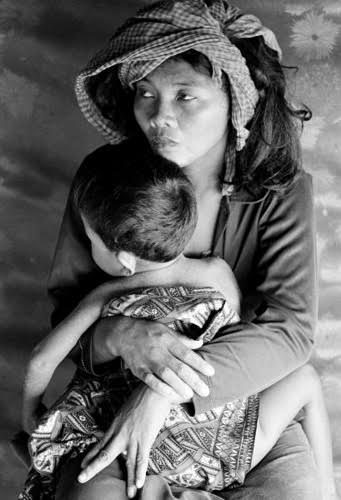
The roundtable explores human migration across generations and borders. As noted, "with more than 65 million refugees and displaced persons around the globe," the discussion examines how societies respond to displacement through "creativity and compassion rather than detachment and fear."
Speakers

Watch
Media
Related Roundtables



Transcript
This roundtable brings together a neuroscientist, immigration historian, humanitarian aid worker, refugee advocate, and social psychologist to examine how societies respond to displacement. Uri Hasson opens by presenting research showing how stories create neural coupling between speaker and listener, but how easily a single contextual framing can split audiences into incompatible interpretive groups, a finding with direct implications for media polarization and empathy toward refugees.
Simon Deng, a former slave from Sudan, delivers an impassioned personal account of displacement, arguing that the international community must address root causes rather than merely managing refugee populations. Morris Vogel provides historical context, tracing parallels between the anti-immigrant sentiment of the 1920s racial quota era and the current political moment, arguing that both periods feature people who feel displaced by economic change and react by restricting borders. Athena Viscusi and Lisa DeBenedittis discuss the psychological dimensions of forced migration, from the clinical reality that displacement itself constitutes a form of mental illness to the remarkable agency refugees demonstrate in rebuilding community structures. The discussion turns to whether empathy is innate or cultivated, how othering enables violence by overriding natural empathy, and the challenge of building cross-group solidarity in an era of political fragmentation.
Show discussion topics
- 00:00:00 Introduction of panelists and Uri Hasson presents neuroscience research on how storytelling creates brain coupling between speakers and listeners.
- 00:04:42 Morris Vogel discusses how the Tenement Museum uses immigrant stories to build empathy, and Lisa DeBenedittis describes Doctors Without Borders' refugee simulation exhibit.
- 00:09:21 Hasson demonstrates how a single framing sentence can split listeners' brain responses, drawing parallels to media filter bubbles and polarization.
- 00:12:30 Simon Deng gives a powerful personal testimony about the experience of displacement and slavery in Sudan, arguing the world must address root causes of refugee crises.
- 00:18:16 Vogel provides historical context on immigration to America, discussing how communities reconstruct home and identity after displacement.
- 00:21:23 Discussion of US immigration history from the 1920s racial quota laws through the 1965 reforms, drawing parallels to current anti-immigrant sentiment.
- 00:31:20 Athena Viscusi reflects on the primacy of home, the psychological trauma of displacement, and the refugee camp experience in Greece showing human agency in reconstituting community.
- 00:42:28 Debate over whether displacement from war versus economic hardship produces different trauma, and the inadequacy of international responses.
- 01:05:30 Vogel argues immigration has historically enriched America and cutting it off damages the nation, while the panel discusses American generosity and its limits.
- 01:24:26 Audience questions on American indifference to suffering, the interplay between empathy and othering, racial definitions of nationhood, and ethnocultural empathy breakdown.
Show full transcript
00:00:00 displaced in the other when I announce your name you can raise your hand Lisa de benedettis URI Hassan Athena viscosi Mars Vogel Beverly zabriskie who is a helix Center executive committee member organized this wonderful program and we're very grateful to her also Simon dang is on his way and will be joining the discussion as soon as he arrives
00:00:31 so without further ado well we were talking before this about um the effect of people's stories on each other and I guess you're the one that's done the research on this so maybe if you could start us off with how you think that relates to this topic
00:01:04 so we basically what we're doing in my lab we're looking at how people communicate so I'm a neuroscientist at Princeton University and my lab we're looking now a storyteller convey his ideas to to the audience so basically we're scanning the brain of the listener why they listen to me speaking for example and my brain what I'm speaking to you and basically what we see that in good
00:01:35 communication the brain of the listeners become coupled to the mind of the speaker and the stronger the similarities between my brain patterns now and your brain patterns mean that we managed to communicate and you can really understand me most likely it's not happening now right I assume that you need to get used to my accent we need to develop a common ground we need to have a common ideas of what we're talking
00:02:06 about and then it will emerge at the end of the conversation hopefully and and I think that especially in these days with Simone that it's very easy to interrupt communication it's very easy not to be coupled to the other and I think when good communication happening is like a magic right that our eventually become coupled and I think the question in these days how can we can really improve
00:02:36 communication and Inc increase the similarities in our responses and served background and understanding of the topics we are talking about instead of dividing and biking because it's very easy for the listeners to be decoupled and not to want to be engaged in communication so since we're talking we're in a climate let's say where people are being othered a lot yes
00:03:07 um what are those conditions that we need to create so that people can listen to each other I think that the two really important things for communication to happen I think first we need to develop similar joint language like if we were all talking about different aspects and have different beliefs and and filters by which we perceive reality
00:03:40 it's very easy to be decoupled so for example when I was reading the news yesterday's in the attack on the media I got really scared by trying to say that for example Journal you start the enemy of the people because that means that one of our basic cell knowledge and way to to create a society now is undermined
00:04:10 and if we don't know what is the facts and what are the thoughts it will be very difficult to establish this common ground and it will be very easy to divide us more and more and anything that basically living in a world that become more and more fragmented and I think there are some forces that like it that can gain power from this fragmented reality and that I think we need to fight against I mean I direct a uh an immigration you say
00:04:42 it was very much a storyteller we it's not exhibits it's the stories of immigrants these are these we tell these as third person stories these aren't these aren't the stories of our Educators people who SE around but the goal is to create a sense that this is that the experience of others is very much like the experience of immigrants is very much like the experience of visitors who who don't identify naturally with the
00:05:14 immigration experience we don't have that sense of whether we're connected at that sort of a granular level for us it's it's very superficial are people saying to us things like yes my grandparents experience the same thing or are they saying things to us which they are increasingly uh today I don't have to listen to that crap anymore there's been a change and we can tell our story we own our own stories and we don't have to
00:05:46 connect our stories and stories people it would be wonderful to be able to see the kinds of connections that you that you study and and what it is that facilitates would facilitate our ability to make the connections more real yes so you were talking about the um exhibit The Doctors Without Borders did earlier this this year about um yes
00:06:17 um so that's the organization I work for um highlighting our experiences with refugees all over the world and the whole point of that was that in telling the stories and making people more than telling the stories but actually making people kind of go through a simulation of that experience that that's um it's impossible not to be moved I guess you know I think we come from I come from a place where it's um
00:06:47 stories are moving you know and we encourage forums so people can tell their stories because that's what's going to shift people's minds but I guess what your thing's kind of challenging not necessarily there have to be some conditions yeah I think that there's something really interesting about storytelling and it's way more effective way of communication than anything else if if a doctor will come and will tell you that you have a Cancer and you start to
00:07:18 detail all the facts it will be very difficult for you to process but if you will talk with someone that went to this to the therapy and we'll tell you his own personal experiences suddenly we'll get information so I think in storytelling it's a way for us to communicate way more effectively because you know we all humans we all suffer we all have families we all have friends we
00:07:48 we went to the world so it's very easy to con to connect when we have this like very basic common ground to use for when you go and really become very abstract you know then it's more difficult for people to be coupling and understand the situation well I think that's the premise of of having the work that you're doing retelling
00:08:19 stories from history and then also in the kind of presentations where we were having um I guess all when when we're trying to talk about the displaced and raise empathy for them and services and funding hopefully um we do rely on story I think that's kind of the idea we do rely on stores but I think what you're saying we're I think we're all increasingly um just talk you said you need a common language
00:08:51 in order to hear somebody else's story and I think we're all increasingly siled and just listening to the people who speak our language you know I mean in terms of um yeah yeah I mean you know and that there would be words like if you if somebody's telling me his story with an illegal immigrant that's it I've stopped listening you know because I don't
00:09:21 in my language there's no such thing there's no illegal immigrants so we speak a different language so finish look you know my empathy and just put up some some guards right and your introduction is absolutely right this is exactly what do we see basically I can we did an experiment it was a very simple experiment it was like listening to 15-minute Story by JD Salinger so basically everyone listened to the same
00:09:52 story the story was about a husband that lost track of his wife in a party and he calling his best friend in the middle of the night asking did you see my wife it's a very simple story for half of the audience we say that the wife having Affair and he is with the friend that is actual moment and for the other group we said and and really behave a very irrational way
00:10:23 and if like one sentence was enough to make the audience understand the story in a very different way it and it was so strong that we can look on the brain of each listener doesn't tell you believe that the wife have an affair or you believe that the husband is lunatic and if you think that one sentence can filter your reality the thing about what happening if you listen to Fox News for 24 hours a day or
00:10:55 you read the New York time then for the same news event that you're exposed to you have very different filters and as you were saying this filter is going to change everything and that's what I was saying that if we won't have the same filters on reality to be more challenging to communicate and there's something good about it because you want the different opinions coming to so you
00:11:26 don't want everyone to have the exact same or something about reality and but also you want some common ground then the question how to balance it it's something that we don't really know how to do like and it's always changing and then there's quite a difference is you've already raised between telling someone else's story that is your story because you're
00:11:57 engaging it and then telling your story which is much of I believe what you have done is that you have told your own story foreign from the experience of a person's that happen to live in it
00:12:30 it is something that cannot be tall to somebody who have no clue what it mean for instance to be in a situation knowing that what tomorrow will be like to be in this situation whether they're going to be tomorrow or not to be in a situation where somebody will be in charge
00:13:01 of your life yourself somebody will be giving you a margin order that that you have to be left right or you shouldn't be there but in 21st century for me looking back the darkness and sadness demonization and helpless
00:13:32 and this is what the displaced person or a refugees or immigrants these the same things just different names different circumstances at the Times in 21st century for me myself when I look at the suffering of the others knowing that I've been there but I'm no longer there I'm now a different person who
00:14:04 is in a position to talk about the sufferings of the other persons who don't know how to say no who cannot I want this and I don't want this and I don't want this so I always ask myself why any person's at the moment in 21st century should go through what I went through
00:14:36 maybe 40 years ago at the time when the we the Wolves talking about the global economy global environment what about the global Humanity where we have to sometimes to look at the time when we have a technology that we know what is happening in South Africa within 24 hours
00:15:08 which was not like that 50 years ago 40 years ago why a person have to up in uh you know the tree and climbing a boat risking Journeys without knowing what will happen in the middle of the oceans but they decided so these are the things that they the the wall should be
00:15:39 addressing what make that person's be so desperate that to leave the place where he or she was born the place where any person is proud to call it home because the place where he was born and sometimes cannot replaceable even that how bad it is and then even the the medals and the smells of the the sense of where you
00:16:09 were born it's it's good because God created you to be in that place God didn't create you to be in heaven creating you to be in that place so this is the myth that we in the worlds are not discussing to address the issue what makes a person so desperate to rest his life or her life
00:16:39 seeing immigrants watching out by the oceans and after the drowned seeings people risking their life to be shot at to go to the other side so I think there is something fundamental that we in the world that we are in especially we in a better world where we are today
00:17:10 we have to look into it if there is a problems in the home where I come from I think the solutions should be can we address it can we find a solution to that problem so that Simon will not risk his life for a yearning with our knowing what will be ahead of that I think that's the discussion um so what I'm thinking about Simon is
00:17:43 the way that you um believe that people are inextricably tied to their homes you know and are fundamentally identified to home sorry I lost my the way that people are um fundamentally tied to their homes and the particular problems that refugees have when they are essentially homeless and stateless um and also the responsibilities then that
00:18:16 governments have to create or not create a sense of Home in those kind of interstitial moments when people are traveling and um Morris I was wondering you know at the tenement Museum given your own research on home how people form those neighborhoods organically you were talking about that downstairs As Americans we assume that movement is natural we
00:18:47 assume that people are created with opportunities to go somewhere else where an end stage at least for the moment of that process but in most of the world it's very much like the the world that Simon speaks to people didn't expect to move they moved only under the most desperate circumstances so we tell the stories of people who for whom there was a
00:19:17 differential the Lower East Side the streets were not paved with gold as the the language of of some of American History has it these were extraordinarily difficult circumstances people encountered struggled they were strangers they weren't they weren't the victims of Terror in the place to which they came in many cases they were victimized by Terror in the places they left they came because there was
00:19:49 marginally more opportunity and significantly more safety the question then was how do you reconstruct something how do you make a community when you're there not because of of something that you had always dreamed of doing but something that that was forced a choice that was forced on you because of conditions in the place you came from I mean I I think of this personally would would I be at this age still I don't know living in
00:20:21 Poland uh if if my parents hadn't gone to Siberia and wound up uh wound up here I don't know that uh if as an American I think oh I can think of nothing worse than spending my life in Poland but so there there is a there are positive outcomes but we assume those positive outcomes and yet what we need to do is realize just what the difficult the difficulties are of of that movement uh
00:20:53 how how undesired that movement is in almost all cases so so can from why the borders were more open on the 40 is it because the situation in the state was after the Depression there was a need for new power to come in so they opened the borders if slightly more it wasn't like completely open right
00:21:23 because now we see that the bottles are closing more and more but I think the economical situation of the people around actually is better than what was on the 40th side title now the flosses why we close the borders in this particular moment in time in history when we have more resources to give we close them for the first time in the 1920s in the laws of 1921 and 1924 established
00:21:54 a racial system that determined who could enter this country and cut immigration back from a million a year to a 150 000 a year favoring people of superior racial backgrounds Northern Europeans Western Europeans cutting out altogether Asians cutting out all together Africans and restricting to a handful Eastern and Southern Europeans so Eastern Europeans polls and Russian poll Russian Jews and
00:22:27 polish Jews had been entering at three hundred thousand a year they were cut back to five thousand story of the Holocaust is the story of the 1924 Johnson read Act passed in this country after the war there's a slight opening not because as uh and by the way the key to those 1920 laws are that the United States was experiencing great prosperity in the 1920s it was one of our really
00:22:58 great periods but an awful lot of people in America thought they were losing their country's identity they were agriculture collapsed essentially as a source of employment small towns gave way and people whose lives were built up in their identities were tied to to Rural America our small town America uh to what we would today call Red State
00:23:28 America thought that they were losing the future and so they cut off anything that threatened continued change in 1945 when the horror of the death camps became unavoidable President Truman wanted to allow immigrant refugees to enter the country Congress wouldn't go along it believed that the same conditions that had prevailed in the 20s still obtained Truman had signed an
00:24:01 executive order that allowed literally a handful a couple of thousand survivors of the camps into the United States without Congressional authorization in 48 they signed Congress passed the first Refugee act that wound up allowing about 2 hundred thousand European refugees and and that included about 80 000 Jews actually more ukrainians came in under that law
00:24:31 it's in irony there than Jewish survivors we didn't change our laws till 1965. in the as part of the civil rights movement and now we're at another one of those moments probably with great prosperity and yet with people who who are losing their their it's like the 20s in a lot of ways people who are losing their sense of the nation belonging to them and wanting to go back to a pre-civil
00:25:03 rights America wanting to go back to a white America indeed to a white Protestant America and that's where we are where we are and how it has been and some people would argue that there's a fundamental change in the economy not the superficials of of prosperity or lack of prosperity it's economics and identity so if you take this analogy of like in
00:25:34 the 20s in 1920s then we should be really worried because we all know what's happening in the tattoos and the thought is what what happened was the same thing that's happening in the 30s and 40s in Europe yeah seems to be happening again yeah in in Europe right the the irony for us is that usually afternoon an election in some emerging part of the world the American president calls up the new dictator and says we'll we'll be
00:26:06 your we'll collaborate with you as long as you respect for a rule of law and human rights and this time after our election it was Angela Merkel of all people who called Donald Trump to offer the same collaboration going forward if the United States respected human rights and rule of law waves of immigration when there is some Choice involved and the whole motif of
00:26:38 forced from home and that was the exhibit of Doctors Without Borders that forced from home and you've worked in many different kinds of refugee camps in different countries a few yeah when you were talking everyone I've worked in maban county in South Sudan and um and and
00:27:10 you were I thought I heard you say how people downplay that experience of being wrenched from your Homeland how it really is you know a loss A a death a grief you know to be forced from home like you say but that there's the loss of the of the what you were saying your god-given Homeland you know um no
00:27:41 you know other people have used that idea anyway um but it was I think that's true that people really you know we when we think of trauma even we think of well if somebody died or you you witnessed this or but just the loss of Homeland just the loss of of of common language you know of but not just the the tongue but the um markers you know
00:28:12 um is so it it's something you need to recover from you know that it's this loss and I was working um with a very small group of people from um Sudan who had picked were in a refugee camp in South Sudan and they had no language and they had no word in their language for depression and so I was trying to explain what's depression and we were trying out different words and
00:28:44 the educated people in that spoke Arabic and then their native language and then so we're going back between the few languages trying to figure out you know what is depression you know when people are crying and they can't get over it and they're staring out the window and they can't function and they said Oh you mean when you're missing your village you know and so that became our word for depression like missing your village you
00:29:14 know that it's that fundamental you know that it's a it's a it's a mental illness to to be wrenched from home you know I always remember that um and you know talking to um I was talking to a young man from Central America the other day um who had to flee his father was murdered by gangs you know and the
00:29:46 the you know his father was murdered all these horrible things happened but the biggest component of the grief was the the future that he had anticipated in his own place his own god-given place you know and that he was never going to have that again and that one person with a gun could take that away from him for the rest of his life you know um I really think we underestimate that I mean the idea that people are crawling over our you know borders to take our jobs or
00:30:18 some thing like that it's um but you know then I think and this goes back to the storytelling then can it really be only people who've experienced this who understand are there you know like when you tell the story of the 1920s immigration laws I wasn't there but I'm having that experience right now I can understand your story right of how the
00:30:49 in prosperity xenophobia arises so I didn't have I have you know how do we create these environments where or the language where people can understand people who have not been wrenched from their home can understand the severity of that and and you know for people who have not been oppressed can understand what that really means and how wrong it is and
00:31:20 hopefully you know so that people who are oppressing can understand what they are doing and stop doing it um but that that presumes empathy and it can't be presumed yeah I will go to my grave presuming empathy they can't take that away from me home is such an elemental concept that even if we haven't been driven from our
00:31:53 home or Nation or the people whose language that we share that idea of leaving home is something that we can all that we've all encountered even if it's just that struggle let's say to leave home and um uh I was telling you that we I was recently in Greece at a refugee camp and in one of the camps it was a Syrian camp and it had just opened about two years
00:32:24 ago and the people who at the military who organized the camp basically just organized people numerically and they gave them their boxes they call them ISO boxes to live in based on whatever number that they happen to be assigned when they entered so all of the mostly Syrian families were there and they were just organized numerically but then over the space of one summer they reorganized themselves according to communities or tribal
00:32:56 affiliations or whatever kinds of smaller cultures they wanted to affiliate with and I think that that was a really powerful experience the amount of agency that any one person has when they are in a refugee camp was remarkable to me you know the idea of being able to leave your box and where would you go you needed to have an appointment at another box or you need
00:33:27 to be you know you need to have an appointment with the medical staff where you need to be going to a class but people didn't just walk around and wonder what they might do for the afternoon I mean this idea of what it means to be home or what it means to be at work or what we currently call a third space right that place that we hang out with our people you know this is something that's really missing in a camp and it was it was somewhat
00:33:57 remarkable to me that the people who had organized the camp I mean certainly for reasons of efficiency which are completely understandable you know that they would just organize people directly but it was also wonderful to see the agency that people took upon themselves to reorganize and to see how that was allowed for you know that shift once there we've had that in this country with the resettlement the refugee resettlement program has put people you know the Hmong here and this and
00:34:30 everybody has reconfigured themselves you know there was a study like within five years everybody had migrated to find their own people and and create the Little Italy's in the chinatowns and the the things that that people need I also saw that in South Sudan where there was a um society that was organized around shakes and so they all moved themselves around and we would call the different parts of the camp according to the the Sheikh
00:35:01 who's you know I'm going to say so-and-so's part I'm going to according to the Clans the whole Camp had been renamed as opposed to ABC according to yeah but even among economic migrants who are much more fortunately situated in a city like New York you've got dozens of Hometown societies organized by Mexican villages you've got these Hometown associations uh organized by Chinese regions and and
00:35:34 communities uh and if you go back in time you'll have in the on the Lower Side the linesman shaft and the people who came from some God forsaken Village in Ukraine and uh banded together with others of that same background because there was something of home that that was that significant to their identity to who they were to really Empower them to help make their way in this very strange world
00:36:06 you see there is a word which we learned people like me that said nothing like home and come down to why you replace home to refugees care and this is a refugee skin there have to be some things undescribables
00:36:37 that took home away and make you a displaced persons and nobody win this audience can describe it to be a refugee more than a person's who was from home and become a refugees for instance we all know about the slavery you read from the books how bad it is
00:37:10 demonizations and but if you tell me to explain to you you will be in tears different from what you read in the book because there are certain things that a person have to withhold it within inside you cannot throw it out nobody should be a refugees
00:37:42 or should be a displaced medicines that's my opinions and if that's the case why we have a flow millions and millions of refugees against at the time when we talk about globalizations and so on and we have the beautiful organization here talk about the issues which they supposed to be responsible again talk about the UN we sometimes make me to be disappointed
00:38:15 of the you and how it move away from the principles of the University Declaration of the human rights when you have and you mentioned in southern sudanes where at the moment we're speaking we have about four Millions Southern Sudanese are refugees uh question is why yes
00:38:46 southern Sudan has been from refugees to the refugees but since the time of independent of sedans in 1965 the war has been going on and on and off and on and so on in other words from the refugees to the refugees to the refugees even those those who find better life like me there is nothing replace home
00:39:16 I remember when I went back to Southern sudans place where there is nothing absolutely nothing there is no running water there is toilet there is no nothing absolutely you know it but I feel something Joy I feel like even that I didn't eat for a day there is no hunger because I feel full of whom it is not compared to my daughter which was born here if I took
00:39:48 her over there there's no connection she will be like I'm going home which is where he's supposed to be so the point I'm trying to make I think we have to have a comments of humanity in US where we have to look at the problem what make people become refugees sometimes it is very complicated
00:40:20 to explain to the person who was not but to me for instance if people of southern Sudan become refugees then there is somebody is responsible the father of the House of southern Sudan is responsible it is in my house if my kids running around then who is going to be blamed it have to be me as a father somebody have to say and said we have to hold these call this person and explain to us
00:40:51 like this father why his kids are running around making things difficult for the others and that's you know I feel very strongly that the solutions to any crisis where vis-a-vis immigrants and refugees is not to bring them into your house the solution have to be home
00:41:24 because bringing it to your house is not a solution at all the question if if it is a solution how many you are willing to take because yes there is go to Eastern Asia there are maybe 100 million they want to come in your house go to Africa there's another 100 million go to Europe go to anywhere in the world if your place is a a better place for these problems how many you willing to take
00:41:56 and that's why I feel very strongly always where the refugees came from we have to address it would make them to be a refugees now the world talk about the refugees of Syria yes I personally have as a license he's responsible if he is responsible how can we let him replace destroy life of millions and he is one person
00:42:28 and then now we have a crisis a problem blaming ourselves why are you not taking 10 and why are you not taking 20 and why are you not taking 30 why we don't even take one man out and let people stay in where God given right home do you think that there's a difference and this is um to the whole group between those who feel they have to leave their Homeland because of famine or drought
00:42:58 or some uncontrollable nature aspect versus a power Dynamic versus a totalitarian [Music] submission aspect because I I would imagine that the way the psyche processes that is quite different it's one thing to be you know upset I mean we know that the river is drying comes back to us but it's a different thing than let's say someone from another
00:43:30 cult within your own religion or tribe within your own country push you for survival and I wonder have there been studies of the different kinds of trauma in that regard did you see anything different from the Afghans and the syrians for instance um so I guess I'm struck because how the psyche processes it is very different
00:44:01 from how the UN and international law codifies it right so at the camps that I was at the Syrian refugees were given very different resources and treatment than at another camp where the Iraqis and Afghans were because the Afghans and Iraqis were not going to be eligible for Refugee status because they weren't considered to have
00:44:33 fled as wartime refugees whereas the syrians were going to be entitled for Refugee status therefore their children got to go to Greek schools they lived in very different kinds of circumstances in terms of the psyche I think that they did understand that they had a different status which was one that was more prospective you know they were able to look toward their future and see a different place I mean to your point
00:45:05 Simon the Iraqis and the Afghans knew that ultimately I think they were going to have to go back home and in a different way than you mean it I think which is that going back home is a kind of healing return they didn't see it that way because it wasn't going to be that way for them so I think that that's a real difference in how people are treated as refugees you know those conditions under which they left yeah I I totally agree
00:45:36 that the the differences are artificial differences that we impose all displacement is because of inequality it's all all of power dynamic people who came you know my grandparents came because there was less there and more here that's the power Dynamic it was unfair it was wrong you know it's all because of Injustice and then we compound it by
00:46:09 making um uh um categories I think you know when we treat people with trauma I mean to me um and I'm not a researcher so I just make this stuff up um you know but the big um difference is the level of helplessness that was involved right and
00:46:41 the a traumatic um you know which is why sexual violence is so difficult to get over because it's you've lost control over what comes into your own body right it's just um so the the level of disruption and and so if I have been raised knowing that the world is unjust my whole life and then I'm going to have to make decisions based on that
00:47:12 Injustice and do the best I can I might be less traumatized when I move to to save my self than if I grew up thinking there is maybe some you know that there is Justice in order in the world and then I violently find out that there isn't and have to flee in the middle of the night however I would say that all of this is power dynamics
00:47:43 and that we have a world of globalization and all it does is give us more information about how unequal it is you know that now any kid um in wherever me and Mark can be on his Facebook seeing what other people have that he doesn't have you know that that's what globalization has given us not redistribution do you think this is a way could you let that's your topic
00:48:16 and say you have the power now to change Dynamic is there even a solution to you to that I'm a little social worker yes I mean I think you know I think we're always trying I mean I think Humanity has always tried to evolve situations of Greater Justice and greater distribution you would just not gonna interrupt anyone no no please because but I would
00:48:46 challenge them yeah right I don't think that that's hardwired into us by the way and I say that without evidence except as a historian yeah yeah because Simon was saying we should let everyone go back but the conflict brought people away from me and and as you were saying that people want to protect what they have so why should I will give more taxes more money for what I'm earning lose my income for other people that's coming
00:49:18 I want to protect it so so this feeling of on I have two meanings right and I think it's the source of the conflict first it like it's like really pure feeling of this is where I belong and the other is this is mine and not yours right so it's also creative boundary between one and another and this is why people if you take Syria for example it's not
00:49:49 luck Assad that is in power it's a minority the alloying that control the majority of the Sonic and they know that if they will lose soon Equity majority going to punish them so it's part of their life and it's also their own and and the question because we cannot fix it from the outside and and we cannot open the borders for
00:50:20 everyone that wants to come in this Dynamic I think we we start guide as liberals we don't know how to fix it and as conservative they don't know how to fix it then and sometimes I'm feeling that we don't really discuss the complexity of the situation and we go to the place that is about comfort zone we believe everyone are
00:50:51 equal for example that's something that we can operate with but we don't know how to make it happen like we don't know how to fix it I think there is something she mentioned about when she asked all of us but the kind of refugees and immigrants because there are two so many layers when it comes to immigrants or those who the
00:51:22 refugees there are those who want to go to choose for a better life there are those who false to become displaced persons and this is the real refugees in my opinions and and come down to what I said before about why a person have to be a refugees what is the problems and if we
00:51:54 genuining I'm not talking about we're talking about the global war that which is today focus and invest in Solutions of the crisis of various refugees to diagnose why they become people become refugees I think it will be better than investing in sending the refugees things and so on and so on and so on it will be less cheaper
00:52:24 by if Southern Sudan's refugees are four millions and the the father of that southern student is the problems and and we focus on that person to why he became a problem and identified and address this and solve these things I think we will save ourselves you know time and energy and resources of debating one another and okay why are
00:52:55 you not taking and why you refusing to text for instance it my opinion is the world should have to look and invest in solving the problem what make the refugees as refugees so I guess what you're saying is who is this for who's the world who is the world the United do nothing Nations because based on it is this true that's that's why we keep you know going because we
00:53:27 are not they are there because all the the the country the Nations where the problem come they said where and they sit in one place which is the U.N let's take two examples recent one in Iraq it was governed by a dictator right Saddam Hussein the U.S went in to OK over the country replace it with like a democratic government and the country collapsed okay I don't think something good came
00:53:57 of the aqua maybe Isis came out of it take Syria Obama was about to attack Syria and at the end he decided to back off and not to put military ground on Syria right and then the last one came into Syria are they fixing it who will fix Syria who will fix the Rockets as you think it's like the people in the place need to fix their country and if and if they cannot because the power Dynamic and it
00:54:27 everything is about power dynamics it's too complicated it's very difficult from the outside to fix it and and now we're really stuck in in a crisis and and because everything is connected it's one stay in Syria only like it's coming out to Europe and now it's in the Europe and it's changing the us and we're all part of this dynamic because it's a global World in a sentence everything is connected and it's a very serious problem that we don't know how to fix
00:55:01 and we haven't for a long time to go back to Barbara's question about uh is there a difference between people leaving for one circumstance or another obviously people who leave because their lives are at risk or one end of a Continuum and people who leave because there's some differential that they think that life could be better somewhere else are at the other end but people have been leaving for both of
00:55:32 those reasons leading places for a very long time whether it's the idiot sons of English Aristocrats who realized there was nothing for them if they stayed in England in the in the early 17th century and and wound up populating the American or leading the American South or whether it was people whose whose livelihoods disappeared as Europe industrialized in the late 19th century whether it's people who fled fled a war in none of
00:56:04 those power imbalances has anyone figured out how to stabilize sending societies different as the die Dynamic involved in the sending was I don't want anyone to think that leaving England because you're a Cavalier as opposed to a Puritan is the same as as leaving Syria because your life is in imminent danger well yeah I mean maybe this is going too
00:56:34 far off track but one thing I've always been perplexed by is the desire to colonize right like that's like because we're always dealing with people who are fleeing you know like who don't want to leave home because they're fleeing or then we talk you know so that's a refugee and an immigrant is somebody who thinks there's something better on the other side I mean what's a colonizer like that's really sick which is how this country started like
00:57:05 like what's that did you leave your home to go take somebody else's how does that fit into this sorry I'm like way off but you know when I go to these places I I really it really puzzles me like why do people want to take other people's homes instead of improving their own because that's what colonialism is answering your own question your question was why don't we find a way to improve societies where they are and the answer is we
00:57:38 haven't and we haven't for a very long time colonization is one element of that one aspect of it and I think that is that is the the the the the the the argument should be focused on and that's why I said before there is nothing like home uh for instance and I've seen the works of Doctors Without Borders and uh in many places in southern Sudan even before the peace agreement between the North and
00:58:09 the South Side always take a risk to go to into the war zones and and sometimes we have to carry the patients for the whole day and reach to the where the Doctors Without border are stationized in the midnight and then and and I remember I was in Northern bar gazal which is not enough and a child and a mom
00:58:40 just felt sick and you know something had to be done all day and we have two doctors with us but there is no medicines and according to them if we find a medicine these people will will survive if we are not going to find a medicine then within 48 hours they so we have to walk for nine hours to reach where the doctors with our border so in my opinions
00:59:10 the Investments of the argument should be finding the Solutions in which that the Doctors Without Borders instead of they because they like their life sometimes are in dangerous you know it I don't need to tell you how many uh your workers uh in in maban who has killed [Music] the environment is hostile environments so the solution have to be invested in finding a solution where there is and
00:59:42 the doctor without body instead of risking they have to go there and train a person okay instead of you relying on tradition medicines which probably you know there are people in my band rely on their own medicine because there is no other way to find a doctors so this is where the focus in my opinion should be today in the state of taking 4 million Syrian refugees who are now need to get our who already refugees to
01:00:13 take them somewhere to in my opinion that's not a solution to take four million the southern sudanes who are now refugees in their own country is not a solution we have in Uganda one and a half million Southern Sudanese that living in in in life I don't want to describe it there is no dignity by being a displaced person in a place which is not your own for you to survive you have to do ABC
01:00:44 and you just figured out what do I mean by ABC to survive but if we find a solution to their home believe it or not I would rather be in my Village you mentioned before and figured out how will I survive whether I want to go to the River Nile to get a fish instead of be in an hostile environment where there is no Dignity of my child's
01:01:15 there is no sense of human of home I become homeless and helpless so I think that's this that's what we in the world have to be addressing and I'm just you know who am I to to to to to tell the world there are so many different levels to address here and it seems to me though that it's also really important to address the ethical practice of how we respond to
01:01:47 people in need even while maybe the Primary Response needs to be to fix the situation because there are always going to be people in need on the sidewalk right in front of this building that are displaced and that are homeless so the question becomes I think how do we ethically respond you know we don't have any behavioral Economist on the panel who could explain Game Theory and why we
01:02:19 take from other people you know like they have to have something and we want it so we take it and it would be maybe interesting to have somebody like that on this panel but how do we how do we respond ethically with the few resources that we have and I continue to you know to reflect as I hear you talk about the Primacy of home and how that may change for any of
01:02:49 us depending upon where we've been raised I mean in Queens where I'm from I don't feel a really powerful affiliation with Queens as if I'd be ripped out of my home if you know to like and then thank God thank you um so you know what is it about certain circumstances that evoke that really powerful Elemental affiliation where if
01:03:21 you did not live there then you're homeless you know that's a really powerful thing to say and what are the various conditions that shift for people um you know that make some people have that primary affiliation and others not um but is it clearly the case that it's not if if we will take you and Report you out of the US and test you in Africa what you feel displaced not from Queens
01:03:52 to Brooklyn I'm sorry yeah I would feel yeah if I had to move to Staten Island I think I would feel really displaced yeah so who are your people right that's always the question is how how do you constitute a community of people around you but you know you're asking what kinds of resources are available actually pointing to how few resources there are it's really how few resources we make available because resources are
01:04:26 in in the case of homes for those seeking Better Lives they're nearly uh they're they're so there there are so many that they're uncountable we we had from Simon the numbers of refugees of four million here 4 million there those are large numbers Until you realize that this country alone between 18 and 65 and 1914 took in
01:04:57 25 million people that's a big and got nowhere near full nowhere near full so the resources are there what's missing is the empathy the will the willingness to not so much share because with one mindset we realize that we are enriched by Movement we we've we've talked about people who are displaced and and moving and seeking something we
01:05:30 can shift that to the society that societies that in the past have welcomed them and are part of our argument that the tenement Museum and all history is an argument by the way science is not and I understand value free but part of our argument is that almost anything we could point to in terms of this country's Prosperity its culture its dynamism uh literally its health is
01:06:00 the result of immigration and to cut ourselves off from that now you don't need to read Paul Krugman or or David Brooks though I do uh to just to hear the argument pulled out of the literature that if we do this we Doom ourselves to really to economic not just lack of growth But ultimately insignificance and boredom and well that too yeah I think
01:06:30 you you mentioned did you mentioned twice and people like us are blessed to be given the an opportunity uh and we cannot take this for granted and that's why some of us we felt that being here is a place but at the same times we have to stay and look
01:07:01 after those who are not fortunate to get what we get and we become The Voice of those who have no voice we speak on people who have cannot speak for themselves for instance one time I have uh about 300 000 Southern Sudanese flee from Egypt after they was attacked by the police in Egyptians at in front
01:07:34 of the UN in Cairo because what happened was that there was being considered as refugees without knowing where they're going to go and then when Southern sudans peace was being signed between the North and the South all the issue of the refugee through their name already there they nobody talk about it because nobody's sure what would be the future of southern Sudan is going to be a peace within our independence or separate two countries said they want to know and then they
01:08:05 went and you know peacefully camped in front of the U.N in Cairo and then the U.N called on this Egyptian security we're almost 100 and something people were skills so they've they felt that they are not welcome in in Egypt and then some of them takes the risky yearning to a crossing the border from Egypt all the way to Israel and the numbers at that time but 28 people who went there we got information that our Southern
01:08:37 Sudanese being detained because they are carrying the Sudanese passport saying that you cannot you can go anywhere but you cannot go to uh the enemy country that's Israel to them so Israelis of course they was very concerned people coming without knowing then they're coming from a country which is hostile to them so they want to know who are they and so on uh I have to get involved on there because they cannot reach to the levels of the
01:09:09 government to to to to to tell the the the the the the Israelis that these are not your enemy these are people who just run for their life they run from southern Sudan may end up in Egypt assuming that there is safety there they're being attacked in Egypt and that's why they came here uh they are not even threat to you because if you ask them that do you have a problem with Israel they're going to say no that's why they came here so I'm
01:09:42 begging you let them give them a chance yes that peace agreement until uh six years from now will southern Sudan probably will become Independence even nobody believe me then so I have to be lobbying on there on their behalf and we end up with uh thirty thousand Southern Sudanese uh people from the north people from that foreign and the issue of refugees in Israel become a crisis at the same time but I have maintained my
01:10:15 position with them that these are people whom are not seeking to be here believe it or not one Southern student become independent all these peoples are going to go back because to me as I said before there is nothing like home and you cannot replace them because running away from where you was born is not a Solutions then who is going to remain there if that's the case then let find any place where there are problems in the world and take everybody out of
01:10:46 there and then there's going to be a crisis where we're putting them to So eventually they was given a chance opportunity and so on and then suddenly should undercome Independence and all these other refugees who happen from Southern all of them are back in southern Sudan even though very unfortunately we didn't respect what happened in southern Sudan today should have happened so come to to to to to the argument of refugees the solution always have to be home
01:11:20 and we have to address why a person have to go yes if there is a way where we can give him because we are a human being sometimes even we hear when somebody begging for some things you always if you have you feel some kind of humanity if you give even the law said that you don't do that but I'm a human being my coach is telling me that I have to do that and that is even why people like me was given opportunity in this country
01:11:52 and that's why people like me should not take that opportunity and then look for my own Affairs instead of looking for the Affairs of the others I think Simon there's a piece underneath that that you're really addressing though which is a sense of choice I mean some people would choose to leave some people would choose to go back but the most profound sense of displacement is when you don't feel you have choice and I mean I I probably would be among
01:12:23 those who would flee as I did from Rochester New York you know and others would certainly want to go homes but the issue is that that sense of autonomy and that's what gets taken away in terms of the displacement the refugee situation it is absolutely and if you look at the at those who was given a choice the majority will then would prefer I go home if there's a my place will be a
01:12:56 place where I will for instance and I will speak for myself as an American student with this suit uh what prevent me not to go back to Southern students and in my Village and make that place a place to look like United States if there is environment safety and peace and Security in that place and that is why we have to focus on what make peoples to become a refugee because
01:13:27 those who flee of the conflicts their numbers are huge compared to those who flee with with the choice of immigrant or better life those who were being driven by when I talk about Millions in southern Sudan these are people who didn't choose compared to somebody who want to okay I want to go to Brussels for instance but these two four million if you ask them where it Brussels they don't have no idea so we leave the issue of immigrant those
01:13:59 who want to leave for individuals who want to take a risk at gamblings to to to to to to explore the world but a human being should not be a refugees well I think we're talking about the difference between choice and force that and the power dynamic as you were saying I mean you're a you you chose to you chose to move to a country different from the country of your birth so you're talking you come from a
01:14:32 perspective that is different than this you know this is why I'm not a refuge tree right because Simon is right I wasn't forced out it's a very different situation yeah it was your choice it was my choice yeah I will never say the time in the future I mean that will be like immoral to say because I I had options in my country and I had options over there and to come and explore them and then
01:15:04 following my dreams and the society give me opportunity to follow my dreams I have only to be thankful I cannot believe and that is not a crisis that's not the correct the crisis is the refugees whom are being in this place yeah um I I have a question I want us to get into before we wrap up and ask for questions were you surprised by the outpouring of support in this country for organizations that deal with refugees
01:15:37 and human rights ACLU International Rescue committee Doctors Without Borders when they were threatened I one has the sense the people found that they really had a value in the acceptance and facilitating of others and that that but it took a crisis it took a challenge before that really came out could you could you address that Morris sure I I think that what you're speaking to is
01:16:08 that what has for a long time been the the dominant American narrative the story We Tell ourselves about who we are and where we come from and probably a majority of Americans believe that the Immigrant story is their story and and a a conscious uh denial of that narrative threatens their sense of who they are and their and and really their their
01:16:38 deepest values the question is how long that can be maintained it's it's uh it's not just a matter of being able to mobilize people or or have them write checks there's a political system out there that doesn't necessarily respond to the majority or response to a a majority that's constructed and reconstructed and is there are powers at play here that threaten that narrative so where we are
01:17:11 right now at least when it comes to the stories we tell ourselves to to storytelling and empathy at that level we're in a good place what our feet what my fear is will we be in that good place five years from now a generation from now that's what's scary I was joking to my wife who's sitting behind me earlier today that while they're we're being Pat we are rightfully paranoid about what's going on today as opposed
01:17:42 to the 60s which is the last time I recalled this level of oh my God they're out to get us this time the FBI and the CIA are on our side who would have thunk well no Lisa did you wanna yeah I I just think of the power of visual storytelling in the media in in terms of how it I think galvanized a response for people I I think about that now famous
01:18:14 uh image news image of the little boy in Aleppo sitting in the back of an ambulance and how so many people saw in that little boy children and vulnerable children and and Trauma you know for once a face of what trauma looked like you know to just see that boy so disconnected from whatever was in front of him and it really uh it galvanized people as as well as I think
01:18:45 the image that had come out in the news maybe a few months before of the little child who drowned on Lesbos right and how that got people speaking in a way that we weren't quite speaking before and have you have you seen an outpouring of more attention and understanding yeah I mean we're all raking in the cash yeah but um I mean there um
01:19:19 you know even this nation of immigrants thing is a story because the history is it's a a country that colonized another people and then imported a lot of people through involuntary slavery to build a country that's that's what this country is yeah okay and then some people immigrated after all of that you know
01:19:49 um so even that's a story and the fact that we can see the face of trauma in that little Syrian boy but we can't see it um when a child is shot by the police in our or by a vigilante you know in in our own communities um so it's it's always difficult as much as I'm I will go to my grave being an optimist they are never going to take that away
01:20:20 from me you know because I really believe that's the last thing you know have been rereading Victor Frankl a lot you know I really um they can't have that you know um but um where am I going with it you know that it's that these are illusory victories I guess and that we still need the big victory you know the one um and who is the we
01:20:50 are going to drive I don't know that's going to redistribute everything um uh equitably and sustainably and make it snow in February again and um I don't know but um so so um you know not to be cynical but just to be accepting of the fact that there's always a lot of things going on at once
01:21:22 and so that the outpouring of Goodwill towards refugees and immigrants is um I I I is a lot due to compassion and a lot due to self-preservation that I I I I want to be sure that we are not this guy you know I want to be sure I um went to the women's march with a
01:21:52 sign saying white women we need to do better right because 50 and 53 percent of white women voted for Trump and white women would say to me really but not me I didn't and to me that's our country you know so I want to be at this march to be sure that that's not me you know but what what are we doing to change the conditions that create these
01:22:22 things and this is really what you're saying you know what are we doing to create the to change the conditions that create displacement what are we doing to to change the conditions that created this hopefully very temporary regime that we're facing and so so is this outpouring of of funding and Goodwill really changing the the conditions and I don't want to down I think it's great you know I don't
01:22:53 want to say I don't want to be cynical about that because maybe this is what's going to get everybody thinking and and willing to mobilize on a whole new level um you know I I I you know I have seen that in my life you know gay people can get married in this country now I mean in my lifetime you said you people thought you were crazy to say
01:23:23 that South Sudan would be an independent country I mean we have seen things that were Unthinkable you know I mean we um you know I think we we forget things we forget like when HIV hit this city what was going on I mean that that felt like you know an unimaginable um and and the reactions and the othering talk about othering right I mean the the Pariah you know and
01:23:56 these things change they do go for the better and you know um and so I I just this this is part of going towards the better but it's not it I guess you know that the outpouring is just a little part of it I guess I don't thank you yeah well to be more inclusive here in the room um I would like to ask anyone who would care of course and you know uh
01:24:26 for what this country has given to me and seen it give it to the others in the world I still believe that the generosity that come from America who will steal there and I'm very optimistics based on what I have since the American has given to the others to the point that you mentioned even today we have in the books where the American can bring
01:24:58 in the settlement program 250 000 a year there is no sightings in any other countries that we have you know numbers which is being fixed uh you go to England they don't have that thing you go to German you go to anywhere but in America there is even sometimes go beyond that so I'm really uh the men very optimistics of American generosity and and we have that's why we're talking about that we should not turn it in a
01:25:29 country or immigrants we should not take things for granted let's look after others who have no voice and let be their voice so um if anyone would like to ask a question I'm going to keep this constricted to questions not not statements and I have to apologize in advance if I have to cut off anybody but I'm going to if I need to so please would you begin
01:26:00 for us yes um I probably am not allowed to say this but I really want to make the moderator feel a little better only about 12 percent of white women voted for Donald Trump you know if you go back only 50 of the population voted 25 percent of the population voted for Trump and of that 25 maybe half for women now thank you all so much but I do have a quick question thank you for allowing me to say that I really want her to feel better yeah the
01:26:32 um don't want to feel better I want to do better think have so much wisdom do you think that We As Americans have become so inured to to suffering to displacement to violence to trauma that that has a very serious consequences on the way we respond to it and if the answer is yes what if anything are we or can we do about
01:27:04 indifference towards trauma violence I'll defer I I I'm supposed to be the moderator but I'm going to put my two cents in here no no I don't mind don't worry I don't have that kind of complex but um I I think the capacity to feel shame has been extremely important I think the outpouring of support has come from a feeling of Shame
01:27:34 and a feeling of Shame of what goes on within our own culture that we really have to allow ourselves to feel it is an impetus and a stimulus but I'd like to hear Americans through philanthropy probably give tens of billions of dollars a year to deal specifically with those issues the issues of those who are underserved the issues of those who are in some ways unfortunate that's not matched anywhere in the world I would
01:28:07 not make the case that where that it's the best way or that it's effective totally effective but if you're talking about people's feelings that that somehow there is something unjust out there and they ought to address it an awful lot of people in this country address it through their pocketbooks um there is a feeling that something dark happened and I think we feel it then
01:28:39 we're afraid of it now from the chains and we all I think this is the reason why you most of fear and most of us came today to talk about it and I think it's only the beginning because it's happened a few months only two months ago even less right and so I think in the beginning I think it's not going to Trend quickly I think it's going to be way darker than it is now so we're all worried and we all think how to train and
01:29:09 I think we need to act as you are doing basically you're going out and trying to change and Simon trying to change and only by we tend to be activists in a way and ex expecting that it would be a long process maybe we will win at the end you did mention you know there's always a homeless person in front of us you know outside the like
01:29:41 we can all start there like today you know like you don't have to send a hundred dollars to Doctors Without Borders you can give a dollar to that person and I really believe that you know that's you know you you know that that that's what we're doing to to whatever you called it you know if we've been inured to suffering like let's make sure let's they can't do that to us like they can't you know we
01:30:13 will defend our right to give a dollar to somebody who may not deserve it you know they can't have that sorry it should really make me set up did you want to say anything to that question no yeah all right please um when comparing uh Americans attitudes towards immigration in the 1920s versus now is the issue more not so much the relative wealth of the
01:30:43 country but the amount of inequality in the country I've read that uh well inequal is a major problem now and it hasn't been this bad since the 1920s so maybe that's the common thread I would say yes inequality is an issue but the displacement is the larger issue people by the 1920s who had spent their lives and assumed that their Futures would be in small towns in New
01:31:14 Hampshire or in farms on the Great Plains that had been ripped from them by economic change by the transformation the industrialization of Agriculture by the rise of industry in the same way today this isn't this is Joseph stieglitz's argument this is there so people today who are who are industrial workers or coal miners
01:31:45 and those are the the constituencies we've heard most about in the last year those folks have seen their world disappear their world is being displaced by Silicon Valley and all the best and the brightest coming in on H-1B visas and disrupting everything all right that's that's the similarity it's it's uh I don't think it's poverty and much as I don't like inequality
01:32:18 I don't think it's inequality either by the way the 20s happened 10 years after the United States began to seriously address the question of inequality through the progressive income tax and any number of other literally Progressive measures like laws against child labor so the 20s were a good time if you're looking at the uh the trajectory towards social justice much better than now I think there's been a lot of science well psychological studies that claim that
01:32:50 your relative well-being is not as important as how you compare in terms of their total happiness if everyone's poor it doesn't bother people as much as when you're poor you see other people very wealthy and yet the people who most loudly speak against inheritance taxes are people with nothing so a lot I would like to believe that logic matters
01:33:20 I've you know I've got a PhD and demonstrated I could keep keep a consistent thought through 300 pages of text I I don't think it does I don't think if we if we tell them that it's their health insurance that they'll lose they won't do that they'll do that anyway so that's another issue why Americans vote against their own interests
01:33:52 I want to address something Athena said that you believe very deeply that there is an innate empathy that people do you believe that the concept of the other is also innate it's been certainly through every civilization we know every time we know um what do you think of that yeah maybe they go together I don't know yeah unfortunately um yeah it's still shocking
01:34:24 the you know and and how it meant I mean South Sudan is shocking hell the people can Slaughter each other after having fought so long for their freedom from another entity that was slaughtering it's it's shocking it's it's shocking um I don't know if you've read maybe I'm going off on a tangent here but Sebastian youngers latest thing about
01:34:55 um yeah tribe yeah but that um oh no it wasn't in that I was reading something else anyway that's really interesting stuff in there about how the actually the symptoms of PTSD are more from the the loss of connection than from the actual thing that happened to us and I see that in my work a lot my current work which is working with uh expatriates when they come home from very difficult situations and there's
01:35:27 definitely a correlation between those who are still connected to a a base and those who have lost that connection from working all over the world so much that totally I subscribe to that but no I was reading something else on combat by this um Bill Clay's piece in the times no his um yeah it's I know it's anyway a guy who writes military stuff and um saying uh and he's talking about preparing
01:35:59 Warriors for resilience blah blah blah but he's saying that there's um there is a taboo in all cultures against a human killing a human you know yeah yeah that guy what's his name yeah him yeah yeah yeah yeah yeah um right that's like that was a really that was on purpose and they they affected
01:36:34 another they don't actually want to take their life so they pay them that's one aspect right but then and then that the trauma of killing somebody is not just a trauma it's a taboo trauma you know what I mean like it's it's just so wrong so so where am I going with this I don't know where I'm going with this I'm saying they're both and maybe you're right that they're both innate and that their flip sides are the same coin Maybe I'm not sure that I know that they're both and that the only way that you can overcome that taboo is to other
01:37:06 the only way that you can overcome your natural empathy okay now it's making sense yes we're hardwired for empathy I don't know he's the hard wiring guy don't ask me I make all this up yeah that you know our natural inclination is empathy and and and and love and unicorns and the only way to do it is to is is is to other somebody and make them less than human and that's what you see all over the world in these conflicts where
01:37:36 people just make somebody less and and I think that's why I've been going back so much to reading um when I started working with Rick refugees Reading literature from the Holocaust you know how can people think this of each other how does this work in their heads it's the oppressors that fascinate me you know like how does that happen and Yuri from your work well yeah so no so I'm coming from a dynamical system perspective and not forming eight
01:38:08 perspective so I would say the following you know I can connect it easily to the Holocaust you know go up in in in Israel and being surrounded by like second generation and third generation survivors and that was was the question how to determined could be so evil right how can they not to operate the camps and and it it's like it's not human right and I think and then the realization that
01:38:40 each human being and it doesn't include each one in the womb okay no one is excluded from that every Divine aspect and a dark aspect and it's only a matter of dynamic of the play between them and sometimes best can come from human and sometimes the worst can come from the same human and and being in difficult situation and I was in compact situation I saw dark things coming from people that I loved
01:39:11 and I was very surprised by it and and this is human and I think it's a matter of times and context I can remember even there was like out blackout in Manhattan for three days from 23rd below and my friend that was living there was saying that after two days of people become kind something become on us to even in this very rich Manhattan Island right so
01:39:43 it's two about all of us and and as humans what we need we need to strive to bring the best in ourselves even in Dark Times and and that's what we need to do and I think we need to find a way to to improve the Dynamics even when it's spiraling down and start to get everything dark ER
01:40:13 I I think you have to come up and get in line here thank you did you want to say any and do you want to come now please hi everyone it's not oh okay um I'm from South Sudan and we go back and forth
01:40:43 um my question is how could you let a government could be substance or other countries [Music] because we talk about this place and refugees so displaced people they do not choose to leave their homes right now I have my own family my my sister and 16 other kids they went off so basically if they don't run error they're going to be killed or otherwise
01:41:16 so how could we stop a detector government from doing that to its people is there a way either the UN or the U.S because Southern students didn't come independently that the U.S fight and everybody know that American help us to be free and I believed whatever they're doing to each other is is absolutely wrong and I remember earlier Simon mentioned about certain
01:41:48 things he don't want to touch or he don't want to it's dehumanizing we are talking about children getting raped women getting raped and not only that couple of days ago they announced that Saturday is uh is stopping basically the whole country is starving to death famine so this is is like getting out of control so how can we intervene and at the U.S or the
01:42:18 UN to stop this from getting out of control like completely well I prepare You by check it first and then uh no I mean I don't know the political solution I you know uh yeah yeah okay okay what about humanitarian because if people are feeling or they're hungry the whole country is stopping should we do
01:42:48 anything or you know to help them out at least like humanitarian persistent yeah the only thing that's happening in South Sudan is humanitarian assistant there's no government functioning that I know of I don't know maybe I'm wrong yeah actually yeah what uh my sister here saying it is what she's asking it is the question being asked by the four million that everybody before
01:43:20 that question is being asked by 280 000 uh Those whom are under United Nations protections you know them even in Yuba in Jungle in apanal since 2013 they are in the capital but they cannot get out because of the security of the presidents will execute them even to the point that the security are just around
01:43:51 there in Juba the capitals there was something terrible happened to those who came out including the ngos who went there to work and help them they were being attacked by The Bodyguard or the presidents American citizens humanitarian with rapes in that in the capitals and nothing being said by the U.S so the question she asking it is a genuine question uh
01:44:21 southern Sudan didn't fall from the sky and become a nation in one night it worked through the United States Congress the United States Senate the president of the United States that put a bill called Sudan peace act to stop the war between the North and the South and wish that the president and his followers and we're talking about all Parties By the way there was nothing happened for the the two party to come
01:44:51 together to to vote as one block except in the case of Sudan peace Act where that the issue that the slavery have to be stopped the war the longest war in the in the world have to be stopped between the North and the South and based on that seeing everything being signed by the president become law you did have an obligation to assist billions of dollars to the people of Southern students human and others follow because when Americans take the
01:45:22 lead others will follow and and then they was given a chance because there was a debate whether the the the the the referendum should be delayed or not I personally I went walk barefoot in all the offices of the elected official in the Congress and in the Senate to deliver to them address them one each individual if you if you delay this referendum then there is a the the the the the the the the the the the the the the the the bomb will go up because
01:45:52 Southern students then you're telling them that then you remain go back to the miserable situation so the war will go back again so the southern student was given a chance independent was a friend who was conducted in Southern Independent through American Health after we did that held that we give them millions some billions of dollars people who doesn't know how to balance the books without accountability without even somebody to follow what this money being used for for the first time to
01:46:24 have a Nations uh come out from independent with wealth in their hands all your money in the in the hands of individual who doesn't have an account there was fighting war and so the President Office become a place where you become rich in one night where millions are being stolen every day in the Office of the President by his relative and so on and so on for God's sake if you guys are aware of it four billion dollars
01:46:54 was distributed by the president to his cabinet because he is taking a big tongue about of that and then later on he turned around to tell them that bring the money back and then now we have George Clooney leading this investigation of the recovering this month they're not going to be the couple all we need in southern Sudan today is to recover a life of a child who is dying now and
01:47:25 then since the world came out last week that there is a film in southern Sudan they talk about 20 people a day 20 people a day dying of a hunger and it Stills we're still talking with the man who is in charge who who replaced them the man who brought the catastrophe monster and this is where my sister's question come about in my opinion if there is a way we have to reach out to Washington's United States have a moral obligations
01:47:58 to rescue southern Sudan in the situation where they are in today based on what they did what they showed them as I when when this peace agreement was not being signed between the two parties I have to go on Hunger is five for 45 days I'll die and she was with me by the way until the President Obama realized that I don't want him to die in front of me and then he went to others peace will assigned but the president saw the Surah rejected it he said and I quote this piece of
01:48:29 agreement it is not a Quran or it is not a Bible I'm signing it but I'm not going to implement it and nobody even hold him responsibilities to me that person the president of southern Sudan by the name have to be whole accountables of a half a million Southern students who perished in four years half of Millions of four Millions whom are now displaced at kids are being rep on a daily basis
01:49:01 rep in southern Sudan become you know it everybody talk about it then why we don't have an for the courage to say to this man enough is enough it's simply because of the dollar we give you why why don't we have why don't we hold them accountable well there was a problems with my cousins the president United said Barack Obama you know the policy of not Don't Rock the boats uh lead to this situation because
01:49:33 southern Sudan if as I told them and I told him the president of the United States Southern student is an American baby and that's why I went on Hunger Strike to tell that the baby you brought to the world is die before our own hands and we don't want to hear that story I think again it goes to the story this was a great success we got South Sudan free from those horrible Islamic people and walk away in Sudan and hanas very sad yeah yeah no and it's
01:50:03 absolutely so thank you thank you for asking that question very important and that was incredible and several times during the session people said why did it happen now you just gave this exemplary explanation that's incredible you know I don't think many of us knew that but I'm wondering and this kind of goes to the other when we look at the other then we can do things and we've always looked at Russia as the other and
01:50:34 when South America when all the trouble there it was that was the other and even today it's the other and we don't necessarily well I'd like to know what what you think about it that because I think we do have the UN as you suggested and then the gentleman there said that it's never going to improve I guess until we have another on another solar system you know and then we'll behave but anyway as Steve Bannon said the other day other
01:51:05 uh that we're not part of a global communities there's we are part of a nation that defines itself as every nation does in opposition to Every Other Nation for us for Americans for a long time that other was ideological it was hard to have a racial basis for our nationality because the United States was separating itself from Britain and
01:51:35 there was an awful lot of overlap there if you used race so we emphasize those things that we learned about in third grade religious freedom uh what was it political democracy social opportunity they weren't quite real but they made us different from Britain they were real enough over time we've used those or at times when we've become a little bit more insecure we've
01:52:06 reverted to race uh we shifted to race over the course of the 19th and early 20th century after World War II we went back to ideology as you pointed out the Russians were extraordinarily important to us when they were the Soviet Union they were the they were the communist world the enslaved world and we were the Free World free world included oh I don't know Franco Spain it included lots
01:52:36 of things that maybe weren't quite free but weren't in the Soviet sphere then the Soviets did something horrific they evaporated in 1989. we woke up one day with no other after 25 years of a civil embracing a civil rights view of who we were toward Racial equality toward economic opportunity toward I don't know a culture-built
01:53:06 intolerance toward accepting one million immigrants a year that's what the 1965 law as amended is about without racial basis we still do that by the way but it's in those other areas that we've then begun to shift back to race George H.W bush now the sainted George one of the great presidents of the 20th century got elected by running ads about Willie Horton remember a black convict
01:53:39 in Massachusetts so we moved we have been moving for the last 20 years increasingly toward a racial definition of who we are and that's what we because that's all of us as a nation embraced at the polls a scant form of exhibit only three months let's get three months or so three and a half months but who's counting a gov a racial definition of nationhood thank
01:54:11 you very much don't get me off on racing I guess no we're back we have we we're back right now what we have is right back what we the people who've lost their jobs in the coal mines the people who've lost their jobs in the industrial plants that that is that's it's a group that wants to make America white and great and racially based again
01:54:42 um so thank you I'm Allison Avery I really enjoyed the diversity of perspectives of the panel I'm going to try to make a question out of the comment I just had a really quick comment but I'm going to now that I'm rocking the mic try to transform it into a question um so I wanted to say a quick element about I know you talked a lot about um aspects of empathy and the the one comment that I'm trying to transform has to do with when um
01:55:13 you look at a lot of the Cadre of empathy studies they really demarcate the capacity for um empathy breakdown really tends to be around um different social identity categories when you know there's the in-group kind of out group and that tends to be what we are hardwired for is the identification for um you know whatever I identify as my kind of in-group however my community is defined or my social identity categories
01:55:44 are defined and then whoever I other which is my out group and that tends to be the ways in which empathy is the quickest and the fastest to break down so that generally is like whatever is nation states or nationalities or cultural identity categories or races and and that is the I'm getting for my question yeah and that is generally that was my comment is around ethnocultural empathy and so I think it's really a missed opportunity whenever we're talking about empathy to not talk about the specificity of ethnocultural empathy
01:56:16 because that tends to be where empathy tends to be the hardest and tends to be where it breaks down so that we do get the outcome of War and the missed capacity to see somebody as not our equal or as um not even deserving of our time attention and love or capacity for um compassion so it's around differing social identity categories where we have the hardest to identify with another person so with that my question now is
01:56:48 uh when you guys were all talking as a panel you said Americans are very very generous with our capacity for giving funds so you raise the idea that when recently we are you know giving and donating a lot toward um New World Charities recently and uh with seeing pictures and connecting a lot with Refugee um individuals and not so much with you
01:57:20 know black lives matter movement and a lot of other um social justice activities that we really need to kind of Garner but not feeling a lot of connection with so how do you see there being a capacity for other social groups for us to connect to and having more empathy with different social identity categories how do you see these connections being able to be made across different groups as it's kind of maybe garnering from our pockets
01:57:51 to actual people how do you see more connections being able to be made how do you see emotional connections being able to be made and more connections across different categories being garnered how do you think that can be done so Yuri do you want to take that on okay yeah I can tie thank you you're welcome I think again it's it's it's the story that we tell and finding a common ground
01:58:23 so you know we can all be very empathetic and we cannot be very close and and see the other and it's in group and AD group it's the right terms over here because you know sometimes we're saying we go out in Manhattan and we see people on the street living and we don't see them at all but we're going to denote money for people that are starving in Syria right so and now you ask why you don't know to the omelettes but in front
01:58:53 of you so it's we can all have this we all have this like two sides right we can be open to some and we can close to other and and if we want to amplify something we need to create to change the boundaries in the discussion that's the only way to do it so if now is the focus is on something then this organization will get the money right if the focus will be I think the other organization will get the money and now we need to decide as a group
01:59:23 giving the limited resources and giving our nature for in-group versus outgo how do we Define our group we are are we Americans are we Global Citizens are we from Queens I mean we can we can have many different ideas right are we liberal are we conservative are we reading the New York Times so I mean we can divide it in and it's up of of us now in this moment of Crisis to define the way in which we
01:59:55 can build a common ground that can move us forward to well one to be in 20 years and if it will fail other people will do it for us like Steve Bennett they're really I have a question I guess for both Allison and URI are you saying that it's a rhetorical problem then that how we language who the other is is dynamic and one can actually be strategic I don't
02:00:27 think it's rhetorical it's the rhetorical sound like it's wall with no accent I don't mean it now we're just talking about language and I think words are accents I mean you do think with words I don't think that if you speak you do something and you can read things the reality and I think what we see now for example the attack on the media that um it's an act it's a deliberate act to change something in the slides of the society
02:00:58 and if they will succeed they will gain power for many years to give them a lot of power it's a very smart move it's not a crazy guy that's talking this something is not it's not crazy guys simply know what he's doing it's a very smart move and and now that you see the move you want to react when people reacting and now there's it's not rhetorical world it's it's a
02:01:30 real world but the concept and there are some sense and how we move forward from it and that's that's what's happening now I think I think what you're really pointing out is that it's as if within all of us there's the fight between affinity and empathy yeah and we're seeing a clustering around groups of affinities but I would like to thank this affinity group those of you who have come and stayed with us through this and the
02:02:02 wonderful speakers and presenters very much appreciate the really wonderful level of discussion and your good energy for being here today so thank you thank you thank you [Applause] [Music] thank you no no no go ahead