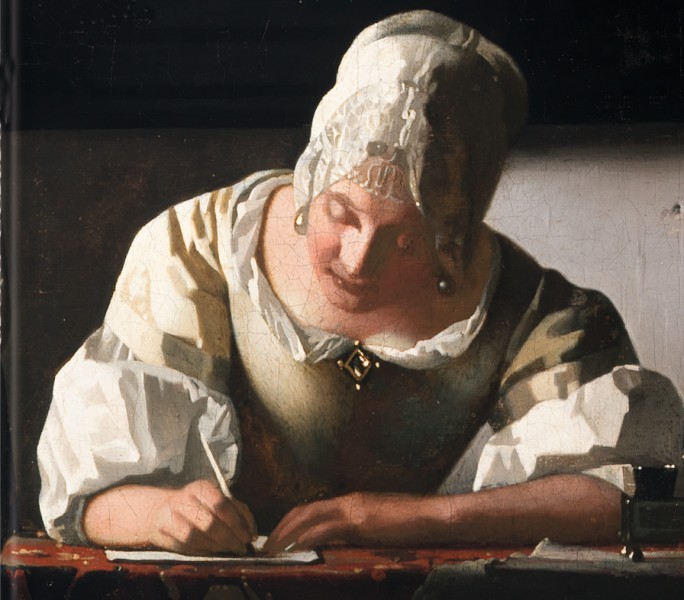
The roundtable explores motivations behind writing through philosophical and literary lenses. The discussion examines how written words convey meaning, ranging from literal communication to deliberate ambiguity. Key themes include: the relationship between language and thought, writing's capacity to deceive or entertain, emotional purposes of writing, and William Empson's concept of ambiguity in literary expression. The panel considers what "animates writing" and creates texts that provide aesthetic pleasure.
Speakers
Watch
Media
Related Roundtables


Transcript
This roundtable gathers novelists, poets, and literary scholars to explore the motivations and compulsions behind the act of writing. The panelists offer deeply personal reflections on why they write, ranging from writing as response to political crisis and emotional loss, to writing as pleasure at the level of the sentence, to writing as a way of discovering what one thinks. The discussion touches on whether writing emerges from an overflow of experience or from a sense of lack, and how the solitary act of composition paradoxically provides a form of human company.
The conversation explores the phenomenology of the writing process itself: living with uncertainty before the next sentence arrives, the role of discipline and routine, the relationship between walking and thinking, and the painful experience of writer's block. Panelists debate whether extensive reading helps or hinders original composition, and whether language can ever achieve the unmediated expression that writers seek. The discussion also addresses how writers relate to finished work over time, the central importance of revision, and the way a completed book becomes an independent entity separate from its author. Throughout, the panelists circle the paradox that writing is simultaneously compulsive and chosen, private and communicative, pleasurable and agonizing.
Show discussion topics
- 00:00:00 Introduction of panelists including novelists, poets, and literary scholars, and framing the question of why writers write.
- 00:07:20 Writing as response to political and emotional crisis, and Byron as an example of writing driven by compulsion and instinct.
- 00:14:38 Writing as overflow of experience versus writing from lack, and the desire to create a body of work as a form of self-making.
- 00:22:06 The compulsion to read as parallel to the compulsion to write, and how reading creates its own reality distinct from lived experience.
- 00:31:31 The pleasure of writing at the sentence level, and the relationship between solitary composition and finding company through language.
- 00:36:40 Writer's block as the inverse of creative compulsion, and Marianne Moore's concept of gusto as essential to the writing process.
- 00:43:57 Living with uncertainty and silence in the creative process, and whether reading other literature helps or hinders original composition.
- 00:50:09 The struggle with signification in language, the impossibility of unmediated expression, and Gertrude Stein's challenge to conventional meaning.
- 00:56:27 Discipline and routine in writing practice, the difference between journalistic and literary approaches to writer's block, and walking as creative method.
- 01:08:56 How writers' relationships to their past work evolve over time, the experience of letting go of a finished book, and revision as central to the writing process.
Show full transcript
00:00:00 I'm Ednner Sessian, director of the Helix Center. Uh I will uh mention today's program and the future programs and then uh John Williams who's a member of the Helix committee will introduce the speakers and then we get going. So uh today's program is on why we write and then on March 7th we have one on where have all the isms gone on the evolution
00:00:32 of knowledge and then on April 18th we have one on medicine and artificial intelligence. So John, >> I'll try to speak a little louder. >> Is that better? >> Okay. Indeed. Okay. Why we write? We have a very distinguished group of panelists today for our roundt conversation. I'm going to introduce them with abbreviated bios. I would uh
00:01:04 encourage you to consult the entire descriptions of their work on the program. But for the sake of those that are watching as we live stream on YouTube, um I will give a brief introduction and then we'll start the conversation. As you know, this is not a format of Q&A or even prepared conversations. It is something of a free flowing conversation among the panelists and we are privileged enough to sort of overhear what goes on. I'll begin with Paul Fry. Paul Fry began teaching at Yale in 1971.
00:01:37 His primary fields are British romanticism, the history of criticism, literary theory and literature and painting. He's also a painter and has written art criticism for art news, the poet's calling in the English ode. His other book received the Melville Kane Award of the Poetry Society of America. His online lecture course, Introduction to Literary Theory, can be viewed as an open Yale lecture course on YouTube. I recently checked it this morning and it has over 1,300,000 [snorts]
00:02:07 views. So for a lecture on literary sleep at night, >> that's quite an accomplishment. >> Wow. >> Um for many years he was executive co-director of the Yale New Haven Teachers Institute and its national counterpart, the Yale National Initiative. In addition to the book mentioned above with a cooler edition and many articles and reviews, he has also written the reach of criticism, William Mson, Profit Against Sacrifice, a defense of poetry,
00:02:38 Wordssworth and the poetry of what we are and theory of literature. Moving on, Eric Lindström is a professor of English at the University of Vermont. He teaches courses across literary studies and publishes scholarship in the areas of romantic and modern poetry, [snorts] literary theory, ordinary language, philosophy, and on the novels of Jane Austin. He's the author of over 30 essays and reviews and editor of two scholarly special journal issues, Stanley Cavell in the event of romanticism and ostensive movements and
00:03:08 the romantic arts. He's currently co-editing for Routlledge, an historical companion on lyric in the long 19th century, anosed new modern language association volume on teaching romantic poetry in the 21st century. Joe Luzy is uh the Asher B Edelman Professor of Literature at Bard College and the author of nine books including the recent The Innocence of Florence, the Renaissance Rediscovery of Childhood from Norton and Bacelli Secret, the lost
00:03:39 drawings and the rediscovery of the Renaissance. Both were New Yorker best books of the year selections and Buchelli Secret was also shortlisted for the Fi Beta Kappa Ralph Waldo Emerson Award. Other books include Romantic Europe and The Ghost of Italy, A Cinema of Poetry, My Two Italies, and In a Darkwood: What Dante Taught Me About Grief, Healing, and the Mysteries of Love. It's a very moving memoir actually, which I recommend highly to everyone. Honor Moore is a prize-winning
00:04:12 poet and memoirist living and writing in New York City. A termination 2024, an account of her pre row abortion and how that act of resistance shaped and allowed who she became, was published by a public space and was a New York Times editor's choice and appeared on best of the year lists at Publishers Weekly and the Boston Globe. The audio book will appear next month. Our revolution, a mother and daughter at mid-century from 2020 was published two days before the co 19 lockdown and its
00:04:44 book tour was one of the first conducted over zoom a zoom pioneer as it were. She has many more publications which I encourage you to consult as well. Elizabeth Berkeland is the author of A Northern Light in Province, published last year by Random House, The Runaway Wife, and The Dress Maker with additions in the UK, Germany, and Russia, and several film options. Prior to writing novels, Elizabeth was the first was was the personal finance columnist for Cosmopolitan magazine and a full-time
00:05:14 freelance writer for national magazines, including Glamour, Self, Victoria, Working Woman, and Institutional Investor. A graduate of Brown University, she studied comparative literature, which included a semester at the Serbon, Elizabeth has served on the boards of the National Humanities Center in Research Triangle NC, and the Center for Fiction in New York. And finally, last but not least, Michael Frank's essays, articles, book reviews, and short stories have appeared in the New York Times, the Wall Street Journal, The
00:05:46 Atlantic Slate, the Yale Review, and many others. and his fiction has been presented at symphony's space selected shorts celebration of the short story. He served as a contributing writer to the Los Angeles Times book review for nearly eight years. He's the author of what is missing, a novel and the mighty Franks, a memoir which was awarded the 2018 JQ Windgate Prize and was named as one of the best books of the year by the Telegraph and the New Statesman. His most recent book, 100 Saturdays, was
00:06:16 selected as one of the 10 best books of 2022 by the Wall Street Journal and received a Nathan Notable Book Award. Please join me in welcoming our six panelists to this conversation. So, why we write? Feel free to begin. [laughter] >> [clears throat] >> I guess I might I'm the oldest of nine children, so I [snorts] always seem to begin. Um I guess my first question is
00:06:48 who is we? And um I think there's a kind of cross uh cultural transnational multilinguistic we who write. But I had an experience this week. I teach the graduate program at the New School, creative writing. And I had had this student. I knew she was Iranian. And she looked kind of upset after class the other week and I
00:07:20 said, "Are you okay?" And she said, "Well, not really." And like an idiot. I mean, I was sort of in PR or something. I wasn't. And I I said, "Um, why?" and she said, "My country." And this was two weeks ago. And I said, "I'm so sorry that I didn't, you know, come up with that initially." And I and I said, you know, this class is very flexible. Any way you want to
00:07:52 put that experience into your prompts or your conversation or whatever is fine with me. But I I did think of her in the car coming across town who who is we and that her we would be under more stress or a diff extreme stress than mine or perhaps any of ours here. So >> it's hard to top that. >> Yeah. Well, it's sort of not topping but
00:08:23 it it just >> parallel maybe. Yeah, I mean because that we is also a child who can't express whatever he's living or an old person who hasn't been able to at the end of life to come to some terms with a personal point of view. I mean, I read this study once I thought was so interesting that they sort of measured degrees of peace at the end of life and talked to people who had told in some ways formulated the story of their lives versus people who had never been able to, >> you know, and it's not surprising which one led to a greater peace of mind. It
00:08:55 seems so straightforward, but it's not that easy to make a narrative out of your life, you know, and very hard to do it accurately. Of course, that's a whole other part of the conversation, but >> well, we also raises the question whether or not it's fair to use the word anthropological uh when we want to know. I mean, we we always wonder why our ancestors drew pictures of buffaloos on the walls of caves. I mean, they presumably had
00:09:27 better things to do, but they wasted their time drawing pictures of buffaloos. And uh we ask ourselves why. And to me it's tempting to think of a kind of compulsion uh the bazwand the need to write uh which I don't think I don't think it follows from that that there is then um
00:09:57 an anthropologically universal motive. Obviously there is not. there are perhaps as many motives as there are people although maybe they could be dealt [snorts] with taxonomically. Uh but in any case something and I'm not sure that it needs to be confined to writing although I wouldn't dream of venturing on the topic of music which I feel that I couldn't say anything about uh but I think that it
00:10:29 might extend uh from the scribbling of writing to the doodling of painting uh as uh something compulsory in our nature. uh and uh well might pursue that in other contexts but maybe that for a first contribution. But uh Paul compulsory if I just hear it kind of has a I want to say negative associate in other words not necessarily meaningful
00:11:00 but something that's >> a reflex and instinct do you do you see it as something that could move in a more positive direction or >> Well I threatened to you earlier that I would say something about Byron and I think I think in I mean I could say something about Dr. Johnson who said no man but a blockhead would ever have written except for money. Now that [laughter] that would be that would be another way
00:11:30 of venturing on the topic. But what what Byron does in the first cate of Don Juan is represents Jan's first affair with a married woman named Donna Julia who uh for her transgression is thrown into a nunnery and the whole plot gets a lot like Eloa and Abalard and she writes Jan a letter and in the letter she says I trace this scroll all
00:12:02 because I cannot rest. [snorts] >> I have nothing to reproach or to request. In other words, there's no real purpose >> in what I'm writing. I just have to write. I trace this scroll. And she associates it with being unable to rest as though there were a kind of of overload almost a sensory overload in her mind that needed somehow or another
00:12:33 to be [snorts] u sort of toned down or maybe even emptied out by the process of writing. Uh and uh so I [snorts] I give that as an example of what seems compulsory yet at the same time is I would think positively necessary just as it was uh to for Eloise writing to Abal. >> Well I could say a little bit about that given that I was starting writing at about eight or nine years old. So I it's
00:13:05 always been a mystery why other people just enjoy their lives and [laughter] and I have to write and I did ask my mother about this question recently why we write why I did write and she said your stories in the early days were about this is third grade second grade were about an animal missing something and I was thinking well maybe you know the zebra without the stripes and the they were a kind of jungle book uh the peacock [clears throat] without and maybe it was a way to resolve uh
00:13:36 something that was missing >> or but it definitely and then I was wondering if I became addicted to that back to your compulsory thing that I I needed it as a way of resolving what might be missing but this is a rational mind talking this isn't the irrational mind which is just it's something you have to do and you're you do it but >> if I could just add to that When we got the prompt for this session, maybe this
00:14:08 reflects badly on me, but instead of thinking why we write, I thought the question is why do I write this? So I started thinking why do I write? [laughter] And I really couldn't answer the question maybe just because it's become a habit. It's something that I do. But I I'll tell you a little a anecdote that I think does relate to this idea of compulsion and something missing is that after my last book and now I've had several for the first time I don't know why I took all my books and I put them
00:14:38 on a bookshelf together as in like the little body of work and I felt in a way it was like trying to I think some writers write sort of um out of a lack and then some writers as an enhancement of their life and as an overflow of experience. And to me this these books kind of represent a physical instantiation of something necessary to
00:15:11 my life like a a kind of record. >> [snorts] >> uh you know rescuing from the oblivion of time these experiences. They're set in text and they're there and they feel kind of necessary. Now is that a compulsion or a desire to make something meaningful? It's it's hard for me to answer that. But it does feel somehow necessary. And um there's a physical
00:15:41 embodiment of experience in those books that stand out to me as the author. >> It's possible that if you didn't write, you wouldn't know that you existed. Maybe it's my own pathology, but I I need from all the flux and chaos of life, this is proof that I've done something with my time, to me, and that means something to me. So maybe I I don't know where that comes from, but um
00:16:14 >> I like to think of um [clears throat] writing as making something. I mean, poetry the base is is a we're about making and so is fiction and therefore so is non-fiction. Um, and actually creating. Um, and I actually think of it that way. I I think of it it's displacing something from myself to the world or to outside. And um it
00:16:49 reminds me Peter Saxs uh in his book the English elegy talks about elegy as the mourner creating something to replace what's lost >> and um you know time is lost experience is lost >> childhood >> childhood >> childhood and I mean but as one goes on every every chunk of time is lost >> and Exactly. >> The writing, you know, making something
00:17:21 from it >> makes it less >> um, you know, painful and uh, meaningless. Um, and I'm not talking exactly about physical books, although that's another thing. I'm I'm actually talking about entities which then have an independent life from from me even if I write a lot of autobio from autobiography but it still feels like other other than myself. I'm flashing on this image of Odora Welty who used to uh
00:17:54 rewrite and rearrange her stories by retyping them because there is a kind of materiality even if the books don't forever live in the world but >> there's something about touching language whether it's a visual touch or a physical touch or turning the page touch that I think concretizes this insanity that is constantly in motion in inside you know this chaos >> and I just wanted to add something to that so I resist Uh when people say, "Oh, it must have been so healing to write that book." It's like, "No, that's I mean,
00:18:26 >> that's a different conversation, right?" >> Yeah. I mean, all of that I kind of resist. >> There's there's an element of this that is fierce and almost tragic. I mean, we're talking about loss and then I'm I'm finding myself drawn to writers. a poet James Skyler I'm working on and I'm not a Stein expert but I'm sure we all had things that we somewhat excitedly and frantically grabbed from our libraries when we got this wonderful unanswerable prompt for which the audience would be equally great respond and says certainly
00:18:58 me and I picked up Stein's how writing is written um you know which is a conundrum of a title but I also was looking for an answer and in one of the pieces in there I forget which one it was one of the lectures in America Stein described, I'm assuming, writing, um, as the having of everything that she had never had. >> And also that was a description of America. And it was a witicism like the famous overly famous there's no there there >> right >> in Oakland. But it was also something
00:19:29 about a word that for me at least could get a little medicine because I'm not in the digital humanities and I'm probably pointed backwards in time just as a person but the sense that like virtuality is something that literature and poetry and and maybe fiction have have always kind of provided us and it's like non-tragic like it's not an oxymoron for Stein to say that their writing is the having of everything that they had never had >> right >> it's true Um, maybe anthropologically true, but something about the virtuality
00:20:01 of even the material production of writing, it's so satisfying, as Keith says, to write your dreams on vellum leaf. No one can say you're not a poet. Anyone can write their dreams on vellum leaf, he says at the opening of the fall of Hyperion. But even with that physical object, there's something virtual about it. And it is the having of what we've never had. I think especially because writers are >> it's also the recreating of what reality could be for you. So it's this life that you can you can take on so many lives
00:20:33 >> at once. So she could have endless lives really as many as she creates. >> And I guess that's speaking of your P that's what P is after, right? It's never as good as what he recreates. the reality is >> which he admits >> right you know >> it's all um his ideas everything is projection I mean I I've just come through a seven and a half year cycle of reading the whole uh search with this group of >> eccentric people wonderful people and we just kept coming back again and again
00:21:04 the fact that absolutely nothing measures up for him >> it's all in his head it's all in his language you know and that's where his aliveness or his contentment if you could call him content the narrators that is seems to reside in this imagined reality. And it's true for him, it's true for Swan, it's true for so many characters in the book. >> But he also talks about in the first uh volume there's that extraordinary passage on [snorts] reading and he talks about how
00:21:36 um if you live something, you know, this happens this month, this happens two weeks later, this, you know, this happened yesterday, it's He says and it takes the novelist by which he means the writer to uh render this so that the reader can actually feel it. I mean and that's a kind of slightly grand you know it's grandiose but there's also a truth to it. I mean the experience of
00:22:06 reading uh an experience is different from living it and has its own reality. >> There's also a compulsion to read. I mean one [snorts] it's it's it's tempting to say well there's a whole parallel discussion available about why we read the nature of what we read and the conditions in which we read. I mean, I think we've been wise by and large, at least so far, to avoid media history.
00:22:39 And the question, what are what are the circumstances of writing? Are is one using a pen on vellum paper? Is one uh is is one dictating to a typist? Is one oneself typing? uh typing on a computer, dictating to a computer uh and meaningful change among these moments in media history. Possibly, by the way, the answer is no. [laughter] that there's somehow or another uh an
00:23:12 underlying an an underlying feeling of the relationship between what you're doing and what emerges >> that isn't so specifically media dependent. But obviously a lot of people have taken up that part of the issue as well and and and thought about it. But uh so >> I'm curious how many of you keep diaries or journals because to me that's the most immediate way to try to hold experience even maybe not at its most
00:23:42 organized >> unfaithfully. >> Unfaithfully. >> Unfaithfully. But when certain things intense emotions seem to provoke it >> or intense experience sequences of experience. >> Exactly. Yeah. >> Unevenly but intensely. >> In my old age I have been doing a lot of writing. uh I think more or less intentionally not for publication which in a way puts a different spin on the notion of the product uh I've written a
00:24:13 long screed on being old for example uh [laughter] which uh I think has no possible outlet uh I've I've I've just finished writing something called why crosswords [laughter] why crosswords laugh at poetry uh I don't think there's probably a future in a topic of that nature. Uh and so but it al but it brings out um the notion of compulsion that I've been talking about. Why do I
00:24:43 do this if I have no conceivable externalization in mind for it? Uh >> isn't it company? >> It is company. Yes. It's also it's also trying to get to the truth or something that's that's deeper than isn't it something seeking some kind of essence of who you are and >> yes and and also the the I mean in the case of being old well what is that like and how can I know if I don't write
00:25:13 through it in order to perhaps get to the other side of some of the more opaque >> uh uh confrontations in the mirror uh and um in other cases I find that it's a return to things that I have thought about in my publishing life, but that now I'm finding more idiosyncratic ways of of sort of slanting
00:25:46 >> what were more or less respectively organized academic topics. and and so the but in in in all of those cases of course there's continued self understanding uh and as you say I think quite rightly uh company >> I mean one has human company as well but >> I don't know what about you do you keep a diary or a journal a regular writing practice like >> uh only I used to and then Grace Bailey
00:26:18 said don't keep a diary or you'll never write stories. And I thought and and that's when I sort of stopped doing it regularly or poems or you know whatever you were writing. However, >> now I've found the po journals that I have kept to be useful when I >> Yes. Exactly. Right. >> writing about things and then I did there were some significant things happening in my life that I thought oh I think I'll I'll keep a journal during
00:26:49 this period. And so I've done that and I I talk into my f my phone and um >> so it's sort of dribbs and drabs. >> So I keep a diary pretty much every day and I'm like a proletizer with all the young people I know, my nephew, my daughter. I'm like, go write it down. Because the thing that I found is that I just don't have the kind of brain that remembers the texture of the past. The way you will put things down in real time, and you're so unaware of what you're doing because you're just absorbing the atmosphere around you,
00:27:20 making a daily record, political, the weather, your internal weather, what you're reading, what you're wearing, what you're eating, all of it. and it ends up becoming a kind of historical document that can be incredibly useful when you're going back to try to write stories. I think so. I don't agree with all due respect uh with Grace Paley on that one. But but in a way it's almost like it seems like with there's two kinds of writing like there's if you keep a a journal a diary or something a compulsion a personal compulsion and
00:27:51 then if you're writing a book right and you know it's it's not really it's for you and that you're writing it but you're writing it for other people. Um and it's almost like that's the difference when I think of um writing a book for a reader. You know, for example, coming through the scholarly tradition as an academic, I would be writing for other academics. And then the transition to writing for general readers, you get into a a dialogue and a conversation and
00:28:23 it's kind of an anonymous one because you don't know them all, but there is a sense that you're writing for a reader and it's it's personal, but it doesn't live in under a lock of a diary. I don't >> No, but I would I would venture that any writer who keeps a diary is never 100% sure that what he's writing is private. I mean, let's get real people. you're leaving behind language and >> you know and and you know if you're >> I think there's craft involved even in
00:28:53 the daily entry personally but I mean not not at the expense or exclusion of then writing a book or looking to it as maybe a foundation for a book but I think that if you're >> a practice writer you know on the level of the paragraph you're already hearing what it is you're doing you know the craft comes >> I totally get I guess my question would be this is there is there something that a switch that goes off in your that for example, let's say you're writing a book that's clearly not just for you that >> Sure. because you're in different voices all the time depending on the the genre.
00:29:25 Don't you don't or aren't you? Don't you think you are? >> Well, I I'll ask a question by analogy. Uh if you have some friends that do writer groups and for me I that would just be so alien to go in a group and just write for the pleasure of writing. like I wouldn't because I I don't write for that like I write to produce a book that other people will read >> not as an end in itself and it >> in other words there are people for whom the writing process is a wonderful
00:29:55 experience and that that's their >> their endgame and I admire and respect that but that's a mindset that for me is is hard to get into. I don't know how the rest of you feel. I I think that's a great question and as a so I'm I'm like a poet mon or you know whatever like I I stopped writing poetry and I went to graduate school. Um but one of the feats of being a employed academic who writes is to somehow keep that person alive kind of not so
00:30:26 secretly often in the rejections I get but still like that [snorts] that writer is still alive. Um, they're not dead in me, as Cridge sadly said, uh, he felt they were. >> And, um, what am I getting at? >> I think I've never I've never understood the audience thing. And I think that the question about um, oh, I've lost it. I've really lost it. But the the question about that basic
00:30:58 writing for another um has always been a bit of a ground zero leap for me. And so it's really intriguing to hear others speak about it. And now I found it again. The reason I lost it is because it's about other people and other minds. And I was thinking about >> poetry in particular, something that you you imagine there's a leap almost into song. this metaphor conceit rarely true true of George Herbert [laughter] or Bob Dylan or whatever but like there's that sense that
00:31:31 I couldn't imagine even in my own throttled academic pros writing the next sentence without pleasure writing for me is very >> pleasuring even if it's not pleasuring to my reader or whatever [snorts] >> and so I think of that as the poets we have going and one of my questions for the group honestly for all of us as human beings is like how do How do you judge your own writing? Is it pleasure that gets you from one word to the next or one thought from the next? Or is it, as you're saying, Joe, something else that really is truly anchored in an audience that you feel
00:32:03 like you can confidently reach? And even though I'm a academic writer, I have no way to go from one sentence to the next besides pleasure. [laughter] Um, and it made me think of all the different varieties. It honestly made me think of Eve Cedric in this great introduction called Axiomatic in Sedick's uh book about sexuality, epistemology, the closet. And the fir the second of the axioms in axiomatic is there just so many different ways of doing sexuality >> even for people that might be outwardly
00:32:33 described as of the same. You know, I think there are so many different ways of doing writing and whether you take pleasure in it is maybe like the first one as it is for Sedwick when Sedwick is talking about that and it I thought that's that's like too true for me. >> Yeah. >> This kind of brings back what you were saying about company and what what is it about your writing that is company the other? >> Yeah. >> So it the audience in a way is well you're seeking you're you're bringing
00:33:03 out the other in yourself and that other is in a way the company. Well, in fiction anyway, I find that it is a stretching to the other and we all are in a way so unique. So, you're stretching to who you are as the unique >> per being that's that's for me in fiction. It's and the craft comes for me in the rewrite and >> that's like that's like a first draft. >> Yeah. Process, right? Because then there's another >> then there's the rewrite which is
00:33:34 >> then there's the the making, right? There's the Yeah. And just building on that, I'll throw this out to the group. I was talking with a friend a while ago and we just started think he's like, "Well, what do you think are the best novels ever written?" Just one of those questions. And I went down and I sat down. I made a little list and I realized I mean these are like the heavyweights, you know, like um War in Peace, The Brothers Karamatsoff, Middle March, Moby Dick, the usual suspects. and it produced and I realized that all of them had long stretches of difficult
00:34:07 tedious passages. James Joyce's Ulyses, like all of them had areas of inaccessibility that things maybe a modern editor would get rid of. Um, and then I thought they're writing at a different plane. They're not writing for the reader. They're writing in a a sense of they're just channeling their own idea of uncompromising form that is not reader friendly at all and they're still
00:34:38 extraordinary works. They're the greatest works, but [snorts] they clearly weren't written to communicate. >> I'm not disagree. >> Okay, [snorts] >> you go first. I think all of those books that you mentioned, they're creating another world. It's goes back to the thing of making. >> They're making another universe >> u that reflects their belief >> [snorts] >> uh imagining of a universe
00:35:09 >> that we are lucky to be able to enter, you know, 200 years later. >> Also, they're writing for in a different time where there's no other there are fewer other forms of entertainment. A lot of them are writing in serial form, so they're filling weekly installments or weekly expectations. They I think there's a size and dimension component of that. And sure, they couldn't keep that plot up or as taught as it could be in on every page. Ped himself that 125 page dinner party that could kill you, you [snorts] know, but he just was
00:35:39 determined to take us through that dinner party, you know, and he's probably the most supports what you're saying more than anyone because of the lack of checks and balances to a certain point, but they still were published. He still had readers, people had to people passed on them, people took them, people ran with them, people responded to them. So, >> edit edited them. >> Yeah, edited them sort of. Yeah, they edited him. Sure, not at the end, but yeah. Um, so I think I think context is important important there. Our
00:36:10 >> our brains are maybe wired differently now, but everyone is happy when a certain kind of novel of a certain length and breadth and loose baggginess, if you will, comes along and can convince us, you know, and hold us. I think it still has think it's still a viable object to put into the world. So when we uh pursue the uh pleasure and satisfaction of making and uh shaping a world and shaping our experience, shaping the experience that we imagine
00:36:40 in others. Uh I think that in in in fascinating ways we're edging near the opposite question. Why do we fail to write? What happens when we have writer's block? [snorts] When uh the compulsion to write suddenly becomes the inability to write. Uh the uh possible frustration
00:37:10 ensuing on that possible at least temporary relief ensuing ensuing on that. Uh but some form of blockage that suddenly stands between ourselves and the process to which we're not only accustomed but perhaps in some sense um not addicted but but feel the need of
00:37:42 >> and I don't know how many of all the people who write and I you know all the people who scribble scribble scribble scribble a given another fat book a given uh the uh I don't know how many what percentage of those people actually have the uh um uh calamitous psychological experience of writer's block. Um I'm not sure I've ever really had it although certainly have been days when
00:38:14 it's felt like that. Uh but it's it seems to me there's a probable dialectic between the need to write and the inability to write >> because one wouldn't feel the inability if one didn't also feel the need >> as a journalist. You don't you're not allowed to have >> writer's block. you you it's right you can't do it's not you can't
00:38:46 >> but it is yeah it's a discipline I think and even if you if you have that experience I think >> to write even when you're blocked >> even when you're blocked yeah >> yeah I'm I'm thinking of I mean I've already laid out that on whatever dimensions it has like I I feel pleasure in writing um ordinary pleasure but pretty predictable. But then there's this other part of it where it's like even if it's just a notation writing a
00:39:17 diary um for me they're more notational. Um, I like Marie Mlan's got a a great chapter in my poetics that's about notational poetics and ends up talking about haikus but also the hibun which is like the poem and the um the liatures you know the the the pros part um but all art that notational poetics I definitely have had um as a as a writer and a person the feeling of not responding just the simple call of having you know a smell while you're cooking and you get the language for it
00:39:47 or just you know usually just a few words but it could potentially be expanded like bullion or whatever and I just won't write it down or I'll have a dream and I won't write it down and then I believe to the in the muse or inspiration to this extent that if I don't write it down for a couple days I won't get the call as often >> and so it's it's not writer's block but it's that sense of just a very ordinary moment and then if I've said no to it even if the outcome is only just writing in literally this notebook >> um and then it doesn't come calling Mary
00:40:19 and Moore has this great quotation from one of her critical essays. I think it's one I've written the title because it's so wonderful called humility concentration and gusto >> and Moore says yeah the third is gusto the romantic term from um hasllet Moore says the thing is to see the vision and not deny it to care and admit that we do >> and and that's not even a quote about writing but I feel like it gets at the
00:40:50 heart of what I would say about writing which is just like write it down like stay stay with it Because if you say no, it won't come back. The next time it won't come back. And in that sense, it's almost like a relationship going bad where it's like an important relationship going bad where it's like if you don't take care, it >> it erodess >> or like a muscle, you know? I think I think of it as a muscle when there's a break >> imposed by the world or circumstance and it, you know, >> it can be rather hard to reactivate it sometimes. Totally. I think and I also
00:41:21 think I love that formulation about pleasure but I don't know if it's always entirely unmitigatedly pleasurable. I think that you have to experience times of displeasure really or unpleasure whatever that word is. Um >> I think all depressives are better writers than I am certainly. >> There you go. >> All the what? >> Depressive. But um this idea, you know, writer's block, not to defend it as a good thing in the world, but an editor once said to
00:41:52 me, only write a book that's necessary, something that you feel you absolutely, utterly have to write and no choice. And that in those cases, the writer's block tends to not be as strong because it's like an emanation. You're you're just you're pouring it onto the page. Maybe sometimes some books that are written um for the sake of writing don't have that urgency and necessity and
00:42:23 maybe that's when the danger of the block is there or maybe the block is a good damn to keep out unnecessary books. I don't know. It's it's it's been an article of faith for me in that I try to ask myself each time I write a book, do I really need to write this book? I've heard that same formulation both from an editor and from a very experienced Italian writer I know. And I think that's more in the category of compulsion, though I don't not sure I love that term, with all due respect, but I think it's this I remember this editor saying to me, you can tell when a
00:42:55 book had to come out of somebody. And I really I I've thought about my own books, you know, and I'm slow, but they had to come out of me, you know, and I and then um >> this this Italian writer I I know also phrased it differently, but it's like he could he could smell a book that had that kind of urgency to it. And so I think we all know what that means. Like we recognize it. You recognize it when you read it. Sometimes a book that just there's a kind of something happens in it that it has a kind of propulsive energy. It may not be about speed or
00:43:26 tautness, but you could it's like that Philip Roth herang, you know, you can hear this person in your ear who is going to have to talk to you and keep you planted in place for a certain amount of time until you've finished hearing his his or her story. I I wonder if it has to do with thought also, you know, the move following the movement of thought. >> Yeah, that's interesting. Yeah. Or not knowing where it's going. The other thing we haven't talked about is it's as though all this is also, you know, prepared like I'm going to get up, have my tea, have my pleasure, and continue
00:43:57 writing. And really, it's like you have, if you're me, you have really no don't always have an idea of what's coming next. And you have to live in that uncertainty. You have to live in that silence. You have to live in that anxiety. And also find out I think for me one of the pleasures is actually finding out what I'm thinking not knowing. >> Yeah. >> Or what or finding out what happened, >> right? Or how to tell it and particularly writing fiction. You can have a wonderful idea for a novel. But that that's one thing that's five minutes or a minute maybe or five
00:44:27 months. But sitting down and making it building it daily and sustaining that energy that that tension is is an entirely different experience. But I even think from autobiograph something that happened to you >> similarly also it in order to find out what happened to you. >> Absolutely. >> Absolutely. >> Which is odd but writing right. It takes a it gives you a grounding. It it Yeah. You're not creating but you're >> you're establishing your reality. You're you're finding it. You're discovering.
00:44:58 Yeah. >> Well, you are creating it in a way because >> what happens to us is one thing, but putting it in language is another, you know, and putting into language when you're one age and then another after that. Mh. >> You know um Adam Phillips Phillips writing about Winnott once some in some riff of his there said you know it's interesting how we come out of childhood within you think about it with like two hands full of very specific memories that we that you keep returning to all your life. the
00:45:28 memories aren't changing I don't think as much as you are changing and you go back and look at them with everything that you've lived and that happens to me all the time and I'm kind of stupified like why did that thing sink in it was although it was waiting for an older version of me to go back and figure it out and I find that an almost mystical experience that for me is really a core reason >> of why I write I have to say >> the mystery is really big >> and why we all write I mean >> you know um building on that this I was
00:45:59 thinking something Paul said earlier about we're not talking about reading but one thing that comes up whenever we have um we have an MF undergraduate study creative writing and I'm on the board sometime even though I'm in the lip program and we all know this because it's kind of what a lot of us do for a living but writing is one thing that you have to be in other words you can be a prodigy in music right you can just somehow play phenomenally well at 8 or
00:46:31 10 [clears throat] or whatever and not having studied music your whole life or be a a virtuoso in math at a young age. But to be a great writer, to qualify for that label, you have to do a ton of reading, that's sort of the given. We always say to anyone who wants to be a poet or a novelist or a writer, go read a bunch of books. Um, what what do you make of that connection? I throw it to the group. In other words, is [clears throat] is saying why do we write or why do I write
00:47:02 very similar to saying why do we have to do a lot of reading to become writers? That they they they seem fundamentally related in a way maybe not so much in the other arts where you can have a certainly you have to know the history of painting and and music at some point but with writing it's different. It's there's very few, you know, prodigy novelists at at nine years old. >> I think that it it you don't have to read. >> Is that right? [laughter] >> Really? >> I do. I mean, poetry comes out of
00:47:35 children. I mean, I don't think you have to read anything. >> I mean, I think you can I think you need to know how to the language. which I think you know need your own language but I don't I think reading sometimes can hinder the work >> in a way that I think I mean wouldn't it I mean you don't have to read P you don't have to you you can just if you're expressing your self in the most honest way like I don't think uh reading is >> well sometimes once you get going it's
00:48:06 not I mean I was going to say that reading other writers it's it's a conversation I mean I say it on my students, you know, you know, it's a writing is a conversation that began at the beginning of writing and everybody's responding back, you know, we're still responding to Homer or, >> you know, Sophocles or somebody, you know, it so it's a conversation. I and I think sometimes in my own work, I'll wait to read something until I'm sort of
00:48:36 into my own conception, voice, music, whatever. And then I'll say, "Oh, you know, that's very if I remember I should read Jane Austin, you know, or I should read, you know, and then and see how that person dealt with that kind of material." I think the division there might be a division between poetry and pros in this [laughter] one because I think the poets can erupt that that [snorts] way. I mean we have seen a lot of that poets in their 20s and their teens but I think pros is a little bit I think pros might
00:49:07 need a little reading under it. I don't know. >> Yeah. >> Well subject verb object >> a little [laughter] bit like that. Well you you need to uh climatize yourself as fully as possible both as a reader and as a writer. uh with all the ranges and flexibilities of the language you're writing in. And uh I would uh just to throw out another notion uh suggest that there's a possible ultimate frustration
00:49:38 in that that language can signify always signifies from the very beginning in its most imperfect forms signifies and in its finest and most subtle forms still signifies. And the day comes when you say to yourself, wouldn't it be wonderful not to signify? Wouldn't it be wonderful to find some means of expression?
00:50:09 Concerning which there was nothing at stake, concerning which [snorts] one only wanted to say what is there in an unmediated way. Wallace Stevens has a poem that ends where was it one first heard of the truth the 'the' and of course that's still signifying. >> But it's also expressing a frustration
00:50:42 at the one way in which we can speak of the limits of language. >> Language can never not signify. And I think of that as a potential frustration precisely for the virtuoso, for the person most skillfully versed in the possibilities and registers of language. suddenly to come to the realization that the one limit
00:51:13 standing between this person and originality, let's say, is the fact that I can't stop signifying. >> I know Miss Stein doesn't always signify, dare I say. >> Maryanne Moore really got at it, didn't she? Well, and you know the whole struggle of writing a poem is to try not to, you know, is to try to bang your language into a shape that [snorts] surprises rather
00:51:45 than first rather than telling about. >> So it's that a poem is it's not about, you know, >> but I even think that's interesting to try and do in pros, >> you know, because there are different kinds of pros. is I mean there's journalistic pros which is you know about you know it's stu it has its job and I'm always talking to my students about the difference between journalism and creative non-fiction. We used to all say oh what's creative non-fiction. Now
00:52:18 I sort of know what it is. It's applying a certain amount of creativity to what you're writing so that you you know and I I say it's not a documentary so what are you going to do with it you know how are you going to make the the thing and so maybe maybe it's the kind of [clears throat] effort to go against signifying that >> is one of the spurs of writing >> you know of of trying to write well and
00:52:49 the other kinds of m I mean if we really go with this maker thing >> and I love the reminder that fiction is that too >> um >> then ma making and signifying don't necessarily have to right >> you all the other things that crafts people make don't have to signify language stands out as the one that's so embedded in our cognition in our sociality and maybe in in something like species being anthropic loically that it
00:53:20 can't help but having that alignment even if we don't want it. Um that's one reason why I worked on Stanley Caval's philosophy for 10 years out of this sense that we're all just say and that that's the human predicament of being given to meaning. >> That's the other side of that. You're >> right. Yeah, I think so. >> Can you say a little more about that? >> Oh my gosh. Can I say [laughter] >> not 10 years worth, but just >> saying more than you mean. I love that. just well so like here's the biblioraphic comment which is just you know Stanley Caval great uh philosopher
00:53:50 taught at Harvard forever passed away about five six years ago um his first collection of essays which I urge you all to check out um is called must we mean what we say >> and simply the conundrum of how to interpret that or even just how to respond to that um what that's doing what that means um a lot of it is about like the way in which you know We are linguistic beings and and are both find each other and are distant from each other in our language. And um I mean
00:54:22 Freud says the same thing. Our language like overcommits us to others. Think of the unconscious and Freud like we're constantly slipping and giving away our meaning too much or giving away meaning maybe we don't recognize it as ours. And so that sense that like not being able to turn signification off I think is one thing that maybe it's just a certain kind of writing, maybe it's a certain kind of literary theoretical writing, but I don't think so. Like writers want to make things and there's the impulse almost toward muteness or toward just
00:54:52 like making something that stands in the world the same way other objects and crafted things do. And language simply can't do that. It can't not emit, right? >> Like acting. I >> it always gives it away. It always gives away a lot. >> Yeah. I just I find myself thinking about acting because um a performer can convey without so much without using language. It just makes me insane. Like I think it's just not fair because I'm I'm in the process of adapting my first book as a possible play. And I just I'm
00:55:22 so tired of the words. It's like c can't the actor just embody that thing with a few hints underneath, you know, like a little direction like you would do in a screenplay more more predictably, but >> back in the stage, you're back in the world of this need to >> Yeah. >> Yeah. >> That's why somebody >> what >> I think the actor can do certain things without work. >> Exactly. And I'm jealous. I really I look at that sometimes the economy of it, that little twitch in the face that
00:55:54 you will spend like days trying to get a paragraph that will convey that. >> But in a screenplay, you can just suggest that. >> Yeah, you can suggest it. But again, you don't have quite the control you do in a play or in a book. So some of us >> don't love that. Yes. Exactly. >> But that's when we get to the question of where did the oral tradition turn into the written? Like why would they even go there? >> Exactly. >> Because they were doing it all with their acting and their >> well and their story. their coral storytelling and what yeah >> you know Elizabeth just to go back to the point you were making about um the
00:56:27 discipline of writing and the way in which journalists can't afford to have writer's block. I think this is also true for a good many novelists who uh put themselves under comparable regimens. I'm going to get up this morning and I'm going to write five pages, come hell or high water, inspired or not, good, bad or indifferent, and I'm going to keep doing it day after day after day. And there's virtue in the very slogging of this process.
00:56:57 >> Uh, and um, that too has interesting results. But what I would say it's keeping writer's block at bay. [laughter] >> That exactly. Absolutely. Yeah. >> Yeah. >> Yeah. >> But it's a muscle, right? So, I mean, even if you're, you know, even if you're not that amazing young woman skating the other day, [snorts] uh you're still uh exercising the muscle, >> right? >> If you keep slogging,
00:57:28 >> right? And I think Flannry O' Conor said, "I don't know if a I'm going to get a story, but I know if I'm sitting at my desk, I'll be there to receive it." >> Yeah, that's great. >> Yeah. >> And I love that. You know, >> so for just as many writers who are in that modality, Philip Roth every day, Graham Green, 500 words. Then you have Virginia Wolf who will finish a novel and have a nervous breakdown, you know, or we'll go to France, you know, and we'll go away from it for a while. So,
00:57:59 in the same way that there's not just one book to write, I think there just not one way to go about writing them. >> Are there writers that have block and writers that have boredom? I was reading I mean John Ashbury of course talks about this is you know or or actually I was reading a great collection madness rack and honey um and boredom is really important to that. I have a note on that if you want to hear it. But it, you know, like this sense that like, yeah, welcoming boredom and and boredom, boredom being, of course useless, of
00:58:30 course it's got to be wasted, but being like, and I wonder if that's just a different mo mood from writer's block, or if there are different writers that make use of boredom in ways that just are kind of therapeutically better or maybe even artistically more generative than writer's block, which to me, the genuine thing about that is that By definition, it's not remunerative, right? Like it's just block. You know, it it even makes me feel kind of yucky to say it because it has such a
00:59:01 >> horrible connotation. >> Yeah. Yeah. >> What do you mean um boredom? I mean, exactly. >> Yeah. I can't get my head. >> I don't know. I want to piggy back on what it's Mary Roful and and John Ashberry that I'm trying to piggyback on here. But like >> I mean, I guess I don't know. Like >> Well, what do you mean? Being a writer is not a purposeful even if it is uh our mode of employment like in various ways like it is it is decoupled from most util util most utilitarian or directly
00:59:33 utilitarian forms and so it's already kind of linked to like idling and boredom >> but do you mean they try they try to write boringly I mean what do you exactly >> you hit a boring patch or >> what I sort of mean like very practically is like I was reading in this great madness rack and honey essay by Mary Rufol and she quotes a grant application. I'm assuming this is actual where she writes, "This sounds like it was from a bygone era. I need a stretch of uninterrupted time free of distraction so that I can be open to distraction and be bored so that I can
01:00:06 you know >> that word that use of border clear >> that's different. >> It's more generative. I well necessary. I don't know generative word but I think there are that this thing happens sometimes that I've I've used to torment me but I've come to make better friends with it with some experience which is that you will sit there are days you will sit there and it just won't happen and it won't happen and then I forget that I shouldn't be sitting there because the minute I virtually the minute I get up and leave then something
01:00:37 comes so I think that this that but that time of mobility sometimes can be incredibly um useful. It's Adam Most did this book about he interviewed a hundred different creative people and asked them like where do they get their inspiration like a very very basic sort of question but one one recurring theme I heard him talk about this in a podcast was that um when people are in motion they find the inspiration or the problems I don't know if any of you has had this whether walking or swimming or bicycling not
01:01:09 driving >> trains >> trains okay I thought it was a more active like something in the physical But you got all that stuff coming >> really >> coming beside you. >> Why? Why moving? It's a very interesting a very interesting question. >> Well, you're moving your muscles and that changes your >> out of your head. Maybe you're out of your head a little bit, right? >> Not on a train. You're not really moving your muscles unless you're pacing the >> your eyes are [laughter] your eyes are scanning. >> Rapid eye movement. I think in the case of Wdsworth who wrote most of his poetry while walking uh the poetry is so
01:01:42 heavily amic and walking is in some sense amic as well uh that I I think he found a rhythm >> uh uh and of course this is this we're talking about a writer who didn't write he ran home and wrote down >> what he had composed without pen and pen while walking. >> Uh and uh Dickens the same, right? He was creating his characters and
01:02:13 >> yeah, >> he was a night walker. >> Right. Right. >> He was >> the night is an interesting time. Like Cynthia Ozac for a long time, I think, wrote all night long and then slept until noon. I think that's fascinating. I don't have that metabolism, but I I sometimes feel like there might be a secret there. >> But I I think the key is whether it's you're a night person or a morning person. Most writers I talk to have a ritual and you get into that. What's Gerta's famous line? Do not hurry, do not rest. You're kind of
01:02:43 >> you're working. You're working at a set time. You go back into the real world. You come back to your desk and you're within that rhythm. You find your your writing space. But I just being person I don't I write every morning first thing just for a few hours and that's when my brain is freshest and it's the hard work of the day but it's only a few hours. It's not and most writers I talk to don't write eight hours a day. They write three or
01:03:14 four the most. >> Falner used to say what am I going to do with the rest of my day other than drink. You know I mean that would justify his alcoholism. I can't write all day so I have to start drinking. But there is something >> same with the painters. [laughter] Yeah. >> Yeah. >> Something about that rhythm of work and nonwork that I think is >> we've drifted away from why and now it's how. I mean >> it's like how is so much easier than why >> but there's later in the day there's the editing process and the Yeah. So you're are you talking about the generative
01:03:44 process? >> Can we go back to Wsworth for a second? >> Sure. Um, [snorts] so Wdsworth wrote his great stuff, most of it before he was around when he was a young man. >> The great decade takes you up to roughly [snorts] 30 or 30. Yeah. And then there were long decades where he still produced work, but it wasn't he did work on his autobiographical poem during that time, but
01:04:16 the muse wasn't there. So you can have all the rhythms and the regimes. Um, but you have to somehow still be inspired. I think you have to shift your paradigm or your or something. You have to kind of just decide to start again or >> say I'm not writing out of that but what am I writing out of and kind of figure out what it is or something.
01:04:48 >> I mean I think writing is this is very podcasty of me. writing is very like costly like it's resource costly even though it's sort of what we do just as people like I think it burns a lot of calories right and it writing well probably like um I mean you guys tell me but like writing well probably exhausts or at least externalizes like a key part of [snorts] a creative self for that time and it's a
01:05:18 it's a costly >> I think there's there the other side is maybe the um the relief factor that we haven't talked about relief of burdens, traumas that that writers often write. That's the reason they write to >> to and that would be sort of um the opposite in a way. It would be rather than costly, it would be re reconstituting and re um a huge
01:05:50 psychological do you think? >> Sure. [laughter] >> Yeah. No, I mean I'm also wondering at so there are writers maybe Werdsworth was one of these although arguments we made he's not. just we don't have the taste for his very productive interesting later work. But like, you know, if you're writing to externalize something that really kind of made you and then you get it done, that could be a once in a-lifetime thing. And then there's like the mystery of that that recharge of energy, right? Like new
01:06:20 energy. I've been thinking about Frank O'Hara being in the city, you know, like that just that solar metabolic mystery of the the recharge of energy for um for writing and I think different kinds of writers have different um temperaments for those things >> and each project might do something different. I mean Virginia Wolf said famously that she was haunted by her mother's death. She was 13 when she died and she was like 40 when she published
01:06:51 to the lighthouse and that was a long stretch of >> wrangling with and living with and that she stopped being haunted by her afterward. You know, is that the model for all of us? I don't know. I don't know if it quite works like that in the real world. It seemed to for her, but then she could write flush. You know, it's like they're they're they're like different species altogether. And didn't the book that didn't the didn't the book that cost Wolf the most that she finished just before she died >> not you know end up not being one of her
01:07:23 best like that sense of like the expenditure didn't align with the aesthetic value. It's really interesting. >> Well that was but that was sort of the whole I mean it was the years right? >> It was the years. >> I thought it was between the ax was the last book. >> What? >> I thought it was between the axes. Yeah, that's not unfinished. I think you're right. >> Is that the unfinish? >> That's a great book. So I think >> it's a masterpiece. >> But there was the years which is sort of almost a more Eduardian book. >> I think that was earlier on. Yeah. >> Okay. >> Yeah. But yes, of course the effort that
01:07:55 you pour in doesn't necessarily going to relieve you of I mean there's something to say about it could kill you. [laughter] >> Yeah. Say again. >> It could kill you. >> It could kill you. Yeah. >> I have really found that to be true that certain conflicts are resolved. I don't you know >> like do you think back about your childhood and do you think of it in the does it weigh on you the same way? >> No definitely not. >> Yeah. >> You know definitely not. >> Yeah. Was it in the writing of or in the world reading of >> uh or both?
01:08:25 >> No it wasn't in the world reading. It's in the writing. It's in the figuring out what happened and making something of it. And it's phw. I now understand that I don't have to worry about it. >> And do you think your understanding of it is definitive? Sorry, as a memoir writer, I always have these questions. >> Uh I whatever definitive means. Maybe maybe uh you know um you know if you wrote a book 30 years
01:08:56 ago then you might write it differently now. But >> or does it depend where you are in your life? Because as I've gotten to the age of some of the people I've written about, I've come to see them slightly differently, I have to say, which means maybe one just never publishes anything. And like Harold Broadkey just keeps going back and writing and writing and writing until you get it. >> Well, I just sort of look back. I mean, I my first non-fiction book was out about my grandmother who was a painter. That's right. >> Who died when she was 86. I just turned 80. That's different from starting a
01:09:29 book when I was 35, 36. >> Would you write that story differently now? >> I don't think maybe I'd write it. >> Okay. >> I mean, I really wanted to understand in the case of her, I wanted to the the moment that made me write the book was that I I knew that she had stopped painting and I said, "Why did you stop?" >> And she said, "It got too intense." And it was like, "Oh, I have to find out what that
01:09:59 >> means." And I did. >> But it it seems to me for why we write also applies to people who are not writers. >> So sometimes I may jot down an experience that I've had and it's not for anybody else. is just an experience and I feel I should as opposed to other experiences I should
01:10:29 have write down that experience >> why >> I have no idea just some experiences and the same I think occasionally I have certain emotions and I say I'm not a poet or anything but I write a poem I write 10 lines five lines >> and somehow I feel it communicates the emotion I'm having >> and then I put it away I may find it five six years later in one of the drawers course but there's no other purpose and then there's another way of writing which is uh in my field uh I have
01:11:05 started for some years questioning Freud >> so I wrote couple of papers to present to uh psychoanalysts but then I decided what why did this happen and how did this happen what was the evolution and so I started writing an actual book where which is called uh which will come out soon but it's called the end of Freud with a question mark. So not I'm not a writer. I don't have
01:11:37 any other uh you know psychoanalyst working in my office. So there are other impulses that make one right. >> And I think when Paul earlier was saying he writes but he doesn't write for anybody to read it or anything. It's part of that you have experiences and you want to record them. You just want to put them down. I think what's interesting about that, going back to the question of memoir, um, when I think back to a very personal book I wrote about how Dante reading the
01:12:08 Divine Comedy helped me get through a death of someone very close to me was that [snorts] it it did the book wasn't written for therapeutic reasons or anything like that, but it was a traumatic experience and writing the book was unbelievably challenging. because you don't want to really go there and you but if you're going to write a memoir, you got to go there. You got to lift up the hood and start tinkering with the engine and you got to let it
01:12:39 fly or don't write it. Um and after a lot of false starts, I wrote it and I really wrote it and to the best of my abilities, but and it was a way to deal with this death that I couldn't have done just as a human being, right? I wrote it. That wasn't why I wrote the book, but it became sort of part of the process of of grief and mourning and then it was over and it no longer
01:13:09 belonged to me, right? >> And it's a strange feeling. It's like >> then it's like a part of you dies along with a book and you let it go >> and you just it's it exists. >> So is that >> it exists outside of you? That's posit. It sounds negative, but maybe a positive side. And emptying out is cathartic or purgatorial. >> My when my father died, uh my mother who was uh poorly educated
01:13:41 because when she was a young girl, her mother died and they pulled her out of the school to take care of the younger siblings. But so she was never I never saw her write before. When my father died, every day she sat down and she wrote about her life >> from early on through the relationship with my father until his death and then she was fine. >> Similar was a way to deal with the grief
01:14:12 at the moment. I'm reminded that we have company here as well and so I thought maybe with the time that remains we could open it up for some questions if people in the audience would like to um approach the microphone if anyone has a question for the round table to consider. Oh, here we go. Is the microphone on already? So, um,
01:14:44 nice and tall. Good. [snorts] >> Great. >> Uh, so all of you obviously write and make a living writing. I teach. Um, I'm interested in for the rest of us, we all in our own lives communicate and we write. we talk and you know maybe if you're an actor there's other ways to express but um I'm just struck with how
01:15:14 damn hard writing is at the professional level. I mean just no question about it. Um, and then I think of my own life as just a regular person and I text. Um, I write reports, I read terrible writing things that have been put together and it's just so bad that you know there's there enormous gap. Anyway, um I actually was uh my undergraduate I was an English literature major and I have thought many years uh you know why did I
01:15:47 major in that? I don't regret it. It was great. Um, I think part of writing is you got to read good stuff. >> Um, but writing also takes work and practice. >> And um, you know, this I'm just in appreciation to all of you. You know, if you can't write well, you're you're out of business. You know, you're out of luck. Um, I am a graduate of Mr. Fry's alma mater and I do remember that uh as
01:16:18 a student you know we were we the main purpose was read the works and what does it mean and that's what the teachers you know worked on but I the whole department didn't let you off the hook yeah you got it right but this could have been written better and [snorts] it but it but it wasn't like you just got to you've got to do better it was more of a a nugget of it. You should want to write better. So, I thank you for all of that.
01:16:49 >> Thank you. >> That's beautiful. >> Word. >> You could always write better. >> Panelists. >> I don't want to create any feedback. Uh, as a side note, this panel made me think of a Kafka quote that was something like a writer who doesn't write is a monster courting insanity, which but um, so I know the guiding question for this panel was why we write, but uh, we can't really separate that from
01:17:19 writing being an outcome driven process. I think that all of your answers have kind of gone to we write towards the having this product, right? So, and I get the feeling that your answers will be very different coming from each of the panelists. My that begs the question for me, what constitutes good writing and if we are to write, is it always to produce good writing or is it sometimes just for the sake of writing? >> Great question. >> Good.
01:17:50 >> I would say uh from personal experience that it's not always to produce good writing. I hope it's not anyway. uh but be because I really do feel very strongly that there's something mechanical built into the kind of need that I'm talking about that um when you use words like scribble or doodle uh you're saying something about the writing process which is not irrelevant uh but um has
01:18:23 and and and that's of course where media history may come in too because needless to say uh at different periods in the history of writing we have had different orientations toward the gesture itself. But I do think very strongly that when we write, we often write in hopes of excellence. >> But we also write maybe even in those same moments and and possibly in other moments too simply because we have to
01:18:55 write. Also, a lot of bad writing precedes good writing for me anyway. I mean, I throw a lot of things away. I think that's very healthy >> or necessary. Is it time to quote TS Elliott? Go ahead. >> Whenever I think I've written a particularly fine sentence, I throw it into the fire. [laughter] >> I do think there's another side though in the sense that um the first gentleman who spoke mentioned that we do it for a living and and we write books and whatnot. Um there is the professional
01:19:27 side of writing where if you work with a rigorous editor, if you you know you you spend hundreds and thousands of hours on a book, um the outcome you expect it to be at a certain level and it's I mean I'll make the I played tennis my whole life. I love tennis and I I can grade myself progress over the years, but writing, you know, I'm not a pro tennis player, as much as I'd love to be. Writing for publication is is you
01:19:59 have to get it to a certain point and um that's a demanding process but it's a really meaningful one when you have lifted the pros so to speak up to the level where it can be considered publishable and wellreceived. >> A related question might be why do we revise? >> That's that's the fun that's the fun part. Yeah, I someone said the writer block you someone said you have I have to put on another persona when I when I edit
01:20:30 because it's such a different >> process. It's taking out the creative process and and it's for me I I don't I don't like it that much. But it takes double the amount of time actually. >> That's basically the answer to the question is revision. Endless revision. >> So much you can't count. You can't count and it's hard to describe how much revision goes into the finished product. >> Back to Virginia Wolf, the last thing she wrote before she died was an essay. There were seven drafts found in her
01:21:00 drawer the week that she committed suicide. >> Only seven. And then there's Mr. Roth who says, you know, it's the only profession in which experience accumulated experience means nothing because every time you start, you're starting over. And that really is true. I think that's a little bit playful maybe in his case, but I there I do understand that in the deepest level you are looking at this void and trying to figure out what story is going to make its way into it. And the stories
01:21:31 you've told before can only help to a point, I think. Well, and then there's the syndrome of starting the next thing and what you're really doing is going on with the last thing, you know, in some way and you have to Oh, no. I have to start again. >> We have another question. >> Two more. >> Okay. Uh, I'm a painter and a historian and I used to write and I was perplexed
01:22:05 by how do you choose which art form uh to endeavor in if they all appeal to you in some way and I found at first with words that I had a vocabulary. I had a given vocabulary. I wasn't going to use it literally, but I found with painting, especially in this time and especially in the 20th century, >> that the vocabulary is to be found. Of course, it's part of a long tradition. But the terrifying thing in painting is
01:22:36 you have a white canvas and you start and you start without the given, which you have. You have the given >> and of course there is a tradition and we all belong all painters belong to a certain tribe and they follow but still there is an element of experimentation and risk and failure if you wish that word but uh uh in terms of what you're going into. So I'm very fascinated to hear all of you speak about the nature of writing and I'm thinking about
01:23:06 painting and I'm thinking you're lucky in some ways you have this given vocabulary. Of course you have to have talent to know how to sift it and change it and colle and various things but uh it's is interesting to see and we should have more interdisciplinary work because painting is sort of in between in some ways maybe even more music and to some extent poetry writing has other analogies and I was thinking another thought too a lot of contemp painters of
01:23:37 the last 50 years have spoken about painting as a religion, a new religion. And often they'll put their easel up on their painting. They'll paint their easel as the god because the creative act becomes a kind of spiritual revelation. And there's also in painting and this true also probably in writing a sense of tribe. You belong to certain pictorial traditions. Keep looking just as you keep reading. So it's very interesting just to hear this process.
01:24:09 But if you go into then the painting process, you can see a little more about how you are really fighting against the unknown. >> I just that's Yeah. >> And I know Paul, you are a resident writer and painter. Are there anyone else here in the group who does? >> I just wanted to say I'm always envious of painters because I think, oh my god, uh, a a canvas and paint and I don't have to worry about all those words. >> [laughter]
01:24:39 >> a lot more to worry about. >> Now, I'm sure I'm that's a joke. >> I'll just I'll just say one thing. Uh expressing the frustration of being uh a not terribly uh strong painter. Uh and that is that I I do mostly abstract painting and I maybe in the tradition of what I grew up with, which was abstract expressionism. And my experience, the frustration is
01:25:11 [snorts] that once I have covered the white canvas, I found I find myself surrounded by conventions that I can't get away from. Compositional choices that I wish could be made in a different way, but I can't figure out how to make them in a different way. So I find myself perpetually falling into what let's say cliches of composition >> and that's a frustration that I feel
01:25:41 much more strongly in painting than I do in writing. It may be that I'm a better writer but I do think it may reflect on a difference between the two media. >> Well I think when you think you go back to conventions uh in painting uh soon as you get to that point about getting through that. In other words, it's not what you do in the beginning. It's what begins to happen that you don't know. You have an idea in your head and then as you're
01:26:12 working, other things happen and you you have to take those things on. So there's a tremendous freedom once you pass that bridge. You have to go through the bridge to get to the point where you have to then take take accident. Now I mean I don't know again with writing there is a certain amount of accident. There's a lot of painting because with material you're dealing with material that you c you can't completely manipulate. >> Uh but I am interested in the idea of abstraction in painting and how would you relate that to the world of writing?
01:26:44 Would there be any equivalent? So, one thing I'll say, and it's related to um the the the conversation with painting, a challenge as a a teacher when you're teaching literature and teaching writing is that the students know the language. In other words, if so, they say, "Well, I already know how to write because I already know how to use English." They wouldn't say that about painting, right? They'd say, "I don't maybe don't know how to draw. You're already human. I don't know how to sculpt." But um I think writing is actually it cuts both
01:27:15 ways. I actually think a true writer is a knows how to strange himself from language where it's no longer familiar where it's no longer just communication. Like if you think of like the opening of Ulisses, a stately plump buck mulligan bearing a bowl of lather. It's kind of English, but it's like English broken down and reconstituted. And there's something alien about it, but it's
01:27:45 powerful and it works really well. And it's it's no longer just >> communication. It's no longer email. It's text. It's you have to be able to hear language the way a musician hears. >> It's abstract. >> Yeah. There's an abstract quality and there's a a music to it. And I think that's about estranging yourself from languages communication. >> We have I'm sorry, we have one more question. >> Thank you. Um I've enjoyed the conversation immensely, but I may be
01:28:17 hallucinating while I've been sitting here for the last hour or so, but there's a very large elephant in this room and its initials are AI. >> We haven't heard anybody say that. >> What's going to happen to all of this? as we >> seems like in Asia really enter into this new [snorts] world. >> Yeah. >> Excellent question. >> You have to come to the round table. [laughter] >> We'll have to have a um a right to
01:28:49 write, right? [snorts] Like we we've got these new movements now that are about things that for which political space needs to be open like the right the rights to maintain equipment you know the right the rights to having commons of any kind. We'll have to have a because at least I think in this room it's not just about accomplishing a goal as quickly as possible or sort of um what's the word? Offloading. We don't want to offload that labor [laughter]
01:29:21 or that pleasure. Um, >> it's a good question though because it's threatening. >> Oh yeah, >> it's it they're doing it so well AI. So it's a very >> one of the points of the panel was that you often don't know what you're thinking until you've written it and what happens when that initial >> right >> struggle >> is taken away for you even just in terms of the >> idea generation or something. I'm sorry. We have one more question. >> Thank God to stay away from my AI. Um I
01:29:54 grew up hating to write. Um, and I, um, when it came to writing my dissertation at UC Berkeley, I, um, had to dictate it into one of those little cassettes because I couldn't tolerate sitting there with my Smith Corona um, trying to type something. Um, and I think that was the only way that I could get through that first chapter and the second and the third. Um and it was I continued to
01:30:28 hate to write through training here at the New York Psychoanalytic Institute. Um and I um only I guess at the age of about 75. um loved started to love to write and that was when I started taking a memoir class >> and um for the first three sessions I could not write anything. I just listened to what other people wrote and then I took my
01:31:02 little laptop out into Central Park and I sat there and it was the first time I'd ever taken my um laptop out of my apartment and I sat down and I wrote just spontaneously and I handed it in and I was given a great deal of praise and uh admiration from the my fellow students and my teacher and suddenly I love to write. [laughter] >> What's the difference there?
01:31:35 >> Does hers? >> Oh, okay. Sorry, we have time for 30 seconds. >> It's kind of a a lightning round question. There's been a lot of um great references um of different works and quotes and and things that I think have >> made this conversation come to life. So, just a quick lightning round. I'd love to hear everybody kind of mention whether it's a quote or a moment or a book or whatever the trigger might be that is is most inspiring. Just kind of a quick uh tidbit is >> with all the depth and knowledge at this
01:32:06 round table be lovely to hear. Thanks. >> Last recommendations >> me first. >> Uh P >> commit seven years.5 and uh do it 25 pages a week 10 months a year. Yeah. >> Oh my gosh. Well, I' I've been falling in love with James Skyler. Um, so I'll recommend Skyler again, but here's a great quote from Frank O'Hara, and I don't know if he means this straight up, but I take this. Uh, he writes that
01:32:36 quote, "The crossroads where what I know and can't get meets what is left of that I know and can bear without hatred." >> That's Frank O'Hara. >> That's good. Elizabeth. >> Uh, well, I'm I'm in a I'm volume three P right now, but also um but James Joyce has always been a a touch point for me. >> So, >> I got to go with Dante. Uh, no surprise. I think the um the Divine Comedy, but the beautiful opening of Paradiso 25
01:33:10 >> where Dante steps out and says, I'll paraphrase a little bit. Should it ever happen, should it ever come to pass that this sacred poem to which heaven and earth have both set their hands so that it has made me lean for many years should overcome the cruelty that bars me from the fair sheepfold where I slept as a lamb. Then I will return at the baptismal pond of Florence as poet. >> Nice. >> Beautiful. >> Pizzas to Autumn, >> which I think is a miniature divine
01:33:42 comedy. 33 lines. I say no more. Right. [laughter] >> To the lighthouse. Virginia Wolf. To the lighthouse. >> I've now I I don't know how many times I've taught it. Maybe 25. And I I it is so perfect and beautiful. >> Yeah. >> That I highly recommend repeated readings of it. >> And I would recommend that we read the writings of our panelists and give them a warm round of applause. Thank you for questioning.
01:34:12 [applause]