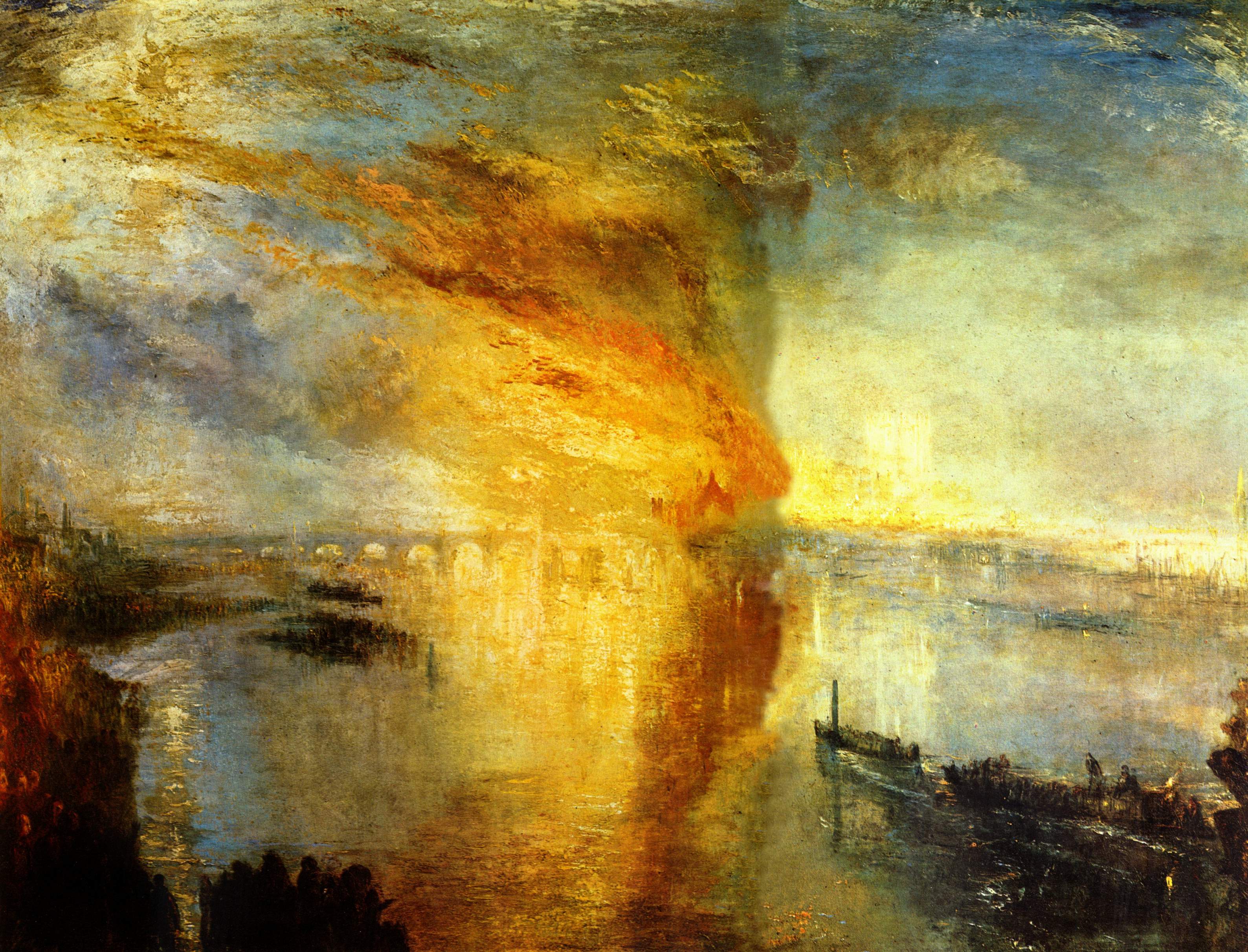
The roundtable examined how the sublime evolved from pre-18th century understanding of "beauty and greatness beyond measure" through Edmund Burke's foundational work. Discussion explored awe, the emotion classically associated with the sublime, and its psychological dimensions. The event considered how the sublime manifests differently across visual arts, music, religious experience, and nature, drawing on philosophy, religion, psychology, and neuroscience to distinguish between pleasure and sublime ecstasy.
Speakers


Watch
Media
Related Roundtables



Transcript
This roundtable on the sublime experience brings together literary critic Paul Fry, conductor James Judd, cognitive literary scholar Alan Richardson, and philosopher Sandra Shapshay. The panelists agree that the sublime is a genuine experience characterized by a distinctive mixture of being overwhelmed and feeling elevated, though they differ on its precise nature and sources. Judd speaks passionately about music as the most direct path to sublime experience, particularly through Beethoven, while Fry emphasizes the literary and poetic sublime rooted in Romantic traditions from Wordsworth to Shelley.
The discussion traces the concept's theoretical evolution from Longinus's ancient treatise on rhetorical transport through Burke's physiological account to Kant's distinction between mathematical and dynamical sublimity. Shapshay introduces Schopenhauer's contrasting theory, in which the sublime involves temporary release from the will and in which music holds a uniquely privileged position as a direct expression of metaphysical reality. A significant tension emerges between sublimity as momentary disruption versus sublimity through sustained repetition and accretion, illustrated by the side drum passage in Shostakovich's Leningrad Symphony.
The panel also addresses criticisms of the sublime as patriarchal and elitist, noting Sappho's poetry as a counterexample of embodied feminine sublimity. Audience questions push the conversation toward the sublime's democratic accessibility, its relationship to ecological crisis in the anthropocene, and the spiritual dimension that several audience members feel the academic discussion has skirted. The roundtable concludes with reflections on the sublime's return in contemporary discourse after decades of suspicion toward aesthetic experience.
Show discussion topics
- 00:00:54 Opening announcements and introduction of panelists Paul Fry, James Judd, Alan Richardson, and Sandra Shapshay for the roundtable on the sublime experience.
- 00:06:18 Each panelist offers their definition of the sublime, agreeing it is a real experience characterized by a mixed state of being overwhelmed yet elevated.
- 00:14:12 Discussion of paradigmatic examples of the sublime, from mountain vistas to Beethoven's Ninth Symphony, and whether the sublime requires form or formlessness.
- 00:22:34 Historical theories of the sublime from Longinus through Kant, examining the distinction between mathematical and dynamical sublimity and the role of rhetoric.
- 00:29:51 James Judd discusses Shostakovich's Leningrad Symphony and the distinction between sublimity arising from repetition and accretion versus sudden disruption.
- 00:34:31 Exploration of what exactly is felt in the sublime experience, the relationship between the object and the observer, and the role of fear and safety.
- 00:48:40 Comparison of Kant's and Schopenhauer's theories of the sublime, with particular attention to Schopenhauer's view that music uniquely accesses the metaphysical will.
- 00:57:34 Debate over whether the sublime can exist in film, program music, and framed artworks, and whether Kant's restriction of the sublime to nature holds.
- 01:09:33 Audience questions on class and the sublime, the anthropocene and ecological sublimity, peak experiences in everyday life, and the relationship between the sublime and humility.
Show full transcript
00:00:23 s [Music] [Music] [Music]
00:00:54 hi everyone if I could have your attention for a brief moment so we're we're about to begin thank you all very much for coming um so this is a round table on the sublime experience and it is funded in part by a very generous Grant from the Templeton Foundation but one of the stipulations of that is that we have surveys that we need to be filled out by a certain number of people for every single Round Table um that otherwise I I don't know what would happen maybe they'd ask for their money back but either way um I was not present
00:01:27 for the first 15 minutes of when everybody was arriving so I didn't get a chance to harass you individually so now I have to do it on mass so if you'd be very very generous and gracious and be willing to fill out a survey the first half is for before the round table so filling out right now or during and then the second half is for afterwards um I guess just raise your hand slightly or eyebrows or something and I can come around with surveys and I have a couple pens but if you have your own pen you should use that one
00:02:04 okay while Julie is doing that I'll introduce our program I'm edner sessan director of the center uh next uh on not next week the week after the February 21st we are going to show in the morning the documentary Particle Fever and then in the afternoon we are going to have a round table with the title the quest uh the the participants of that are Sarah dearo uh Alberto manguel Jean Strauss
00:02:37 and Mark levenson uh then on um March 7th we have a round table on Consciousness and uh David Chalmers from myu col friston from the University College London Gabrielle Jackson from Stonybrook Pete from Princeton Ken perer from Northwestern and Nicholas schi from Cornell will be the participants of
00:03:09 that uh today's Round Table is on the sublime experience and uh I will uh read you briefly uh the bios of the participants uh they are available on the website if you want to dig deeper into it uh Paul fry sitting there is the William Lanson professor of English at Yale he was educated at UC Berkeley and Harvard his
00:03:40 seven books and numerous articles cover many fields the history of lyric British Romanticism the history of criticism the history of Aesthetics philosophy and literature recent literary Theory and literature and visual arts uh I will stop there that's about a quarter of what I have James Jud who is sitting here is music director of the Israel Symphony and the little Orchestra
00:04:10 Society in New York uh his previous directorship include the New Zealand Symphony the orchest national de Adelaide Symphony and the philarmonic symphony he's been a regular guest conductor with many orchestras around the globe and he leads annual tour of Asia and the Asian youth society and as an opera conductor he's led the English national Opera Glendon born and Florida Grand Opera and again
00:04:43 I'll stop all the other major achievements Alan Richardson who is sitting there is professor of English at Boston College he holds degrees in English from Princeton University and hardvard University a romanticist by training he has published extensively on the literature and culture of the British Romantic Era especially in relation to issues of to an education race and colonialism and scientific psychology he's devoted his research
00:05:15 more recently on the intersections between literary studies and the Sciences of mind and brain and finally Sandra shap is has a ba in intellectual history from Penn from University of Pennsylvania and her PhD from in Philosophy from Columbia University she's an associate professor of philosophy at Indiana University and her interest Center on the 19 century German philosophy
00:05:47 especially and schopenhauer as well as contemporary Aesthetics and ethics uh we had a fifth participant Amir Exel but unfortunately he fell yesterday on Ice in Boston and broke his forearm so he won't be with us thank you um well I thought that perhaps I I could get us started and in good
00:06:18 philosophical fashion uh thought I would ask a definitional question of everyone uh what is Sublime experience or what is a Sublime experience well I'm I'm glad you asked it that way because when I did my work on the sublime it it became clear to me that not everyone agrees that there is a Sublime experience but I do feel that there is one so so I like the way that your question is biased towards my
00:06:50 position if we have positions um some people think that the sublime is just a language game what Vicken Stein would call a language game a way of talking about certain class of experiences that we decide to label that way a rhetorical Trope um but most Sublime theorists up to the 20th century clearly thought there was an experience of the sublime and and something that you could feel before there was ever a word for it and and I guess that that's what I feel just
00:07:21 to start with that it is an experience and and it's an experience of um for me in brief when you realize palpable when you realize viscerally um in your body as well as it with all of your acting mind that the world is greater than you have ever supposed than you can take in with your with your um senses and and with your cognition it's uh an experience that that's both cognitive and emotional and very powerful and my
00:07:52 guess is that many room feel that they have had such an experience I I know that I have I too think that there is certainly a Sublime experience I think that uh the terms for it have varied in history and that the sublime experience as the response initially in a state of fear then in a
00:08:23 state of recovery and in a certain sense after that a state of possession that is to say possession of the experience but at the same time possibly being possessed by the experience uh I think flourishes particularly in the 18th century uh the that the term Sublime uh applies most recognizably to that experience then uh and the and that as one moves into the
00:08:53 19th century partly owing to kant's third critique but but perhaps not uh as a so much of influence as you know the sist or whatever uh in my own view the experience or becoming aware of the imagination that is to say an internal faculty that one is alerted to by the experience of something almost
00:09:23 incommensurable in the external world uh replaces the Sublime and that the word sublime as it's used in the Romantic Period becomes a little more casual sometimes it even means chemical sublimation as when Byron calls a rascal rapscallion of a lawyer the sublime of Rascals uh that is that's that's that's a chemical term the pure distillation of Rascals uh
00:09:57 and then I think that that since then this is something I'm going to stop and need to talk about more I think that since then the experience itself has become more unstable in Freud I think that the a comparable sort of experience is The Uncanny and that's something we might want to come back to as well uh and there are other aesthetic categories as described in the 20th and 21st century that in various ways maybe
00:10:28 encroach on on what we mean by the sublime without taking away the fact that there is such an experience so I've gone on too much well I think from my experience as a musician that I would venture to suggest is that me it seems to be that I'm growling and I don't mean to uh that perhaps the sublime is easier easiest to be accessed through music that I remember my experiences as a very small
00:10:59 child not being aware of particularly what I was listening to some great works of Music Great Coral works great B then later realizing that that music had transported me in a special way that right up to now I'm trying to analyze and understand um but I think that through great music and I think we could all agree on certain pieces of great music we can find the sublime access the
00:11:34 sublime well now you have to have to answer my own question um I I I think um I I also agree that there is such a thing as Sublime experience and that it it has a certain character to it that makes it distinctive um I also think that um the the term Sublime as as you allude to Paul um has become stretched in in various ways to sort of take on perhaps um an
00:12:06 experience of horror and uncanny and and actually um uh art one of the art critics for the New Yorker whose last name I can't pronounce very well sheldo that's it Peter sheldo um said in in um response to uh an exhibit of works by um Kasper David fried that um that the Sublime doesn't mean anything today that it's been stretched too too far and so one of the things that I've actually been working on in contemporary
00:12:36 Aesthetics is to to come up with some um some sense of of the concept of the of the sublime of a Sublime response that has a certain shape to it and and doesn't fall uh victim to sheld doll's charge that it uh I think he said something like it's uh the sublime has had 200 years to start meaning something coherent and it has failed so but I but I would say that there really is um a category aesthetic category that um that
00:13:07 that makes sense that is kind of a mixed uh pleasureful experience um and in the 18th century when the when the category was um came to be significantly theorized it was seen as the kind of the pole of beauty so Beauty was uh seen as largely you know very pleasurable tranqu equal experience often of smooth or polished um formed beautiful formed objects and the subblime was seen as
00:13:39 kind of a more painful tumultuous um experience of often formless or vast overwhelming kinds of of paradigmatically natural um objects or scenes but uh but it seems to me that there still is a kind of experience of being overwhelmed that is both it's painful and it's also pleasurable that um that we still feel today that answers to the to the concept of
00:14:12 sublime I if I could respond to where you started Sandra I don't think it's it's such a concern that terms and Concepts get stretched out because that's what we do right as language users we we try them out in new context and we stretch them out as long as it's not really a problem as long as we have Central examples so you know so we can talk about you know a an examining table and we can talk about you know a massage table but we still know that you know what a table is and
00:14:43 this is our Central example is something like this so so if we have a you know if everybody had a paradigmatic example of the sublime experience that might help us obviously uh James has already given us his it's listening to what M's nin or Beethoven's 9th and yes and you know the moment when the audience comes to tears uh um for me it would be being really high up in the mountains you know and being able to see range after range
00:15:13 after range of mountains all around me and be completely unable to take it all in and yet you know sort of in awe of of this you know I I I still really like the natural Sublime What do you have a a central example Paul or is oh I I would be perfectly happy with yours and it's interesting of course that in the development of landscape painting The Dutch in particular uh specialized in extended prospects that were just like that painted from uh a high angle so
00:15:43 that you saw against the across the flat country of Holland through innumerable Villages and spires becoming smaller and smaller in the distance and finally arriving at what might be the sea but is so far away that it's difficult to tell uh I certainly agree that that's that's a central experience of the natural Sublime on the supposition that the sublime is in the world and not in our head uh I I think that already uh we're
00:16:16 coming to the point where the question of whether the sublime is bound very large or bound less uh it already becomes a matter of interest because to speak of of the shape of the sublime experience I think is right the experience itself does have a shape but the sublime the Catalyst uh that which gives rise to the experience uh is
00:16:50 arguably and it depends who you listen to either almost infinite but still finite that is to say an object in the external world or uh something that we think or constitute in our minds as the infinite because of course we don't know the infinite in the external world and this is this is one of the controversies about the sublime uh and uh it's and it's very interesting that even people
00:17:21 who modern critics and and and thinkers who theorize about the sublime uh seem not all to get Al together to agree on it there's a book by Steven Nap Professor Berkeley called personification and the sublime that supposes Sublime objects including supernatural beings even human beings uh to have a finite outline we recognize them in the form of their
00:17:51 personification uh a device or technique that we associate with allegory so in some sense we can see them clear clearly and in that case if you take Belton as your Sublime literary text bar excellance you'd say well Satan is the sublime figure because Satan is some is a being that you can see but you're mistaken if you think you know what the real extent of his magnitude is and we
00:18:21 can come back to that I don't want to dwell over it for the moment what I wanted to say for the moment was if on the other hand you think of the the the figures of sin and death in Milton not so much Satan but the figures of sin and death you see that Milton's whole point about them is that they're shapeless they're that their magnitude is communicated as that which is boundless and has no form so an underlying question for me in thinking
00:18:52 about this and it may have to do with the relation between the sublime and the is the question whether the sublime as it were has a form right well can I follow through on that you mentioned Beethoven let's think of a piece we all know probably the Beethoven's Ninth Symphony and I and and I mentioned this for a few reasons you look at the score I've had the manuscript or the notebook in my hands in a from a library in Cracker of the score of bov's n Symphony you see
00:19:24 something incredibly structured and perfectly formed um in the hand of a great interpreter and I think the sublime in Beethoven's nine needs a great interpreter for example Fort Wangler if you listen to the recordings of Fort Wangler live of bethoven night Symphony he transports this formal structure into something that at the end of his performance his particular performance it goes beyond the pain barrier in terms of tempo and in terms of spiritual ecstasy and takes us into
00:19:57 something that's completely Eternal I think and yet interestingly I mean Vagner talked a lot about uh about Boven for vler the great uh Vagner interpreter Beethoven interpreter uh read much or or or thought about his interpretations through the writings of shophow for example both Vagner and Fang and um so what I think music needs is music is not on the piece of paper
00:20:29 Sublime it needs great interpretation because bet over 9 can sound perfectly pedantic well one one thing that also might be um is uh is the distinction that that Kant made in the third critique uh between the mathematical and the dynamical sublime so the mathematical Sublime uh deals with vast formless objects or expanses possibly expans es of time and uh and the
00:21:01 dynamical sublime is about great power and um sort of overwhelming um uh uh Power or dominance oops um and so in some ways you one might think that um an experience of a of a a particularly Sublime uh interpretation of of uh Beethoven's 9th would um would trigger more the dynamical sort of sublime um so that you know when one is experiencing kind of uh
00:21:32 being overwhelmed by some some kind of power or um emotional expression um and perhaps it's not in that case it's not uh a kind of sublime that that answers to the more mathematical vastness that's interesting because there is a work by stockus for three orchestras written in 1954 uh which is incredibly complex because it's written on the 12 tone scale but every Dynamic is controlled by mathematics every note is controlled by
00:22:03 mathematics the instrumentation three different orchestras placed around the hall very complicated for the conductor because uh you have three conductors each Orchestra is playing at different tempers but it's perfect mathematically mathematically and it's so so satisfying so that's probably an example of music that you can just look at as a trained musician and and find the sublime mathematical Purity go and listen to it if you don't
00:22:34 know it it's it's a challenging piece but it's wonderful yeah really wonderful a pioneering thinker concerning the sublime uh was a Greek uh teacher of Roman youth preparing to enter into Civic life somewhere in the thir Century named Linus and he wrote a treaties called on the sublime and he distinguishes there in ways that AR that aren't I think fully
00:23:06 analogous with kant's mathematical and dynamic but at the same time rather interesting uh on the one hand there's the sort of power expressed by the tearing apart of the fabric of language through rhetorical devices uh an opening of a gap or wound in ordinary discourse where somehow uh what he calls visualization or the experience of something arresting or terrifying from
00:23:37 the outside emerges and on the other hand he speaks also of a Sublime experience that one has if one's an auditor of deanes being as he put o puts it hit over the head again and again and again and again in other words with deanes it's a matter of sustaining the experience of being overwhelmed in other sorts of rhetorical experience it's a matter of a sudden
00:24:09 tearing apart of the fabric of the experience which he calls persuasion or uh the coherence of an argument that can be very exciting and compel us because it is coherent but at the same time this sort of experience tears that apart leaving a sudden riff or Gap through which as he puts it the experience of the sublime floods
00:24:40 right I I um just taught longinus to my undergraduates and one of the things that always interests me when when I teach that piece is at the end of it he starts this a discussion or picks up discussion that he's had already with someone else about what kind of society Fosters the sublime so apparently there's certain societies that Foster more Sublimity than others and and he wonders at first you know is it that Democratic societies and he's thinking of Athenian democracy that's what
00:25:13 Fosters the sublime but he says no what I really think is that you know affluent societies like ours where people get very interested in consumer goods what we would call consumer goods money those you know people are so preoccupied with mean Thoughts with uh uh with with thoughts of things L says at the beginning of his Trea is anything that that it's you know cool to despise can't be Sublime so it's cool to despise money right we all know that it's it so that
00:25:44 it can't be Sublime so a money Society has much less Sublimity than than a um society that prizes genius and you know character so I don't know I I don't know what people think of that you know have maybe that's the problem not that we've uh defined the sublime too thinly but that you know we're addicted to consumer goods and you know we've seen too many ads that say a cigar is sublime or do you you remember that one was it Ed
00:26:14 atoms that that's you have to be a certain age to back when they could advertise cigars that way yeah you know is it is there anything to that I I think so actually I mean um I go back to Kant a lot I think Kant had a had a very nice way of understanding the sublime and and one of the key analyses that he gave uh was that in in contrast to the beautiful which is a kind of for kind experience of purposiveness of a sort of
00:26:46 being at home in the world uh where things accommodate themselves to you their forms are comprehensible and um one can sort of slip easily into a kind of tranquil free play of the intellectual faculties in in the Beautiful the sublime is uh is an experience of Contra purpose purposiveness where you are not you do not feel at home in the world that where things are um are difficult they challenge you um where the the uh
00:27:17 paradigmatically forun the environment is um hostile in a way either to our intellectual faculties hostile to comprehension or hostile to us existential so I do think this Sublime it does seem to be um a kind of experience where um one is one is being challenged in some way so if things are too comfortable right if your if your environment has been made so comfortable through consumer goods uh you know you're living
00:27:48 you're feeling pretty at home in the world uh where the sublime is a is a kind of at least according to con kind of feeling not quite at home um which leads one to so that that's the painful aspect of it the experience of a person's or human limits uh limits to our cognitive abilities and limits to our um to our our very own existence or our own power so you're rooting for more snow right now you now you know who to blame that's
00:28:19 right that's right yeah it's true though I think you know here in New York if we had uh you know 3et of snow we might have a greater chance of an actual experience of the s rather you know some don't allow that the music of Mara you mentioned earlier it can be Sublime because Mara is so Earthbound with tragedy and with the personal battle and so on but I've always found that that um repetition that you get in Mala sometimes of banality and of struggle
00:28:49 releases something just so moving and profound and I was thinking as as you all speaking about um a book I was just read reading by a fantastic historian Brian moan about the Leningrad Symphony of Shostakovich and about the the uh circumstances historically surrounding the siege of Leningrad I mean it's too horrific but I do recommend the book Siege and Symphony and thinking about the seventh Symphony of Shostakovich I don't know whether any of you know in the first movement there is a prolonged
00:29:21 I say prolonged 10 minutes of side drum snare drum just repeating this banal kind of threatening March and through repetition but this is another area I suppose hypnotism repetition I'm not sure that does that lead to the sublime but through this grotesque music that some people can't stand frankly they dismiss the many people dismiss the the Symphonies of Mara they can't take it and dismiss Shostakovich uh but for me
00:29:51 uh that music just through the pain and so on really really takes us somewhere uh that the beauty of Mozart doesn't always do yeah that well that's demoses I think in in the lenan register uh and the element of repetition is an aspect just as sheer accretion or accumulation of kant's mathematical Sublime as well so uh and and I do see uh somehow a
00:30:23 distinction between experiences both Sublime one of which arises from repetition or accretion and the other of which arises from as I say a kind of a blasting apart which is momentary is not sustained or repeated but it but is momentary I I thought by the way that um so if through if only for truth and advertising that we should uh we should um acknowledge a
00:30:53 rather strong adversary current in the 20th and 21st centuries concerning the sublime uh because it has been accused if that's the right word of being both patriarchal and tyrannical in other words if one were to parse an ideology of the sublime uh there are many who would say that it's gendered not just masculine but hyper masculine and that and that politically and this in some
00:31:26 ways comes out already of the discussion at the end of of of Linus that politically it's anti-democratic that is to say it imposes on the recipient uh kind of tyrannical Authority uh and this is uh this is very widespread I won't name names but but a number of people who have made arguments of this kind and and you know it's interesting to think about something I think those of us sitting
00:31:57 here care about a great deal um uh under this sort of threat and maybe thinking about how to counteract it or at least put it in perspective so you know I I I know that line of argument well as as you can imagine and and I don't buy it and it's partly because even in Linus you know one of one of his great examples of the sublime is a poem a lyric poem by safo and it's the First
00:32:28 Time In classical literary criticism I know of that a woman writer's work is taken that seriously and and I'm not a classicist so I don't know this for sure but is that the only reason we have this pom by safo because Linus preserved it that way I think maybe I heard that one I think I think that that it is the most preferred uh uh preserved form of poem it was on its Praises were on everyone's lips and and had been I mean the extraordinary thing about the poem as
00:32:58 Linus says is that it expresses uh uncontrollable emotion in perfectly controlled verse the verse which we now call sapphix uh it's it's an absolutely perfectly controlled meter and yet constantly straining against it is the volcanic emotion that she's feeling about her lost beloved anator it's and it's very emotional and it's very
00:33:29 physical it's very bodily and you know she she's looking at this beloved woman and she's sweating she's trembling she's gasping for breath she's cold then she's hot I mean and and it's the combination of all these things Lina says that makes it Sublime the fact that she can weave together all thesea chaotic and even contradictory physiological symptoms as well as so in Burke too you know the the the great 18th century Sublime theorist and English tradition in Burke the the
00:33:59 sublime is very physical and very bodily and part of the Slam against the sublime was that it's disembodied and you know and and and it's transcendental and but but there's such a rich Sublime tradition including Linus and that citation of Sappo you know that that says no we feel the sublime in our bodies and with our bodies it's it's not up there someplace that's the the the as I'm listening I keep wondering it's not anything I know
00:34:31 much about but as I listen I I'm not clear what's the what is the experience and what is the product that causes that experience so uh when you go up on the mountain and you are looking is that uh perspective Ive that scenario what you are seeing or is it what you are feeling the
00:35:04 sublime and as a second question is what is it you are feeling if you were to cuz it seems there's always a lack of sharpness to me when we say it's Sublime what is it and what is it we feel uh is it Joy is it awe is it The Uncanny feeling which contains elements of some anxiety or discomfort so my yeah it's you know the mountains
00:35:36 by themselves are aren't if if nobody's there the mountains aren't Sublime right it's if the sublime isn't a it's a human experience you need a human Observer to have the sublime experience so that one's easy you know that the ocean isn't Sublime when when no one's out at seeing it but you know when you have a huge wave and you're seeing it it it's Sublime um that you know that lack of definition is Cur this will sound like a cop out but I don't think it is it the
00:36:06 lack of definition is built into the sublime because it's what eludes our categories it's what um Keats has this lovely phrase you know when he talks about how the Elgen marbles the Elgen marbles tease us out of thought the sublime is what teases us out of thought we we can't our our um well honed you know cognitive abilities are are you know well-used stable categories they just fall by the wayside but uh it's a moment of for me the sublime is a moment
00:36:36 of of breakdown and in that moment we get this sense that that the world was greater than we ever supposed and and Kant would add that you know the human mind is greater than we ever supposed because somehow even though we can't imagine it we can't take it in we're still cognizing it in in in some odd intuitive feeling way so it's hard for me to know exactly what K means at that moment but he but but it's almost like we feel our way into it we can't we
00:37:07 can't grasp it but we know it's there but uh I understand that but then when I listen to James and I'm very happy that he's here because he brings uh a perspective which I think is so important in this he feels the sublime a lot of the time you have to go up those mountains and James he he's almost constantly in the
00:37:39 sublime that's why I started off by saying I think music is the easi but I was thinking about the mountains as well because um I have that same feeling when I go up into the mountains now I was thinking I'm trying to figure this out for myself Brookner the great Symphonies of Brook I always think are sort of written for the mountaintops and he was writing his music to the glory of God but somehow when you hear those giant Symphonies with their perfect mathematical
00:38:11 structure um that's sort of where it takes me but music is not his music is not about trying to replicate the mountains um so and Beethoven in the pastoral symphony as Vagner said is not ba is not trying to depict the countryside it's trying to go it's going beyond beyond beyond beyond so for me when I listen to a Brooklyn Symphony I get an extra Dimension um frankly than I do from just
00:38:42 being on the Mountaintop and being overwhelmed by that and great music for me but it's because I'm a very simple soul I think great music uh just puts me in touch uh I think with everything that that has existed um for all of my lack of knowledge about pretty much everything that somehow um there is a truth and a unity and uh it's not a religion and I think I'm by to what
00:39:14 extent is all of this eventually just chemicals I mean this worries me a lot when I'm thinking about I try to analyze why do do I have these feelings about music and I want to know more about what it is and these days are we not is there not a path that is leading us to believe that all of this is simply actions well going back to the dis distinction between the sublime and the experience of the sublime in the mountains Kant uh actually mentions The
00:39:48 Peasants of the Savo the savvo uh who are so acclimatized to the mountains because they live there that they have no experience of them at all they're just it's just their daily environment so that what K is suggesting is that a certain distance from the quotidian experience of whatever it is that surrounds you is required and in a certain sense that well it isn't chemical because if it were chemical
00:40:20 you're in a mountain you're going to have the experience and and that's that where but whereas kis suggest testing that it must to some extent be a question of environmental distance and not intimacy that and and that's where the element of fear for one thing comes in which is so frequently uh associated with the first phase of the experience of the sublime the idea is that initially in response to something that seems overwhelming we see we feel
00:40:50 fear but then we realize that we're not actually in danger that it is a kind of a proxy danger that we are in effect safe we're standing at the top of the mountain but there's the railing that the tourist industry has put in for us and and okay fine we're say and then through a kind of recoil or retrieval of self-respect we internalize the
00:41:22 experience and we feel that in some sense um it is uh the result of our own emotional or power uh so that and Linus says this too he says the amazing thing about a great utterance is that it transports us it puts us into an ecstasy ecstasis it transports us so that we imagine that we ourselves have produced the thing that
00:41:53 we have heard right so so he he takes you through the the whole experience as well it's like a kid in you know watching a baseball game and Swinging his little toy bat and somebody hits a home run and he's just so enthusiastic he swinging his Bat he thinks he hit the Home Run himself he he he had through a the intensity of identification he has this moment of thinking he did it you know which is part of the excitement well in music The Great uh interpreters are recreators I
00:42:24 think the moment of performance you are the Creator I mean you have to be to make it convincing uh I think but uh well one one thing um that philosophers have puzzled over with with this Sublime experience that is this kind of mixed um painful pleasurable experience is um which I think will get um to some of some of your worries Ed is um that it's not clear where the where
00:42:54 exactly the pleasure should come from from the SU experience so um so if the experience starts off with a feeling of being um kind of in terrified or overwhelmed um essentially insignificant in some ways where does the pleasure come from and that's been kind of a puzzle for philosophers from from the 18th century on I I've just been thinking about that in relation to the experience on the mountain and the experience of great music it's a profound and wonderful loneliness
00:43:29 you know pleasurable but terrifying but but yeah woring worrying but wonderful loneliness that's interesting because part of the political critique is that the sublime is demagoguery and that uh the power of an orator is capable of transforming masses into a single entity uh or sinister commun
00:44:00 yeah yeah well I think I mean various philosophers have tried to come up with the answer to you know where's the pleasure coming from and in some ways I guess you get a more democratic kind of an answer from uh from from the transcendental philosophers um that in some ways that this experience highlights a kind of power within the the individual within all human beings in some ways to withstand um this terrifying or
00:44:33 overwhelming um environment or or Force so that there's a kind of a dialectic between um feeling existentially very small and frail feeling powerful and in some ways um transcending natural limits that one is confronted with in these kinds of experiences so yeah and by the way in New Zealand um you seldom find those safety rails when you go you know so I
00:45:05 wonder to what extent our search for um is Sublime in nature in this country we're too we are too many safety things there for to remind you whereas in New Zealand there's this fantastic kind of risk and people get killed and eaten by sharks in Australia because there's no notice saying that sharks could eat you you know so yeah hence the privileging of Music the what hence the privileging of Music
00:45:35 yes for experience true yeah but is that the whole Sublime experience in other words you feel the fear uh but does the absence of the safety net let's say uh prevent you from The Recoil recovery that is allegedly or traditionally part of the experience the the the the in musical terms I realize that the only times that
00:46:07 I think I can produce music of any worth uh which is probably seldom to be honest or any of us is when there's you Absolut you will you will you will not have a job there's absolutely no at all you have to really throw all of that away and the great performers that I I think we talked about for vler earlier um an age where they were doing less repertoire but doing it with such wholeheartedness um it's very seldom
00:46:37 that I hear this is terrible thing to say right um um modern performances where I don't feel net and there's something too structured there's a there's something around the performance that doesn't release the sublime I mean listen sorry but but I'm thinking of no safety listen to Glen gold playing Goldberg Variations if you want the sublime and that's also interesting because when I think about that you can watch him
00:47:08 play and you can listen to him play and is the experience the same is it even more Sublime when you see this Soul so wrapped up in his loneliness with this music that you're profound you're drawn in profoundly yeah there's a category you know as you were talking about the lack of the safety net I was thinking if if you read um people that you know nature writers
00:47:38 like John mure or you know that that class there's a a a class of experience called Edge experiences that often get represented where again you're just you're pushed beyond what you what you think is possible for you and and yet you still survive you know and and and that is often a moment that that unle of sublime description and and and so I agree you know you if you play with a net you know if you got the guardrail it's not going
00:48:09 to happen on the other hand if you don't survive then you can't ever tell about it I guess that's what I meant about the [Laughter] shark what about schopenhauer yeah shophow I I um his his theory of the sublime is I think very content um he kind of takes over a lot of the contian theory the distinction between the dynamical and the mathematical Sublime um but the key
00:48:40 difference I think between their theories and and actually this might lead into the music as well is uh that uh for for K the the source of the pleasure in the experience of the sublime uh comes from the recognition of a super sensible part of us um which is for Kant our rational vocation our um our vocation to sort of understand fathom nature um as fully as possible
00:49:10 and and our moral um rational vocation to be able to obey the moral law no matter what kinds of obstacles are are put in our way um and and schar had a very different view about morality and different take on on um the powers of reason and so he replaces the role of reason and K with um a certain kind of attitudinal Freedom so that when when one is faced with uh very you know
00:49:42 terrifying landscape let's say you're you're facing a volc a volcano or a tornado or something or a raging storm at sea um that the the pleasure that one would would feel according to schopenhauer's the would be a sense that uh one has an a power to sort of respond to it in a different way so one can um not care one can uh kind of disengage
00:50:12 from from the will um but actually shophow theory is really interesting for music and I think why he was such a a darling of composers um in that music for him was extraordinarily special in that for his metaphysics you know the the ultimate nature of the world is is Will um a sort of a blind striving and schopenhauer thought that that music actually um was a copy of the
00:50:44 of the metaphysical will and so actually one's experience with music would be with the right sort of Music would be more powerful than any other experience with art and one thing that that's puzzled me though actually about schopenhauer's aesthetic Theory with respect to music is that he himself does not apply his categories of the beautiful and the sublime to music um he talks about music as being the most powerful art form where we really sort of tap into the the ultimate nature of
00:51:16 the world and we resonate with universal emotions um and that that gets us closest to the way things really are but he he does not talk about music as either sort of beautiful or or Sublime um but it seems that those categories um would would Naturally Fit uh quite well with with music and I know um hanslick wrote on you know the on the musically beautiful but I was wondering actually
00:51:46 um if if you thought that is there a specific sort of music or there specific um uh kinds of forms music that uh you think would be would be the musically Sublime that would be particular forms it's difficult to say I mean if we I mean the the shophow was such an influence on grade music you can't imagine certain pieces I guess existing the same way without shophow in
00:52:19 my limited knowledge you know what I've read about the influences with Vagner and so on um but when we think back in music I think the first so the music I would call Sublime might be the music that had uh relatively little formal structure in a sense like music of palestrina uh these great Coreal pieces of Talis music that just seems to uh hypnotize to flow to be in touch
00:52:53 with with something that just goes Direct to our souls without us having to have any knowledge any right I think that's a great thing about uh music maybe what he was capturing talking about the will music is closest is because it's something so natural and to be very simplistic about it that wherever we go in the world and we play A Minor triad and we play a ma major Triad everybody is going to understand what is sad and what is Happy what is the fast Rhythm the slow Rhythm
00:53:25 so this it's just I think was he saying that there's something so simply natural about music yeah yeah I definitely thought that um that there was a kind of universal language of feeling to music at least the right sort of Music he had he had tremendous criticisms of program music and um uh and and music that didn't really that wasn't truly expressive of um which I think was why Vagner was very careful to
00:53:55 talk about Beth over is it's not a picture you know the pastoral symphony and so many composers subsequently have been very very um cautious about attributing any kind of description to them put something and withdrawn it later for this very very reason because when you're listening to the scene by the Brook of Beethoven you're not picturing a brook with Fish And glint of water sometimes when we interpret that music and you're working with an orchestra and you're not getting the sound you want you do describe and you
00:54:27 try to get the music by painting a picture for a moment but that's not what it's about is it it's about the overwhelming feeling of but what is it is it emotion how do you separate emotion from the sublime I mean what is the the difference between overwhelming emotion overwhelming happiness and sub Sublimity I what is that um well I I think at least um I think the sublime needs to be in some ways turbulent there
00:54:57 so there needs to be some sort of yeah some kind of dialectic now maybe this is controversial but some sort of dialectic between um a kind of feeling overwhelmed and then in some ways um which which would seem quite negative you know feeling um overwhelmed by emotion or overwhelmingly sad or um and then and then some sort of positive effective experience that that counters that um so I'm not sure if if the if an an
00:55:29 overwhelming sense of Happiness would would be would be a candidate for a Sublime experience unless there was in some way some turbulence there it's interesting because most people when they talk about their love of Mozart and the h a phrase of Mozart that really moves you you talk about the happiness of moar but always with a tinge of sadness there's always something more than just happiness it's always in this genius always somehow reflects a
00:55:59 contrast oh and the holy Halls yes yes I what about program music is there a is there the possibility of Sublimity in berot when we know the head is falling from the guillotine into the basket or in in Peter and the Wolf or or whatever program music One chooses to name is there a possibility of Sublimity or does the I don't know literariness or narrative ambition of the music somehow
00:56:31 preclude the sublime no I'm thinking actually the Bia is something fantastic you think of the first movement of his inspiration from his unrequited loves and so on but when you think of the nature of that music in the first movement I think that reaches a kind of sublime because it just transcends any kind of poem or any kind of feeling it just I think I not sure about the march to the scaffold with the head falling into the basket but that's maybe we need that contrast but I
00:57:03 think PR programmatic music can be Sublime and think of uh you know you might like the Strauss Alpine Symphony where he does sort of describe in chapters the journey up the mountain um I think that that can reach in our minds in great performance of a tremendous Sublimity I think it can be why not but it's somehow also I also feel that those great pieces don't need the programmatic content as we've been talking about the
00:57:34 sublime in music I've been thinking about are there art forms that can't convey the sublime very well and I was thinking about film because clearly they're films that try to convey the sublime but if you see them you know 20 years later they just seem sort of pathetic in those attempts like the Ten Commandments you know and I think for early audiences that was like wow you know that's on we see it no yeah right the first time you saw no yeah but but um that's that's they have to have music
00:58:05 as well right well then they do use music but like James Cameron's Titanic you know was that was an attempt to mass Market the sublime or um The Perfect Storm you know where at that moment when Mark Walberg for all his muscles is about that big and the wave is that big you know that that's a Sublime moment but does it work or is it sort of cheesy you know can film is film unable to can can it as opposed to I'm not trying to be a snob I'm just no I'm just no I'm
00:58:38 I'm just inviting you guys to be snobs thanks a lot well I mean the question of of whether artworks at all could be Sublime has been a somewhat controversial issue uh I mean so in some ways that you know every well should I say pretty much every work of art has some form right has beginning in case of musical um compositions beginning and an end um or
00:59:08 or a painting as a frame same you know there's there's a form to um to a film so would that in some ways discount it from being being Sublime just there and and actually on some readings of K Kant does sort of say no artworks can't be Sublime even though he has C examples that he uses of sublime art works but but it seems like it's it's a position that he may have really held um but it seems that it's as long as um as long as one can uh kind of
00:59:40 um if one has the the sort of emotional response to say the Titanic especially when it you know maybe when it first came out and there had been a lot of of um imitators uh if if one can um have the experience of feeling feeling somehow overwhelmed or uh by the power of the sea or and and get into that dialectic of of thought and emotion then why not why couldn't that absolutely be Sublime I don't see any reason in in principle why it couldn't
01:00:11 be recreates the New Zealand experience very exactly but but it's you know it really does come back to the question though of the place of form and thinking about the sublime again as you say and you be and by or at one point uh reminded us that especially in the 18th century the sublime is the U gendered beautiful Addison and Burke describe the beautiful as smooth and round and soft
01:00:42 uh get it uh and uh and and Associates the Beautiful with reproduction uh the sort of the whole 18th centuries that Addison said of the beautiful he he he distinguishes three categories uh the beautiful uh the UNC the uncomon as he calls it which came to be called the picturesque and the great which came to be called the sublime uh well the the the purpose of
01:01:14 each of those is spelled out by Addison he says that the beautiful exists to procreate the species he says that the uncommon exists to inspire curiosity and to increase knowledge and that the great exists to make us experience reverence for God in other words for it it is something finite but in the in the contemplation of which we realize that
01:01:45 there's something infinite in other words in a certain sense it already anticipates the argument of K except it's not a subjective idea but a spiritual or Transcendent idea uh but the beautiful is plainly um the usurper of any idea of form right because even the picturesque to some extent and certainly the great or the sublime uh tend to take us out of form not necessarily not by way of form
01:02:17 I mean obviously the intermediation is formal but it takes us out of form whereas the beautiful uh is as a were uh form in and for itself and for its own sake right and so the place of form in this conversation I continue to think is is an important one this this U uh Round Table you have a picture a Turner picture right is that right the on the website I think and I just as you were
01:02:47 speaking I was reminded that fingles cave of Mendelson this wonderful piece from the 1830s came out the same I think was performed the same year as the Turner picture is that right of fingles cave and that is framed melson's music is is not Which is closest to the sub Sublime I wonder well the Turner does its best not to be formal uh you have this huge Cliff the actual cave is
01:03:18 almost impossible to discern in in the painting you then have the C and you have the one thing that is formally and conspicuously there is the looks like a freight boat with a big cloud of black steam coming out of it uh on which we understand Turner was seated when he was thinking about how to compose his painting uh and that's what you can see as if to say well I can sort
01:03:50 of I am doing this from a perspective and I can show you the perspective clearly but I don't actually want to show you the cave itself maybe for just the reason that um if I do music will have the advantage of me but you know as you described the Turner painting you know there's that loss of outline again and that confusion of categories what sky and what sea you know or you you know the burning ship P paintings you know what's fire and you
01:04:21 know and what's lightning coming down what's a shaft of light it and and you know it goes back to the saapop P you know where where you're trembling and you're cold and you're hot and you know you're sweating all at the same time and and you can't uh um you can't organize your experience you know your experience becomes radically disorganized and yet it's more powerful than it's ever been so so I for me Turner totally works as a Sublime but it's prly because he really captures that that that suspension of
01:04:53 our ordinary categories that seems to me to been one of his big programs in his art he was way ahead of Music at that time after all you know I mean Mendelson's music is absolutely beautiful but very formally structured and is more obviously picturesque although I would argue that it isn't really I mean goes much deeper than that but when you think of what Turner was doing in the 30s was it 1832 I think that I mean it's you music came several decades later music that was
01:05:26 less that that was so um how can I say so so unfocused in the way um you're going to the Impressionists and it's amazing how I have to give it to Turner over menalon it's interesting too that you know that that when you think about Turner when you think about some of the composers there's a lot of hos hostility initially when when they're doing their
01:05:58 great works right A lot of people don't understand them and you know and is that is that somehow tied in with the sublime the you know the art that that goes ahead of its audience you know which would again make it very different from a mass marketed film that wants to manipulate its audience you know that that wants to hit its audience right where where it already is I mean Stravinsky famously said you know I was the vessel through which lakur passed and um you think of shern BG's music
01:06:29 which I would argue some is absolutely Sublime the when he became more expressionistic with the 12 tone system system so to speak uh which who which music sounds more modern today than most music being written today actually in the century on is still totally misunderstood um it seems that music takes a long time to catch up and we're in a world where we're we are so visual
01:06:59 I would love to see a Sublime cuddly toy made and my Sublime cuddly toy would be a sort of 12 tone windup thing for babies to see what what what um what influence that would have on their perception of Music in later life I was just going to remark in fact in response to Alan's question how it is that uh art we consider to be sublime or at least to have a legitimate aspiration to
01:07:29 Sublimity uh is so often greeted with hostility and one spontaneous first response is well obviously we fear what we don't know so it's a Sublime emotion that we're having and it just kind of gets stuck on the dislike that comes of fearing what we don't know but at the same time you know there again the question of is there a Sublime EXP experience the initial feeling of which is not fear and I think that ining music
01:08:02 and the way in which we respond to music you've been very strongly suggesting that that we that probably we need to dis not that some Sublime experiences don't begin in fear but that we need to dissociate let's say our definition of the sublime experience from the notion that it begins in fear is a Sublime moment in music which you either consider sublime or cheesy I consider Sublime is a wonderful oratorio
01:08:32 by Edward Elgar whose music I love being English the dream of gerontius or ganus and there's a moment in that enormous work where there's a terrifying sort of March in the music and everything just goes crash and still uh where jonus is allowed or perhaps perhaps allowed to see God for a moment but can't face and I'm thinking allowed to see the sublime in a way
01:09:03 because I don't think it's anything to do with God that's too restricting but it is the most amazing moment in music where you it's so music it's so fearful it's so overwhelming and the moment of of uh reaching something it's unattainable and everything collap collapses so the sublime is unattainable elgar's
01:09:33 case ready for questions yes yeah okay please line up I it seems to me uh that uh there are uh a few ghosts who have uh been haunting this discuss and I would like to uh hear uh your remarks on that and that and that those would
01:10:06 be Society culture and class and uh none neither of none of those have been mentioned in an explicit way and it seems to me to be very much the foundation of uh the sublime the way it's been discussed here yeah well we did we we talked a little bit about s working yeah yeah do we talked a little bit about uh Society in relation to Linus right and and his
01:10:38 concern that that this debate that was going on whether you need a Democratic Society for the which is interesting because that that would distance it from these you know fears that the subblime is related to authoritarianism that Paul mentioned or or whether what you need is a society that's less commercialis and material um when you mention class I'm I'm I'm I don't know if there's a implicit question there about whether the sublime is is an
01:11:09 inherently uh upper class phenomenon that that you don't have a Sublime until you have a yeah please I what I mean is you know when we're talking about uh you know Sublime in music it seemed to me that there uh uh most of music that most people listen to uh really has a has a great class difference from the classical music especially 12 tone music um uh
01:11:40 what about the pretenders I mean I I think right there's as much EX ecstasy and Sublimity uh Sublimity there as as in any music mhm but it somehow that that hasn't been a part of this discussion and it seems to me we're we're talking about a particular notion of the sublime which uh really has uh a a class Foundation uh or at least a part of the part of the foundation does right I my
01:12:12 vote would be for Jimmy Hendrick as the you know but seriously and you know but but you're right I mean here we're all academically trained and so we're going to our you know our stock academic examples Turner mer you know Milton you've heard you've heard them all and you're right there's there's a bigger world that's Sublime out there it's interesting in terms of the limits of the discussion it it it is interesting that we don't want to talk very much about religion because there's clearly an overlap between the awe of the
01:12:43 sublime and the awe of a lot of religious discourse and experience so so yeah you you've definitely located one of our blind spots so far All Along the Watchtower in particular if we vote for Jimmy Henry and from a musician's point of view I mean one of the things I truly believe is music is music you know so um within the de music um I hate the barriers that we put up that are both uh restrictive and suggestive of class and
01:13:16 elitism what I was thinking CL is uh that its culture which licenses is ecstasy uh and and right and and that's that's the kind of sublime that uh I I right I find right the most um uh um aggressive uh you has the most aggressive uh uh call on on my particular way of uh responding
01:13:51 and it's it's distinctly a uh a social form and we that really hasn't been mentioned yes we understand about uh um you know whether it's democracy or you shouldn't be so uh uh you know much interested in money well it's the wealthy who don't have to worry about money it's not the poor people right so uh do they somehow lack for the sublime
01:14:21 right could I could I jump in actually just quickly because um I you think we've been largely talking about um an aesthetic tradition that um considers aesthetic experience to be disinterested and so there is a certain kind of presumption that well one needs to have some some Leisure Time some one needs to be able to take you know time away from one's concerns in order to appreciate something in a disinterested fashion and that that um you could you could say
01:14:52 well that is that's um that's a privil of people who have some significant Leisure Time um but what at least um with the tradition the 18th century tradition of the sublime um I would say it focused more on on nature though than art and one of the one of the um environments that was seen to be the most Sublime were the starry heavens above us which is anybody um you know with eyes to look up at at the at the
01:15:23 night sky so I think it's I mean I agree that kind of class um uh bias one needs the Leisure Time in order to have a kind of disinterested appreciation but the objects blime I would think in some ways are more democratically open part of the discussion artists mediate
01:15:53 that okay go ahead uh thanks everybody for a memorable uh discussion my question is for Professor fry specifically and it concerns ecology and the subblime um um characterizations of the sublime historically have been inflected with terms of Terror and fear which um precipitate from a central concern of death and the subjectivity that that gives rise to um it's universally acknowledged or ought to be universally acknowledged um track towards um what TSLA would call the death of Earth um
01:16:24 four quartets um fossil fuels um uh accumulating in our atmosphere just rang for me when you when you talked about the sublime as repetition and accretion um and that production is in our quotidian lives our daily lives so if the experience of the sublime requires a kind of distance um from cottian experience um can that be achieved um in this particular context
01:16:55 um if it requires a s of internalization of a proxy danger what happens when the danger is is very real um how does that complicate the um internalization process guess what I'm getting at um in the context of our ecological moment um um the impending catastrophe probably we don't have a time scale but it's it's looking that way um ility of of sub of Sublimity available to us um if it's not is that a problem uh and if that's a
01:17:25 problem is it a political problem thank you thank you it's a very it's a very interesting question I think the very concept of the anthropos scene itself uh is Sublime primarily because it has to do with the traditional very traditional way in which the sublime is a questioning of the limits of human power uh there's an odd Paradox about the anthropos scine on the one hand we are holding our feet to the fire uh as a
01:17:57 civilization in a way that we never did before uh and on the other hand we are supposing ourselves to have greater power than we supposed ourselves ever to have before uh and in either case you could say that it's something like a Sublime experience I suppose the question is uh depending on the degree which one might feel that the anthropos scine is how can I say it a strong argument as opposed to a concerning
01:18:29 global warming uh one might wish to what one might wonder uh about whether or not the relationship between the human and the impending disaster uh remain Sublime in the same way you could argue given the agreement most of us probably share that the is impending You could argue that this is very much like the traditional Sublime moment in which one is having a burkean
01:19:00 experience of being overwhelmed by something external and you could argue that if we accept the strong argument about human responsibility uh that that's more like the content experence experience of recognizing something in yourself that in response to what you see in the external world so I guess I would put the ecological question in relation to the sublime in those terms sorry to have gone on but you you did ask
01:19:34 me I I too would like to thank the panel for a fascinating and Broad ranging discussion uh the question I have I guess uh relates to the difference between the object that's nominally Sublime and the experience that and the chemicals in our brain uh I'm told that the light es and the Newtons have a Sublime experience thinking about numbers that would not be my experience but I accept that they do uh the
01:20:04 question I have is is there a relationship between um the peak experience that may not have any objective uh uh cause particularly uh some the Zen and the Art of archery type experience that we experience not necessarily for archery it's may come from uh Lio juust it may come from hitting a perfect forehand it may come from various other types of events uh is
01:20:35 that similar in some sense uh it feels to me as if it's similar but maybe a minor league form of the sublime not in the level of of of appreciating Bach or feeling transported but I'd be interested in your thoughts I you know I think it's close but I I think it that absolutely absolutely borders on it but that the difference for me would be well it depends on on on how you experience If you experience it as the ultimate moment
01:21:05 of Mastery like you really got it then to me it it's not Sublime but it's but it's close because you've transcended your usual capabilities and you know done something you know like being in the zone you know that but if you had this moment where you know you had no idea what you did and then you looked and the arrow was quivering you know right in the heart of the bull ey that's more like the sublime you know when when youve just you weren't there you didn't get to be there and yet and yet it happened and so again
01:21:37 you get a sense that wow there's something going on that I don't have a handle on control over that's bigger than me and yet it just did this thing that to me would be closer to the sublime if if not the sublime itself um it's a marvelous discussion and it's all present for me because I haven't been thinking about the sublime uh so my experience with what's happened here is all within the context of the now um and
01:22:10 uh it became uh I was going to say it wasn't a a Sublime experience and I don't mean that as a as a subtle comment on the discussion which I think was terrific instead it became a graphic exper experience for me after a progression um because when I came in I began to hear a discussion of binaries you had fear and then you have this experience you have something else you have go to the mountains you hear music um so I was hearing a a binary and
01:22:42 largely a binary of of flow an experience and a consequence um and it beic um and eventually out of because it were spots it it became sublimes I was hearing a discussion of sublimes um and philosophers may have disagreed uh which suggests to me therefore they were landing on different Landscapes or having different
01:23:13 experiences um and within this context there is no set definition at least that I heard of the sublime so we have a plurality of sublimes uh most as I say I the binary was something leading to something uh but there was not a word used that I'd like to see if you have any comments on it was uh suggested constantly discontinuity that um in this plurality
01:23:44 of experiences I would say with music uh you probably it's a flow not a discontinuity from the what's happening to the sense of the sublime uh but in a disruption of Life severe loss suddenly all expectations reached an impass uh there's a discontinuity on other levels there are discontinuities expectations totally no
01:24:16 wow U and you could have that uh so I'm seeing this graph of physical you mentioned you know various physical things happening and then the sublime uh sensual many senses Visual and sensual uh leading to this um emotional strong emotional experiences so I just wanted to share that and then get a sense of particularly the sense of how discontinuity as well as the flow are
01:24:49 related to this experience and then the product which we call the sublim but should be sublimes thank you I I feel very strongly that discontinuity is at the heart of the sublime and I I that's why I talked about you know the rift in the fabric of communication or rhetoric or discourse uh uh something that um unexpectedly bursts through uh and I think in the 20th century one of the more interesting uh instances of
01:25:21 thinking of it this way is in the work of the of the Frankfurt School philosopher wter Benjamin who speaks of distraction orro as a necessary component of the experience of genuinely Modern Art uh and I and the the way I always try to explain it is that it's basically it's Saul on the road to Damascus right he's he's riding his horse along he's paying no attention who all of a sudden he
01:25:52 falls off his horse and he picks himself up dusts himself off and he realizes that now he's Paul you know somebody with whom I can identify uh and that he has had a TR he has had a transformational experience he could not have had this experience except as a form of of disruption or distraction he couldn't have had the experience if he just kept G Damascus there had to be this moment
01:26:22 of complete disrup eruptive surprise which opened up for him the possibility of a transformative experience uh and I think that's the way Benjamin thinks of distraction in for example uh the work of art essay want to say about this continuity in terms of Music well in music I'm just thinking as you were speaking that um you think of the sublime continuity of the music of mozar and he wrote from one moment to the next that you can see just
01:26:54 a complete flow and then you think of the disruptions that bee ofan went through in order to achieve the Fifth Symphony and how he almost didn't get to the point that we know now as this Sublime work uh because his work was constantly he was disrupted by his own thoughts there was such a lack of continuity in his um thought and yet he chiseled away and managed from all of this to produce these cohesive wonderful pieces that's nothing to do with your
01:27:25 question really but I'm just a simple musician so uh yeah I'm wondering how much is one State of Mind determine whether you'll have a Sublime experience as opposed to the actual event can anything cause someone to have a Sublime experience if they're in the right frame of mind particularly if they're on the right [Laughter] drugs answer that I actually think um sort of depending on your view of the sublime I think if you go with a more
01:27:56 physiological view of the sublime uh like in Burke where it's in some ways um a kind of relief from a terror or um uh a kind of relaxation of of of mental and bodily exertion um then it seems like uh it's it would be kind of a fairly easy experience for anyone to have but I think those uh who take a more transcendental approach to the Sublime see that there's much more of a cognitive element to a Sublime
01:28:29 experience that involves a kind of train of thought um about one's place in the in the universe and humans in nature and in that case um I think you might need a little more education of a certain sort or you might have to have certain ideas in order to have that sort of of sublime experience wouldn't that imply that the same event would cause the same people to be Sublime while it seems like people have very different experiences with the same event so there
01:29:00 not absolute about it it just depends on the person uh yeah although I think even though different people might have different uh experiences you might think that well certain experiences are more appropriate for the environment than others or certain experiences may be more serious um so I think in some ways it doesn't mean just because people might have differ experiences doesn't mean that there's no normativity um available to us about these experiences
01:29:31 I think it goes back to the first intervention that I mean there is cultural conditioning in the experience of the sublime and probably uh there isn't anyone who doesn't fall under one form or another of that cultural conditioning and therefore responds to a certain uh set of external events uh as the sublime I I I I think that's possible very very probable and that and and that that uh that means all kinds of
01:30:04 music all kinds of art all kinds of n of experience in the natural world thank you hi thank you so much for this awesome Round Table um I have a question that's similar but looking at it from a different perspective from the individual um feeling connected to the universe and um whether or not the sublime or that moment of um feeling beauty or feeling the sublime be a way to connect to um Society to feel like a
01:30:35 member of a community for example I know that feeling standing on top of a mountain and you know that feeling and you know that feeling and that I could know that feeling when you mention it implies that there's some kind of shared or communal experience and if you could talk about how um I'm also coming through this from the perspective of Emerson um and his idea of like the common heart and human sentiment and if you could talk about how that could maybe be the foundation for society or
01:31:07 community that would be great but I every well you you went on the mountain so that's yeah that's a really uh um thoughtful question and I appreciate it the um and and I'm understanding it various ways and one is at first I thought you were asking is there a kind of a social Sublime and and then I started to get worried about you know there's there's the the fascist you know Sublime where
01:31:37 you're part of the crowd you know and and that's that to me is is not the sublime maybe just because I find it distasteful you know I I'm not sure I have a good intellectual reason to rule that out but but then I but but then I understood you saying more like do you tap into something that then connects to everyone else you know can the sublime be we were just talking about the sublime is disruption can the sublime also lead to connection I you know I I I
01:32:08 guess there it would be in so far as the sublime shakes you out of your habitual sense of self shakes you out of of your your sense of of you as a stable individual with this name and this history you know then does it enable new kinds of connections and yeah I would say yes ni hi thank you for your discussion um I have a question about the permanence of
01:32:40 sublime and a couple of examples about this is um I always take pictures of everything so I'm very observant of my surroundings and a pigeon on a rail on the way to work one morning will cause me to take pause and it's almost Sublime something so simple and the next morning I'll see the same thing and it's not there but the memory of the first one remains so memory in Sublime I think is something that I wonder about but also um going back to the mountains for
01:33:10 example let's say you you make that trip with someone you love and you lose that loved one and suddenly that experience is shifted into very different painful type of sublime so just wondering if you could comment on that um actually uh the mountains is really interesting example and I um there's a there's a book called Mountain Gloom and Mountain Glory uh thank you margorie hope Nicholson um and if I if I
01:33:43 recall correctly her thesis is that actually it wasn't until uh about the mid 17th century that is that right that people started actually thinking of mountain as Sublime uh and not blights on the Earth's surface and that's largely because of theological views that held that the the Earth was originally made by God to be a perfect uh perfectly smooth and that it was because of the fall and sin that that
01:34:14 then the world became you know pocked with mountains and so um in some ways it it seemed that at a certain point it had to be um people's ideas about the Earth and um and and theology that enabled mountains to become Sublime and I think to be be experienced as Sublime I think one of the issues that you rais about you know sort of what's the subjetive um component to the sub Sublime experience how much um has has
01:34:46 it to do really with the ideas we have of of the world and um metaphysical ideas and or even personal subjective associations you know I climb that mountain um with with the love of my life or um something like that so I think uh I mean that's um gets at some of the this the subjective aspect of this experience and which would make it I think very difficult to to give um any convincing account of sub Sublime
01:35:16 experience that is perfectly objective you know that well these kinds of things are Sublime and these are not it it seems to have a lot to do with um with with personal and also um cultural and intellectual associations what interests me about this lecture is it starts out with a particular point and then radiates all over and the complexity of the subject becomes vaster and vaster now uh I'm a
01:35:48 pain historian so I'm going to speak a little bit on a bias point of view from my particular stance but this kind of discussion has happened more in the last 10 15 years and prior to that there wasn't as much interest in the sublime and when you go back in history and you see religion took a very stonghold point and then we move into the 19th century with nature and then art took on the role of the sublime it became the mediator of the
01:36:20 transcendental and then the art World changed and went into a gear of high and low and there was a questioning about should we be involved in the cloud should we be thinking more about what's happening on the sidewalk around us to look at all the all the detrius of the world and the the emphasis on this peak experience on this this experience of transition or the friction within the Pearl that brings about this this thunder was not essential and I'm
01:36:51 finding now in these years which which is interesting which the pendulum is swinging and there's more discussion about this nature of of things of this sort and so um again uh it it's such brought up so I because there were so many subjects that came under but perhaps the most important thing discussed was the concept of discontinuity which does bring out the the awe and and the sense somehow that
01:37:21 we are The Human Condition is a very fragile and and limited condition and I think it's that awareness how fragile uh we are as as humans and as the Earth is you well the 20th century saw a widespread distrust of Aesthetics in general one might want to say not just of the sublime uh the beautiful for its part uh came under a comparable Cloud uh
01:37:51 the literary critic IIA Richards early in the 20th century spoke of the Phantom aesthetic State and what he meant was the state of disinterestedness in Kant uh in which we uh have an aesthetic experience as opposed to ative experience or a cognitive slm moral experience the only one of those experiences which being which is disinterested being the aesthetic experience the 20 Century skeptical of
01:38:25 most things uh has been skeptical of disinterestedness in general uh and has insisted uh through uh the great trium that recur called the hermen newes of Suspicion Marx nche Freud has insisted that experience is interested and that there is no uh bracketing of a certain kind of experience as though it were disinterested uh so there therefore in in in this sense it was the aesthetic in
01:38:57 general that went into a kind of eclipse people were afraid to talk about their appreciation uh of uh art or of their environment uh on aesthetic grounds now this it seems to me for a variety of reasons that I'm not sure I fully understand uh because perhaps I'm a little skeptical myself despite being very interested in Aesthetics uh this it seems to me has uh somewhat um subsided this as it were hostility toward the
01:39:30 aesthetic uh and we're hearing in addition to hearing more about the sublime again we're also hearing more about the beautiful there are people scary just to name one uh who are dedicated to what I think in the early 20th century would have been called a cult of beauty uh and insisting on the return of this as a category which is intrinsically an e an ethical one and I think the return of the sublime uh also has an INT an implicitly ethical
01:40:03 dimension of the kind that we've been obliquely talking about during this whole discussion so that that's how I would maybe explain if that's the right word how it's returning you know there's been a great emphasis on deconstruction of everything of all concept so it's curious now that the parts are being looked at that is ining MHM did I add one uh thing um it seems to me also there there were a couple of moments in the middle of the 20th century though where the sublime kind of uh in Painting came
01:40:35 back and then [Music] after right I thought that was Sublime but I was afraid to say so okay okay hi uh this discussion seems to be dancing around the Fringe and not tackling the issue that would seem to be essential to most people who think about this subject uh namely what is the
01:41:05 meaning of these experiences yes on one level a mountain is a mountain it's just a rock and then somebody comes along and has a different experience of it is that experience merely an illusion based on the chemicals that are dancing around inside our body or uh is it just that those chemicals are associated with an experience that has some real meaning that tells us something that is beyond
01:41:36 the immediate reality of our and is carrying and giving us some clue to another dimension some would call it mystery uh of course some people with that because then that takes you into the realm of spirituality and some people then get suspicious you're talking about God perhaps uh and many feel much more comfortable in reducing it to the materialistic level and talking about these chemicals dancing
01:42:07 inside uh so I wish you would address that are these experiences meaningful in giving us a clue to something that is beyond our understanding beyond our immediate perception but that represent that represents something that is a reality but something that be maybe beyond our grasp of our immediate reality I I would like someone else to answer that question because I feel like I've already come closest to that of of
01:42:38 anyone but I did want to say this is like the third or fourth time that the chemicals in the brain have come up and I just wanted to make a point about the chemicals every thought we have is because of chemical reactions every perception every Movement we make none of that happens without chemical reactions in the brain so to say something's just chemical everything everything in our metal lives is chemicals in the brain so it doesn't reduce it you know that that's kind for me that's that's sort of a a category
01:43:10 mistake so so I just want to get the chemicals well that's not entirely true what you're saying because there are many people who do believe that it's just chemicals I mean one big school of Neuroscience for example would say that uh uh that uh brain is just it's another name for Consciousness and that Consciousness is brain okay and that's another way of saying that it's all physical it's all chemicals uh of course I mean we couldn't be here we couldn't be having this discussion unless we were
01:43:41 encased in a body with all of the physiology associated with that but is there something beyond that are these experiences merely Illusions is your experience of Music merely illusion because it evokes those chemicals in your body uh and do the chemicals produce the experience does the experience produce the chemicals or are the chemicals just associated with an experience that has some meaning yet beyond the immediate reality well I mean I can't answer that
01:44:12 music that question in music I I believe that my reaction to music when I first heard it and I hear it now is something Beyond something I don't understand can't comprehend but I'm always trying to challenge that I find the fascinating in challenging that with um with questions all the time I me why um I I don't believe that that it's God I don't I'm not sure what it is but I do
01:44:43 believe that that sense sense of C Central loneliness that we discussed earlier um brings me together with something that I think that that in great music uh that it does serve uh a purpose I believe that great music can simply bring us together whether we want to call it God whether we want to call it spirituality whatever we want to call it I really believe not only great music great art uh that is
01:45:15 its its role its purpose its design its Glory right well there's a legend about Verity that as a child the first time he heard uh a symphony uh or or some music that overwhelmed him he fainted and then his parents decided that maybe we should get him that piano he's been asking for but I think your question is a good one but I don't think we have an answer for it uh well there may not be an
01:45:46 answer I think it's I think we have versions of answers but if I understand you correctly you are trying to say at which point does the chemistry stop and something else is added to it I don't know if anybody can tell you at which point chemistry stops and something is added to it unless you bring in belief could I could I actually well I I do think there's a there's a non-theological answer that I'm kind of sympathetic with
01:46:18 um that comes out of the schopenhauer kind of tradition which sees the the the meaning of sublime experience as a kind of revelation of Freedom um so that uh which is a pretty mysterious thing you know that we are beings who who are natural beings but we also seem to have free will and um operate on a what some philosophers call a space of reasons that is not um just reducible to a kind of a causal story and for for con
01:46:51 schopenhauer the the experience of the sublime was the way we could um have a felt recognition of our freedom when I uh come to realize couple more questions oh okay go ahead go well when I come to realize that everything in the external World however large or distant is nonetheless finite uh the discovery of the very concept of infinitude that I find in myself uh is
01:47:24 the signal in this in the sublime experience in this tradition of freedom because freedom is nothing other than the escape from limits and if uh the experience of the external discloses in me the escape from those very limits the power to escape from those very limits that in that tradition that's another way to put it is the meaning of the sublime and
01:47:56 okay two more questions and then we'll stop uh first I guess want to say I'm profess Axel couldn't make it because this question was originally meant for him but uh it's about a distinction so I study mathematics and it's not clear to me that I've ever experienced the sublime in what I do but it's all it's been clear to me that I've certainly experienced Wonder right and our discussion of Wonder at least my impression of it is it's it's something
01:48:27 that's it's Wonder arouses a kind of productive curiosity about the world and it sort of Fosters curiosity in science and my question I guess is there a distinction between wonder and the sublime um and is if there is um is the sensation of the Slime is that well certainly it seems to be only encountered in the Arts in literature in
01:48:58 um in music and what would that look like in a sort of a more scientific mode what you know for me wonder is obviously they're close because the experience of awe can be applied to wonder or the sublime right so that so there's our our stretching of language again but if I were going to try to distinguish Wonder from the sublime I would say Wonder makes us it
01:49:29 it it there is a certain amount of awe involved with it but it makes us want to makes us want to know more and more about something right this is wonderful I want more intimacy with it I want you know to really plunge into it now now uh Wonder um pequs us and and gets us engaged the sublime knocks us off our feet right and and makes us feel that any amount of knowledge would be inadequate to what we've just experienced last question thank you um
01:50:02 to what extent do you think context um is important especially in light of your comment that or I believe it was your comment that art um you know the analysis in the 20th century shifted away from a formal you know Aesthetics or understanding because many people um who appreciate Modern Art appreciate it with an understanding of the need for context such that um the matis exhibition you don't necessarily have to know his place in history or his place
01:50:33 um in art what it represents but the actual apprehension of it many people speak about it being joyful and and and creating possibly a Sublimity or a sense of of great happiness um with music on the other hand to what extent can um do you need a a formal knowledge of for example example I I can't really access um shonberg I don't have enough knowledge to to appreciate him and and would you call it aesthetic level it's
01:51:04 not satisfying to me and I know it's from a lack of knowledge um whereas um SOC is is it's accessible to me for whatever reason it's not in that tone I don't think it's the same extent of um of um what would you call it um complexity if you will if you could just address that well that's a different Lang the the difference between sherberg and Stravinsky some people will still find the Stravinsky very difficult and in principle I don't I think great art um you can't like everything and that
01:51:35 what is great will hit you without you needing to know anything about the ingredients of the meal exactly um the first part of what you were talking about interest me if you you you talked very early in the day about Mara's Ninth Symphony the shared experience the context of the shared experience is a very interesting one to me if you go back home and look on YouTube you will find a performance of the ninth Mara Symphony uh by the lucern festival
01:52:06 Orchestra with claudo Abado conducting and the performance is so extraordinary I would suggest leads the whole Hall of 2,000 people to about 15 minutes of total silence at the end where that shared experience and context has led to a Sublime experience for all those people that you can also get from just watching and participating and and for
01:52:37 me that's one of the great uh sort of truths of what can do and the in in context uh just a a a quick point about something you said uh and and the lady will correct us because she probably has her own views of it uh I would say that there is actually a fairly important difference between aesthetic appreciation and formal analysis I would not say that formal analysis went into
01:53:09 eclipse and thinking about the art of the 20th century whereas what did tend to go into Eclipse into eclipse or underground as one might say was the willingness to say uh oh that's beautiful or that's sublime or it's ugly or it's grotesque or any of the other aesthetic categories that one might point to uh formal analysis on the other side on the other hand is something that I think has flourished in the in the 20th century so maybe a distinction is
01:53:39 needed there but that's a little that's btic because we all understood what you were saying and it was very interesting it was the last question but I let you ask your question but make it briefly I'm a little sorry that you you uh conflated Sublime with Aesthetics and Beauty because I think they're very very different issues and you can often appreciate Aesthetics and Beauty in in just about any field that you want to talk talk about and not have Sublime
01:54:10 experiences with any of them and I think this Sublimity is something that you could it's almost like a polistic response and you can you mention Glenn Gould and you can conjure up probably from anyone here who who knows him how to get a Sublime experience out of looking into his eyes on film let alone variations or one one um chord in
01:54:41 Tristan or one chord in the second string quartet of shonberg or a sound of yussi beerling you know what what these things do and you could pick anything you could talk about birds or flowers or mountains and have these kind of experiences without they have anything to do with Aesthetics you can you can have associative experiences even from ideas if you want to talk about
01:55:14 someone's um idea let's say of shonberg or Walter Benjamin and then you can conjure up a whole class of ideas associated with what they're talking about and have an A Sublime experience it's an abstraction it's it's a way of going into the universe of having an infinite opening you know looking at one color out of a Rosco painting or one one um
01:55:48 gestural element in an abstract painting or Pal I mean or or early blues or early jazz or anything you know it this sound you know naying it it has there's something obviously physiological there's a strong chemical component a physiological component but there's an associative component that as you say can go from culture to culture to culture you could share it with almost anyone who knows
01:56:19 nothing about what we're talking about and they will know the meaning of sublime or the meaning of numinous you know which is a word that wasn't used or so many other things that the flowing into eternity it's not a question but I just felt listening to so many of these things that that there is a broad category and someone said which I thought was fascinating that no that can you share the sublime if someone says something to someone else it's like like
01:56:49 the old joke well it's not the joke that's funny it's the way you tell it you know and it's the number the way you say the number of that joke and it's the same thing if you talk about the the pointalism of an event that conjures a Sublime experience or that opens it can you then share that with other people thank you and we have one more we have one more question last question and brief please yes of course and this and this is a question and by its nature it will be
01:57:21 brief um but I'd appreciate around to ask it around the panel because it's striking for me that something that's Central to the discourse of 18th century Jewish Mystics about the sublime as an opening into un inom mystica into into the experience of of of Oneness and the the move across the Divide between human self and and and Divinity is is is the emotional tone that goes along with that and that and that actually can be seen
01:57:52 as the entrance way into that is humility and while you've touched on the you've touched on sort of the other side which is almost the secularization of the of uh of the of the of the of the translation into Divinity in terms of freedom but while on this side of the divide the feeling that of sublimate that it goes along with with the feeling of the sub of the the encounter with the experience of the sublime of humility has been missing entirely from this discourse and I'm I'm I'm curious about
01:58:23 that so I I appreciate going around the panel and addressing that in some way well Hegel really confines the expression of the sublime in history to he to the iconic clasm of Hebrew scriptures and the reason he does that is he feels that the sense of the infinite is directly connected to a mistrust of images in other words that images always H take bring with them an investment infinitude and and the humility uh of our uh of of our
01:58:57 deference to the infinite is something that can only enter into the picture sorry wrong expression can only enter into consideration for Hegel in the form of iconic clasm thank you okay we will stop [Applause]
01:59:34 just leave d