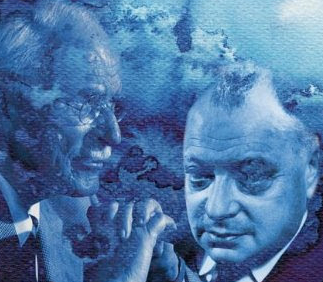
The event explores the mind-matter relationship through the Pauli-Jung Conjecture. "How are mind and matter related? In the mid-20th century, the psychiatrist and analyst Carl Gustav Jung and the Nobel Laureate physicist Wolfgang Pauli formulated the concept of synchronicity." The discussion centers on dual-aspect monism, examining how the mental and the material are two complementary and intersecting aspects of one underlying reality.
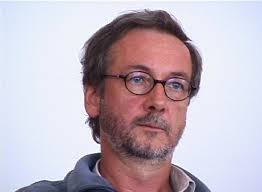
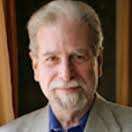
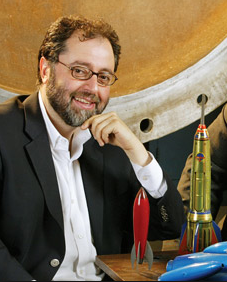
Speakers

Watch
Related Roundtables


Transcript
This roundtable brings together physicists, psychoanalysts, and philosophers to explore synchronicity and the mind-matter relationship through the lens of the Pauli-Jung conjecture. The panelists trace the intellectual history from Einstein's influence on Jung through the extensive Pauli-Jung correspondence, which produced a dual-aspect monist framework proposing that mind and matter are complementary aspects of a single underlying reality, analogous to complementarity in quantum mechanics.
Edgar Choueiri draws striking parallels between quantum measurement problems and the unconscious, arguing that just as observation changes quantum states, making unconscious content conscious alters mental states in non-trivially similar ways. Harald Atmanspacher distinguishes synchronistic correlations from ordinary mind-brain correlations, emphasizing that they are acausal and not reproducible in laboratory settings, though empirical work at the Freiburg counseling unit has developed psychophysical tests correlating exceptional experience reports with perceptual tendencies toward false positives.
Clinical examples feature prominently, including Joseph Cambray's shared dream imagery with patients and Beverley Zabriskie's account of multiple patients presenting dark bird imagery and World Trade Center dreams in the months before September 11, 2001. The discussion concludes with explorations of peripheral awareness, the role of affect in cognition, and how facial mimicry and neural mirroring might provide mechanisms for the kind of intersubjective field communication that underlies synchronistic clinical phenomena.
Show discussion topics
- 00:00:00 Beverley Zabriskie introduces the Helix Center event and provides historical context on Jung's concept of synchronicity, tracing influences from William James and Albert Einstein.
- 00:08:29 Panelists introduce themselves, including Farzad Mahootian (philosophy/chemistry), Harald Atmanspacher (Pauli-Jung conjecture), Joseph Cambray (clinical synchronicity), and Edgar Choueiri (plasma physics skeptic).
- 00:17:22 Historical overview of the Jung-Pauli correspondence, including how Einstein influenced Jung and how Pauli shared 1400 dreams with Jung to develop the synchronicity framework.
- 00:23:09 Joseph Cambray shares clinical examples of synchronicity in psychoanalytic practice, including shared dream imagery with patients and a scuba diving episode.
- 00:30:22 Discussion of the failure of the neuroscience 'decade of the brain' promises and how the Pauli-Jung dual-aspect monism offers an alternative framework for mind-matter relations.
- 00:44:28 Edgar Choueiri draws parallels between quantum physics measurement problems and Jung's concept of the unconscious, proposing mathematical analogies between epistemic and ontic reality.
- 00:55:33 Harald Atmanspacher explains key differences between mind-brain correlations and synchronicity, emphasizing non-causal correlations and the distinction from standard neuroscience.
- 01:01:16 Beverley Zabriskie shares clinical examples of precognitive phenomena, including patients' dreams before 9/11 depicting dark birds around tall buildings and the shoe bomber incident.
- 01:17:24 Discussion of empirical research on exceptional experiences at a Freiburg counseling unit, including psychophysical testing that correlates false positives with reported synchronistic experiences.
- 01:30:35 Panel explores peripheral awareness, trauma theory connections, and the role of affect in synchronistic experiences, with discussion of facial mimicry and neural mirroring as mechanisms.
Show full transcript
00:00:00 I am Ed nurse Asian I'm director of the Helix Center which is an interdiscip Center which organizes interdisciplinary round tables and is located on 82nd Street between Third Avenue and 2nd Avenue we have a number of programs coming up that I just mentioned to you but you have probably picked up the Flyers out there we have complexity and emergence on November 15th we have French serialism
00:00:33 on December 6th and immortality on December 13th the program tonight synchronicity and other mind matter conjecture were co-sponsored by the young and psychology Association and Helix some of you may know this is the second in the series on synchronicity both of which were organized by Beverly zabriskie I just want to take this opportunity to
00:01:05 tell her how appreciative we are for all her help to Helix and to express my wish that we can continue to be a beneficiary for knowledge and wisdom moving into the future thank you foreign good evening I'm Donald crazy the president of the Union psychoanalytic Association we too have Flyers
00:01:37 and I hope you get your information on the way in um I really want to say before we get started what a delight it is to be participating in the second collaborative effort at the Helix Center and uh capitalizing on the excitement that we generate spring and with that I'll turn you over to our moderator Beverly zabriskie thank you thanks so much
00:02:10 for your topic and as was mentioned it's the second time we've tried to address the scheme it's especially I think in the spirit of the Union tradition and particularly the jpa my that we do such an event with Helix at a certain at a certain point in his career Jung stopped going to just
00:02:40 analytic conferences and instead he converged a group called The erinos Round Table which would help in Switzerland with Scholars from all the different disciplines a mythologist indologist scientists poets and he felt that he was looking for analogies from whatever field existed because he saw it all as
00:03:12 expressions of the psyche that art religion science itself philosophy all emerged from the human psyche and so everything is relevant its experience and to the way it manifests and so um I think we've been particularly drawn to Helix because it picks up that same model and brings people together the one big difference between aaronas
00:03:44 and the round table format here is that these were all Scholars who wrote very scholarly papers and read them and presented them and we come together on the Helix model which is a little bit more like a free-for-all and people don't really know each other ahead of time and one of the objects is that the speakers learn a great deal from each other and I think that happened the last time
00:04:14 and I hope it happens again tonight I'm just going to give a couple of quotes that I wanted to ask my colleagues here to introduce themselves and then we will start a discussion and see where it goes and I'll say if there are two modest I'll say a few things about them so please be as cool as possible young was especially influenced by
00:04:46 Williams James and William James's Notions of the margins of Consciousness and the varieties of experience and so following that idea he tended to go toward the margins of time studied whatever scene mysterious or invisible or below the surface and one of the issues that he noticed was how very often he himself initiated a whole new process in his
00:05:19 life and how often his patients did because they had him experience that seemed to them quite uncanny a variety of themes that came together somewhat simultaneously and so for instance there would be an inner image or a dream image and then one would meet that figure in life and that started him off on a whole exploration of what he called meaningful
00:05:53 but a causal coincidences which he turned synchronicity and he called it synchronicity because there was a factor in time where the person would have an inner experience or there'd be an outer event there would be a certain convergence of seeing these similarities or dissimilarities but there was no way to explain why there was this convergence of something that was experienced by an
00:06:25 individual it was very meaningful and I'd just like to give you a couple of quotes here um as someone who was trying to deal with the whole question of mind and matter I had my comeuppance before I came to not because I had all my notes in my printer and there was a paper jab and no matter what I did I couldn't get them out so I'm reading this off an iPad which I'm not quite used to so bear with me uh young wrote
00:06:55 the problem of synchronicity has puzzled me for a long time ever since the middle 1920s when I was investigating the phenomena of the collective unconscious and kept on coming across connections which I simply could not explain as chance groupings or runs what I found were coincidences which were connected so meaningfully that their chance concurrence would represent a degree of improbability
00:07:27 so I hope you were able to follow that and then he writes 30 years later 30 years later Paulie goes down poly the Nova Laura the Gloria Quantum physicist has prompted me to write my thoughts on the concept of synchronicity since physicists are the only people nowadays who would be able to deal with such a concept successfully it is from a physicist that I hope to meet with critical understanding although as you
00:07:59 will see the empirical basis The Experience seems to lie wholly in the realm of the psyche so it's on that basis that we sit here tonight to Union analysts two physicists and a philosopher of science that's the correct way to describe karzade and now I would just like them to tell you about themselves and why they are drawn to this sub ject and their entry point
00:08:29 to it [Music] on my backgrounds in philosophy and also in chemistry kept popping back and forth between the two Fields currently I teach at New York University in the school of liberal studies and I teach both science requirement and the humanities and I'm very happy to be here this is one of those few places where as you say
00:09:00 we can actually mix it up and do many things at the same time so I'm known as the summit of humility and I I have been educated as a physicist I'm not working at the Swiss Federal Institute of Technology in Zurich which is very close to the place where you'll
00:09:32 move together with poly developed their ideas and the Parliament dialogue as we called it previously now we call it a little bit more ambitiously the party link injector that has been a topic of concern for me since more than 20 years and I mean I don't want to make this story too long but we can maybe end the discussion we can go into more details how this path actually developed but um yeah here I am and I'm really looking
00:10:04 forward to this kind of so Herald is the author of numerous scholarly articles she is the editor of the journal he conducts research and a psychological Institute in Germany and he has exposed himself to congresses of jungian analysts which I think is incredibly Brave and um it's been very generous in sharing his knowledge his mouth
00:10:37 well I know some of you it's good to see you here in terms of my background it brings me brings me I actually like a trained person in chemistry see in quantum chemistry I have sincere interest across these students as well however as a topic of sort of scholarly interest it really emerged out of my clinical work of trauma cases that I had in the
00:11:08 late 80s and early 90s extraordinary events started to happen and the the question was how to clinically understand them and it brought me back to a revisioning of building's work where did he get his ideas how did he that itself is an ongoing story as many of us I don't know so I find myself being drawn into
00:11:39 oh how long you might call spiritual ancestry Legacy work and provenance of ideas and part of what we're talking about not just simply as a Look Backwards but also with a genus-based way to look forward this is a questionable paradigm shift for culture and the way that this conjecture I think that's that's something that points us not backwards before
00:12:09 hi my name is uh Edgar schweri and without a shred of humility I am the least qualified psychologist in this room I I'm completing outside of the psychology but I have interest in this field I should say why I'm a professor of Applied Physics at Princeton University my interests have to do with the spacecraft propulsion new Concepts for planning space practice space and the process I come to psychology is I have also I do research in an area called psychoacoustics how humans perceive
00:12:41 sound how sound a music special user can be can be recorded or produced in 3D to approach virtual reality my interest in this topic stems from my being intrigued by any time that people especially psychologists either Applied Physics to the concepts or try to combine a psychology and physics in the case of the topic tonight this started as early as a first Parliament
00:13:11 met young women before and probably started training Einstein over dinners in the early part of the century and the idea of developing a system a worldview that combines minor matter in one construct and treat them both and any attempts to marry physics into it beat my attention and I will I as an outsider I've been reading papers by our panelists today and I have prepared some questions my role as I see it myself is uh not as
00:13:44 much as a skeptic although if I am as I can be and I think I will be but I am mostly asking questions to learn so I stand to learn most from today's discussion brilliant young man who deal very young when he developed one of the major theories in 66 as well and he was very exacting and he was
00:14:15 called the scourge of physics or the conscience of physics and so we have Edgar here tonight that that same role to be discouraged in any obfuscation that we might borrowing was the power effect you know probably one whenever you walked in the room everything stopped working so hopefully the microphones will stay with us
00:14:46 but um yes and he plays poly entered something broke so he was very dangerous to have in Laboratories which was one reason he was not invited to the production of the iatbombs misreputation that was another Exclusion Principle right right so just to fill in a little bit about Joe Joe has written
00:15:17 um the most Cutting Edge book on synchronicity which is available online Texas A M he was president of the International Association of analytical psychology which is the international group of certified Union analysts again is taught and lectured a great deal with has been very good friend and Edward is head of the Aerospace department at Princeton he has one laboratory that is an airplane Hangar and another one that
00:15:49 is a Sound Studio so that that gives you and one of the great questions that comes up about this mind matter correlation is it's not only what does the Mind perceive and take in about what's going on in the material world it's also how is the human mind able to penetrate the material world so how is it that a mind inside
00:16:21 someone's head can penetrate how to send a rock is space I you know that is one of the great I think questions um there there's one neuroscientist David Chambers who talks about the great problem with Consciousness but I think this idea of synchronicity extends it a bit to what is the place of Consciousness in the world what is the place of Consciousness in the universe
00:16:51 and how does it function and why is it here and so I hope these are all top s that we can cover just to give a little historical background and then we'll some of the topics young was a professor at the ate Hub where Harold is now and at the same time there was a young Professor named Albert Einstein he'd have much money so Jung kept inviting him to his house for dinner to
00:17:22 feed him and to learn what he could and I think that these conversations with Albert Einstein had a huge effect on young Soul trajectory because it was in the summer of 1911 and 1912 when he wrote to Freud that he was having these conversations with the young physicist about the nature of light and went on to describe Einstein's theory of the Quantum of energy
00:17:54 shortly after that Jung separated from Freud mostly around the topic of how all psychic energy could not be considered sexual that you know this sense of the magnitude of how this young physicist was dealing with energy made it impossible for young to reduce it all to sexuality being the source of all forms of psychic energy and sort of hidden or
00:18:26 obvious ways and so this he throughout his life thanked William James he thanked Albert Einstein and then he got involved with this young physicist again young was 55 Wilton College was 30. he already was recognized as being brilliant but very disturbed and and so he came to Young to ask for help with his psyche
00:18:56 and you don't send them to someone else to do analysis with but then how he gave young 1400 of his dreams that he had carefully worked on and made all sorts of associations in African patients and that became um the pre the material for a book that young men wrote called psychology and Alchemy and then after that he and Paulie started a correspondence which
00:19:27 has been published by Princeton press type and they worked out in this correspondence and in their meetings this theory of synchronicity that we're going to talk about tonight so Joe do you want to start off with it in terms of how to view it from a psychological thing to do and then Harold would you do something about you know your entry to it I guess where I like to start is that it
00:19:59 was experiential for young and this was not an abstract concept for him it's part of his lived experience and it started with some of the things that began to happen to him around the break with Freud and his own psychological struggles with that he underwent a very intense process that's chronicled in the red book but it's it's really um when he is able to come through that
00:20:30 and simultaneously World War One breaks out that he realizes that the struggle that he's undergone is mirrored in some way in the world and that's a problem for him because he neither believes himself to be a prophet nor does he really think he's in that manner and so the question of how is this influence it takes him another 15 years before he's able to make an exit the way he exits from that is that he is um in a very deep way of drawing these mandala like images on a regular basis
00:21:04 and in the midst of a particularly gripping one he received a manuscript from a close friend in China Richard Wilhelm which ultimately becomes the secret of the Golden Flower without Helen was writing them asking him to do a commentary on this mandala that's in there and he and for him it was a rather close replication of the material that he was working on and after that he's very clearly says Ah now
00:21:35 I can stop this red book business and return to the world of science and it's an interesting conundrum what does he mean by that part of the way I would understand it to enter from a psychological sense is that he is now realized that his dilemma of neither prophecy nor Madness as a solution comes with the notion that there may be a level of objective meaning uh that is part of human experience and how we enter that that is key clinically this is what comes up over and over and
00:22:06 over again anyone who does depth work and I I won't do it not to take the time but I've got some work from some psychoanalysts who are not at all influenced by Young but when they present some of their clinical material strikingly working at a deep level these kinds of events this correlation between what's happening internally and what's happening internally show up again and again so this correlation that can't be easily ignored that has great promotional impact and often it's transformative for people becomes for me
00:22:38 a extremely important psychological tool I don't think we can control it and manipulate it but we do have to work with the levels of reality that the mind is able to penetrate into from a psychological side and then I think it's our colleagues on on the matter side that we're interested in being in dialogue with an example of the kind of synchronicity that other patients report or that you experience in the session
00:23:09 yeah my own argument here which is a little different than yours is I think there's a spectrum that that is there are varying levels of intensity and in fact the model that Harold puts forward in this polynomial conjecture actually gives us some tools to talk about that spectrum of these things because young as a pioneer look for the largest examples I can give you one you know I was uh working with someone who would have very severe trauma history she every time I would have to every time I would leave for more than a week
00:23:40 we would have to put her in the hospital so that self-destructive control and finally after about a year and a half of this rather contained work she asked if she could have a phone call between well I was awake and that's of course a breach of normal analytic protocol but after some consultation I decided to to do this and when when I got on the phone with her the first thing she said are you in Germany asked her why she was asking me I was in the Caribbean quite frankly
00:24:11 and she said well I had a dream last night you were in the black forest and I couldn't find you and it obviously spoke to a level of disorganization and distress and I worked for the remainder of the time on the phone helping contain that and in fact the woman was able to stay out of the hospital for the meditative period I was beginning a course of diving while we were in the Caribbean and I was asked to go out for my mate
00:24:41 and die the first die on in open water and I with some trepidation agreed and then the the Dive Master uh said he would be my dark buddy and people as we got out there he pulled us around and said let me tell you about the site today it's called the black forest okay and so there's this moment of Crisis obviously you know what am I jumping into psychologically uh what's happened between the patient myself is in a precognitive dream what
00:25:12 what is the quality of this field of interaction between us and one of the things that I won't go into a long because I want to close it quickly but one of the things that I'm most impressed with is that we were both in an image that we shared that is the black forest hers was one of a sort of world of Grimm's Fairy Tales childhood monsters mine turned out to be black coral which was an Exquisite dive it was one of the more Transcendent moments in my life and yet here we are both in the same image I obviously had been overly rational
00:25:45 with her and I've been hit by her irrationality and together we had been brought into what I would call an emergent space it's this edge of Order and Chaos where this image of the black forest was manifesting in both of our lives in brother different ways but in very parallel meaningful ways me yeah I think it's I think it's important to say that there's one really essential commonality between the three points of
00:26:15 you know as in as you mentioned before and probably into this whole issue of what we would call the right amount of correlations or psychophysical correlations and synchronicities are a special case of it and this commonality is personal experience really I mean you know of course if you mentioned this you'll have these experiences and it's in his therapeutic practice over and over again Paulie had them in his um when he had this personal crisis in
00:26:46 his life very much in the 1930s 31 32 which was actually the reason why he why he went to you and met him and then also um I mean Edgar mentioned these uh how do you affect things you know things would break when he entered Laboratories of colleagues and stuff like that so he had these experiences but now the difference between a psychologist like Jung and the physicist like Paulie in in how they confront themselves with these
00:27:17 experiences is that Paulie would never you know tell people about his anecdotal experiences he would try to find a systematic way to understand them and and he would enter into a public discussion only at the level of when he sort of has a theoretical framework but he's an idea how to talk about these things in a scientifically coherent fashion let me say you know this is of course we all know this is this is this is eventually difficult for these for these things and
00:27:48 um but that also makes the topic so interesting for us today and what we what we now have from from the party you correspondence and also from from Publications that you published and also which probably published in journals and and books we have sort of fragments of something that might One Day become a theory it's not more than fragments when you look at the material and I think the
00:28:19 real work that people like me and but also many others have been trying to do is reconstruct from these scale of remarks and fragments reconstruct what I call what I would call a coherent framework of thinking it's not yet a theory but it so I really try I try to interlumber maybe but it's it's a kind of attempt to reconstruct the historically existing material and bring it into a form that may allow us to understand these experiences in a better
00:28:50 way and for a physicist it's it's a huge step to go outside physics to go to experiences which which are obviously not physically physical experiments or something like that and for for psychologists like young it's it in the same way I use them what about that the psychological domain so we're really talking about the meaning of two Spirits two minds two two of the greatest minds of the 20th century which which try to approach this revolutionary
00:29:20 thing which which we might call relationships between the mentalism material and uh you have mentioned David Thomas right okay you know Dave Chalmers is since a few weeks he is a member of The Faculty here at New York University and he has coined the notion of the heart problem of Consciousness and I think this is very much related to the party young debate uh to the parliament conjecture I should say as many other themes that are nowadays discussed in
00:29:52 the philosophy of mind and philosophy of are related to this and let me just finish with one remark with one observation that I actually am making since one or two years on conferences and also in discussions with colleagues the program that for a long time was considered the program in the philosophy philosophy of science named the physicalist program to reduce everything to physics that has created now a lot of
00:30:22 disappointment there were huge promises in the 1990s everybody was talking about the decade of the brain right and the decade of the brain is still somehow there but people get more and more frustrated because they hear the big problems that could not be solved after 20 25 30 years by this what I call the physicalist approach and now people are looking for Alternatives more and more at Big conferences this is really a theme which is discussed very openly and and I think
00:30:54 the power young stuff is one of the really viable alternatives to physical and that's one of them you know that's why as a very good chance to now go beyond the beyond the psychoanalysts societies and Beyond the people know probably from a history of science point of view it really becomes every stuff and that's right thank you um one fact that is implicit and becoming more explicit is in this idea
00:31:26 too that the human mind can not only relate to the world around it but decipher it and also that it's the mind that notices unusual connections that with our understanding of what um is this this whole idea of what is now called the mind brain or the Mind
00:31:57 Body Continuum or the psychophysical World implicit in that is that the whole of the world's interconnected and that the human mind is in an interconnected relationship with the world that now from a psychological point of view we register both unconsciously and consciously synchronicities are experienced as a
00:32:27 kind of shock is kind of surprised they seem anomalous and what I have seen both in my own life and in the life of patience is that it's very often asking for a very particular particular embodiment and coming into the presence and relating to the world from that further implication is that we are not just a who but a what
00:32:59 and that it's through our Blackness that we are related to the wetness of the world and from that from that sense of that experience that here we are somehow in some juncture where we are observing connections um that we that we then are in this relation to the world that needs to have a responsiveness and a responsibility that comes with it the whatness of the
00:33:32 world so it develops I think into a very large kind of environmental sensitivity and a sense of relationship to the planet that is why Jung talked about a certain kind of conscience coming along with experiences of synchronicity I just wanted to say that alphabet good continued both of these lines the philosophy of
00:34:04 science uh did uh has come to an impasse it's been long and coming since about the 50s and 60s when the whole program both of positivism and physicalism is questioned and the expectations didn't come to fruition as dreamed of in the meantime a different program in philosophy of science came up that really addresses this issue of responsibility and conscience and that is a the branch of uh well it
00:34:37 has different names but essentially looking at the sociology of science looking at philosophy of science in practice as it's actually carried out within its social political context within its cultural context and studies that have been done in that area tend to raise the awareness of scientists well certainly general public but the scientists themselves that what they're doing has impacts in a
00:35:08 broad broad sense far beyond the theoretical Frameworks that they're trying to perfect okay so I will now Zoom back into the the pairing of Pauly and young here you have a physicist and a psychologist who in our framework of Western science as we have it aren't as far apart as you can get they're about far enough that they would meet If This Were a circle which they in
00:35:38 fact did and the conjecture really is that they're not a part there's one world of which these are dual aspects the the polygon conjunction that Harold's been talking about so was that an exception um it sounds like one and it reminds me that there's a couple of ways of talking about synchronicity at least one and they're two extremes maybe one is that synchronicities are these extreme events
00:36:09 of high emotional intensity that practically break a person down or shock a person into a moment of awareness then as Jose mentioned tonight and also in this book there is a spectrum there's an intensity that you can get stronger and stronger and weaker and weaker senses of synchronicity where the meaningful coincidences are not just once in a lifetime or once a year or once a generation but sort of a
00:36:39 current because this is the nature of reality well along those lines if the philosophy of science is coming to a consciousness of its role in shaping both science and Society uh it would be ideal if the ethical awareness or the moral awareness would not have to be brought in externally to science the way it has been in the past with a council on
00:37:10 ethics for uh for the genome another Council for uh the bomb another Council it should come up from within science itself how would that happen so a recent set of studies within the last 10 years or less taking place with funding from the National Science Foundation and taking place in a number of universities across the country do this very simple thing of putting a humanist or social scientist scientist
00:37:42 within a lab within a science lab within a natural science lab to basically be with the physical scientist why technology they're performing ethnology they're acting like anthropologists you could say in this foreign tribe Etc the way uh that this was done in the early 60s and 70s by a brilliant Frenchman whose name
00:38:12 escapes me at the moment anyone starts with a B Bruno LaTour of course okay so so this is sort of um since the 70s when he did this uh laboratory life I think was the first study this is now uh you know two thousand three four five ten uh what happens now this is this is the part where I become interested in I was not involved in any of these but I was you know part of the team who looked at the results and tried to put together a
00:38:43 framework for this what happens is something very similar as what happens in therapy situation or in this pairing of young and Paulie they start to start to think alike they start to essentially constellate something together that neither of them could do separately by exposure of over a 12-week period or so the questions of the social scientists or the humanists become the questions of the physical sciences and vice versa and this is not by virtue of the one asking
00:39:16 ethics questions of the other but uh sort of uh indirectly the idea was to ask indirect questions of the scientists what are you doing how's it going sort of uh sort of the way therapists are supposed to do when they're not being directive not being a therapist I'm not sure if that's the mode but anyway um in the course of just kind of being together and so forth this thing emerges and at some point the frequency of interaction the intensity of the
00:39:48 conversation and then the flipping where one Dynamic of one way of thinking sort of is entrained by the dynamic of the other begins to happen and not as intensely as we have with the two Geniuses uh yum Pali but sort of spread up widespread so that uh that's what I bring to the table witnessing this thing and trying to see if there's some generality here some
00:40:20 some sense of a dynamic that is not restricted to the very exceptional case it's not restricted to the very high level theory of how matter and mind could possibly be linked in some exotic mathematical format it would include that but also sort of spread uh further than that into these larger and larger and more general contexts of interaction between people across the Spectrum
00:40:51 did you have an example of what you've seen when you've gone into a laboratory and how your presence affects assign the experimenter and the experiment well I I was not involved in doing these studies myself I have worked in a lab with a scientists as a chemist and all that so I'm kind of I'm an impure sample right here but I can tell you the accounts of the uh the PhD students who I did talk with and interviewed after they did their work and essentially
00:41:22 what happened was I think to put in very brief form the political scientist who was assigned to a fertility lab so they're doing genomics basically after some time she was a she went tribal or native I that's the term she went native and what that means is that she became a member of the lab she was trained in the techniques of preparing samples and so forth so she you know was asking questions questions they said all right
00:41:53 listen let's just show you how it's done and then so she embodied the the activity the the work of these people uh in the process of doing that uh you know sympathetically listening and then becoming actually quite good at sample prep this changed their attitude about who she was and they started to wonder more about her and think along her lines uh the to
00:42:23 bring the the story short this is in an article it's in a book coming out about uh Young's 100th anniversary I forget the title of this book at the Fordham lectures but essentially the the short version of the story is that by the end of this the lab director began to think along the lines of what does our lab look like from the outside what is the impact we're having on the community that we're in if we're having this effect on this woman and these are questions that she's having
00:42:54 for us um he essentially shifted his thinking and rearranged some of the activities of labs some of the communications of the lab and uh actually uh asked to co-author some papers with her about the activity going on in the lab one other thing that happened that I have to relay is that there had been persistent questions questions both the procedure and of Ethics about taking blood from the actual researchers they were
00:43:25 using their own blood in the research and they weren't sure whether this was what what the status of this was morally and scientifically it kind of worked it out but they weren't really sure about the status of the morality of this and they didn't know how to think about this but that was just sort of sitting there below the surface continuing and continuing but never right really reaching the surface to become a decision and as with the case with the other social scientists and humanists I know
00:43:57 in almost every case something comes out from the depths and becomes a decision whereas before it was not even acknowledged as something that required decision and action that's the beginning really of our responsibility so Edgar how do you understand if you can figure out how to get well um I'm still trying to figure out myself but but first uh
00:44:28 I should say that I'm very intrigued but but Harold and Fraser both said and I want to pick up uh would like to pick up on it for the question um and I'll come back to the question of creativity and um you know in and see what's in space research if I can speculate on that but but mostly I think what uh Harold told us um and also Father explained also more that there is a consensus at least in the community of uh strongers of Science and also other
00:45:00 communities that the positivism and uh and uh physical physicalism have failed in breaching both the the world of Sciences of the mind and the Sciences of matter Harold talks about the young public conjecture as a new as a starting point for a a hopefully more successful description but Harold didn't tell you because he's humble that he has done major uh Headway in that direction
00:45:30 in some seminal papers he actually has a because of his background in physics he was able to find a really fundamental the important relationship and properties and I'm going to try to describe them in a simple fashion that really uh fight on the on this conjecture as being a very promising headpoint I mean I have a starting point so I'd like to do is describe to you from my uh understanding of what some of the work that Harold has done and uh
00:46:02 give it to us a question which I would like to ask so basically and this is really at the heart of the discussion today the the relevance of the uh probably a younger conjecture so basically in physics we do measurements of course a measurements take us from a realm of the properties of material to the realm of knowledge of how materials behave so um using nomenclature use in in the field where Harold works we talked
00:46:33 they talk about an anti-reality we're ontology is is around basically a particle has a mass has momentum has energy things one could measure we call that an anti the realm of antique reality and a measurement takes us from that round to an epistemic reality where we can know something about how products behave so what scientists do they take a measurement which takes them from the antique reality to a um epistemology the science of knowledge
00:47:05 what's incredible about quantum physics what a revolution that happens in the early part of last century is that physicists discovered empowered would play the major role in that that the mere Act of making the measurement uh has a back reaction so to speak it has an influence on the antique reality itself so that took a while for that to absorb and now today there's no doubt that that's the case there have been numerous experiments establishing this seemingly non-intuitive fact a physical purely physics experiments where people show
00:47:36 how particles the property of particles by the new observation and the observation does not have to be done by a conscious Observer it could be done even by an instrument it will influence the property itself or the some of the properties of the particles so this influence of the observerance is called the quantum mechanics is a fundamental prediction and verifiable and verified aspect of quantum mechanics what power you did since he was very much involved in this he actually found a parallel and in many
00:48:06 ways convinced I shouldn't say convinced because young has only the people's position to to take all that and run with it basically that there's Apparel in in the case of mind so when we the parallel is that as we have optic reality which is the properties of plastic particles similarly there's an objective reality in the unconscious these are we talk about the local mental uh objects which are states like mental states that can
00:48:37 be defined in Boolean passion zero one sad for example happy these are things that we can talk about unconscious and then awareness which is the equivalent in a way the analog of measurement takes us from this unconscious to the epistemic reality which is consciousness so if you become conscious of a certain feeling let's say and probably conjecture so to speak he uh that there is same way as the quantum physics same same way as it will discover that time in physics there is a back reaction
00:49:10 there is an influence the mere awareness will stimulate Us in physics mean awareness of the unconscious as it becomes conscious reflects back on the unconscious and changes it so this parallelism was stated as early as a the 1945 in 1954 it was already shrined in a book but it can be traced back even earlier now what Harold forgot to tell you I
00:49:40 didn't tell you because of his humility is that he did actually major Discovery in that section I'm going to try to do is this is summarize very much in in what he did okay so and the problem is that this is a mathematical mathematical trick or mathematical discovery that is hard to describe to normal petitions so I want to do my best remember I talked about going from the unconscious to uh which is the Arctic to the epistemic now an example for example if you take a survey or do a questionnaire and you you uh you have to report on some states
00:50:12 some mental states to say of some and the mere Act of doing so will make which will put down in writing um this epistemic you know realization has an influence on influence on the actual States now what uh what Harold did he was able with a classic paper which was I think already recognized to me classic paper by Atmos Parker and former 2012 that the um
00:50:43 these mental States or or these uh the the realm of the antique in this analogy has some mathematical properties okay uh and they are to use a technical term that can be described as non-commutative structures which happens to be exactly the prop mathematical uh system with investment mathematical properties that quantum mechanical systems in the realm of the Arctic possess that can be described also as
00:51:14 non-cognitive structures this discovery seems too technical but actually it's very Stark because it shows that there is indeed more than just an analogy between these two parallels it shows that there is actually uh a fundamental relationship okay to use this word it talks about a constitutive joint principle combining both the mental and the physical okay so now like this is my my explanation of my interpretation of uh tell us what thank God he's with us so
00:51:46 he can correct mistakes I'm done but I I now I'm going to pause my question and to understand question and again it stems from a you know my Intrigue my being intrigued by this this relationship between physics and and that psychology and wanting to poke more than I just learned so I'm so far I'm by poking I hope to learn more so the question I'm going to post comes from my own work I'll give you an example of my own work uh so I work in a female plasma rocket where uh
00:52:19 that all the details Rockets use of plasma which is a gas that's ionized to produce thrust for for for spacecraft these Rockets can become unstable they can start to oscillate okay and they can turn on and off they use electrical power and they and they have their own behavior one particular Behavior called an oscillation has been observed and then has been successfully modeled and tested and it's called The Predator prey instability now now this instability is a interesting
00:52:51 it's a it's like what happens when you have in a forest characters and prayers and if they're if the characters uh eat all the praise eventually the characters will start to die and then when when the uh uh when the uh praised outcome or the Predators and we have a cycle that can keep feeding itself on oscillation it turns out the oscillation that happens in these Fosters are exactly similar to this and we use an equation to describe this observation called the lock of ortera equation uh
00:53:21 is an American mathematician actor latke and Peter Victor is a Italian uh mathematician who described the fish in the Adriatic Sea by this equation showing how fish certain fish are apparatus other fish that are prey the population goes up and down and oscillates exactly in the same way we see in the thrust so here is a mirror I'm mirroring the fishes in the sea and my rocket to my lab the same way an analogy here as a Herald is probably mirrored the
00:53:58 backtracking that happens between antiguity and epistemic reality in physics the quantum physics and one that happens in Consciousness so I'll get to my question so basically that success of modeling both phenomena in the same equations um has a limit in my opinion the limit is we get to a point where in the rocket it turns out that the voltage that you apply to the rocket influences this instability not only this the instability influences the voltage this is the back back reaction that I
00:54:31 would like to find in the fishes however if I go down to the sea to the drug scene look at the fishes I don't find that back reaction for example I know that the the predators in the sea the fish predators are their concentration is also influenced by the weather in the seasons but the fishes themselves cannot influence the weather not at least so we have this uh breakdown which shows you that finding this beautiful analogy this beautiful commonalities can
00:55:02 be very promising Can Shed the light but then pushes me to ask the question is this beautiful um not only analogy but but beautiful mathematical similarity that you were able to find elegantly are they more can one say that there are more than just an analogy can we really expect them to materialize into a world view that's very concise and very powerful of the Mind matter interactions
00:55:33 yeah let me start with the following remark I've always I mean not all my life but for a long time I have waited for someone who can explain these things so well thank you very much now the um let me start with a quick answer to your final question and then a lot right on this a little bit I would think that there is one big difference between the local Tara or Predator prey model and what what we have in mind when we talk about is mind
00:56:05 brain relationships and that big difference is rooted in the notion of causation in the local Terror cycle you always have caused letter actions while I would insist I mean Paulie and you almost insisted that for instance synchronicities like interrelations between the metal and the material mentioned the physical are just free of causal interactions the your volume and says that we we must not think about these correlations as
00:56:35 causal relations and that I think is a big difference now to your your question that that is that that follows from this how seriously are we actually or should we should we take these analogies and I would say you know just from developing a model or developing an interesting framework this this is not I mean this can maybe make us think that this might be an
00:57:06 interesting way to go but the point where we really can believe that this has something to do with reality is the point where we can derive empirical implications and then test whether these implications uh hold whether where the systems behave like that and with respect to that question let me just make one additional remark to what you were saying about uh the these these non-commutative mental observables you realize you know if I ask you to to just only to express the
00:57:38 notion of not negativity you will have problems we were very much used to this because it's a concept that is that is that is pervasive in quantum mechanics and in other areas of physics as well but one important consequence of everything that behaves non-commutatively is that the sequence in which you make measurements makes the difference this is not the case in classical systems and the interesting thing is when you think about what happens when you make a measurement on a human mind on a human
00:58:08 mental state it's it's I think it's a fascinating observation that you will make namely that such measurements actually for such measurements non-commutativity is the rule rather than the exception and this is very plausible because when I asked you a question for instance right you will output an answer and I hear the answer I read out the value that you give me but at the same moment at the same moment it's very clear to everybody that this also changes your state so that's the back
00:58:39 reaction and now if you're asking a second question on this on the change state right then of course the answer that you give has to do with the change State not with the original one now when I when I exchange the sequence of the questions then the changed state after the first question is of course different from the first from the change state after the first question the first realized realization of the experiment and that means that the final result after the second question will in general be difficult and this can be tested
00:59:10 you can test this in questionnaires and we have the paper that you mentioned thank you very much for for your compliments in that paper we we even give a classification of four different types of such order effects they are well known in the psychological literature but very poorly understood and we have a career in framework to predict these effects and even predict effects that have never been observed in Psychology like uncertainty relations products of variants and all this kind of stuff this can all be tested now can all put put the test be put to test and
00:59:41 that I mean once there's some work already around these directions and and once you see that the results fit the predictions I mean this is what what we what we do inside this happens then we then our our trust is the models that we that we have increases and then we would say this is more than pure energy yes yes well in that let me then follow up with the question if that's the case um since you're talking that it's good to hear of people in this field talking about the testing yes that you know and
01:00:14 having a prediction which as you know some in some in some circles it's it's a it's a bad word and so it's here to hit that's good to hear that you you think that so how could you then formulate um that you've reached a successful Theory I mean in physics is very clear that reproducibility is but there is an inherent I mean um both young and how we talked about the score relations to be inherently non-reproducible you're hoping to get to a producible
01:00:45 experiments that are predicted on the other hand fundamentally these correlations are not predictable and not reproducible yeah and I think that is one of the great differences between psychology and the science and student Material Science Sciences that we would always have the individual's subjective facts and most often the individual emotional factor and you can't really reproduce
01:01:16 that I mean you can't go into a lab and make it happen I'd like to give a couple of examples of why I got interested in synchronicity and just hear your your senses of it and how how we're meant to think of it and I just want to give a couple of examples out of my practice with the Preamble that the last science class I took was dissecting the frog in freshman year of biology so this this is a huge stretch for me and I'm sure it is
01:01:48 for many of you too um one thing that frequently happens in the Consulting room for me or even in the hallway when I open the door to my office as that as the person is coming toward me I have an image that comes and it's got nothing to do with anything I was thinking before or anything that I'm going to think after that session is over for instance in one case I opened the door and I saw a woman a very lovely
01:02:19 attractive woman I worked with for a long time and I thought Lobster now she doesn't look at all like a lobster and she came in and she described to me that in halfway through the session they had just come from Canal Street and when she went to take her car out of the parking slot a lobster came right in front of the car Canal Street the lobster came up from the canal and was there on the street all right so that's one kind of thing
01:02:52 another is that it's extremely frequent that I will suddenly have an image of something in a dream and a session or we will be discussing something in an interpretation will come out that I hardly recognize I mean it's like it comes through and then the patient tells me their dream from the night before and the that image was in the dream and we have
01:03:22 already interpreted the dream even though the dream was not all communicated and shared so that's correspondence on a level that is not an ego to Ego and certainly not a rational to rational level but the experience that really got me going in terms of exploring what these different synchronicities of unusual correspondences are that's another way to think of it
01:03:53 was that in the spring and summer of 2001 patient after patient was bringing in dreams of blackbirds or writing poetry about black birds and Ravens or you know having and everything I read had blackbirds and Ravens in them and then when 9 11 happened there was all this image of these black burned
01:04:23 Birds Coming Around the World Trade Center and many children and art classes we had a colleague who was working with with children in a school in New Jersey actually said that the primary imagery that the children in the schools were painting were blackbirds and there was just this this sense of this ominous quality that it was as if
01:04:54 the psychee of these patients were picking them up now I was the only person who knew that there was this sort of critical mass of this these images so it's the human Observer who's making the connections there it's not that they're you know they're in the wider universe as far as we can tell but that's not an unusual kind of situation or one day last week every single
01:05:26 patient had something to say about shoes or socks you know why were people referring to their shoes their socks so then I have to start thinking about shoes and socks and what's the symbolic meaning of that and what's the communication around by the way is this sentence it's smoking bad things wow
01:05:58 so we better call today so um in any case I just wanted to give that as a from a whole different point of view of what Jung was talking about in terms of synchronicities which is a kind of non-verbal non-rational communication of a buildup of different images or shared images or you think of someone and they call you the next day that that kind of thing
01:06:28 and does that at all fit into your Realm of what you look at when you I mean you've worked in this clinic in crossword what what kind of anomalous situations came up there 9 11. oh wow don't do that [Music] is another
01:06:58 one see this happened because none of us really believe in all of it and so that had to happen so we are sort of alert yeah those correspondences now that's not taking you far off the topic right I just wanted to make one remark concerning these for the order effective issue right this is something that can be tested exclusively precisely there's no no record disability issue amen psychology is not an irreproducible
01:07:29 science altogether definitely not sometimes reproducibilities are different than in physics this is superior but uh you know in Psychology things that are not reproducible will not be counted as part of the established knowledge of us but now these these events are completely different story these are not psychological events alone physical events at all I I would you know you can think about how you want to call them I at some point I call them psychophysical events you know something
01:08:00 like that you can try to use other Notions for that and I think in that respect then we really come to what you are addressing uh in terms of synchronicity for instance but I think there are also other very interesting psychophysical events which fall into this kind of General class and again he had to hear the issue of reproducibility really into conservation because um obviously we we know correlations between the physical for instance our
01:08:31 body or our brain and the mental what we think and these correlations are pretty stable for instance when you look into into common Neuroscience then people know that certain metal States you know I let you ask I let you I let you do a kind of math task then the the brain activity that that is correlated with that mental task is pretty much the same in all these across individuals so this is a very stable reproducible correlation
01:09:02 and from our reconstruction of the polio framework we call these ordinary or Baseline correlations now the the things that you are addressing they are not they are not based on correlations we wanted to talk a little bit more about that I guess well a couple of different things that I think it's important to say a little bit more about what you mean about the structural correlations these these fundamental things such as the relationship of mind and matter when you read your non-synchronicity he's queried
01:09:34 by CA Meyer several places where minor is pushing on him and says you know this question of causality in the mind-body relationship is possibly to be considered as a synchronistic thought whatever that might mean um and young said well if that's actually correct then I have to rethink the whole notion because then it's not just the rare event it is then something that's part of everyday reality and we've had this problem that we've had no way to talk
01:10:05 about these two different categories of experience as if they were all one and the same and I think what's particularly interesting about this conjecture is you begin to titrate that out a little bit you have a you have a structural do you have a degree of structural interaction and on top of that it's a particle wave as it were on top of that you have these induced correlations that can be a varying intensity it's either positive or negative positive it's like the ones we've been telling where the unexpected Links come together but then also negative whether dissociations where
01:10:37 things that you expected to be there that just simply aren't what I think there's one question I lead to from this for myself I think this clinically could be extremely useful to begin to use this kind of model to look at the range of phenomena that we're talking about with these kinds of where I'd also like to go is to pick up a point that uh Edgar was talking about and that is in the the difference between the two models you can't add the whole notion of the ecological and the idea of systems
01:11:09 that have holistic properties that are extremely difficult to catch into one simple description and when Jung says these are a causal connections what if you're study what is causality is it's a very 19th century thermodynamic form of causality it's about thermodynamics and systems at equilibrium it has very little to do with systems that are actually like human beings that are open that have all of these Transformations possible in them so if we start to begin to think about an ecological model here
01:11:41 then I think we're at the edge of what I don't think we know this as a community what what how do ecological systems manifest their holistic features and is there causality operating at that level that we call synchronicity is a sub-center I I think if you put it within another context you can begin to see and to be honest if you follow where young and probably got some of their ideas this was part of the idea I mean James is one of the people that they drew
01:12:11 heavily on and where did James get some of his ideas well in the 1870s he's reading James Clark Maxwell on field Theory he's looking at fields that fill the universe and beginning to think of the Mind as a field rather than as a localized substance so I think that that kind of model this is the same problem of 50 years of chemistry where we know all the ingredients of life and we can't synthesize it why what's missing you know that's a fascinating question is there's another there's another level to
01:12:41 that question that has not yet been solved and I think that's what we're in some way yes Yes actually that that brings me to um a question having to do with the how one filters or how one calls a simplistic event a simplistic event there's some rigor has to be applied to some extent I mean you um I think how we talked as a civil Simplicity event in the limit of meaningless correspondence become
01:13:13 pure chance and that pushes me to ask Beverly especially going back to the 911 um there are many times at 9 11 nothing numinous is happening is happening nothing pretentious potentials is uh is being said we don't register with those we talked about AI we talked in the beginning about an emotional impact yes yes okay emotional impact will allow us when these things happen we all become emotionally we amplify them we forget about all the times 9 11 passes by on
01:13:43 the clock and nobody said anything so one has to normalize this uh event that happened tonight by all the 911 times the clock said 9 11 that nothing incredibly happened and and we find this to be very small number which we call statistical noise so one has to where we're going to power it that's the limit where these meetings correspondent takes us to Blind chance so how do you come up with this filter that would say this is a significant back and this is not every time I feel
01:14:14 you know somebody who's like a lobster or somebody you know comes to that course when what are the criteria is and how do you flicker the emotional impact part because the emotional impact will keep us will all will all become clear jimin and less scientists every time it happens and so we have to watch out against against that how do you watch out against yes I just like to respond to the clergy bit actually Jung was exploring the idea of synchronicity to to get away from magical thinking
01:14:46 because up in up until the more scientific era if something happened that had an uncanny quality it was thought to be a message from the gods of God and he wanted to find how we could understand things that we could not so it was really an attempt to at least open the door to other ways that things connect that are not messages you you know from from the Beyond in that sense so it was very it was an attack out of
01:15:18 the picture which is fine but still a question is that how do you filter out now you attribute them to to this honest to this uh you know Realm of the archetypes and so on so perfectly fine but the question is that when when you put the threshold how do you consider and what kind of statistic meaningful threshold you put on what is a simplistic event and what's pure chance that's Amplified by emotional impact and that's where it's very individual because he's not saying that there's you know that the whole world is the
01:15:49 synchronicity rather that if a person perceives certain kinds of connections or experiences these on these sort of networks so of meaning that that's for them it's not that then you go out and pre you start a religion of synchronicity and you have to come and confess that you've had that many synchronicities it's the Act of Creation that the person is making for themselves and they have to figure out then why
01:16:19 they've noticed it and added emotional reaction I think that's really hard to to keep not keep away from the idea that they have to be to resolve phenomena well I agree with that because this is a very important question maybe it's only too difficult for now you know we have to approach that question maybe that we may be our grandson but I think nevertheless it's possible to make you know you know better than others science Works in
01:16:50 small progress works and small steps right so what we can do with the with the power young picture and maybe someone generally speaking of the school aspect of whatever thinking well we can predict the classification of what we call Exceptional experiences a classification of exceptional experience and this classification again can then be tested because we have a lot of material that's difficult IES that you mentioned we have about 2 200 people now who were
01:17:24 seeking help at this counseling unit there and they have been their cases have been documented since 1996 very carefully and particularly and we can so we can try to use this material it's empirical material in order to test whether the classification is good is correct don't know that what we found is the classification is perfect it's not even perfect it also applies I mean I was talking about clients seeking advice but we also did the same study with the samples from the general population
01:17:56 we find it we do not only find the same classification patterns we also find the same percentage over the over the different patterns and we find that's plausible we find less intensity and less frequency because this is normal population right and now this is very interesting because now we have a so this is this is already something that can be reproduced it's not the value of a certain trouble of course it's a it's a different kind of reclusability but then this is this is this is something very interesting I
01:18:27 think we we did um this is a test it's called money task the morning task is you have a you have a screen and you present on the screen a random distribution of black and white pixels right and then once in a while you manipulate the pixels in such a way that you see an indication of the face or an object or something like that and then the subject is asked um do you see an object or do you see no object and now one of the classes of
01:18:59 exceptional experiences that we that we have does significantly correlate with false positives in the monitors so what does that mean this means when you show these people random distribution of points they have a they have a significant over abundance of telling you it's not random there's a face or there's a doctor so what they do they attribute meaning to a pattern that actually is blind chance and this is this is precisely The Coincidence type one of the four types
01:19:31 in this classification so now we have it we have a psychophysical test really to select I mean a filter if you want to select these people out of the whole bunch of all exceptional experiences people and that you know these are these are small steps I I'm completely agree about that South Side definitely in the right direction this is the way to go and I think now we'll open up questions from the audience yeah go ahead um well I have a couple I'd like to take a shot of a couple of bad news questions
01:20:02 can you can you hear me can you hear me like that yeah yes yes sure okay so about ecology it reminded me of JJ Gibson's ecological or gibsonian psychology he was attempting as some may well know to construct a representationalist direct realism uh so that there would be a seamless
01:20:35 continuity between these the ecological stimulus and the perception of that stimulus there was no differentiation so without just throwing that out there if that would be something that would be of interest to that question about ecological uh circumstances but I'll just throw them all out and on the second one that you raised that was just answered about the differentiation between coincidence and synchronicity it since the one of the defining characteristics of a synchronicity is
01:21:05 the personal meaning that the individual experiences that would imply uh as per you're most with the experiment you described Harold described suggests that there's going to be some neural activity uh might be related to our predisposition to to seeing let's say an arc but see a circle or to fill in an incomplete letter of the alphabet on the other hand that's not necessarily meaningful but one extension of that kind of experiment could be to have volunteers
01:21:39 and they'd have to be very dedicated volunteers and if they did happen to have a synchronicity and they were willing to uh um have some type of fmri at first at least until we got down to more precise measurements of neural activity and then gradually Zone Zone in on that area of the brain that was lighting up if you will when there was a meaningful synchronicity
01:22:09 that would be the beginning of the start to have a mathematical structure of a neural activity related to a synchronicity that's just an observation the question that I have though for Harold has to do with a lot of research some of it quite recent that seems to decouple causality from the direction of time at a Quantum level such that the effect the experiment is carried out in a normal direction of time but the effect actually occurs or can be detected or measured prior to the cause and if that might have anything to do with some of the things we're talking about in terms of correlation or hyper
01:22:41 correlation not detangling in that sense but uh atemporal as related to a causal major of some of these experiences that's it anybody yeah I mean this last issue is really well I think it's pretty complicated because that touches on several fundamental research topics in basic theoretical physics I don't know whether
01:23:13 whether this is something I should go into into much detail it's correct that there are people who think that at the fundamental level you know time doesn't play around anymore in some sense and then causation in the sense of something happening before something else is of course meaningless right because then the the notion of time is not there but I would maybe I can expand this into a an issue which I think is is brought is relevant in a broader sense
01:23:43 and that's the issue that in many of the Sciences not necessarily in fundamental physics but people are completely over obsessed with causation I think you know in what you in there's no experiment in the world in which you see causation you all what you see is always correlations between observable between observed well barriers or something and then when you bring in causation this is always based on a Model that you have and so this is already if you want this is a bias you know right
01:24:15 I would always I mean and the power young discussion shows in a very nice way that correlations are really can even theoretically be more important than immediately ascribing causal relations to them I think that that's that would be my point you know in that direction yeah I'm going to take a stab at the ecological one and then ask Edgar to to uh your opinion of this answer I'm about to give
01:24:47 and it's um with regard to um causality and one respect sort of other models of causality than the linear um one could um exploring the idea of whether synchronicity could be looked at as a sort of a cross-scale cross-scale and coupling phenomenon and you wouldn't know this unless you were tracking all the different scales at which you've answered current and then you could see
01:25:18 a line connecting these things and then something happens that is not expected if you're just looking at that novel but then when you have a coupling across down the scales then you get something occurring and I wonder whether in the case of the thrusters things like the volume of the chamber makes a lot of difference to what kind of oscillations you get among other things that are could be measured at various scales much much smaller and much much but if you don't know if you're not
01:25:49 tracking all these different Cycles it just looks like magic again yep no I definitely see a new point and tracking these cross scales can can present a totally different pictures and one could see it at the Surface by the way just as a note to uh what all three of you have said regarding my my invoking an ecological model the fish I was only bringing that as an analogy between an instability as in the Thruster and there and I'm and then I
01:26:21 was bringing the analogy of that mirror that parallelism with the parallelism that probably Drew between the uh back back reaction that happens in quantum physics and the one that he was conjunctioning also happens in in my matter so I wasn't trying to draw too many parallels between the ecology itself okay so but but since but I I'm intrigued about something you said early on which I find uh very interesting you you talked about Paulie and Yong at the end of uh so far from each other in the field that they are almost at the end of
01:26:53 the circle I think that's correct today unfortunately with the exceptional people like Harold who and and also Joe will come from a background and you will come up from a background I mean three exceptions but still at most physics experiences today are do not involve human 99.5 do not involve uh thinking about what humans do they think about the physics of course there are humans that are thinking but they don't indulge in that science and the other thing the same thing most psychologists don't indulge
01:27:23 in the physics about particles so today they are very far however Joe is spent a lot of his recent writings showing how the atmosphere especially the tradition which was only I'm talking about the 19th century German romantic tradition had a huge impact on scientists at that time so the German romantic scientists so to speak were poets in many ways they actually were striving to combine the experimental and the aesthetic and and and
01:27:57 partly what the direct part of that and as a matter of fact that can be traced it's uh you know how our boom talks about the anxiety of influence and talks about Freud having anxiously you know influenced by anxiously hiding the influence of Shakespeare I'll ask him Joe will agree that uh he almost probably had actually hiding the the the the influence of Spinoza that went all the way down to Humboldt to ersted to William James to Young and Paulie and
01:28:29 now that makes people from that time can the physicist and uh and and the psychologist very eager to talk to each other and very natural especially when psychology is being born on the science was nothing shocking there was an Einstein host had been hosted by a psychologist is far less shocking than to today I'm leaving to a psychologist house for dinner and very few psychologists would invite me so especially after tonight but nonetheless and what I'm trying to say is that could it be that this Affinity
01:29:02 between physics and chemistry physics and psychology is a is it part of a tradition and here I'm going to quote something that Beverly uh quoted young saying in one of our articles a young said archetypes seem to belong as much to society as to individuals they are therefore luminous and contagious in their effects so could it be that uh that the other type of a psycha of a psychologist physicist was particular to
01:29:32 German romanticism and contagious and that young and Paulie just called about the next question I have I mean that it seems to be there's always striving I mean that psychology works therapeutically beautiful but in the past 62 years has flourished okay but the underpinning in the physics of Mind matter based on any type of psychology has nuts is still tenuous I think you all agree with me despite Harold's recent work I mean notwithstanding so I still have a
01:30:05 tenure system that tells me that you know I wonder whether this is a relation between physics psychology is kind of forced and is a product of this uh of this tradition more than intrinsically you know a reality I mean I mean fortunes don't don't talk much about physics but young guys do so and I wonder if if you think this is this is this archetype it's contagious the facts of his archetype um
01:30:35 so I could throw out something that's a little bit different here I've been studying Vision because you basically seed with your brain so you can't see without moving your eyes and our ancestors our brains evolve in a state of nature it used to call it Samurai vision so a human brain in the state of nature is actually capable of being aware of seven streams of awareness simultaneously sometimes it's given the name situational awareness today where we lock up Horizon on static letters we
01:31:05 attribute that ability so it's some of these things about synchronicity if we live in this world of seven streams of awareness simultaneously if you might I've never asked this before think that synchronicity might possibly have something to do with that seven point awareness that's your crosshairline yeah yeah is that there's going to ask what uh if those streams if they have uh certain I guess some cycling times or something like that no idea you know it's like The
01:31:37 Da Vinci Code you can see up down left right you know foreground I mean you know when I'm talking you can also see at the same time and I'm just saying you know that's a fact I'm just curious because nobody ever looks at it what you think it's a it's really intriguing it's really intriguing possibility I mean in a it does correspond to kind of the idea that we're we're very focused on very little most of the time that we know of
01:32:09 consciously and we don't cultivate Samurai awareness I'm not sure some of this I mean I would really defer to these folks who've tracked these experiences more to see if it's something within the perceptual field or not as what you're suggesting is that it would be something that could be included in the perceptual field that we're not tracking something even small it's quite cold you know in India's eye yoga yes doing this for 3 000 years
01:32:41 so they have programs that are astounding that they used to practice this 2000 years ago when I was in the ground magnets are there any other questions oh I'm sorry Margaret yes okay um coming from an analyst point of view I've sent it first to Joe you said something about
01:33:12 um there are really clinical implications for all of this and the one that struck me and I'd like you to talk about it um see if this makes sense Harold said this is not about um causality it's not correlation that sounds to me like a very serious analytic statement because we're not looking for the cause we're looking for the patterns that's what analysts do and that's what heals the cause is not the the point right that's the other new understanding
01:33:44 trauma Theory that's the new understanding of all of it is that what you were talking about about the implications of this or what were you thinking of Joe when you talked about the implications of the emergence and synchronicity well when I when I was particularly interested in was that actually it's a kind of background question I keep hearing occur and that is when you start to look at um if you can take those structural things and you could study those alone that would be more in the realm of physics and the mind matter relationship
01:34:15 what we've been talking about clinically these examples above and below the Baseline because you get a spectrum there I think it starts to go to the question that Edgar's raising about what how do you filter emotional do you filter emotion out I mean that is these very large numinous kind of synchronistic experiences they're always charged but very highly charged with affect and what we don't do then is to scale that back we start to look at experiences with with less affect immediately in them
01:34:45 it's not that I I mean we now know that affect is part of cognition you can't think without your affect so it's I wouldn't throw affect out but I think you can say what happens asymptotically as you move back as you begin to titrate the um the aspect down to lower and lower levels I mean one of the things in science one can talk a lot about nowadays is serendipity more and more of the biographies of science reveal how much accident is involved in so many key discoveries that
01:35:15 people are looking it's looking very intently with a very well organized mind and finding something there that's curiously other than what you look for and if that becomes the place of breakthrough that seems to be an extremely important correlation thing you can say the same thing for analysis well that's yeah exactly I mean it's mostly serendipitous I mean these things about the lobster that comes to mind the field that you're in have a serendipitous quality and I would say quite honestly every interpretation you make you can't make an interpretation that isn't somehow
01:35:47 part of this there's a serendipitous field quality to what you're saying especially if it's right yes and that would bring in the question of the sequence of questions yes yes theory has a different way of thinking about how you come approaching something and not sort of make a difference and I'm very pleased to hear that yeah that's part of the training I think yes
01:36:20 it's interesting I find that in my work as an analyst um that depending on the patient's State of Mind for example if I'm working with somebody who tends to be more disorganized or somebody who is sort of experienced the archetypal mythological realm that's less mitigated over the archetypal realm is asserting itself more forcefully in the field within the within the um within the sessions there seemed to be more
01:36:51 synchronous events I will want to say words that I usually don't say and in fact never say come to me and seem in those words seem to somehow match the patient's experience or something they'd gone through that day and it seems to go back and forth and back and forth and again it often happens with when I'm working with patients where the ego let's say is more permeable to the archetypal contents and I'm wondering if you can if anybody if
01:37:22 you notice that or if you can comment on that I think that's a weird feel phenomenon and the kind of transmission that happens through body language through facial expression through the whole mirror neuron system I mean we now know that how your face is arranged you've got ten thousand different facial muscle combinations and however your face is arranged
01:37:54 descending neural signals to different parts of the brain so if you smile you're soothing and Cooling the brain and if you're grimacing you're heating up the brain and if you're with someone who is you know in a very tense and strange and stressed state there's a certain facial expression that we all just analysts and Amazons it's also other kinds of connections we are
01:38:25 mimicking and mirroring and sending the same signals and getting into something of the same brain state that used to be thought of as psychic contagion we now know much more about how our whole emotional physical cognitive system works so I would think of that more as in your field but in a way that can be so precise that um you know someone like Joe Ledoux the NYU
01:38:56 neuroscience is that these kind of communications are much more accurate and precise than any kind of verbal so you've been wonderful stay with us we've been wonderful to come and risk these kinds of discussions so appreciated I always learned a great deal and I thank you for your presence and I thank you for your patience and
01:39:26 perseverance [Applause]