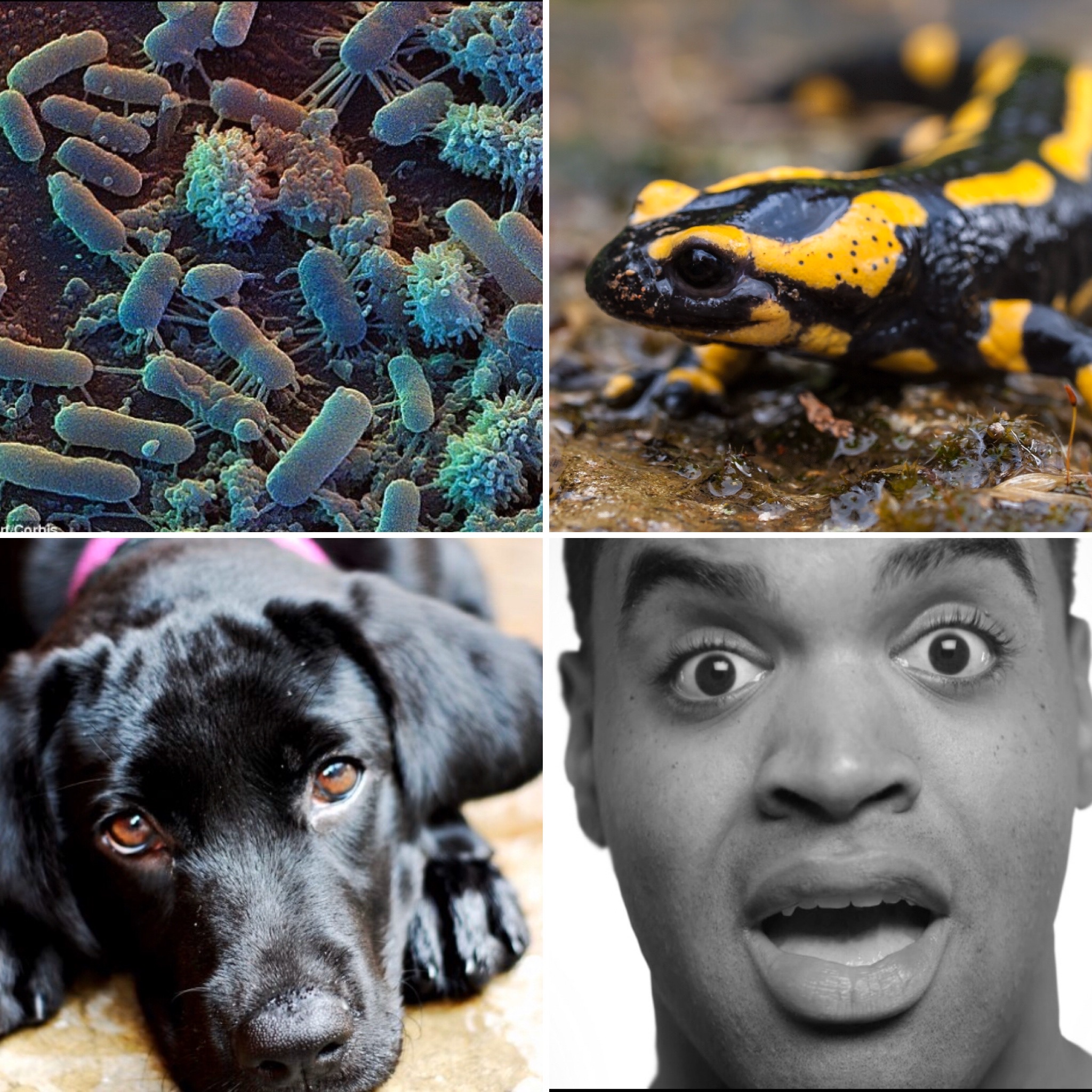
This roundtable examined Joseph LeDoux's book The Deep History of Ourselves: The Four-Billion-Year Story of How We Got Conscious Brains. The core premise challenges conventional understanding of human emotions as evolutionarily pre-formed states. LeDoux argues that single-cell microbes possessed basic survival mechanisms (detecting danger, seeking nutrients, maintaining fluid balance, reproduction) whose modern manifestations we interpret as fear, hunger, thirst, and pleasure. He contends emotions result from cognitive interpretation of significant life moments and require our specific brain architecture.
Speakers


Watch
Media
Related Roundtables



Transcript
This roundtable explores the deep evolutionary history of behavior, mind, and consciousness, prompted by Joseph LeDoux's book arguing that the molecular mechanisms underlying learning and memory trace back four billion years to the earliest single-celled organisms. LeDoux explains that molecules associated with synaptic plasticity in mammals are also found in organisms without nervous systems, suggesting that basic survival behaviors like feeding, threat avoidance, and reproduction have ancient molecular roots, even though these ancient capacities do not necessarily produce conscious experience.
The panel engages in a rich debate about the nature of consciousness across the spectrum of life. David Rosenthal presents higher-order theory, arguing consciousness requires awareness of being in a psychological state, and discusses blind sight experiments as evidence for this view. Carl Niklas describes how behavior becomes progressively elaborated through evolutionary transitions from single cells to colonial organisms to complex multicellularity. Kristin Lindquist contributes insights on how language and cultural concepts shape emotional categories, arguing that even among humans, the same word for an emotion does not guarantee the same experience.
Key tensions emerge around whether we can attribute consciousness to non-human animals, the distinction between unconscious threat responses and the conscious experience of fear, and the clinical implications of conflating behavioral responses with subjective experience in psychiatric treatment. The discussion concludes with LeDoux performing original songs that reflect on these themes of consciousness and the mysteries of the mind.
Show discussion topics
- 00:00:00 Welcome and introduction of panelists Joseph LeDoux, Kristin Lindquist, Carl Niklas, and David Rosenthal, followed by overview of LeDoux's book on the deep history of life.
- 00:06:20 Joseph LeDoux presents his thesis that molecular mechanisms of learning and memory trace back four billion years to single-celled organisms, predating nervous systems entirely.
- 00:14:18 Panel discusses whether behavior in plants and single-celled organisms constitutes genuine behavior, and Carl Niklas describes the progressive elaboration of behavior through evolutionary transitions from colonial to multicellular organisms.
- 00:21:09 Discussion of human self-awareness and suicide as uniquely human phenomena, the relationship between brain and body in decision-making, and plant reproductive strategies as a form of biological altruism.
- 00:32:20 David Rosenthal explains higher-order theory of consciousness, arguing that a psychological state is conscious only when accompanied by awareness of being in that state, and discusses blind sight experiments in humans and monkeys.
- 00:47:08 Debate about whether animals are conscious, the relationship between fear responses and conscious experience of fear, and how anthropomorphism shapes our interpretation of animal behavior.
- 00:54:31 Discussion of when human consciousness begins in ontogeny, the spectrum of consciousness across species and development, and Kristin Lindquist's work on how language and cultural concepts shape emotional experience.
- 01:06:32 Examination of animal deliberation, whether it implies consciousness, and the distinction between unconscious processing of alternatives and conscious reflection on choices.
- 01:11:52 Discussion of psychopharmacology and anxiety treatment, the gap between subjective experience and brain mechanisms, and how clinical approaches should target both behavioral and conscious aspects of emotional disorders.
- 01:28:54 Joseph LeDoux performs original songs inspired by the book's themes about consciousness, mind, and the deep history of life.
Show full transcript
00:00:00 I guess I'd like the top ones sorry I had lunch with [Music]
00:00:33 [Music] okay hi everybody welcome welcome to helix Center my name is Gerald Horowitz I'm the associate director of helix and nurse essien and people hear me okay no
00:01:05 okay I'll speak louder but I will get a little bit more amplification so my name is Gerald Horowitz on the associate director of helix Center head nurse essien our executive director is out today unfortunately for him because we have a wonderful program and I think that's reflected in this wonderful turnout we have here today so welcome everybody before we get started I want to mention our two of our upcoming panels the roundtables on March 14th
00:01:36 we're having a roundtable on the many minds of memory and then on April 18th the topic will be ethics and AI artificial intelligence and ethics so let me do a brief introduction to our panelists today the discussion today is based on Joseph LeDoux's new book
00:02:06 on the emotional brain and let me just say a few words about Joseph and we'll go through the rest of the panelists so Joseph LeDoux is the Henry and Lucy Moses professor of science at NYU in the Center for neural science he also directs the emotional brain Institute located at the Nathan Kline Institute in NYU and his professor in Department of Psychiatry and Department of Child and Adolescent Psychiatry to NYU Langone Medical School his work is focused on the brain
00:02:38 mechanisms of memory and emotion LeDoux is the author of the emotional brain which is the basis of our talk today the synaptic self and anxious the latter received the American Psychological Association William James book award LeDoux is also written about the brain for the New York Times a Huffington Post he's received a number of awards including the Carl Spencer Lashley award from the American Philosophical society the frizzen International Prize in
00:03:08 cognitive science the jean-louis Sigma a Jean Louise singer a prize of the Ipsen Foundation the Santiago Chris olia prize the American Psychological Association distinguished scientific contributions award the and that's enough the list really goes on and it's quite wonderful and impressive at the same time his most recent book is the deep history of ourselves the four billion years story of how we got conscious brains and that's the title of our talk today
00:03:42 christen Linke West who I'm imagining you can identify because she's our soul woman on the panel today is an associate professor at the University of North Carolina at Chapel Hill where she has appointments in the department of psychology and neuroscience and the biomedical research Imaging Center in the School of Medicine she directs the Carolina affective science lab which uses tools from behavioral science physiology and neuroscience to examine how our social world's bodies and brains conspire to create emotion she's
00:04:15 interested in how emotion and emotion motional regulation varies across the eight span and health and disease and across cultures Carl Nicholas you'll raise your hand since you're not as easy to identify there although the beard helps Carl J Nicholas is the Liberty Hyde Bailey professor of plant biology emeritus in the school of integrative plant science Cornell University his research is in the plant biophysics is in plant biophysics and evolution with a
00:04:45 particular focus on the evolution of biomechanics complexity and multicellularity he has written over 400 peer-reviewed articles and five books and they're listed here you could find them on your on your introduction to the talk today he's a fellow of the American Academy of Arts and Sciences the Institute of Advanced Study at the vishton Schaaf College in Berlin and the American Association for the Advancement of science David Rosenthal is professor
00:05:16 of philosophy at the Graduate Center of the City University of New York with courtesy appointments in linguistics and cognitive neuroscience he's also the coordinator of the Graduate Center's interdisciplinary concentration in cognitive science he is published widely on consciousness the mental qualities of perceiving and sensation the representational character of thought the nature of emotions the self and related topics including his 2005 book consciousness and mind his
00:05:48 work on consciousness advances the theory that a psychological state is conscious if it is accompanied by a thought to the effect that one is in that state he's also published in the nature of emotion the mind-body problem and the relation of thought and speech and I am the last panelist as I mentioned Gerald Horowitz I'll just say I'm a clinical neuropsychologist in psychopharmacologist who practices here in New York City and I'm in faculty at Columbia University so we're gonna begin
00:06:20 with Joseph LeDoux giving a brief sort of preci of his book and then we'll commence having our conversation thanks Jerry so it's really great to have these panelists because you know in a book about that covers four billion years we need a lot of different expertise to get into all of this and when I was writing the book the work that each of these people has done comes
00:06:51 into play because it's in part about the early history of life and I consulted quite a bit with Carl and as I was trying to understand how single cells became multicellular organisms and he was incredibly helpful for God to me in that Kristen's work on the cognitive construction of emotions is very consistent with the kinds of ideas that I'm interested in and I also am a very good friend and collaborator with David Rosenthal here who has the grandfather
00:07:24 the main god of higher order theory of consciousness which I also mostly subscribe to have my own version of it with them so it's it's a real pleasure to have all these folks here and to be able to interact with them so let me just tell you a little bit about the book if you know anything about my research you know that I study a part of the brain called the amygdala and its role in threat detection and responding to danger and I've done that for 30 or
00:07:56 something 30-something years maybe 40 years I don't even know anymore and so at one point I started thinking about something which is that the molecules that we've discovered in the rat brain that are important for the detection learning about danger and responding to danger are also the molecules that are present in bees and flies and snails and other organisms like that so Eric Kendall's work for
00:08:27 example in discovering all of these molecules was very influential and helpful because those of us studying mammals would have a much harder time doing that so we use the clues that Eric and his colleagues discovered and I was talking to one of his colleagues once about you know what how did these things come together how to flies and bees and slugs have the molecules that we end up having as well and of course it has to do with there being a common ancestor that had all of these molecules so if you think about
00:08:57 that we get you know that takes us somewhere around 630 million years ago so it goes back a long time and this fella his name is Seth grant who we tried to get to come to the panel he's in Scotland but and he what he would have loved to have come but he had a conflict so we weren't able to add him in the extra seat here but Seth's work is on the genetic mechanisms of memory and the genes in particular underlying certain kinds of receptors that are important and plasticity and Seth had
00:09:29 found these that these molecules not only are present in mammals and invertebrates but also in organisms like jellyfish and snails and slugs I'm sorry jellyfish and sponges and so we're now talking about the beginning of animal life but he also noted that their president protozoa now protozoa or single-cell organisms that are able to learn and you know they're able to detect danger respond to danger in their
00:10:00 environment incorporate nutrients balanced loads and Meuse behavior to do all these things they also reproduce they they the protists the protists which the protozoa are part of or the are the beginning of sexual reproduction so a single cell how does a single cell reproduce will sometimes it's self fertilization but other times there are male and female cells that will flirt a lot but male will fertilize the female so we're now going back about two billion years or so to get where we
00:10:31 still have these molecules that are present in us now these animals these organisms don't even have a nervous system so what are they doing with learning plasticity molecules there's nothing to be plastic about so the point is that you don't need a nervous system for behavior and you don't even need it for learning and that's kind of a mind-blowing concept and so if you keep going back and I kept going back until I got to the beginning of time to the beginning of the time of life which is about somewhere around 3.7 billion years
00:11:04 ago 4 billion years ago where the first cells are able to successfully reproduce and continue to reproduce so that the rest of life then followed these were bacterial like cells that also had to do these same things detect danger responded to detect danger incorporate nutrients balance fluids reproduce and things like that and they use behaviour for many of these things so when we we think about these in humans we're talking about danger we're talk about
00:11:36 fear incorporating nutrients we're talking about feeding and hunger balancing fluids we talk about thirst reproduction we talk about sex and pleasure but these mental states have nothing to do with why these behaviors exists they exist because they were necessary for these early bacterial cells to survive in their environment behavior is a tool of survival not a tool of the Munn we use behavior with our minds but most of our mental
00:12:07 capacities do not necessarily impact our behavior so for example in the work I do on the amygdala and threat detection in rats and in people we often hear the amygdala is the brains fear center that's absolutely wrong the amygdala detects in response to danger your fear as Kristen will talk about as a cognitive construction interpretation of what's going on around you it's not simply a bottom-up thing
00:12:38 that return on the amygdala and all of a sudden BAM you're afraid no the the fear is what happens when you realize what's going on so you jump back from a bus flying across 2nd Avenue here and you do the jumping back long before you feel any kind of fear your brain is able to keep you alive because it has survival talents and that's really what we are survival machines and we use our our greatest capacities such as consciousness and so forth to help us survive as well and then that's an
00:13:08 unusual thing in the history of life that we can anticipate the future and use our understanding of what's going on in order to keep us alive now our conscious minds are perhaps our greatest talent but they're also our worst that they're responsible for our worst proclivities greed anger Envy narcissism and all of the things that are getting us into trouble today and potentially preventing the future survival of our
00:13:39 species you know we're kind of I think baby Carlton adjust this more accurately but species have a kind of typical time course and I think we're probably pretty close to the end of ours the only way we can get past that I think would be if as a species we come together and use our collective of conscious minds to do something good for the survival of our kind so that's that kind of takes you from the beginning of the book to the end and I guess we can throw it open to a conversation I can tell you it's just
00:14:18 wonderful Magisterial you know the end you could imagine 4 billion years a lot of time to cover it and he covers it beautifully I guess there's so many places that jump in and have a conversation about the contents of the book but I think maybe we should start at the beginning and talk a little bit out the AVA where the development of behavior was that sort of a an interesting entry point shall continue or it's shown I mean things as I said behavior is something that every
00:14:50 organism does in some way including plants which Carl works on them a tree that is is absorbing light might are certainly sunflowers are going to in to adapt to the the light the the roots and plants will seek out minerals and and water and there are many things that the plants do that are quite amazing behaviorally and I think that that's actually kind of a hot topic now plant behavior we just have to be careful not to go too far when we over interpret
00:15:20 plant behavior in terms of the mental states and I'll just stop there and throw it open well I would add that behavior it probably should be viewed as an example of any kind of biological trait that spans the continuum of the Tree of Life and if you look at its evolutionary history even consciousness you see that to one degree or another it
00:15:51 exists within every lineage of life including plants and bacteria but it is elaborated progressively with the appearance of new evolutionary groups and you see that it becomes more elaborated as you go from unicellular to multicellular and in multicellular animals for example it becomes more elaborate from those lineages that lack a central nervous system to those that
00:16:23 do now even though one can look at it as a continuum through the Tree of Life that doesn't mean that it doesn't have discernible thresholds so the analogy that I would give is if you look at the visible electromagnetic spectrum light and you see that the wavelengths go from blue dread in increments of one wavelength you still nonetheless see the different colors of the rainbow and so those are the thresholds and so we can
00:16:55 say for example in lineage a we not sure that there's a level of consciousness but when you get to let's say Homo sapiens and primates yes consciousness appears to be the most elaborate so as again there's this continuum and but there are these increments that when you go from one wavelength to the next you go from orange to yellow or yellow to orange my cards you to talk briefly
00:17:26 about the importance of genetic Compellent compatibility of the cells within an organism and what was required to create a multicellular organism with all the cell's having the same genetic compatibility ok very briefly so if we look at the fossil record and I brought a prop which maybe I'll discuss in a little minute we see that every lineage plant animal begins as a unicellular ancestral form
00:17:59 and then if we look at the progressive evolution we see that we go generally to colonial and then to simple multicellular and then to complex multicellular organisms so the theory is that there are two very critical stages the first is a stage in which the unicellular to colonial has to have genetic compatibility amongst your joining cells just may be explained in
00:18:30 colonial one that yeah so a colonial organism would be something like a sponge so you have a bunch of aggregated cells that are to some extent cooperating and behavior in behavior behaving in a in a collaborative way if I was talking about plants I'd be talking about some kind of alga that is just a glob of cells glued together by an extracellular matrix but those cells have to be at least initially
00:19:02 genetically compatible and so it's comparatively easy to do that in the sense that when a cell divides its derivative cells are very very similar genetically and so there's this communicate this community structure that's established but then the really difficult stage is this second stage where you go from cells that are cooperating to cells that have now exported their fitness so in other words
00:19:35 the survival of the multicellular organism doesn't depend on the survival of the individual cells it depends on the reproductive success of the multicellular entity and that's a very difficult thing to achieve nevertheless if you look at the fossil record multicellularity has evolved at a minimum of twenty seven independent evolutionary events and it all started with something like this this this is a
00:20:08 fossil which I'll pass around but don't cut yourself this rock is 2.6 billion years old it's an example of thing called a stromatolite it's a minerals that were precipitated by a bacterial biofilm and inside this are micro fossils which are visible when you take thin sections and look at them through the microscope now if I was alive back then 2.6 billion
00:20:39 years I would still see things that perhaps I would identify as behavior because these biofilm organisms are collaborating some of them are doing one function another another function but getting them all to collaborate as a single multicellular organism that's a very complicated thing so if you'd like to pass this around just don't cut yourself on the edges that's sharp so one of the ideas I end up with at the
00:21:09 end of the book and it's kind of a crazy idea but anyway is that the human capacity for self-awareness is results in our brain having a rote component that is different from anything else that has existed in the multicellular organism which is the ability to go against the will are they you the good greater good of all of the other cells of the body and in your own life and I think that
00:21:42 that doesn't exist in any other organism you have to be able to to know you exist to know that an N can't exist and to choose to bring that in to fruition so it that was one of the most amazing things and many I discovered many amazing things reading Karl's work and other really deep biological thinkers on these topics but one of the things that stuck with me was the compatibility of an organism to have an organism that has
00:22:16 many cells all of the cells have to work towards the purpose of the organism to stay alive and that's why you know unlike in a colony where you can remove a cell or cell can can defect and live on its own because it's not dependent on the the colony it helps the colony if the cell was there so the colony needs to protect some way from the cells defecting but if we remove a skin cell or any other cell from our body the cell
00:22:47 dies because we have so many different parts of our body that are interdependent our circulatory system depends on our respiratory system and and so on so it's just a multicellular organism it's just a fascinating thing and I thank you for every thing I learned from your work so maybe David we should talk about consciousness you will question and what you just said about this suicide thing if the animal a human
00:23:22 thanks well this is a good idea I'm gonna end my life and it goes ahead and does that why I mean there are all sorts of psychological things that I'm not competent saying anything about that and but it's let's assume that we have a case of a person who decides I'm gonna in my life and it's actually from the point of view of the person's psychological functioning that's a good
00:23:55 thing why is this going against the rest of I mean because it's the rest of the body doesn't want to die its purpose is to keep on living well the rest of the body is doing whatever it does as long as the animal is alive but you have a part of the animal one small part of the animal that is making a decision for the rest of the body normally the bodies are working as a unit well so if I'm a tiger and I see
00:24:28 prey over there and I say I'm hungry I'm gonna go kill the prey and eat the prey this is my psychological functioning that's driving the rest of my limbs my mouth and all of this stuff I was so logical bitter I'm sorry I would make it a cycle I would say that it's the survival imperative of the organism to do that I mean that may be some psychology that goes with it but I don't think that's necessarily what's driving the babe so when you talk
00:25:01 about psychology it's got to be conscious I was assuming that [Music] happens above the neck so to speak that's going to be psychological over Tyrell medulla is causing us to breathe and causing a heart River I don't think we can take everything in the brain as psychological well I was being a little loose that way but in any case the brain
00:25:32 is not asking the kidneys or the feet or any other part of the putti about this business of going over and killing the prey and eating it the brain is driving the rest of the body so maybe there's a smaller piece of the brain that says I know what I've been around long enough I'm going to put an end to all of this Minh to be a continuity between the brain running the
00:26:05 body for killing prey and like what was that as you said it's not small I wouldn't say a small piece but there's one component of the brain's capacity that it's making a decision that is going to terminate the activity of everything else it's not where as biologically organisms are designed but we should not design but are built so that they can persist we do the reason
00:26:35 yeah I'm a plant person so a lot of the examples that I can give are probably very alien because plants are not alive at least a lot of people don't view them as living organisms but anyway I can think of a few examples amongst plants where the entire organism essentially commits suicide but in each case it's for reproduction
00:27:06 so the sunflower for example a lot of aquatic plants will reproduce once and when they reproduce once they divert all of their energy from the somatic non reproductive cells they'll divert all of their resources into perpetuating and as close as it can ensuring the survival of its progeny so that is one word that comes to my mind
00:27:37 is it's an example of altruism it's not saying I'm tired of living I don't want to live in fact it's committing the ultimate Darwinian self-sacrifice for the fitness of the next generation and it but it's a one set decision but it's a process of the yes it's actually genetically programmed its genetic so I don't know I'm not
00:28:07 going to use the word consciousness but it's certainly behavioral the purpose of the brain is to regulate the body and to ensure our survival and so is it is odd for a human to sort of override that process in the case of plants there of ensuring the longevity of the extended organism okay the socio is the immuno Durkheim had an interesting discussion of all of this and this is where I'm getting this idea of the the human being
00:28:39 the only a organism that intentionally terminates itself when you mentioned Carl the the development of multicellularity and how now the some that these cells with similar genetic endowment now as you said they've exported their fitness and this may sound like it's a digression but I think it is related to what we're talking about now and so does that make rubbin
00:29:12 of The Selfish Gene notion and and I mention it in the context of well are there directives let's call them from nature that are at odds with one another in this case you see it they may they may line up differently depending on whether it's a you know cell your cologne II old versus a multicellular organism well if you read Dawkins very carefully that something should change he's really not saying the genius in control
00:29:42 he's been interpreted to really push that point of view and later on in his subsequent publications he kind of has but in that book he really is talking about the emergent properties from the level of the genome from the genetic structure and we know that genetic structure does not directly map to the phenotype to the appearance of the
00:30:13 organism when I was a student at CCNY I was taught well DNA messenger RNA protein we didn't know about alternative splicing we didn't know about intrinsically disordered proteins we didn't know about gene silencing we didn't know about epigenetics what we do know now is you cannot directly map the genotype to the phenotype and so this self is gene the way it's been
00:30:44 interpreted in the popular literature is rubbish well the idea of the fitness being exported which i think is a wonderful freddie's haven't put a latch on to that it makes a single that's now the the element that gets affected by a natural selection yes and it's some slightly more abstract sort of thing well I mean if you talk about the export of Fitness what you're really saying is the fitness of the organism does not depend
00:31:16 on the number of times individual cells divide it depends on the number of times the multicellular organism reproduces so if you cut off your arm which is not suicide by accident all those cells are dead but that's irrelevant their fitness has nothing to do with the individual's capacity to reproduce and produce progeny so that's one way of thinking about the export of Fitness it's a major
00:31:48 major transition in every evolutionary lineage that's achieved complicated multicellularity so whereas there are instances of say for example program death like apoptosis and you mentioned the example the plan I think Joe what you're talking about it still is something different that this sort of I have a there's a meaning behind my act than my life which it seems to be in a
00:32:20 different it's a difference of concept right so so risen out of this sort of lower lower level biological functions that might include program death it's a higher order thought right well I think and then so Joe is alluding to my theory of consciousness the theory of consciousness is basically a very common sense lines I think if
00:32:51 you're in some cite some type of psychological state the state counts as conscious only if you're aware of being in that state and that seems natural because if somebody if we have evidence that somebody is in a certain psychological state and the person says no I'm not I don't feel that way I don't see the stimulus I don't have that thought I don't have that desire whatever it might be that's evidence
00:33:23 that the but we still have evidence that the person is in the state and it's possible under all these the conditions that I just mentioned to have such evidence then we have a case of we have a clear case of an unconscious mental state so that pretty much implies that what it is for a state to be conscious is for the individual to be aware but in some way or another and what I've argued
00:33:54 is going again from the human case here though unlike Joe I think I would move down to non linguistic animals but in the human case the standard thing is that if I'm in a mental state that I am aware of I can tell you that and if I tell you that that's performing a speech act I'm saying something I'm expressing a thought that I'm in that state so the
00:34:26 way that I'm aware of being in the state is by having a thought about it that's basically the theory and as Joe mentioned he likes the theory he has a slightly different version of him but so I just like to add one thing too to what you said which is that you know a lot of people think I say that animals don't have consciousness that I don't say that I say that we don't know what
00:34:56 they have right precisely because they can't tell us and we can't use behavior as a reliable indicator of what an animal is experiencing for example this has been tempted in the area of emotion with the amygdala and fear we assumed it because a rat and a person both freeze to danger and in both the in both cases the amygdala is required to freeze to danger that that must mean that the the rat and the person both feel fear and that the rat feels fear because the
00:35:28 person feels fear and they're both using the amygdala but the assumption is wrong that you know I often when we are running from a bear we are afraid but that doesn't mean the fear is what causes us to run they're not the same thing those are correlations not causation every scientists is taught from day one to not confuse correlation causation and yet we've been kind of seduced by this correlation to think that if an animal or a person is
00:35:59 responding to danger it must be because they're afraid but when we look in the brain and start trying to analyze how fear is coming about we see that there are people who have damage to the amygdala that under some conditions can still report for your so also if we present stimuli to a person subliminally so the person that means a very quick flash for example that means the person doesn't know the stimulus is there doesn't report feeling any fear but the amygdala is activated the heart is
00:36:30 racing palms are sweating so the responses are there but fear is not what's driving them that doesn't mean fear is irrelevant it's just not what the amygdala is doing so we have to look elsewhere for where the Magdala my fear may be coming from and building on on your theory I and others have talked about high order states involving prefrontal cortex in fact you and pop one loud written about any frontal cortex so let me just say a couple of words about prefrontal cortex
00:37:01 there are different parts of the prefrontal cortex one of which has properties that are only found in the human brain and this is called the frontal Pole now there are other parts of the prefrontal cortex for example the dorsal lateral prefrontal cortex that are only found in primates including other humans and this has also been actually implicated in consciousness in humans so I'm willing to say yes probably other primates because they have this part of the brain could very
00:37:32 well have some kind of awareness but an awareness that is made possible by that kind of prefrontal cortex as opposed to the other time so my eye gave me that the these dorsal outer regions shared by all primates are involved in a kind of knowledge of what's there whereas the frontal Pole for other reasons I won't go into other than that that it's relatively unique in humans might be involved in the ability to know that it's you that is aware of what's there so that extra higher-order thought that
00:38:04 that that awareness that you have it's definitely worth pursuing in terms of this frontal following we don't have an answer to this question yet but in in your paper with off one loud 2011 you mentioned the frontal Pole that's really how I got onto the front of poles and thank you but now if we go to other mammals there are a bunch of prefrontal regions that are present in these elements but on the medial side of the hemisphere inside the that we have the
00:38:35 two hemispheres is a hot dog and we spread them apart so the white untoasted part would be where the medium areas are and these are put the mustard yeah yeah and the dog yes market but the so these other these other mammals have these medial prefrontal areas and this may allow a kind of body awareness that is another level down that beyond that knowledge that you know that they understand
00:39:07 what's out there and beyond their knowledge that they know that it's then that's having that state so I allow for all these things I just don't know how we would test it and here's the thing there's an experiment that Alan Callie and Petra stiring did with some macaque monkeys so blindsight is a condition where some area of primary visual cortex
00:39:40 is ablated or damaged doesn't function and if a person with blind sight is presented with a stimulus that goes to that area of primary visual cortex the person will say I don't see anything on the other hand the person will be able to guess if the experimenter presses the person to guess you say yes about what
00:40:13 the nature of the stimulus was that you're saying you didn't see and the subject will say well I can't guess I didn't say anything please just guess and they get it more or less around 83% of the time correct which is very good and there have been a number human subjects of this sort and the results are pretty constant so what can
00:40:47 we in staring did was to surgically oblate I think it was the right side well the the left the left side of primary visual cortex will see the right field the right visual field and they had a monkey that in two separate experiments performed as follows the monkey was able to reach out and
00:41:19 touch something in the right visual field even though that's that's the blind side area for that monkey then several months later the monkey was trained to distinguish between a stimulus and the left side and a blank so if there's something you press it if it's a blank you press another button which is the blank button and then it turned out that this monkey would press
00:41:52 the blank button for a stimulus in the right side so the monkey is able to do pretty much what a human can do that is to say in a certain way the monkey is able to guess that there is something there and the monkey also says I don't see anything and it seems to me that it's hard to explain that pair of results without assuming that the monkey has blind sight that is to say that
00:42:23 there's a difference for the monkey between seeing and consciously seeing so I'll just refer to what Larry wise Pratt said about that which is that yes it looks like they're seeing but because it's an animal we can't elaborate my experiences as the person who discovered blood citing that has popularized it and also invented these commentaries that Calvin story where we're using Larry said we think that the animal was conscious but we simply don't know scientifically you know that there's no
00:42:55 proof so Larry was the one who told me about this particular experiment right oh but it friends that in conversation he told me he thinks this is evidence finding Joe that I think is hard to explain any other way so one canister ran for a hypothesis what's the hypothesis that would explain the fact that the monkey can actually detect but
00:43:28 the monkey presses the blank button for a stimulus on that side I'm willing to admit it's possible I'm sorry I'm willing to admit it's possible but the other explanation would be that there's some sort of disposition to act it doesn't necessarily include what we often refer to as consciousness right isn't that for an explanation of is the pair of Rousseau's yeah why why is it I mean so if stimulus is presented on the
00:44:02 left side yeah the monkey presses the stimulant where the stimulus is on the screen right if no stimulus on the left side press is blank right and if the stimulus on the right side precious black and so that's one kind of experiment and the other kind of experiment is that the monkey can actually detect it so it seems as though there's a distinction between the
00:44:32 ability to detect which I'm suggesting car to make humans guessing on the one hand and the monkey is counting it as a blank whatever it means for blank blank means I don't say anything yeah I'm not sure if this is relevant and please I'm apologizing I'm speaking as a botanist but I think of his philosopher Annette Bloch that made the difference between
00:45:05 the phenomenology of responding and receiving signals and the phenomenology of being aware of those signals and so I'd like to point out that plants which lack a neurological system but nevertheless have an electrical signaling system within them clearly perceive external stimuli and respond to
00:45:36 them adaptively so that's kind of a phenomenological awareness but it's by no means self-awareness there is no reflection as we might project from our own experiences so this thing called consciousness is a touchy subject I'm not sure I think it was John Locke who actually used the word consciousness for the first time it was de Vougeot was it
00:46:06 well I Locke said consciousness is what happens in man's mind and that was the definition not that definitions are holding but I just say that this there's one attribute that I think defines all forms of life and when I was a young person god that's not only a century ago but a millennium ago the biology books said life is defined by irritability
00:46:37 and then you read on and it says and as I get older I become more irritable but would it but it was really saying was that a life response it reacts to external stimuli and I think that is from bacteria all the way up to us but this thing about consciousness being self-awareness as I have to agree I'm not sure that any primate other than us
00:47:08 has been shown to be truly self-aware I think in your book Joe did you spend a lot of time trying to push back against certain intuitions even you criticize Darwin for this in a way for adapting adopting anthropomorphism maybe as you say prematurely I think it's it's such a woolly concept conscious because we also mean slightly different things when we use in different senses for example but
00:47:39 I'm interested in the the the famous story about running from a bear because I think where you might also lose some of your audience is that it would seem to me whatever in tells you to start running when I see a bear at some point along the line especially if I think about it you know hypothetically I get fearful right so you and I can imagine even in the in the actual event of running away halfway down the whatever it is not a block I guess I've been there a bear but what you are fearful but yeah it is your fear
00:48:10 of the cause right right exactly right so at some point it certainly kicks in that's for sure maybe cruising marieve the study of emotion there is a tradition of assuming that there's some centrally organized state that is causing behaviors and you see that as far back as Plato right and Darwin was certainly guilty of this and perhaps is the one who has sort of ushered that idea into too modern modern science and yet behaviors are often emerging more
00:48:43 quickly than conscious experiences and so the brain is perceiving behaviors as they're unfolding its perceiving stimuli in the world around it it's perceiving this remoter changes in the body and is categorizing those experiences but there's not clear evidence that there is some centralized mechanism that is fear per se that is causing a certain suite of behaviors or anger per se that's causing a sort of sort of suite of behaviors you know I was just thinking
00:49:14 about how when you're addressing people and trying to explain that there's such a good kindest pushback because our conscious you know deliberations about these episodes so strongly inserts fear that's right you know if all we needed was intuition we wouldn't have to do experiments science would be irrelevant so I mean intuition is often the starting point of an experiment some scientific endeavor we're all you know men we live in our heads we live in our
00:49:45 foot psychology and this is why we do psychology and want to understand and how it all works but ultimately we have to get to what's going on in terms of how these processes really work and what I've tried to argue is that the processes that control these innate behaviors like freezing or escape are separate from those that are making this feel fear and I think this is consistent with Kristen's work as well you know it's the
00:50:16 we're we're innately and of amorphic and it's been said that the promoters and was very useful to our early ancestors to stay living with cows and creating farming and agriculture it was helpful to treat animals as little people of big people wouldn't Bend on the animal that you know because they were partners and in this process might be not equal partners and we know that one guy and so
00:50:47 if something could be innate in our brain and yet not be scientifically correct because it's not about whether it's scientifically accurate it's about whether it was useful to our species so and I said this almost every lecture I give I go home I pet my cat he purrs and I think he's happy you don't have to be a scientist every moment of your working life this science is a different thing than life in we you know we lead our lives in ways and sometimes science is useful in leading our lives but certainly it's not a way to if you had
00:51:20 if you didn't have another hat you could never have a pet if you were you know material earth scientists like me right I would argue that we're not just innately anthropomorphic but we innately assign agency to things and so we infer intention from behaviors because it's a useful shortcut cognitively and therefore we are likely to infer intention in other people's behaviors in animals behaviors in natural events in ways that they don't actually exist cartoon characters named plants the one
00:51:55 advantage to being a botanist is that you're studying organisms don't bleed on you and the other is that it's almost impossible to project human emotions when you're looking at an organism said well yes but as a scientist who studies plants I have no fear about projecting human emotions or attributes to plants now what about this make that rubbish of the
00:52:25 Turing test you know what well the idea that we answer mortify survive Alan Turing right said famously that if you know if you're interacting with a computer program and you can't tell the difference about whether it's a conscious being or not then it's conscious so this line of argument would suggest that's just totally wrong well Turing's idea is the Turing imagine that
00:52:56 Tudor was considering whether you could have a computer program that would be as elaborate and flexible as a person would be so that's not think along the lines of anthropomorphizing an elephant or a palm tree so much but he's relying on the notion of acceptable anthropomorphize Asian as a criterion for consciousness well he's relying on
00:53:27 he's relying on a particular hypothesis that humans are able to react in a conversational setting like this in marvelously flexible unpredictable ways and so some very smart programmer he was a very smart Ramar might be able to design a program Thanks so that a very smart psychologist
00:54:00 wouldn't be able to tell whether a program was behind the screen or a person would like the screen that person was typing out answers right and so it's particularly offices about I think the nature of human thinking rather than something having to do with interval or fising a thought that has occurred to me while listening to this is and it's a
00:54:31 question I'm not sure anyone's really ever asked is when does the individual human being become conscious Ouiser this we start out as a fertilized egg the zygote to go through the blastula gastrula a neurological modifications right but the point is the point is that that's the same organism throughout its ontogeny and this attribute that we call consciousness makes its it appearance at
00:55:03 some stage in that ontogenetic sequence so it's fair to say that we are not conscious throughout our entire embryology or in many or most of our life it's worth making a few distinctions one distinction we use the word conscious between the way we all are now appear when we're asleep we're knocked out or anesthetized or
00:55:35 something like that so that's one kind of consciousness that has to do something like biological functioning we also use the word conscious cell unconscious at the table I'm conscious of a water bottle I'm so and it might be that the psychological state the visual
00:56:06 state virtual which I wear at the table in front of me is an unconscious visual state one of these subliminal states so if you say well David is there a table in front of you I would say no there isn't but then if you ran some tests like priming test or forced-choice or whatever you would be able to see actually I was seeing the table so I was conscious at the table but not consciously conscious and sometimes this
00:56:40 appears in the popular press as a distinction between being aware of the table and being consciously aware of the table well my mom seemed to be able to my question gets back to this so there did these three things that developmentally will emerge at some point we with an animal's development my statement actually was meant to provoke that kind of response but also but also
00:57:10 to point out that not that I'm heckle saying that ontogeny recapitulates phylogeny but it's kind of interesting that when you look at the Tree of Life from unicellular to multicellular from simple multicellular too complicated multicellular from early primates too late primates of which we're the most recent example the question here may be the last the question is when does it make its appearance that we would say
00:57:41 this thing is self conscious and so that's that's even beyond what I was talking about because so if we're talking about the difference between seeing something consciously and sing and subliminally that's not a matter of self consciousness that's something more primitive and then joke talks of the book a fair amount about this he uses this notion that he
00:58:13 blows from handle talking about butter noetic consciousness I'm then I'm not completely comfortable with the distinction between order noetic consciousness and noetic consciousness but at least since something that involves reflective awareness in the self is a more advanced stage of development than simply consciously seeing so Michael Lewis is a developmental psychologist has written a
00:58:45 book called the dawn of consciousness or something like that forget exactly the title and then that he proposes that the child becomes conscious and an adult kind of sense with the development of personal pronouns around the age of two or three so that you don't have something to hang your you're understanding of who you are I mean mine and you know it's not that the child was you know asleep all that time
00:59:16 but didn't have a sense of me the way you have when you have a concept and I think maybe Christian can say a lot about concepts and emotions and consciousness and so forth yeah so there's a lot of developmentalist who argue that self-awareness and children emerges around two or three around or eighteen months around the time that they can identify themselves from other individuals via this mirror self recognition task so you put a dot on the child's head and you make them look in
00:59:47 the mirror and instead of touching the other baby in the mirror they touch their their own forehead and it's thought that that is an indication of the self but the self like any concept is is a concept that is accumulated over time that you are you and you have certain features and certain lights likes and certain dislikes and it's clear that that's something that emerges over over toddlerhood but your comment
01:00:17 was was interesting regarding ontogeny as it sort of recapitulates the phylogeny that joe outlines in the book because it is this this gradual process right and we there's an urge to infer these stages at which their ships and it's much more complicated than that yeah I'll go back to that analogy that I made with visible light when you break
01:00:48 it up with a spectrum that you know you go from one frequency to the next click-click-click-click you go from red to blue and in between are all the colors of the rainbow and there are demonstrable thresholds when we would all agree this is yellow this is orange this is green and yet it's a continuum that's a process which to me is rather interesting even from an evolutionary Neri point of view because as you probably all aware there's an argument between saltation 11 and gradual istic
01:01:19 evolution and I don't see them as necessarily mutually exclusive by virtue of that analogy that I can get you know go from a fish to a terrestrial thing or an amphibian and that doesn't mean that I had to go through a massive reorganization of this body structure of the organism you really have answers a question I was about to pose doesn't completely answer I think but that is I think what an amazing sort of miracle or mystery it is that we all pass through
01:01:51 this developmental stage when we are unconscious and become conscious and then likewise every day there are lots of instances where we're self-aware not self-aware I'm thinking of the example of driving in the car and some did you're very but you know and then you suddenly realize where's my mind been all this time even though obviously we're responding to the thing but the I think well that's an amazing fear why can't we pinpoint why do that well that's aha that's where I stayed conscious because we don't and we don't know that but it's interesting that with
01:02:21 the analogy with the colour spectrum is because you know there are those oddball colors between yellow and orange let's say or blue and purple where we might stop and think I don't know where the line is here I'm not sure where the line is right and that maybe I'm putting out there is a possible analogy to our difficulty knowing when we're fully conscious or not you know it's a more complicated in terms of emotions I mean we have these specific words that we use and you know but the
01:02:53 gradations are not so clear and Kristin you've done a lot of work on emotion words and also in terms of culture and maybe you could yeah it's actually going to start that off with the color analogy which is interesting because it turns out that there are actually cultural differences and where people see cut and visible spectrum of light and you know there's hot debate surrounding this but it it does seem that you know even within a culture people disagree on where you know where the categories
01:03:23 begin and end and certainly across cultures people disagree about where color categories you get an end now if that's the case for color emotion is much more complicated and they're much of my work has shown that the emotion words that people know and acquire through their culture name rich sets of categories that help people to parcel a the the world into emotional meaning and so the richer your emotion vocabulary
01:03:56 the more likely you are to see instances of these categories in the world around you and so in that sense to come full circle to the point about language humans may have a unique form of consciousness that is predicated on their ability to use language which essentially warps perceptual space it makes certain things look more similar together to one another and certain things look more distinct from one another and that's not to say that
01:04:26 animals don't have complex representations but the question then becomes one of gradation again right so to the extent that animals have the ability to represent these rich caches of knowledge in an abstract way they may or may not have emotion concepts that that look something like humans you know think it's interesting that we can translate a word like fear across languages but obviously we know that there are cultural differences in the experience of these things but we assume
01:04:57 because we have the same word we're all experiencing the same thing and this is you know a huge problem and geopolitical politics where we take we take the translation literally but it means acts to people who are listening to the translation and why do the people from the translation is coming from so I mean words are our friend but also can get us into trouble that's what they use and I think scientists are often very sloppy with words I have a person
01:05:27 difficulties happen even in very local context and very often because you know people are being nice they don't say anything about it or they may not notice it but I don't think that you have to travel across national boundaries turbulent languages embedment yeah you're gonna say something yeah oh I was
01:05:58 gonna personal example I was writing a book with a German colleague and we were working together week after week a lot of math and we decided that one day we would speak English and the next day we would speak German so our brains didn't fry and at one point the day we spoke English I'm trying to explain something to Christophe and he said nein nein nein that it doesn't makes no sense so I said it in German he said oh yeah
01:06:32 there's yojo in your book you do make a variant introduction to this topic of deliberation does it chapter on that and I think this goes back to maybe even the example with the monkeys is this I guess one one thing that makes some of us believe that an animal might be conscious if they seem to deliberate it's a conscious to themselves I know the stoic philosopher chrysippus mentioned that would describe how animals for example who might be
01:07:04 preparing to leap over her vas will size up their ability to do it and seem to be in some way deliberating and aware and he uses it as a believes a demonstration that there's some degree of self-awareness at least in that regard I I know how far I might be able to jump or not and will I do it so sometimes the animal back off from them sometimes that kind of a week and that's a really interesting challenge to the idea that
01:07:35 animals aren't you know aren't conscious I mean I'm not saying I accept him but I think it's very interesting sort of you know one of the points I tried to make about deliberation was that you have to distinguish conscious from non conscious deliberation so our cognitive capacities are are they a lot of what we do is done unconsciously we make decisions all the time and we may justify the names after the fact consciously but you know in the process of making snap decisions we're not like analyzing everything consciously so the animal that's making
01:08:08 that snap decision about whether to jump or not or maybe it's you know maybe it's not so snap but you don't know that it's consciously exploring it probably is that's but it's an interesting challenge it's just so much appears to be that but everyone checked I would add to the worry that sometimes at least it seems to me and other people that I talk to what happens well I don't know whether to do a or B and instead of being
01:08:42 Aristotle and whatever Aristotle was saying about the liberating which would be very conscious I turn my mind off so to speak though I don't turn my mind off but I turn I stop thinking about it consciously and I let it simmer and you know it's going on somewhere but I'm not paying anything oh then I see things clearly and so this is the unconscious processes that are doing the work really are debating instances yes I'm not suggesting that
01:09:15 they aren't delivered I'm suggesting that they are unconscious and that's that we can't extrapolate from the liberation to consciousness Joe may be familiar with this work but there's evidence that you can look at cells that map out space in a noncom animal and as the animal is preparing to behave it's simulating which pathway
01:09:45 it's going to take and you can see that playing out and the the firing of the cells and then the question becomes is that deliberation the parade so again we need to be careful with our with our definitions it's amazing whatever it is well it's something like a decision-making process so was you're worried about whether its deliberation whether it's conscious deliberation I'm just pointing out again
01:10:17 that it's slippery right we're where we begin to infer some sort of human-like state right humans certainly deliberate by saying should I take you know this route or this route but if the if the animal brain is is stimulating these future events and sort of weighing which one to guide behavior the question is is that sort of thinking I'm at all the space and place cell and all can't come from Tolman's observations that rats are deliberating if they go through a maze
01:10:47 and then those are the mental modeling of the maze so yeah I think you know there's a lot of stuff that happens outside of what we're thinking about plant roots are an example actually a number of measurements showing how roots penetrate the soil that the tips are the growing points of the root and you will occasionally see the tip of the roots stopped growing and it's sensing and we know the mechanism which is the weakest
01:11:20 root and that's the one it follows so you know is that deliberation but it's it's really perceiving alternatives and it adaptively takes the easy way out so to speak so just to go back to the you know your question earlier about the hard sell but it's not fear that's causing us to respond this way so this
01:11:52 is coming at it from a different angle but this is your field in terms of psychopharmacology and so let me ask you a question how would you evaluate current treatments psychopharmacological treatments for novel treatments for anxiety right now well I haven't much evolved over last you know 40 years they have 40 years and I guess I'd say they're I guess it reminds me of your common you know that people could not have them
01:12:23 know that and the mikkel instilled to have fear you know it's very difficult to pin down exactly the conscious experience of fear but you know it's interesting there there's some interaction between the sort of sheer physiological response like for example in the panic attack and and the experience of avoiding behavior right because we usually in psychiatry think we don't talk about fear actually is that much about it virtually usually in
01:12:54 which isn't it as a shame people patients are later but more avoidant behavior and so most of the efforts are made to damp down a lot of the physiological responses and I think it was interesting we've spoken about Donald kleiner earlier who was the psychiatrist recently passed away who distinguish panic anxiety from sort of generalized anxiety and he'd also discovered that the imipramine which is one of the older and the presence seemed to effectively for that and was better
01:13:25 than taking events though as a being like valium or xanax and that was a very interesting breakthrough because it did seem to create a very distinct and unanticipated benefit from the class of drugs there was no reason to think aside from what God Don thinking about it no obvious reason to think that that would work but it does actually help them there are a lot of theories about why that's so but there is this sort of residual problem of patients going through this and still being troubled by avoidant behavior another example would be PTSD I mean
01:13:58 it's very difficult to get people to despite all sorts of pharmacological and behavioral treatments if they succeed sometimes of course but it now you know perfect solution to those things the Danny pine and psychiatrist not wrote a paper a few years ago I don't know I know I said so in this paper we review the efforts to find medications and so forth to help people with problems of fear and anxiety and I
01:14:28 guess more anxiety than fear because you just said it's not as fear is not talked about as much but one of the things that comes up is the fact that the pharmaceutical industry is getting out of the business of developing new treatments and the reason is because nothing has been discovered over the last 40 years really and so what we propose in this paper is the problem is not with the studies that are being done but with the interpretation that's being
01:15:00 applied to them because the way the research is done is to work on for example avoidant behavior and rats or mice and assume that that's going to make the person less fearful or anxious but because the amygdala these subcortical circuits that control those behaviors are not generating the fear and anxiety itself the subjective experience the the the patients don't quote feel better so the problem is that we've assumed that you have this fear center that can
01:15:30 be targeted by drug and that if you change that fear center the person is better but that's not how it works I mean the subjective experience of the patient has to be an endpoint and I think think this is not my field as an outsider it seems that subjective experience has been marginalized in the field both in cognitive therapy and in pharmaceutical therapy as a goal of the whole process well I'll say since we're
01:16:02 sitting here you know psychoanalysts don't do to make that mistake I know right they do give a lot of consideration to that but I like to say it when patients challenge me about how long it's taking for them to get better that there's a little bit of a chief out but I'll say look it's it's an amazing your minds unbelievably complex and complicated and it's not a tremendous shock that it's difficult to fix it I don't think you'd want to be simpler so that it would be easy to find the drugs to do this and I really do
01:16:33 think that's true of you imagine consciousness that's why that's also a brought to mind the story about running away from the bear maybe somewhere along the line I'd say well for sure now I'm fearful with the bear right whether or not I first bolted because I saw one and that the symbolic rendering of a fearful object for a beloved object or of the object of jealousy whatever whatever so the the symbolic representations that made very well sit in the very part of
01:17:05 the brain that you're interested in you know associating with consciousness of a prefrontal Hall and the mechanisms which are novel to unions you say I accept are not the sorts of mechanisms that respond easily to be infused with a certain you know molecule so I don't think it would be possible to change the content of a conscious thought right with a drug I mean how would you even design that exactly that's exactly what I'd say you
01:17:37 know it's interesting because the out the sort of opera says that is patients because they've read that some drugs can induce suicidal thinking really which i think is done more bad than good because a lot of people stay away from medicines and otherwise help them really literally get this notion that this will put this idea in my head you know and I guess in some sense that's kind of true but it's not it's not an idea that's being inserted at their head it's some level of arousal agitation and dysphoria unhappiness that
01:18:10 might then lead to it but it's not as though you're suddenly brainwashed that's the sort of idea and that's exactly why when we're trying to make people unfair fall and and when their object of fear can be a very complex affair it can be very not just a bear but something much more complicated than that it's very difficult to figure out a way to neutralize those I think that drug companies would be better off if they sold these as avoided medicines over you know physiological arousal reducers that would be much more
01:18:43 accurate and it would create the right expectation of what's going to happen with the medication it's supposed to fear or anxiety medication absolutely I know I look I see you know the the basic outline of how the mental health field tries to deal with these conditions is reasonable enough I'd say because but it's not in practice always done very well that is the most people understand I guess previous these are great example this because it's so difficult to treat and many people who have that condition
01:19:16 do take medications for it and I think for good reason but it's very clear that just one step in a sort of rehabilitation and the rehabilitation which is sort of like the rehabilitation of another crop and other chronic illnesses involved you know what involve a community you know it's not just that than getting them better they like they need therapy the meds they need to expose themselves to what they're fearful of this reminds
01:19:48 me of a large body of literature and some of which is greatly debated about what's called the integrative phenotype and that is it's as you go into more and more complicated organisms and I'm not sure we can identify or quantify complication but we can think of the human mind is one of the most complicated organs that it's such an integrated phenotype that it's very difficult to target a particular aspect of that phenotype that doesn't have a
01:20:19 generic effect and you know much of science is reductionism we think that we can reduce complicated ideas to some very simple phenomena and loss but as we really begin to look at biology in particular we realize that reductionism is only the first step after you reduce all the components you then have to rebuild conceptually and and integrate all of those factors and then you see a
01:20:51 large number of emergent properties that could never have been predicted based on those very simple physical laws and relationships so I'm resonating with this discussion about Pharma logical and solutions to behavioral issues because it's not it's one organ right and you're looking at just one facet of its behavior there's another condition that's not as as often
01:21:23 advertised as being a common target for psychotherapy or psychopharmacology and that is the state and this pertains to his consciousness state of depersonalization where people feel detached from themselves and what's amazing here again is I think that term covers a wide gamut of experiences I mean I've facials who say they feel they have known like as if
01:21:55 they had their working memory as if they have no conscious scratchpad they're not there so they feel like an automaton and there are others who won't say that but they feel very disconnected from their emotions they feel them but they're muted and they feel distant from them there's a really a wide range of abnormal states and that's also something very difficult by the way a tree and it's from my way of thinking because it involves ideas about the self which are so complex as a you know if
01:22:27 you talk about different concepts built around emotion so that just think how many'd are built around myself right there are so many flavors of depersonalization and it's a it's a challenging condition to treat the other we were to open up for questions with it but there was one other I say an oddball state that I just wanted to hear everyone's thought about Russ wants to comment on and that is sort of the opposite of blindsight which is this Anton syndrome and other people right
01:22:58 who are who are blind in fact been provably blind because they can't walk so we're the obstacles and such who insists that they can see now this is an M course it's often referred to as a state of confabulation so they're making excuses for their blindness but even the most absurd circumstances they'll go to absurd lengths to insist that they could see so now I wonder okay are they conscious of seeing what's going on in that situation david everybody thought
01:23:31 so well I think that they could have conscious visual states and but it's a tricky thing and people in the consciousness racket debate about this but my own view is since so here's a visual state and just by itself it isn't conscious it will be responsive to stimuli but that's all then there
01:24:05 will be what I call a higher-order awareness of the state that is to say the individual will be aware of being in the state one will be aware of oneself as being in the state so this is a separate state so now you can take away that and then you would still have some kind of visual awareness right without the so that is to say you wouldn't be
01:24:37 aware of yourself as seeing you would be aware of yourself as being individual state even though in a point in fact as we as you mentioned biologically we know that there is no visual stage but that's not the way it is for the individual right and I don't see any reason why this wouldn't be the case I think with these end tons patience is a bit of a question how fine-grained it is and what the nature of the visual
01:25:09 consciousness is but it seems as though this particular model of what it is for psychological functioning to be conscious provides a very nice explanation of what's going on so you're the patient you described sounds more like Charles Monday I'm sorry it sounds more like the Charles Monday syndrome that Richard in Hawk one oh yes right with it's a lesion of visual cortex and person still has these vision can report these visual experiences but what what's
01:25:40 the damage or what's the condition in Anton's there's your logic you know I'm not sure right now let's see it so it's some region it's there's some disconnection between the fibers and travel only acceptable over towards the temporal parietal lobes okay so the same yes same basic from the in terms of what we're talking about is basically this connection but it's interesting that they're so productive and I think in general we could have a whole talk on
01:26:11 confabulation one day or at least I'll have one at all I'll pretend number all of us see or hear that that's very productive and I wonder about this idea this sort of like this Gestalt completion that concepts that sometimes have to create consciousness of some sort there's this great paper there's a great people from the the 90s looking at color space representations and congenitally blind individuals versus sighted individuals and they you
01:26:42 know sort color concepts as similar and different and then you can use multi-dimensional scaling to infer what's seen as similar and what's seen is different by people and what they find is that this was Shepard and Cooper I think what they find is that congenitally blind individual a representation of color space that's remarkably akin to sighted individuals and so vien language people are are the four hundred representations that are
01:27:13 then shaping some sort of consciousness experience you know people yeah yeah I have that input yeah it was studies of confabulation and split brain patients that made me turn to rats to study emotion and so I was we've studied these patients whose brains are split in half to control epilepsy and would ask the right in the left hemisphere which you could talk to why you did a certain behavior that have been elicited from the right hemisphere some of the left
01:27:43 hemisphere has no internal information about what's in the right hemisphere but can observe the behavior that's being produced and the left hemisphere make up all these narratives his explanations confabulations to make it all make sense and so we were discussing this my mentor and I Mike Gazzaniga were discussing this and we said well maybe emotion systems or something that would be generating behaviors non-consciously that would require this kind of explanation so the light bulb went off
01:28:16 in my head and I said okay and so I left once I left Mike's lab I started doing rat research ended up in the amygdala and here we are today that's all right well I think we should open up for questions if people want to please one of the time and please make sure it's a question and not an elaborate commentary if you don't mind and take it away a future in my life most likely the
01:28:54 reason I say is that you know we have to talk about representations as well because propaganda is extremely itself and we have but not least make people think a specific thought at the same time billions of people can think that way and we all know that conditioning works it's a proven that conditioning could be you know is effective and or an organism could be made to salivate on arbitrary things so my question is that knowing that homo sapiens are tribal and
01:29:24 the start is narcissists are there any representations which can make us more humanistic more planetary conscious more peace-loving more human rights lowing thank you well we have to figure out how to make that appealing to people which apparently is not anybody else well I think attending Healing Center Noah
01:29:56 Harare it is popular in several senses of the word book sapiens talks about about 70,000 years ago a consciousness revolution have you read the book you know what I'm talking to talk yeah well what what do us as professionals really in the field what do you think of that that concept well if consciousness as we humans understand in our own particular way is
01:30:26 part of our our evolutionary history as a species not necessarily as an animal then yeah maybe that's when it happened that that's a wild guess in terms of putting a number on that yeah I'm sort of wondering about the assessment of the data that Harare used to find that out to or to claim it she'll be sitting I think you know he's a great writer I'm not sure he's a great scientist in terms of all of the stuff he'll sit even
01:31:03 though he talked a lot about consciousness it seems to me that most cultures have also developed techniques to become unconscious for at least unselfconscious such as Buddhism seeks to become unselfconscious and connected in a form of unity where in other cases depersonalization were becoming unselfconsciousness it's fractionated depersonalization so it can go either way but one seems to be much better state than the other but in that regard can we look at death as a means final
01:31:33 means to assure unconsciousness well the same ways we use alcohol drugs dance trance any other man if I'm not mistaken Plato said he look forward to death so that he could be pure conscious or pure of mind back in 2016 I was so struck by Rudolph Elena's comment that the
01:32:03 improbability ourselves coming together to form a multicellular organism and remain then as a unified entity that it struck me that would require a mechanism to make that happen that would that would be a turning point and that mechanism you could begin to identify with consciousness provided you remove self-awareness from consciousness and therefore if we thought of consciousness as first of all the unifying element of
01:32:36 what brings multicellularity into a unified being and then we humans came along later and the ability to turn that on ourselves and to understand our own consciousness so I wondered if you'd if you see that shift to multicellularity as being even if you don't agree with my connection with consciousness if you see it as being like a fundamental turning point in evolution that must have led to a new
01:33:07 set of characteristics coming about even if you are not agreeing with them being called some of the more conscious okay so that first step towards multicellularity the formation of some kind of colonial organization in each lineage that has achieved that it has achieved it by virtue of an extracellular adhesive now what's interesting to me is the fact that
01:33:37 different lineages have used different materials to accomplish adhesion I'll give you an example almost all of the cells in your body are adhering because of transmembrane proteins called coherence the cells in the plant body are stuck together by virtue of pectins which are carbohydrates so our bodies are stuck together by proteins plants are stuck together by carbohydrates and if you look at the metabolism of what a
01:34:09 photosynthetic versus non-photosynthetic organism does it makes intuitive sense carbohydrates are cheap proteins are relatively easy to make because of the physiology of the animal so um that's not consciousness because every unicellular ancestor has used the adhesive for a different purpose so for example you think of unicellular things as well they don't stick together well of course they do if the if reproduction
01:34:41 requires two cells to come together they have to adhere and they're using that adhesive to form the colonial organism so continue see and co-option co-opting the use of something as an adhesive here that now gives you an adhesion here the real major step is not sticking together it's working together right and our species says you have to accomplish that more like red tape - I
01:35:21 haven't yet had the pleasure of reading your book but would you perhaps some characterize how your work differs from Antonio Damasio because it seems to me to be the converse that you're supposed to yes so Antonia and I have been on writing books about about emotion roughly the same amount of time and we you know we have different perspectives that ultimately come together in terms of the higher levels so for him you know he started out by saying that the
01:35:53 somatic marker hypothesis which is the idea that body signals somatic signals that reach the brain are interpreted as defining the emotion so my view is that that those signals are important in modulating the experience of not defining it so that's the main distinction but I'm trying to go had an interesting component to that which he called that as if Lou so if you don't have the body States you can
01:36:24 conceptualize you can simulate it and for me all emotions are these kinds of simulations rather than the predetermined events fast if I may just one other question and perhaps the brain is a distributed system beyond what's in the skull of course it started with the gut the tube was the first brain this evolved subsequently and of course there's a lot of work now going on around microbiome in fact work with rats you know reared in a sterile environment having a propensity to be more anxious
01:36:56 than those with a stable healthy gut microbiome in fact plants are just come away from a conference where it's discovered that tiny filaments and plant roots that actually co-op bacteria in to do work with them then expel them out into the environment later on is it perhaps that the brain is a distributed system the emitter amygdala perhaps part of it but it's much broader challenge than that well there is I guess distributed processing within the brain I don't know I mean that seems
01:37:27 not sure what you mean exactly what I'm talking about is in fact a lot of work is going on at the moment about gut-brain axis anxiety as a function of dysbiosis in the ground oh you mean that the the body is in distributed system the brain will be about well actually the ecology of microorganisms in the gut being another cavity that's contributing to the concept of intelligence can tell another yeah I mean you could use an anxiety you're right yes I mean we're so I mean I agree I mean we're doing some
01:37:59 work on the microbiome now everything so yeah I think it's you know it's all one system obviously and I think the brain is you know special but I'm biased Thanks I mean just to put this into perspective about you know the history of life if we think we can think of the amygdala as a continuation of that first bacterial cell that had to detect and respond to danger it's the I'm not saying the amygdala itself but the circuits for them the amygdala that detect and respond to danger are just a
01:38:30 continuation of that that that protective survival imperative that we have and so the amygdala and other parts of the brain that do those kinds of things are just allowing a big multicellular organism accomplish those goals if I can add to that absolutely I agree we used to think of plant a tree as a separate organism and now our ecological evolutionary perspective is well yes it's an individual that will
01:39:02 have a life and death individuality is another concept that somewhat difficult to define but we now know that those treat trees are actually interconnected to neighboring trees by mycorrhizae and bacterial colonies and that they're actually capable of exchanging nutrients and that is that one tree that is over producing can actually contribute to the carbohydrate gain of another and sharing minerals and
01:39:33 things like that so we're you know this integrated phenotype what is the individual from an evolutionary or a biological point of view it's really a fascinating topic what about the idea that we're just here to support bacteria [Music] hi forgive me I have not read your book but I was thoroughly interested in coming here I guess I have a two-part
01:40:03 question the first is from the description itself it says emotions you concluded in your book result from our efforts to make sense of the significant moments in our lives and forgive me if I missed it I don't recall your could you comment on that so preceding that I'm trying to reconstruct where that sentence came from but proceeding is that from the description here yes okay so in the book
01:40:35 that idea is preceded by the fact that we have these biological systems that control our you know survival activities in terms of you know finding food mates balancing fluids finding liquids and so forth and all of these things that that are important in the ecology of daily life and emotions are a conscious awareness of those significant things and putting those significant things out
01:41:05 of biological the biological context and into a psychological context not that psychologists in biological but allowing us to experience what we're doing when we have these biologically significant moments thank you and so this also goes to the gentleman next to you but obviously for anybody the psyche of the psychopharmacologist and you just mentioned I guess the juxtaposition between you said not that cycle the psychology is
01:41:37 not biological so my question had to do with what what effect does the taking of let's say multiple psychopharmacological drugs not only for anxiety but mood stabilizers a whole bunch and in the long-term etcetera have on perception and behavior and we're talking about humans here talking about I think the
01:42:12 most concise way to respond to that would be forgive me for interrupting because before you did you did a really good job of saying well these psych meds or any sort of meds or anxiety meds cannot change or thinking but you were talking about the suicide warning they're not I wouldn't say they can't change well no they don't implant ideas in your mind that's that's for sure they can change the way you think about things and important ways that's for
01:42:44 sure but I what I was about to say which i think is the most concise way to respond to you and to the concern about what are the needing say adverse but it's implied I guess at first effect I'm taking lots of pills over time we're just the effect because they don't do Studies on it the the is especially you're right when is multiple meds they certainly don't all I'll say is that a person's ability to function be
01:43:15 creative be alert sleep well wake up have energy all of those things those factors are more important in the long run than the number of medicines you take so the bad outcome would be someone who's taking lots of medicines and they are thereby very impaired in terms of their alertness or their cognition and so forth and they shouldn't be on all those medicines but when people really and it requires a careful analysis and a discussion then
01:43:45 it's not something it necessarily can happen in one quick session but in the long term looking at how well that person is sort of fitting into their lives and a koala just generally a healthy way then typically with a few exceptions based on blood tests you have to get once a while typically the effects are good that's what I would say okay there are lots of exceptions to it but watching the overall sort of functional state of the individuals more important I guess one perfect example
01:44:17 would be there's a pizza it's a short one it's only one type of medicine that's there's there was a great furor that it arose a few backs because of years back because of a study that said benzodiazepines cause dementia and I felt that study wasn't well done and there was a follow-up study large multi multi institution study that found that no the connection was false okay it may yet still be debatable but I do know
01:44:49 this anxiety in the elderly is a very strong risk factor for dementia okay so when you confront well what now now you have to make a choice and there are important choices and there ways to do it intelligently but it would be wrong to assume that the medicine necessarily is going to have a negative outcome net so okay thank you sure as I was listening I was on the
01:45:21 various themes here I was trying to put it in a context of some other research in a different field and perhaps Joseph and Kristin might come in on this a quorum sensing in bacteria and the ideas of how bacteria of first of all are not solitary their social and that took a long time for the field to come to that conclusion and begin the research to start from that as to as the foundation
01:45:54 and similarly consciousness is social it's not solitary I mean there's the solitary expression of it within an individual but that's still mediated by all of the other influences that are been social and the one thing that sort of hit me when you we talked about the consciousness and developmentally you know around two and three years old well you know the terrible twos the Tantrums if I don't get my way I'm gonna start screaming it well when that stops and the the child
01:46:25 becomes more pro-social that's when the consciousness component of it develops so I think that that's a very interesting thing but you know to start looking at everything's about coral okay well I can't respond only in terms of the comment about bacteria and that is it's very interesting because quorum sensing in bacteria we think is a mechanism to gauge the availability of nutrients in
01:46:57 the environment so by sensing the size of the population and the extent to which the population might be growing or diminishing that is a feedback as to the availability of nutrients for the collective what's interesting to me is that in a lot of bacteria the molecule that's used for quorum sensing which is indle acidic acid or IAA is used by plants as a signaling molecule to go
01:47:29 from the tips of leaves and the tips of roots and the tips of stems so it's a beautiful example of where quorum sensing and the mechanism that was used by bacteria is now been highly elaborated and sophisticated in terms of now communicating amongst the cells within the plant body great I want to make one quick announcement after our next question which has to be our last one we're going to have the pleasure of listening to I don't know if you know
01:48:00 this but Joe is it music performer he's gonna put on a small performance for us the guitar did I go yeah regarding the consciousness of vision in the words of great cognitive scientist Stevie Wonder just me just because a man cannot see does not mean he does not have a great vision this working but seriously folks
01:48:33 [Music] human designed experiments one one person smiles human designed experiments have shown that species as greatly separated from us as birds can figure out human design puzzles and strategize and plan ahead knowing that they'll if they figure out a multi-step puzzle they'll get to the reward the food we
01:49:09 know that dogs can dream we know a dog a dog will sacrifice its own its own life to save a human being and I believe there were documented cases of urban cats jumping out of high-rises knowingly that they're jumping to their deaths because of disturbances in a loud noises in the city so my question is when we
01:49:43 design when humans design experiments to test that the animals have consciousness when it's it's obvious to a lot of people that they do isn't this you know what we're talking about here today isn't this really more anthropomorphic chauvinism well in science as we said if all we needed was intuition we wouldn't need to do science but it's it's difficult maybe impossible to know what's on the mind of another animal but know one thing but the experiments we
01:50:13 design are designed by using our own biases right I don't do this [Music] Suzanne why sorry CCNY yes yes okay yo Galaga no no tree yes I'm that old okay
01:50:44 okay human beings Homo sapiens have been on this earth for about two hundred thousand years were also hybrids we're Neanderthals Denisovans and perhaps some other species we're a brand-new species only in the last ten thousand years have we created civilization and now technology I know and ways to kill ourselves and one of the people here who spoke one of the gentlemen talked about
01:51:15 this may be the end and yet it may be the end and can we fix it well we are we are evolved monkeys we are evolved chimpanzees if you look at japansese they're always after each other there's a a male alpha male and they're fighting they're killing and so on the question is what can we do with our ourselves as humans as Homo sapiens to change that
01:51:48 aspect of ourselves which is built into us find a common enemy yeah I that's us yeah I can't think of any one you know a quick response to that because I just think that there are so many ways there are so many ways in which that can be affected if for the better but it's do too many things to attend you Marie I'm sorry to say and again I was joking
01:52:20 about Healing Center but having general discussions of this sort and it's a little bit of a joke but not is extending humanism all right if anyone wants to get up and leave you can do that now no no no hard feelings take please take your time so I'm only going
01:52:52 to play three short songs and the we were originally supposed to have a larger group here but we couldn't get everybody together so we cancel the whole thing that at the last minute I decided to do something I never do which is performed by myself so let's see how that goes all right so we have a band called the amygdaloid and we invented our own genre called heavy mental it's as music about mind and
01:53:23 brain and mental disorders and we've actually played here for the New York psychoanalytic crystals party once upstairs has a video on the web event that just came across all right I'm gonna do a song called my mind's eye [Music] if you into my mind's eye [Music]
01:53:54 you see the way that I cry deep inside in my mind time we have love it was good you are there you understood everything yes everything
01:54:27 [Applause] can't always trust what you think you know can't trust what you believe sometimes your mind just puts on a show it's simply disease and my mind's eye you were mine my mind's eye was blind [Music] if you look into my mind's eye you would
01:55:01 see the way that I cry deep inside in my mind's eye can't always trust what you think you know can't trust what you believe sometimes your mind just puts on a show it's simply disease [Music] [Applause]
01:55:32 [Music] my mind's eye you were mine but my mind's eye was blind [Music] My Mind's I was blonde booyah my mind's
01:56:03 eye was la okay thank you so sometimes I write a book I write songs that go with the the book and that's what we were gonna play here today and some of this has electronic music and so forth which obviously we won't have today so I'm just gonna do one song from the book which is called life there are there are four songs in the book one is called as soon as there is life there is danger
01:56:34 and another is about these are kind of dystopian either beginning of the world or into the world songs except this one which is about beginning and end of life [Applause] [Music]
01:57:10 all of the things that I think about are also things that I think that I doubt can't keep straight all the things in my mind too many thoughts and too little time and life life [Music] states of mine they come and go sometimes fast and sometimes slow some
01:57:43 leave a trace in my brain others just wax and wane in her life life [Music] life life
01:58:15 [Music] life life life [Music] Thanks [Music] thank you thank you thank you thanks
01:58:52 Tristan coral David and Gerald and the helix center and Miguel back there in the booth okay thank you mark 14