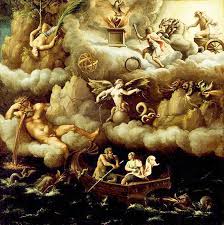
The roundtable explores humanity's pursuit of transcending mortality through philosophy, science, and spirituality. Drawing from Plato's Phaedo, it examines how awareness of death shapes our lives and whether scientific advances in perception and spiritual practices offer pathways to "life in the hereafter or in alternative realms."
Speakers



Watch
Media
Related Roundtables


Transcript
This roundtable brings together a philosopher, astrophysicist, literary scholar, social psychologist, and Jungian analyst to examine humanity's pursuit of transcending mortality. The conversation opens with Chris Impey framing immortality as physically impossible given the universe's entropic trajectory, while Martin Hagglund draws a crucial distinction between the desire to prolong life in time and the aspiration to escape time altogether through eternity. Hagglund argues that the very preciousness of life depends on its fragility and finitude, making genuine immortality not only impossible but undesirable.
The panel explores this tension from multiple angles. Adam Kirsch examines how literary ambitions for permanence have shifted from ancient confidence in enduring works to postmodern skepticism about lasting significance. Polly Young-Eisendrath introduces Eastern traditions of impermanence, particularly Buddhist practices that cultivate moment-to-moment awareness rather than future-oriented striving. Sheldon Solomon offers the evolutionary psychology view that terror of death underlies much of human cultural production, including many of its destructive tendencies.
A recurring theme is the impossibility of truly accepting death. Hagglund provocatively argues that claims of accepting mortality may themselves be forms of denial, and that the anxiety accompanying our investment in life is not something to overcome but something constitutive of caring. The discussion of people near death, drawing on clinical experience with hospice patients, reveals the complex psychological strategies humans deploy when facing their end, from fantasies of reunion to defensive denial. The panel finds no resolution but achieves a rich articulation of why mortality remains central to the human predicament.
Show discussion topics
- 00:02:36 Introduction of panelists and opening of the roundtable on the search for immortality as part of the Templeton Foundation series on science and the big questions.
- 00:06:12 Chris Impey argues immortality is both impossible and a bad idea, noting the universe itself has a finite lifespan governed by the second law of thermodynamics.
- 00:07:48 Martin Hagglund distinguishes between the desire to prolong life in time and the desire for eternity, arguing only the former is coherent and desirable.
- 00:19:12 Discussion of Eastern philosophical traditions, including Buddhist impermanence and Chinese aesthetics of evanescence, as alternatives to Western immortality striving.
- 00:28:02 Adam Kirsch examines how the shift from religious to materialist worldviews has changed our relationship to immortality, discussing artistic permanence and Shakespeare's sonnets.
- 00:40:29 Debate on whether accepting mortality is truly possible or whether it conceals another form of denial, with Martin Hagglund arguing against mastering the relation to death.
- 00:50:20 Sheldon Solomon presents the evolutionary psychology perspective that the disinclination to die is a central human dynamic motivating much of culture and behavior.
- 01:00:16 Polly Young-Eisendrath and the panel discuss anxiety about death across the lifespan, the relationship between fear and meaning, and Buddhist practices for dying.
- 01:22:38 Chris Impey describes the physics of potential immortality near black holes, followed by audience questions on the process of dying, temporary permanence, and the singularity.
Show full transcript
00:00:02 before and after wards
00:01:22 continue [Music]
00:01:58 [Music] yeah but um thank you
00:02:36 thank you okay we're gonna get started thank you all for coming today I'm Rob Panzer I'm the associate director of the Helix Center
00:03:06 we're going to launch right into the introductions for today's program the search for immortality which is part of the Templeton Foundation funded series science and the big questions if our participants could raise his or her hand when I announce your name so that people will know you Martin hegland is Professor of comparative literature and Humanities at Yale he's the author of three books most recently dying for time proust wolf Nabokov and radical Atheism derida in the time of life his work has been the subject of a conference at
00:03:37 Cornell a colloquium at Oxford and a special issue of CR the new Centennial review in 2014 he was awarded the shook prize by the Swedish Academy and his next book this life on secular faith will be published by Pantheon Chris Impe is the University distinguished professor and Deputy head of the Department of astronomy at the University of Arizona he has over 170 refereed Publications on observational cosmology galaxies and quasars and is the recipient of Grants from NASA and the NSF as well as multiple teaching Awards he's also the author of many
00:04:09 popular articles on cosmology and astrobiology and two introductory textbooks as well as a novel called Shadow world and six popular science books most recently dreams of other worlds and humble before the void his next book on the future of space travel is called Beyond and it's to be published by Norton Adam Kirsch is a senior editor at the new Republic and a columnist for tablet magazine he's the author of two books of poetry the Thousand Wells and invasions and several other books including most recently rocket and light ship essays on
00:04:39 literature and ideas Sheldon Solomon is Professor of psychology and Ross professor of interdisciplinary studies at Skidmore College as an experimental social psychologist his interests include the nature of self-consciousness and social behavior his work has been supported by the National Science Foundation and the Ernst specker Foundation he's the co-author of in the wake of 9 11 psychology of Terror and co-founder of the world leaders project he's a fellow in the American Psychological society and the society for experimental social psychology and recipient of
00:05:09 multiple professional honors Paulie Young eisendrath is a jungian analyst and author of 15 books including the self-esteem trap the resilient spirit and women and desire her most recent book the present Heart A Memoir of Love loss and Discovery is an unsentimental meditation on the healing power of love in the face of early onset Alzheimer's having taken formal Zen vows in 1971 she's interested in the dialogue between two meditative and contemplative practices Buddhism and psychoanalysis she maintains a clinical and Consulting
00:05:41 practice in central Vermont and now without further ado air conditioner okay okay well I'll I'll start and provoke by saying my opinion immortality is both
00:06:12 impossible and a bad idea but not to be Debbie Downer out of the gate let me just throw out the idea that the container for immortality is a universe as we understand it all space and time and we've learned some slightly uncomfortable truths about the universe in the last 50 years among which is the eventual fate of the universe being a sort of entropic cold death as the universe thins out gets sparser matter decays
00:06:46 galaxies evaporate black holes even evaporate and so on so however we conceive of a continuing conscious entity or entities it's within a larger context where you're swimming against a pretty Fierce current whose name is the second law of Thermodynamics and and the last point I'll make on that is that Sir Arthur Eddington probably the greatest theoretical astrophysicist of the 20th century wrote
00:07:17 a popular book on thermodynamics and he said you know if your pet Theory you know disagrees with observation well these observationalists bungle sometimes but if your theory disagrees with the second law of Thermodynamics I can give you no hope you should kneel an abject humiliation uh just to follow up on that I just want to sort of put a Distinction on the table I think that um when we talk about immortality but search for immortality we tend to talk
00:07:48 about two very different things on the one hand I would say a lot of things that are classified on that rubric would be forms of what I would call living on that is to say ways in which we search to prolong Our Lives to the lives of those we love or in these states of climate change for the prolonging the life of the planet itself but that form of desire to live on it doesn't seem to be me to me to be a search for immortality at all that is to say it's a prolongation of a life that is subject to death or laws and so on and it's actually partly animated by
00:08:20 that that is part of the reason that I want to prolong my own life for the life of someone I care about is precisely because I sense that it can be lost you know and that Dynamic of like searching to live on or to find ways for us to prolong and enhance Our Lives I I'm very happy doing the work but the other thing we talk about I think when we talk about search for immortality is the search for eternity which would not be life living on in time but it has to be a timeless state of being that and if you're aiming for eternity you're not aiming to Cologne your life you're aiming to
00:08:51 Escape it it's a totally different state of being and that doesn't seem to me that seems to me not only as you said impossible but also undesirable let's say if I feel no longer subject to the strictures of time I would no longer be myself it wouldn't be a form of survival for me at all it doesn't even seem to me to be a consolation so I think that we'll see but we can go but that distinction for my thinking of these issues that's a very important uh primary distinction between like are you when you're talking about immortality are you talking about
00:09:21 decide to live on or decide to be Eternal and so [Music] first I probably wouldn't be breathing right now right and so you know since I'm very engaged in the first one I think that's you know a constitutive engagement but but the idea um that that it would be desirable to leave
00:09:52 behind that condition altogether the conditional mortality altogether in favor of timelessness or eternity that seems to me something that should not just be uh held to be impossible but one should also spend other reasons why that's not even desirable so but the fact that I that I affirm mortality doesn't mean that I want to die it means I want to keep on being mortal I want to prolong my life in various ways the Greeks seem to characterize us as Mortals right right but so it's a very
00:10:23 interesting shift that happens though because you have a in say homeric Greek religion you don't have any sense of a Salvation through eternity or timelessness on the contrary the emphasis on the is on the goods of this life right but this is precise what Plato will criticize with Homer saying that like well if that's what you're attaching yourself to you're also attaching yourself to all these forms of suffering and the aim should actually be to exit from that and you have something similar happening with the emergence of Hinduism and Buddhism in the East that is saying early Vedic religion
00:10:54 immortality in sanskritam just means living for a really long time or not like 100 years say to live on in that sense whereas but then when you start having sort of Salvation religions emerging what would eventually become like the Buddhist notion of Nirvana is precisely saying no the the wisdom would be to try to exit from that struggle to live on in that cells and instead enter sort of Timeless Bliss or eternity so that so I think the distinction yeah I would I would argue a bit about the
00:11:26 notion of Nirvana because in later forms of Buddhism Nirvana is also subject to impermanence both samsara and Nirvana but but just not to enter into casually I I was just so agreeing with what Chris said and um that immortality whether it's an individual immortality for one's own Consciousness or immortality on some
00:11:57 other scale seems to me to be both impossible and undesirable and I know for myself personally I wouldn't have any investment in being poly young eisendrath forever I mean it seems bad enough to be engaged with it you know on an ongoing day-to-day basis and to have and to see the the nature of one's limitations and difficulties and to think that those would be
00:12:27 going on you know at infinitum would seemed to me to be not a very good proposition so yeah I was kind of curious about why the subject came up at all you know the subject of immortality because you know I don't know if they're people who are here who are in favor of it I don't know how the subject came up but it came up but I I
00:12:58 in your first the classification the first group of immortality but yeah just because the I'm not saying living on forever I mean that part of the difficulty of that is that of course if it would go through too long it can become unbearable Etc and like it's so so the first I'm just saying a lot of things that are often classified as testifying to decipher immortality already in dio team of speech and Symposium like they decide to have children to procreate all of these things are supposedly testified to our
00:13:28 innate desire for immortality I think I better understood as a desire to prolong a life in time not to become Eternal and not even to live forever in time which I think would cancel itself out and become impossible so so but so I just want to draw that distinction but I'm not clear when it stops where it stops the the first the distinction you make yeah at which point does it stop and you say well I had this much now I don't want yeah there's no for a few more years part of the difficulty I think is that there's no fixed measure for that that's part of
00:13:59 the difficulty of living in time like you know you you can die too soon but you can also die too late and what is too soon or too late there's no external measure for that that's that's part of an internal Dynamic and it can be this wonderfully smooth sliding scale there's a brilliant prescient paper by Freeman Dyson at The Institute of advanced studies in the late 1970s it was life in an eternal universe and he made the point alluding again to thermodynamics that even in an
00:14:30 ancient you know ancient old cold universe future civilization or life forms could continue almost indefinitely by drawing down by essentially just pacing themselves you know diminishing returns into the almost infinite future and I asked him toad as you draw down on the energy of the microwave background radiation which is free and out there but diminishing in strength so I mean it's a you know that's a that's a continuous there's no place to put a demarcation and say this
00:15:01 is enough or this is super long and this is Immortal um and that's uh and that actually he was almost making a plausible scenario for how some civilization not ours might actually endure for that's what would seem like a very long time trillions of years [Music] you're making um is would be the idea of indefinite prolongation that if we were to know and we we believe we know that the universe
00:15:33 will end at a certain in a certain inconceivably distant time although I would ask um we've known things with equal certainty in the past that turned out not to be true so it's possible that we will know something different in 500 years or a thousand years um but if we were to be able to say on such and such a date this will be the end of the human race what would that do to all human endeavor there's a wonderful book and movie
00:16:05 called Children of Men whose premise is at a certain time human beings stop being able to reproduce and so the people who are alive in the near future know that they're going to be the last human beings and what that does to society and and individual psychology it would be I think a complete disaster it would be there would be no point in doing anything there would be no higher Ambitions no art no culture there would be no uh science there would be no need for any of those things because sort of
00:16:35 built in to the basic structure of our experience of the world is that it goes on and in a certain sense we can't truly understand the idea of a mortal world I think we can't truly accept the idea of a world that's going to end we can accept to a certain extent although maybe we can't truly know what it means to accept the fact that we individually each one of us is going to end but the idea that the entire thing is going to end all Humanity I think is as close to Unthinkable as we can we can get well
00:17:08 that's so that's a very important other distinction in the discussion that you know we talk about the immortality in the sense of the self and we're totally attached to the self as a notion and as our actuality that we live with but that example is where the collective you know enduring is what matters you know and if the collective enduring has no meaning or or will be seen to have no meaning then the personal enduring becomes equally meaningless
00:17:41 I wonder if there might be something also about the distinction between immortality and Eternity that has to do with on the one hand The Human Experience of the unbearability of a change and what might happen and the unbearability of absence of change yeah that's part of the dynamic that is captured by what is involved in in The Horizon of a living on which ties into what Adam was saying uh I would just add one thing but I think that it's
00:18:12 true on the one hand that you need to have The Stance you need to have sort of future Horizon for our actions to make sense and in that sense you and that has to be somehow indefinite that is to say uh along the Dynamics but on the other hand I also think you need to have the sense that it can end yeah not a certainty when exactly it will end so so so the flip side of what you're describing is that also yeah if I had the sense that whatever I care about or invested in we'll just Endure by itself
00:18:42 the intensity of my commitment to it would also be lessened so so so so uh while it might be true that contemplating the complete Extinction of that temporal Horizon is something you you also part of that Dynamic independent prolongation is also the sense that like you can be lost and hence has to be sustained and that would go both for individual actions and and I think for a more Collective Horizons that part of even when we devote ourselves to a project that extends beyond our conceivable lifetime part of
00:19:12 the reason why we are devoted to it is it sounds that it's because we have the sounds that it will not exist just by itself it has to be sustained by effort individual or Collective so you need the Horizon of possible prolongation but also possible end for for the sort of motivational Dynamics to to be at work I think I also think there's assumption about life becoming meaningless in the face of uh impermanence you know and the end of our
00:19:44 existence or our world and that both in Chinese and Japanese and there are forms of practice that would specifically go against any sort of Forward Thinking and to practice with the immediate arising and the impermanent nature of our experience and our perceptions gives a very different feel to life a very much less future oriented in the geography of
00:20:16 thought Richard Nesbitt talks about the real contrast between the Chinese world view and the Greek world view and how the Chinese were never striving for the Eternal or the stable or the permanent as the Greeks were and we've been very much more influenced in Western Culture by the breaks and we don't have in many ways a frame of reference for say the fourth and fifth century Chinese poets some of whom lived in the mountains by
00:20:48 themselves and created art that would fade overnight because they were interested in that experience and not some other enduring experience so I think you can become interested in and sensitive to a deep impermanence that doesn't leave you without meaning if you knew that everything would go away tomorrow and yet some people might think that the culture we're embedded in right now is you know is the height of
00:21:19 impermanence and Evanescence the the clock of the long now the Stuart brand project was notable because it's one of the very few Endeavors designed to create something that will last you know right hundreds of generations and then in a culture where we have almost impermeable and durable Technologies and materials we do almost none of that yeah I mean it's it's I don't know paradoxical the whole issue of permanence and impermanence I mean within within any larger framework
00:21:49 everything is impermanent but within a moment-to-moment engagement it does matter whether you take one position or another favoring something like um you know a limit a limitless future versus a very very short moment that arises and passes away and uh you know so in many of the Buddhist forms and again particularly the earlier Chinese there are practices
00:22:19 to you know Focus you on this kind of deep impermanence and that that is the value of becoming aware of that which um you know if there were some greater uh understanding of it in our society perhaps there would be less fear of of One's Own Death unless engagement in exhaustive health interventions right at the end of life which is something that I thought you
00:22:49 were kind of going after in something that you said earlier that there are pragmatic reasons to um to maybe revision what it means to die you know at this period of time because so many people invest in extending their lives by a very short period of time right at what they take to be their dying time they want to go for a month more or two weeks more or whatever and it's very
00:23:22 very expensive and often also very costly in terms of pain and suffering yeah put a little bit of pressure on what you were saying first I mean because there's this version I think where the Embrace of impermanence there's a post-embracement permanence is actually a very established way of trying to gain eternity in the sense of like becoming at immune or invulnerable to the experience of laws that is to say like
00:23:52 so a lot of these strategies we have them in Western stoicism for example where like the reason you're you're told that it would be wise to stop being future oriented it's because when you're future and you're giving hostages to the to the Future to something that's unpredictable and you're attached to something that can be taken away from you yeah and I would say that's the real experience for more talented and and the and the aspiration to immortality eternities is to try to get a state where you would be invulnerable to that type of laws so so in my so so so the
00:24:23 sort of Buddhist practices you're talking to me are for me like a prime example of trying to gain eternity in the sense not of like living forever but of being immune to the experience of loss because if I don't invest in the future I can't lose anything I'm just in the moment so by but I think like and that's but that's me that's not really embracing in permanence because uh that's actually uh for you to experience something as impermanent from that to have like sort of a pain and a force to it you have to be projecting towards at least the temporary permanence uh and and I think
00:24:54 that this attempt to be in the moment is another attempt to be exempt from time or exempt from the sort of pain or mortality Maybe in early Buddhist practices it was initially but as what has evolved over time especially in the Chinese forums that changed somewhat that shifted somewhat I think in the early taravadan forms there was a desire to get off the wheel of samsara and not to actually continue and as you get into the Mahayana forums they really
00:25:26 are more about staying in experience but recognizing its impermanence and staying with that impermanence so you know it does change over the history I mean I would agree with you about early Buddhism that it was if you could take a cultural perspective on you know it doesn't have to be purely Western culture but the you know the dominant culture and economic force of
00:25:58 the planet where ephemera are all around us and yet we sort of act as if we have infinite resources Etc what it's your take on that well somebody to think about it is that we've moved from a long period maybe all of human history until the last two or three hundred years in which people were confident of some kind of personal immortality even if um the let's say let's say from Christianity uh
00:26:29 we have the West very invested in idea of personal immortalities to the extent that it becomes impossible to think outside the idea of immortality so I think of someone like maimonides for example maimonides develops a highly intellectualized idea of what it means to be Eternal that you're Eternal if you think about God that you participate in his eternity and that it's sort of an intellectual eternity and that's something that Spinoza picks up on later but even in that sense there has to be some accommodation to the idea of
00:27:00 Eternity to a materialist view of the world in which eternity is the one thing that we are not allowed to imagine or Envision for ourselves and I think that the idea that you would want to prolong your life for example even for a week or a month doesn't that make perfect sense if that if life is the only value I mean outside of life there's no value so if there's no eternity if values are something that we create and posit for ourselves in the course of Our Lives then not to be alive is to lose the
00:27:30 chance to participate in that process completely it makes perfect sense that you would want to stay alive as long as you possibly could even under adverse circumstances even from a if not from a sort of Prudential point of view than from a metaphysical point of view it makes sense um and that goes hand in hand with the decline I think of the idea of immortality as a form of Glory in other words the idea that you would create an artwork that would Outlast time that you would have permanent Glory from from
00:28:02 something that you had made or done that your name would live on I think is an ambition that very few artists today share when you're talking about self-destructing artworks I was thinking of tangly and uh the idea that you would make something that's designed to Decay again something that would have been quite foreign at least in Western tradition up until the last hundred years but now we're sort of forced to confront it um there it's a it's a major change it's a change that goes so deep that it's I think even hard to conceptualize and in a way alienates
00:28:32 us from a lot of our own cultural heritage because it depends on assumptions that we can no longer truly share this is a little random but I think physicists of my acquaintance and that was my original training they they sort of reach for immortality through mathematics because they believe it to be some in a platonic sense that an ideal that holds not just in this part of space-time but elsewhere it could be discovered by other sentient creatures and you know creates in the practitioner
00:29:05 at some level transcendental experience and so on it's an interesting thing I'm not I haven't reached that level but I've got close to people who haven't explained it well so you don't I mean I was listening to Brian Green and one of these things talking at the Reuben Museum and he was advocating that position but it it always seems to me peculiar because my background is as a developmental psychologist piageti and that kind of thing and so I don't understand how
00:29:35 mathematics then as a practice Falls outside of subjectivity how could it because human beings have practiced it and invented it so how could it be the language of God for example no you're right there's there's overreach there and I think Max tegmark who's a colleague I like him and know him well you know he espouses the layers of you know reality and awareness and the fundamental you know Pythagorean idea of
00:30:07 a mathematical universe and it's a it's an aesthetic I mean it's a pure aesthetic and as an aesthetic I agree it's low it's it's Locus is in our psycheon and our psychology and yeah I don't I think that's a conceit to imagine that it's Universal in the way that that sometimes presented to really it's all about what Adam was saying I mean I I agree with a lot of the um sort of canvas that you painted for us but again I think once one distinguishes
00:30:38 between aspirations to live on with special relations to Eternity I think some of the discontinuities that you outline are less forceful uh so so as distinct from say a Christian aspiration to Eternity uh the the ambition for the artwork to live on you know I mean if you think about the poetic expressions of this in Shakespeare Keats Etc there is there's an intense awareness both of the possibility to live on say through the breath of a speaker who will reanimate the poem but there's also an intense
00:31:09 sense of like this is not a given it can just be left to die not to reanimated by the reader and even if it is reanimated that's not about eternity it's precisely about prolonging its capacity to speak across the ages you know and so that's an investment I mean what we call poetic immortality I think is actually an investment in a certain form of living on and I think we can and which is you know another version of that is what you yourself recognize that's relevant in contemporary world that I want to live for another week or another two weeks I
00:31:40 mean so so that dimension of of our aspiration to live on I think we can we can recognize across the ages much more and and I think that and maybe we can have it more explicit now because we don't have to the same extent the investment in in an opposing concept of Eternity but but I do think that the uh I mean I'm someone who works professionally literature and and I I as you do too and I certainly don't feel alienated from the pathos of Keith so Shakespeare in in their investment in in
00:32:11 poetry's capacity to live on I just don't think that has anything to do with a commitment to Eternity or or a non-meti it's a very many ways of materials conception because it depends on the material of the poems surviving and reanimated Etc so yeah well maybe it's because in a classical or Christian world you had a confidence in the perpetuity of human civilization in other words you didn't Envision uh catastrophic end to your civilization whereas we live with that possibility all the time and basically take it for granted in a
00:32:42 certain way I think if you asked most people today what they believe will there be civilization in a thousand years um I don't know what the answer would be but I assume that many if not most people would probably say no and then the question is what are we what are you doing it for I mean the Romans for example so horses Horus says non-ominus moriart I will not not all of me will die the part of me that lives on is the poem but if you know that the poem is going to die then in fact all of you does die and that's the situation that I
00:33:14 think artists today are faced with and there so there has to be a much more um trans I mean that's a sort of post-modern aesthetic the idea that what you're doing is not for the ages it's not for eternity it's not um meant to synthesize all of human experience but it's an intervention it's playful it's a rearrangement um something like that which can look sort of like you're playing in the ruins of a culture that we no longer really sustain
00:33:44 able for me between for the ages and for eternity let's just say like I guess I don't especially in Shakespearean kids great examples of this sort of static I don't see their investment in say purchase capacity to live on to be dependent on a notion that there will always be someone to read it's just the Horizon that someone can read it and reanimate it uh so so but there always has to be at least someone right right but there could also be no one I mean I think that's a part of the pathos of the of these there's a
00:34:15 sense in both kitchens but it's also possible that like that that me having written this does not guarantee that it will be reanimated there's some there's there's a chance but there's also the possibility that no one will read it and that would be left to its own or even destroyed as in its material support and I don't think that Prospect would have dissuaded them from their investment in in in in poetry if you think about the sauna some which explains how intense but an intense sense of
00:34:47 absolute mortality there is in dishonest you know and and that and and just as to follow the second law thermodynamically generate the counter response but that counter response is partly animated by the sense that that threat is very real and irreducible uh so but do you think that's was that why they were doing it was that important part of the rationale on the motivation absolutely okay just as I think that like whatever we do is informed by a sense that uh if we don't do it it will not be and even if we do it it might not last and
00:35:18 that's that's both an inspiration and and an inspiration to fear as opposed to just being able to express in the moment a a truth of a culture or a human truth and convey it communicate it to others that's not sufficient I think I think we I think we never live in just a moment we always live in a sort of future Horizon so wonder if there has been a change though in our aesthetic as well as what might which might take to be a sort of an assumptive framework since the um
00:35:51 since our understanding of entropy and the uncertainty principle and relativity all of these things that have come about through the Natural Sciences and have essentially given a kind of an umbrella to our culture for understanding its Devolution or whatever if that's sort of permanently changed our perspective in a way that then we would read back into
00:36:22 the romantics even more of this sort of Engagement with um you know something that would be like the conflict between permanence and impermanence you know I mean I I feel like we've changed a great deal in this recent period of time since modernity basically and that we're still reacting to those changes as a culture
00:36:53 and I wonder if they could lead to a place where there would be and maybe this is making a big leap but a greater acceptance of individual death you know that that it is not something to be fought so strongly now I saw the movie Interstellar recently and I was really kind of unhappy with the second half of it I thought it was kind of a mess even though it had a lot of Consulting from
00:37:24 physicists and so on um but you know there was the um Dylan Thomas uh poem you know weaving its way through there about not going gently into the night and I was thinking um gosh that seems out of line with the movie somehow I don't know I mean it seems to me there there are sensibilities that are arising and not just um you know in academic Frameworks but on in the popular realm as well that
00:37:56 would say it might be possible to to accept endings except one's own death except the kind of deep uncertainty of our existence that that might be kind of cool you know that that seems to be a change from there and yet it exists in parallel with a quite well-funded research agenda to reproduce Us in Silicon as well as that can be done or computationally in some generic sense that we don't quite
00:38:27 understand but it's motivated who funds that very various you know it happens a lot it happens a lot in California the the military industrial complex one's part of it the NSF funds some of it it's it's funded all over the place you know up the road from where I live in Phoenix Alcor has 250 frosties on liquid nitrogen you know last in first out you know you just hope the technology gets better mean this may be just again a sort of
00:38:58 stupid sideline but are those just very wealthy individuals you know who want to be you know who get a chance to LEAP in I met a very wealthy Chinese man at a conference that I did in Switzerland this summer and he said oh there's no question that we'll be able to extend human life to at least 300 years and you know and there are a lot of people signing up for it and they're going to be there are a few of those but they're mostly sort of techies programmers the Visionary slash nerd whatever and there
00:39:28 are a few although this is illegal and not subduity that sort of knew that they didn't want to go out old so they euthanized quite young so there are some that are frozen who are in their 20s they're true Romantics but isn't it I mean there is much less anxiety but being Immortal than there is about being mortaled blessings but being Immortal I don't see people being afraid that oh you know I'm panicked because I'm going to be immortal but people are scared about
00:39:59 that they don't want to look at dying they don't want to look at mortality it's avoided constantly except in an intellectual way so even though you say be eternity and so on is not something to that they sought after but people want to live forever and I'm not so sure at which point somebody if if you could take a pill that you took it once a day and after the age of
00:40:29 25 26 30 you didn't age you stayed the same and you kept going at which point would you stop taking the pill right so thank you because that ties into something I want so part of the point of the distinction for me is it's very important just because I don't want to be Eternal doesn't mean that I want to die in fact the reason I don't want to be Eternal is that that would be the death of me that there would be no life left for me to live in eternity so so personally I I
00:41:00 don't think I want to distinguish very sharply and maybe this is different about between the rejection of Eternity and the so-called acceptance of mortality I mean I'm not sure that we know what we mean by accepting uncertainty or accepting death if that because if that means being able to embrace it fully then I would say if I accept uncertainty in that sense there is no longer an uncertainty part of the difficulty uncertainty is precise that I can't embrace it because I don't know what it's going to be it's not something I can accept in advance and similarly if I can accept death in the
00:41:30 sense of like I'm fine with that I die without my beloved dies I no longer have a relation to death as death so I think that like it's also so it's not a matter of like for me it's not a matter of accepting death but accepting that I will never accept it that is to say that that that and that you can't settle that limit in advance that like you know again I could live too long I could live too short but there's no way in which I can uh adjust myself in such a way that I'm prepared in advance to the difficulty and pain of
00:42:01 uncertainty and death and I think that like uh the idea that we could master that relation to uncertainty and death through some sort of acceptance I think um yeah I'm very wary about that way of thinking contrast between uncertainty and living like living seems to have a lot of uncertainty in it not just death so living you know actually means facing uncertainty so the degree to which one
00:42:33 faces that uncertainty is actually perhaps related to something of one's engagement with life itself rather than with the rigidities of self-protection absolutely you know and so it doesn't seem to me to be the case that uncertainty is necessarily connected to death no absolutely not I mean it's a but the uncertainty is a larger topic but but my point is precisely it's because I'm engaged in living that uncertainty is difficult you know I mean
00:43:04 it's it's part of course what Mike's life worth living if there's absolutely certain nothing could happen but it also means that there is no way in which I can just uh accept that uncertain if I could accept that uncertainty I would be ready for anything come with me you know and I wouldn't be particularly engaged in something so I don't think that that uh that um uh part of to use the word accepting the necessity of being engaged in life is
00:43:36 also accepting that that exposes me to an uncertainty that I cannot master in advance okay and and I'm and I'm worried about them saying like well that very thing itself will allow me to master it by saying I won't try to master it I don't think that no well it depends on what you mean by Mastery but um you know this is another movie reference and I I didn't actually see this movie but just had a conversation about it today which is Only Lovers Left Alive
00:44:06 is that the trade total about the vampires and so these are people these are beings vampires and they're often seem to me cast in this way who can go on living from Lifetime they're taking the P the pill every day so that they can remain you know they age slowly I guess but they remain alive for a very long time and as I as I understand the movie um the the main protagonists a couple they're rather bored with it you know I
00:44:38 mean they've seen everything they've done everything they've been around for centuries they've engaged all the great thinkers and all the great art and and they're kind of like yeah okay you know because there's no novelty anymore and Novelty is so motivating for all of us and when it wears thin well you know life doesn't seem so wonderful but I I don't know why they would assume that there is no novelty since there is
00:45:09 novelty constantly since I didn't see the movie and so I'm not uh that argument about getting bored unless one experiences it I don't see how it would be the case it'll be new things constantly just in the last 20 years in fact when I think about the only times I think about dying with any kind of negative feeling is when I think gee look how far became in technology the
00:45:40 last 20 years I'm going to miss what's going to happen in 25 years I won't know what great thing is going to happen next so that doesn't be some more interpersonal but I have nothing against the pill I think it sounds great I mean that is to stay like well because that pill is I don't have it on footage but what I mean is that that pill is a means towards the end of living on and look and it has mortality built into it because it's very important that you have the capacity to not take the pill if you come to a certain point where you
00:46:12 no longer have that desire but I don't see I'm not making an argument against the desire to live on again and I think we could live for a really long time without it becoming unbearable that would depend on a lot of factors but living a long time it's very it has nothing to do with being Eternal because being Eternal it's not living a long time at all it's being outside of time and it's the desirability of that that I'm calling into question but so I think you know I I don't have any principal objections to also medical attempts to prolong our lives but I don't think that you don't think ideas uh especially
00:46:43 religious ideas about eternity have to do with living a long time absolutely not and all religious authorities are extremely clear on this at least all so-called post-axial religions which would work very sphere distinctions between analogous to what I'm saying living on an eternity that it's not a matter of prolonging this life it's a matter of like precisely bringing that life to an end of like resting in peace this is what Augustine says about being God but there are religions where they say when you die you then meet your family no really that's that's not a
00:47:15 promise that that's not a promise that any religion makes actually Mormons do that I mean like in the sense like Mormons make that it's very much part of the Mormon religion I see I think they're up to distinguish first of all between the most advanced philosophical statement of a religion and the way it's commonly lived and perceived by people and so for instance the other day the Pope ostensibly said that pets would go to heaven although then today there was a story saying in fact that's not what he said but the idea that you would that
00:47:45 your pet would go to heaven or um what we sometimes hear about Islam that you would get sex slaves in heaven um we think of that with disdain because we think of that as a category mistake exactly the category mistake that you're talking about the difference between living on and Eternity but there's also the idea of a last judgment that you resume your body that your soul will find its body in in Judaism um you're not supposed to pre-made or or sever someone's body because it has to be whole for the
00:48:15 resurrection so I think that there's a tension there it's not it's not strictly true that religion doesn't teach that although if you were to talk to again a maimonides or an Aquinas or something like that they would have a much more sophisticated idea but I don't think that that's probably what 95 percent of Believers think presuming that's just what the Alcor people are hoping for right and it's a cut price you know it's only 80 000 for the head yeah why would you pay 150 000 for the body you'll get a much better body anyway there's a big difference though because it's like The Incorruptible body you know which is not
00:48:45 I mean it's a very clear distinct it's not the same so if what I want is my corruptable central body but there's an identity is the key thing well but yeah but exactly how the identity should be fought is a very difficult issue and if you look like when it comes to the idea of this existential consolation or this type of like uh anyone who takes their religious beliefs and turns it seriously will run up against that problem that is to say uh because even then the ones who stress the compatibility of say love of God as we have Christians around with the love
00:49:17 of your neighbor your beloved the means and distinctions very important to say like you don't love your beloved or someone else you only let them as a means towards the end of loving God you should not love them as an end of themselves because if you do you're bound to experience irrevocable laws because them as an end in itself will be lost you know you can love them as a means to US Lamb of God so I think that that uh but the reason of course then why in popular ways I mean because what people tend to be invested in is living on rather than eternity all I'm saying is that that's not something that a religious notion of
00:49:49 Eternity actually promises you uh and and I have nothing against the pathos of like wanting to see your beloved again I sympathize with that you know but I think that's very distinct from the desire to be Eternal uh so say what do you think no this is all very erudite no all I would say is just from as a psychologist and an egghead researcher of your most uh quote uh average people uh don't really make
00:50:20 subtle distinctions that I would argue that the essence of humanity is a disinclination to die and that since minute one of a central Dynamic that has motivated just about everything that people do whether they're aware of it or not and I would argue on empirical as well as theoretical grounds being as we're in Freud's house the unconscious death anxiety is what underlies the urge to immortality in the
00:50:50 sense that Martin refers to it not prolongation but eternity and I agree with what everyone has been saying that this was not a great idea moreover I would argue that one way to think about conditions in modernity is that ways of managing death anxiety in the form of different kinds of what auto run called immortality ideologies that have served us well no longer do so and we
00:51:22 now see the urge for immortality manifested in a variety of distinctly negative ways you know including degrading the environment just a persistent pursuit of money and stuff you know protracted ethnic hatred and violence not to say that the urge to immortality is the sole explanation of any of those difficulties but I don't think we can understand any of those
00:51:53 without considering the malignant effects of the urge to immortality gonori consider the distinction between the fear of the loss of the corporeal being and the loss of the self and just as a hypothetical because it's you know people write and talk about it you know suppose that the that mind uploading concept you know has some traction to just imagine people start trying to play that out and we could we could disbelieve it completely
00:52:24 that's fine it's just a rhetorical device and then is is that what is that gonna satisfy that fear appease it what if the same capability to dis disconnect ourself from our physical body goes along with a completely plausible technology to pool the Consciousness what if we gain an ability to not be solitons in our bodies through that technology that would recast some of these debates in an interesting way I mean I I would almost I I don't as a
00:52:57 humanist in me of course has some significant abhorrence but the you know the Curious curiosity driven scientist wants to see what happens you know well I think that for these anxieties disappear or they're the best therapy for them is a belief in the transcendental that it doesn't have to be personally immortality if you were to be convinced that as people speculate now say that our reality is a simulation and that there's a higher order of
00:53:27 reality for which our reality is a simulation that in and of itself would alleviate a lot of death anxiety because then you would be positing a higher order of reality that our existence serves in some way and that's only a contemporary you know 21st century metaphor for the thing that religion has always offered which is the sense that there's a point to it um and it's in a sense it's the pointlessness or the meaninglessness that is really intolerable rather than finitude um because as as you could say we're born towards death we have our being
00:53:59 towards death always it's impossible to imagine a form of life that isn't about death and dying um it's impossible to imagine that and that's why the idea of freezing in your head seems so childish and so sort of stupid is because it's like you're making a mistake you don't understand what it is you're really afraid of um if we could believe that the death has a purpose that it serves a higher purpose um that would take much of the sting out of it but that's the faith that I think we've lost over the last couple hundred years
00:54:30 on that is the um the moral philosophers have weighed in on the simulation hypothesis and and there is a you know completely reasonable philosophical argument for a Golden Rule and the fact that you would not be a nihilist even if you thought you lived in a simulation so that always makes me feel a little bit better about living in a simulation no I agree with you completely on all of that and that the really the the deeper anxiety that's called Death anxiety is about meaninglessness and also I mean in
00:55:01 talking about how I I think it's it's wrong to generalize also about people in their attitudes towards their own death or dying and certainly because I deal I supervise a number of psychologists and have recently supervised a case where there was a suicide and of a young person and um and it was one of these situations where everything seemed ideal and it was really difficult to imagine and it
00:55:32 seemed ultimately that maybe there was an you know really an insult to This Woman's ideals and that that was the reason why she killed herself and so you know people can kill themselves over some what looks like from another person's point of view as a a pretty trivial offense now of course there can be other things like the Robin Williams suicide where there may be are multiple factors and things that anyone could fairly well identify with but um you know the the issue of some sort
00:56:05 of transcendental meaning or something that gives meaning that would go beyond death seems to be a very important issue that perhaps you know needs to be looked at from the more pragmatic point of view again of the situation that we're in as a society having so many people who are going to be going through the dying and death process and the tremendous overload that can make on our system if
00:56:35 everyone is terrified and wants to live that extra one week or a month or whatever simply because they have no means of seeing death as an interesting Adventure as a developmental Point as a a process that is Meaningful in itself and it seems like we have tended as a culture to and again I don't want to overdo this because when I'm saying we here I'm talking about educated fairly Elite people have tended to you know see
00:57:07 death as kind of the end like not very interesting you know not really the next adventure just the the finishing Point um I think there's still plenty of people in our culture who don't see it that way but but as a a certain kind of uh you know living in a certain sort of more educated intellectual environment one can see that there's been this turn towards the meaninglessness of death rather than it being meaningful include
00:57:39 people who want to do it on their own terms over 20 000 people signed up with Mars one for a one-way trip to Mars mostly young people equally male female that's a perfect example yeah I thought that was meaning pragmatically and philosophically though I I want to question the idea that we should try to overcome the anxiety of death I mean attenuate in various ways sure but I think that that's it's uh
00:58:10 yeah because I mean if you take that idea seriously that that one would see death as not as the end of a person's life but as an interesting Adventure The Next Step I mean it seems to me like uh the most irresponsible uh view possible that is to say like I mean part of the reason why I have responsibility for someone else's life or from my own life is that it can irrevocably end that really is destructible yeah and I think that and and that should and if and if there was no level of anxiety before that there would also be no level of care for that life so I don't think that
00:58:41 that this is again I I don't think I mean I'm a psychoanalyst there's anxiety in everything I mean you can't escape anxiety there's no ending of anxiety there's just a working with setting that's what I'm saying that's exactly what I'm saying but but the the idea that that's a shortcoming that we can't overcome it that I think is a mistake I mean I think we should recognize that anxiety is both both productive and debilitating but it's not something that one should even in principle try to eradicate
00:59:11 the truth of the matter is that you cannot live without anxiety because all anxiety is is a signal to you that there is danger yes and they doubt it you cannot well without it you can't survive right now there is however this issue of anxiety about dying and I wanted to see if your your feeling is the same that that anxiety in terms of the ideas that attach to them varies throughout life that for a 21 20 year old
00:59:43 the anxiety about dying is attached to different ideas and different fantasies than it is to a 40 year old or a 60 year old or an 80 year old a let's say a 40 year old did anxiety may be very much connected to leaving his children what will happen to his children what will happen to his wife to a 20 year old it may be that he didn't have enough fun and didn't go enough dancing so it the the anxiety is fundamental it's part of I think being
01:00:16 human when I probably also in the animal certainly also in the animal kingdom the anxiety is fundamental the idea is attaching to it vary and I think what you are talking about is that it is possible at some point in life based on disease or mental deterioration or whatever to contemplate that I can somehow surmount this anxiety and then the life
01:00:46 sorry sir the anxiety at the end of life but through a cognitive effort you can't silence the anxiety it can't be extinguished but it can be cognitively softened or modified or what Adam was saying about meaning is really what I would say that so anxiety is present uncertainty is present in all aspects of living and dying but what does the
01:01:17 activity mean why are we investing ourselves into something like becoming a parent for example you know you know that you're going to be poor you know that you're going to be worn out by it you know that in the long run the from your friends who don't have children are actually doing better than the ones that do I mean there are many reasons why you you know you could say to yourself that's not a very good thing to invest in but you're there's some larger meaning that is active in your investment and it is
01:01:50 coming uh sort of it be it mixes with or integrates into the anxiety the anxiety Then really is you know as Freud said it's it's not anxiety is different from fear in the sense that it's the it's the sense of of being threatened by something that is not truly a danger it's not a clear and present danger or as fear is the response to something that is a clear and present danger so that sense of being threatened is and I
01:02:20 think that whole issue of the distinction between anxiety and fear is a big uh both neuroscientific and psychoanalytic problem that has not been resolved but it's just a meaning that's connected with that engagement you know and so if you're going to engage with death in a meaningful way you're yes you'll be anxious and so on but you'll be heading into it with uh with more the sense you might say even of enthusiasm you know than if it seems like a a meaningless and stupid end
01:02:51 to your existence after which there is nothing uh or you know after which there is just the loss of everything and whatever else so the way that you uh imagine it I guess you know the way you understand it within whatever your Collective framework is for for the meaning of death I think it's very significant but in part of the problem though in that in terms of meaning is that it's very hard to
01:03:23 not carry it into death the feelings and ideas that we have while living so we have the fantasy that when we die even though we don't say it that way but emotionally it's almost as if well I'll miss my children well you're not going to miss anything there's there's nothing to miss there's nothing to recognize there's nothing to realize it's it's over but it's very hard to to think of it that way spontaneously we always think
01:03:55 of somehow we are going to feel some pain because of something from this is that the desire the natural the fear of death mapping into a desire for Life Extension or longevity extreme or otherwise absent a known strategy for coping with the anxiety and fear themselves is completely irrational right it you you shouldn't have those two things going together oh say that again if you took the the
01:04:28 natural desire for a life extension or increased Longevity if it's not coupled with an aware strategy for mitigating or dealing with the fear and anxiety that is just going to be present even more as you live longer it would makes it an irrational Viewpoint exactly yeah right but the meaning question though doesn't have to be something that I believe is itself immune from destruction you know it's also like the fact that I have children and thereby I invest in something that goes beyond my own death and that might give my life
01:04:58 greater purpose uh that meaning does not depend on I think that my children in turn will live forever Etc the the the the the greater problem that Adam was mentioning I mean I I I do think that our lives need to be tapped into a greater project but but that project itself does not have to be conceived as itself indestructible as opposed to my destructible finite existence the idea that like meaning requires on some level indestructibility I think that's uh that's that's an inference that that we
01:05:29 don't have to uh accept uh but but that also means if you don't do that then it also means that if it will be destroyed and you investigate it continuing then you will have some level of anxiety and fear of death which is not irrational uh that would be rational in that case if if I want something to persist and that doesn't have to be my it can be the political product I'm invested in the community Etc that doesn't have to do with that I will persist but
01:05:59 I still have a rational fear of the possibility that I will not persist and that's not something I think you can yeah and the idea that we should try to overcome that sort of fear I mean that's that's has always been starting with the Socrates fatal that that that Plato's fatal that the idea that the proper philosophical idea related to death would be Equanimity the wise man thinks at least the world about the assessment you know and whether you're an Epicurean materialist or a platonist metaphysician in relation to death you still think
01:06:30 your task is to overcome the fear of death uh it's somehow proving that it's irrational to fear death whereas I actually think that there are certainly irrational forms of fear of death but I think there's a rational kernel to the fear of death which proceeds from to decide to live or decipher something to live on and and that's that is irreducible and incurable uh and we can develop various ways of coping and negotiating and attenuating that but a desire to live essentially means that
01:07:01 from the time you are born and you keep moving in life your investment is in life your investment is not in debt yeah and that's what I'm saying that's so irrational so what about another hypothetical pill the hypothetical pill that by some clever psycho chemistry removes the fear and the anxiety how does that change the individual and the and the culture even more interestingly remember the garden of vegetables yeah yeah completely don't don't tens of millions of people try to
01:07:32 take pills like that all the time I mean there are pills like that that are supposed to relieve anxiety and depression yeah but in the long run they haven't worked that well um you know the the thing that I guess I keep coming back to is that I have you know uh really I I've in bit engaged with many people who have wanted to commit suicide both in in my own direct practice but then recently through supervision and in
01:08:02 two cases and I don't want to say much about them but these were very successful people at the peak of their lives both women one of them with young children and the other one without public figures well known attractive you know educated professionals and so on and um so is that a completely irrational you're saying that that goes against the nature of Life do I want to commit
01:08:33 suicide no it's part of finite life that it can become unbearable and I must say I'm just saying insofar as you want something insofar as you have a product able to sustain you also want to live on but it's possible for that to be short-tered it's possible for it to become unbearable that's part of the radical vulnerability of being finite that you it's possible that you won't be able to take it and that's not necessarily irrational either yeah but but it's symptomatic right that that that's the same as the end of any project then
01:09:06 the end of any commitment except the commitment to end the possibility of any commitment you know so well I mean I think the I think the motivations are usually complex very complex and I think you know something so yeah someone who actually wanted to die that was hypothetical they want to die and they go about making it very clear that that they found a way to do that and they do it in a way that is um you know uh that that works well and so I think you know there are there are people who uh are more afraid of life
01:09:38 than of of death and uh that they they seek that because the meaning of life seems to be unbearable or at least terribly disappointing and so they they seek instead to die and there's no maybe there's no real good argument against suicide that I mean Camus said the problem of the modern age is why we don't commit suic side um there's and the implication of that is that there is no reason not to commit suicide
01:10:09 um because if you precisely because when you die you don't feel anything so once you're gone um there is no you anymore so there's no you to feel good or bad about your decision it's a completely incommensible idea it intervenes into our life death sort of comes in at an angle it's not necessarily part of life it's a termination um so the only conceivable good reason would be to avoid causing other people pain if you accept the sort of modernist
01:10:40 right exactly in that regard if you have people who would be very hurt by your death physically economically or emotionally um then you could say for their sake you wouldn't commit suicide but it's very hard to come up with a good argument against suicide as it relates to me as a the person's winning so if you if you're if the starting point is someone is this completely abstract person who's not defined by his engagements right in the world who's not that is primarily caught up in caring and because if you are I
01:11:10 mean what you fear with death is not the state of being that which is nothing what you fear is the loss of what you want to keep right unless you don't want to keep it and then yeah so so because there are moments when that's that's Heidegger or anxiety right the August is when everything recedes the the world recedes when it's no longer your world it becomes uh no longer attached to you and you're no longer hiding it though you still care about not caring you're still invested in the you still care about and so you're not at that point where like it's where it would look rational to kill yourself it's anxiety is that you want to care
01:11:42 and there's nothing which your care can attach to right tell them what's your experience with that I have not but I I like camo and he said in his notebooks come to terms with death thereafter anything is possible so you know on the one hand there's the view that Adam raises about suicide and I agree with but on the other hand you know I think camun is more um uplifting optimistic moments had some I think some hopes let's say for Humanity and I
01:12:12 think it's long lines of what Martin is saying about harnessing death anxiety and putting it to good use um which is I think what the epicureans are saying sorta yeah baby all right we'll talk about that another time yeah but uh Martha Nussbaum a philosopher she criticized him yes I agree so all right but I like her take on that yeah perspective but I also think occasionally the philosopher can get can forget
01:12:43 they're an animal you know there's a part where you're the ego and the Brain just take over and and we are animals you know to just just get a little more visceral back to biology the nature of life to persist to endure from you know Quorum sensing bacteria to the higher creatures of the planet so that's the there's a grounding somewhere there although then the then would be if pressed then you're a sick animal right um and why should you not end your
01:13:14 sickness what why do we have such an investment in other people not killing themselves but I thought you were also saying that it doesn't have to connote depression that perspective well I think no I think I would say that that is the metaphysical face of what is experientially depression it's it's the same thing viewed in two different points of view that if the world no longer has any value or meaning and your commitments to the world Fall Away you're no longer invested in your own projects um the
01:13:44 because what it comes down to again is that there's no third party there's no God guaranteeing your projects the projects have meaning for you if they have meaning for you and if they don't have meaning for you then they have nothing no meaning at all to anyone so then there's no objective reason why you can't kill yourself or why you want them to kill yourself there's only a there's only other people's subjective desire that you're not doing so I just introduce one one other perspective I've I've um wondered whether this was just too esoteric but
01:14:15 um so from a Buddhist perspective and especially from the vadriana the later vadriana developments of Tibetan Buddhism and all kinds of things that people recognize the Dalai Lama and the karma those folks do there's a tremendous opportunity in the moment of death and that is the opportunity for enlightenment and um it is there are a lot of practices and I've done some of them for conscious dying in the Tibetan practices among
01:14:48 those that have to do with the state of mind at the at the moment of death and there's a lot of preparation for that moment and a lot of support that would I've just recently gone through a very personal death with someone who was supported all the way through who is on in the late stages of Alzheimer's with no cortex left at all had been unconscious was very conscious in dying
01:15:18 with the eyes open and light actually coming out of the eyes and so the Tibetan practices are specifically focused and there are some practices in Zen as well on the opportunity of dying and not just the opportunity from the point of view of any kind of immortality but rather for the development of what would be considered the Mind stream that has been in the form of this particular lifetime that goes forward and so in
01:15:51 these cases does this really looked upon with a lot of interest and excitement and of course there are many accounts of these kinds of experiences that are uh more or less well-known but these days they're out there and it's just a very different involvement with death and it's a very different kind of development than what
01:16:23 the Western perspective would typically take and I just put it out there so does that perspective as a death as an opportunity does that depend on the scaffolding of reincarnation and other parts of the belief system it depends on it's really hard again this gets into particularities about Buddhist philosophy but it isn't reincarnation per se it's really called rebirth and so in Buddhist philosophy the continuity
01:16:53 from Lifetime to Lifetime is the same as the continuity within a lifetime like you're not the same person that you were when you were three when you were 14 you know as you move along your identity your physical makeup and your concerns and perspectives all change and so as you move over that transition from dying to the next stage which is a sort of dreamlike stage you carry some identity but as you move through that
01:17:25 process and then move into existence again there may be very little trace of our memory of in the same way that you don't remember everything that happened to you yesterday you can remember some of it you certainly wouldn't be remembering much from an earlier Lifetime and of course the Tibetans especially have ways of testing for that and so on when they're identifying a Karma or a Dalai Lama or whatever so but it's just a very very
01:17:56 different framework on us and it doesn't I mean before you talked about accepting death which presumably means that like if there is death that is determination of if there is death that is determination of a life if there's so the determination of a particular subject yeah so so if you don't need to do some metaphysics where that's not really the end of what matters you're no longer talking about death or you're denying all you're saying is that you're denying that there is death in the relevant sense that is to say no that's that's really kind of a
01:18:27 mistake to say it that way because it makes it seem too distinct like there there is no death there is actually a profound change when somebody moves out of a physical existence and um it's no small movement but but it's not the end of that development of that Consciousness that's the thought anyway so yes don't you have a strict separation between the Consciousness and the body you have a classical Consciousness body dualism and in that
01:18:59 framework what really matters doesn't die so if if so so to present that as a way of like facing mortality seems to me very misleading because if I'm going to face mortality I'm facing fact that like I am such a being that I can be completely annihilated I'm such a being that like I depend on a body that I don't own and that if it ceases to be I will also cease to be if there's any meaningful thought if that's not a thought I'm facing I'm not facing the
01:19:30 thought of death I've just come up with the metaphysics I would completely agree with you but everything is something continues what continues about me but you know you're but you're you're posing the whole argument on a point of view that's not valid to the system and so you can't say that it undoes that it undoes death itself it does not it sometimes I just Define death as no complete Annihilation what's the material is there a material substrate for what survives or is it purely
01:20:01 spiritual it's purely a spiritual and see that's what we don't believe anymore yeah that's what we can't believe anymore is that there's no such thing as the person so it's it is it is meant to be uh Consciousness that's right yeah throw a question to the the group that I I think we'd be remiss if we didn't also consider the vicissitudes of the development of death fears and specifically the the enduring influence from childhood when the first appearance of these kinds of concerns that are often rooted in object
01:20:34 relations that uh that and the role of aggression in that that you know going back to the you know the the balance bodily substrate of of um of experience that um when children begin to become aware of the uh possible consequences of their aggression towards loved ones and the fears of having murderous wishes towards others I think that it's useful to think about that in
01:21:05 connection to fears of death and wishes for immortality as kind of reparations and undoing of some of these uh feelings I wonder if anyone wishes to comment on that I agree I mean I think that there's a great deal that arises from that early sort of instinctual experience of being destructive and that then that fears arise from that also in relation to
01:21:36 um the continuity of oneself and others and that those are carried over then into one's view of death most people when I work with them in analysis or therapy and I ask them what do you think happens when you die most people say you go into the dark or you go into the dark alone or it's over but when I say so what's that like that it's over it's usually something like the end of a movie or things are just dark
01:22:06 it's an interesting thing that's sort of the imagination of it end of a movie that is depressing popcorn sticking to your shoes just like where it goes the end and then there's nothing okay I think we can go to the audience for questions but I wanted to comment something the last time you were here you told us that we could get on some kind of rocket or ship and go into another universe and start life there and have a whole new way of experiencing time and
01:22:38 space and lives of the physics it's not the Escape Clause it's immortalizing if not immortality it it is completely plausible we the trick is you have to find a thousand solar mass or a larger black hole which is bigger than just a dead star so we'd have to go a ways to find it and then and the point being that that's a big enough black hole that tidal forces don't destroy the body on your way into the Event Horizon and then you gather your friends and your loved ones in another spaceship and you your
01:23:09 time as syntotically slows down and you're you know obviously you comb your hair and do a very casual royal family type way you know on your way in because that's the frame you're going to be left with they'll be left with they go off die Etc so the that's the uh and that that's the perspective of everyone else you have truly been immortalized you in your time frame do travel through the Event Horizon to an unknown fate but Kip Thorne who is the consultant on that movie you know he in the top tier of
01:23:39 gravity theorists points out that spinning black holes of that size do have time like curves where in principle you can you know cheat Time by moving backwards and forwards meeting previous and future versions of yourself in theory in the best theory we have a black hole so that's the the nearest black hole of that size is going to be something like 500 light years away so we have some technology sometimes we have some technology to work on there so questions line up and um state your name and
01:24:10 please keep it in the form of a brief question [Music] yeah for people for myself and people I know there isn't so much a fear of dying it's the process of dying the pain and suffering of dying and I never understood the fear of dying because if you're religious you're looking for something better for afterwards and if you're not religious it's all over so where does the fear and anxiety come in well I mean I try to answer my questions
01:24:40 by saying that what you fear in fear in death is not the state of being dead which is nothing but you fear to lose what you want to keep that is to say you have fear insofar as you conceive of death as the extinction of the possibility of experience and you have an investment in going on in continuing to have the possibility of experience no no I I think I mean whatever you want to that's a big difference in regret and see her yeah I don't think it's a it's not a regret because it's not past oriented it is the it's the prospect of
01:25:13 a future in which you will not be yeah and so I think I mean regret this pastor and fear is future oriented so I think I think that's adequately called The Fear uh that that I that I uh apprehend the possibility of my not being and precisely because I have an investment in continuing to be that scares me uh and it doesn't seem like that's a category mistake or irrational uh to me I think there's a very coherent logic to that it seems to me that it's like what
01:25:43 Rob said that it's that a lot of the fears are based on experiences from childhood that we've already had and that we reorganize them around dying and so we're afraid that we're going into the dark alone or we're afraid we're going to fall forever or that something's going to be destroyed that we've already had those deep fears and they become reorganized dying even if you're religious you have those fears oh yeah yeah I mean because the diners don't believe your religion well dying is a physical a very physical activity
01:26:15 and as people go into dying there are a lot of physical things that happen yeah I can understand yeah that's what I said and so but then you know they anticipate those things and they see their loved ones going through and I think a lot of the imagination does connect to Childhood experiences and Fantasies thank you hi John aronian very happily retired surgeon I told Edward that I thought he should
01:26:45 begin this program with a couple of minutes of Carl Reiner and Mel Brooks with the 2000 year old man because that might be as close to immortality as we could come I like Martin's comments about temporary permanence and very briefly two examples for me of temporary permanence one being a surgeon in any physician in a teaching institution would have this experience
01:27:16 that your life doesn't change the youth comes is with you and goes year after year after year there's a permanence to our existence until we get home and look in the mirror hmm secondly my wife has just written a book for her children and grandchildren about her father trying to establish some permanence in the minds of the future Generations
01:27:51 and I think that this is one way that already one generation has seen and knows this man when they had never seen him or known him and she is establishing some temporary permanence hopefully for another generation or two thank you so since we're talking about film and comedy wait wait yes he wants to comment sorry I just wanted to to follow up on
01:28:21 your thoughts on on temporary permanence that I think that another way of of fleshing out that thought and what you said was very evocative is the fact that yeah what makes it both difficult but also meaningful to be alive is that we have is that you have both permanence in permanence right the the they're interdependent if you only had absolute impermanence there wouldn't be any problem because you wouldn't experience loss of anything it would just everything would immediately disappear yeah or if you had absolute
01:28:52 permanence likewise they would just nothing would be an issue because everything would just be what it is so yeah the key to thinking about mortality in the general sense I think just think about the co-importation of permanence and impermanence that like things last while also disappearing things last while also being possible to cease to be and that's where both the passion and the agony of being alive arises from that intersection of permanence and impermanence and I mean I'm sure as a surgeon you've had particularly Vivid experiences of this but I think that that's that is this
01:29:22 structure and that's also why attempts to escape mortality can either be there like oh let's just have absolute impermanence everything disappears and I don't care that's fine then of course nothing hurts me or I imagine that there's something absolutely permanent that I don't have to worry about but I think both of those paths are are flights from what we are and how things matter to us and and we should not and we should not indulge those those fights so so as and and I I'd like also comment because I also was provoked by the the notion um and so the perspective from
01:29:54 physics or astronomy if you like is is that a pattern uh we're just patterns really that's all there is I mean all of these atoms in this room and elsewhere in the whole universe were one smaller than an atom in the Big Bang and the space time paths went through these bizarre Roots through stars to become heavier elements without which we wouldn't be here and they congeal or cohere and not even you know your skin is last a week your internal organ cells maybe last much of your life
01:30:26 so we're just a Consciousness ourself the entire thing it's just an evanescent pattern and the patterns continue they have you know the atoms May Decay intended the 35 years we don't know but that's pretty good that's as close to Eternity as I'd care to conceive of so the permanent impermanence of patterns when we eventually get to understand the brain and Consciousness better maybe and maybe that opens the door also to some of these Eastern ways of thinking just from the realm of straight up physics well Roger Penrose thoughts uh
01:30:58 okay I was just going to mention that this topic and discussion might well be summed up in a light vein by Woody Allen's response to the question on this topic of immortality which when I asked don't you want to carry on forever he said no I just want to carry on in my apartment so um okay so the questions that arose for me during the the panel which was very very good in my opinion were answered
01:31:29 within the panel so I'm just going to make a few quick observations any comments that the panel of care to make are welcome but otherwise I'll just offer them as observations um on the point of our biological heritage it wasn't mentioned that our for our prefrontal cortex and particularly structures within that prefrontal cortex those stories are unique to human beings and uh the way I can best describe it is Rallo May's comment in love and will that depression is the inability to construct
01:32:01 a future so the need for us to look forward to the future also generates because we are aware of our own mortality that anxiety and I just thought that was something that wasn't addressed directly and I thought it would be relevant in terms of the Far East [Music] I think the perspective you were describing might be summed up in a Hindi saying which translates as in the world but not of it in other words there's being merged with the sensorium and our reactions to it and then there's another
01:32:31 perspective where we step back and look Inward and I think that um that perspective has makes all the difference between one house how one's experienced not just oneself but one's uh impending demise so that's another comment in terms of mathematics being invented uh there's a raging debate whether it's invented or discovered and I think one support for the one piece of support for the latter is the robustness let's say of einsteining Relativity uh where because he was so convinced that
01:33:02 his predictions would be correct and they have been to a remarkable degree that he said if the uh if when we're able to actually measure the perturbation of Mercury's orbit around the sun if it doesn't agree with my theory the measurement will be wrong right so um mathematics does seem to yes it is a language and therefore is inherently metaphorical at the same time if you speak with Professor uh Nema at Princeton he's of the opinion that right now we're just getting into
01:33:34 approaching an era where we have an actual one-to-one relationship between mathematical Theory and structure so it may not be the case that it's completely metaphorical and just of our own invention uh I think that might be it um yeah um oh yes the other thing about the far East and again this uh this nature of uh permanence and non-permanence it is it is the case that while uh that perspective was encouraged within
01:34:04 Buddhism um at the same time we cannot deny that the shogunates and the dynasties in Japan and China respectively were definitely into permanence right so again it's a matter of perspective versus the social political context any comments are welcome I I wanted just to make a comment about the business about mathematics discovered or invented and I think again that may not be a really fruitful way to draw a distinction because
01:34:34 you know it's it's kind of the the if you think from the point of view of of winnicott or Piaget does the child invent the world or discover the world you know on one hand it seems to be inventing the world and its perceptions on the other hand it's discovering the world and so there's something about drawing the distinction between the discovering and the inventing that might be misleading and there's a lot that's written about that in psychoanalysis
01:35:06 there's a quick response to that I'll I'll relinquish my time which is that um a saying like a watched Kettle never boils right in natural language that describes the fact that people are not necessarily aware of that when we pay attention to a phenomenon our perception of the passage of time changes right which also speaks to the issue of board of boredom and a large law a greatly extended life where it's for me completely feasible to imagine a point in science and technology where we're able to control
01:35:38 that sense of the perception of time uh at will so the difference is that with the state that statement does not hold up to what we know and what we can accomplish using mathematics to actually measure the passage of time while that kettle boils so there is a fundamental difference between the intuitive humanistic uh discovery of the world and a language that is precise and independent of the individual
01:36:09 that reflects a picture structure in the world inside the government response to that um I'll make one comment on the math issue um I mean I think you can it's not a dichotomy you can have your cake and eat it I mean we're in the culture at the moment touring is getting celebrated and and his you know to me his singular achievement was the turing machine and that which I think is what they should have been sending out with the seti message rather than these little Stickman and silly pictograms they should have just sent a turing machine because it's uh it's the
01:36:40 algorithm of all algorithms the algorithm that can do anything so it's the purity of a computational framing that can calculate anything that you can imagine and you tell after the aliens that were smart or at least that we're in the first rung anyway calculate this okay thank you so much and your courage to speak about this very challenging subject but just getting back to a second to you know dude by actually was
01:37:12 an Olympic champion wrestler today was his nickname between broad shoulder man that sends his name anyway one of the main ideas simply was the acorn Theory the genetically encoded into an acorn is everything it needs to grow into a tall Majestic Oak tree doesn't get lost on the way it knows exactly but do the women were born into this world we have a presence of solo Spirit but this exterior womb space for Consciousness to develop over 21 years at the Landing versus the Cobb I'm just curious if I just toss this out do you think
01:37:42 genetically encoded in that equal three for a human being but things that we are just beginning to know that might actually still be in there I'm just talking about whatever you think yeah I'm not sure I understand the question but how could there be something concealed that we wouldn't understand what would that be what form would be full Consciousness in a human being does not biologically developed here
01:38:13 so you couldn't access your full potentiality until you're 21 to 22. but by that time most education is finished and done we're in the world of reality our brains are just waking up and so if it was anything genetically it covered it we would just be able to access it at that moment and practically nothing is everything about it this is a very early audience I'm just forcing that outbounds other things they can answer that question but thanks for the comments
01:38:44 well these days they think it's 25 not 21. yeah foreign
01:39:19 the guy you know uh Gregory beats in afterwards psychology of mixtures four words people think nature works and all these rewards are for that if we're just getting to this Essence and we don't even know what's there do you think nature is might be intelligent enough to know that we might like dreams or Vision that something might come up like a collective unconsciousness [Music]
01:39:51 I think I think I'd say yes if I understand the question I think it would be impossible not to be okay what do you guys think about the connection of immortality and Singularity I mean first of all 20 35 you know we've got to reach that and and talks about patterns right so body parts are replaceable and computers can record every utterance or record everything that we do and therefore create continuity and therefore reaching the mentality any
01:40:22 thoughts on that well Ray's time scale is dictated by his own projected demise and he's growth he's grossly optimistic obviously because strong AI has you know failed in its main agenda that the Moore's Law the thing that makes our cyber lives easier is not being replicated in the cohesion of creating a you know a sort of self-organizing framework that replicates in any part the subtlety and
01:40:54 forget about reflective thought I mean we're talking about so someone like an inventor like um guy at Carnegie Mellon and I'm just zoning out on his name I mean he considers that full amalgam of robotic sensors and a neural net operating in an environment a sort of roboticized neural creature is something of like a guppy you know in its capabilities not really and not sending and and that that's probably about fair so and that's that
01:41:24 is so many orders of magnitude away from where you need to be even in just a mechanistic way of thinking about it that so that projection is wrong as is it off the table entirely and impossible which some people think that that you have to hold judgment on but if you want to be take a different view of that you could say that in the 100 simple 100 Years of of computation and computer science we've traveled a road in mimicking biological capability
01:41:54 that took Evolution three billion years that's pretty good acceleration you know so the the futurists the post-humanist the singularity people are sort of hanging their hats on on that a little bit I just want to say one thing about that so for the sake of argument even if I were to bracket all the theoretical and practical difficulties of carrying these things out and uh you know and I could speak at length about the theoretical impactful but say just for sake along that it was possible it would still not be in my view uh
01:42:25 immortality in you know as long as as long as there's dependence on the material support uh as long as it's not entirely spiritual to to to familiar with adults there's still uh the possibility of malfunction that things can uh and and that possibly the malfunction and that destructability is not just that's part of why that existence would still matter to me uh even if it was possible so I don't think that that those are various there might be other problems with those types of projects and thought experiments but I
01:42:55 don't think it's a problem of immortality as long as one recognizes that there is a material support that that enables that sort of existence because as long as there's that it's still it's not Corporal in sense of an organic body but it is material in the sense of something that can be destroyed and so as long as those things don't spin off into a fantasy that we could be entirely Spiritual Beings uh again I don't think whatever problems it would be but it wouldn't be those
01:43:25 sort of and the moral of this is should not have used GE parts so would that help that help us with our accepting our debts I mean if we came close to it if we knew that we would continue on if it's not just a movie it's something very close to us would we then accept death in a better way I mean it depends on what I find this idea of accepting death very obscure and I find that people mean very different things with it uh it might be usually I mean denying death at the end of the day when
01:43:57 they're talking about accepting death uh so it would all depend on what you mean by by the acceptance of death uh it doesn't mean that it doesn't matter if I exist or if I don't exist right right yeah well that seems like a horrible yes yeah that that I think that seems like I think our next person but next person who's going to ask questions can clarify some of these points I'm going to talk from a clinical perspective I have the privilege of working with some people who are dying and what's interesting is
01:44:27 our discussion is all about how we feel about death from the point of view of being healthy and somewhat Young when you're in a position where you're dying you have a very different perspective as Sheldon can probably tell you people who are dying are not as afraid of death as you would imagine in fact there some people as they get sicker look forward to dying there's a there's a wish for death in fact some we have a group of patients that we call
01:44:57 they have a wish for hasten death and and some of those as you know sign up for programs to die uh you know by their own hand in their own way so um I think that as your life begins to diminish and the burdens of living become greater and you have less to look forward to you you look forward to death as a kind of a release or a freedom and again if you talk to patients they don't so much think about the fact that
01:45:31 they're they're not going to exist but they they have all kinds of defense mechanisms in which there is some sense that they will go on in some form or other some of them feel that there's their body will die but their their spirit will continue uh as as some have said as we as we get closer to death or those are those of us who are in the foxhalls all become quite religious uh people do become more
01:46:01 religious as they get close to death uh they um many people believe that they are as Ed said gonna reunite with their family um so there are all kinds of fantasies that play into making the process of dying much less frightening to somebody who's facing death so perhaps the discussion uh should be about learning something more from people who have actually got close to death or dying for those of us who are still living are
01:46:32 afraid of dying they're they're less they can teach us a great deal to make us less afraid right it just seems to me that you're describing two very different things I mean it is acceptable someone because of the physical or psychological suffering at the late station life you actually want to you you can say like comparatively in this situation I look forward to not existing that's very different than looking forward to living on as a spirit or reuniting with your
01:47:02 family in your second example there is no acceptance of death at all it is a denial of death at the same time yes but I'm just saying they're very different psychological responses yeah they're extremely different in fact if what I'm looking forward if if what I want is for my Consciousness to end because I'm suffering then the second perspective that I will actually not cease to be that I will live on this period you know those are totally different reactions so there are all sorts of contradictory uh but that's how really the mind works the mind is not a uh yes linear it functions
01:47:36 at very different levels people will talk about just what you're saying on the one hand and the other hand so they'll say they're they'll look forward to going and to ending their life and the same person will then say and then I can be together with my parents and my sister who's dead but in the way they might talk about it they'll talk about it they'll be there perfectly healthy right so we we we're capable of those questions what I'm saying is that that's because they're actually still afraid of death and I sympathize with that but I
01:48:07 wouldn't say that those are testimonies that how you are not afraid of death will have come to terms with that that seems to me that whole testimony you're giving is a testimony to how incredibly difficult it is to face the prospect of dying and how many contradictory fantasies you come up with to Shield off that Prospect so it doesn't uh and and I have a lot of empathy with that but but I don't think it is an example of how you of someone who has accepted death yeah and I don't think yeah and again I think that people do accept that many of them well in your clinical experience
01:48:38 yeah have there been patients who are convinced that there is no fantasies yes I think absolutely uh I mean you you learn a you learn a tremendous amount about how adaptable the mind is uh when you talk to people or dying they're they're great
01:49:08 teachers of uh what how to deal with life thanks he works at Memorial I'd say first of all I'd really appreciate that you came here for a conversation and you didn't come and read your statements uh I think we'd all be much better off if we went with Polly and lived in the present but aren't we pretty much stuck with Adam and in that there's a evolutionary advantage to living in the
01:49:41 future and uh those those people are the ones who who survived well it is arguable as a 12th century Zen writer named dogen uh said that the future occurs in the present the past occurs in the present and because of that there really isn't a present either but things arise
01:50:13 in the present and we pay attention in terms of the way we direct our actions and so there we can direct our thoughts and actions towards the Imagine future and also our prefrontal cortex tends to head Us in that way towards prediction and reliability that sort of thing at the same time we can become aware that we're doing that and that that there are choices within
01:50:45 the present as it arises it's about three to ten seconds it's not an absolute present but we can become aware of what is going on and where we want to direct our awareness and that's really what's meant by living in the present so it's not avoiding prediction or the future nor is it avoiding thoughts and feelings about the past but the recognition that those are taking place in the present so
01:51:19 okay that's maybe not so different from pattern recognition yeah well please join me in thanking [Applause] and please short of by barring the door please fill out the uh post Roundtable surveys we really depend on your feedback thanks again for coming
01:51:57 thank you