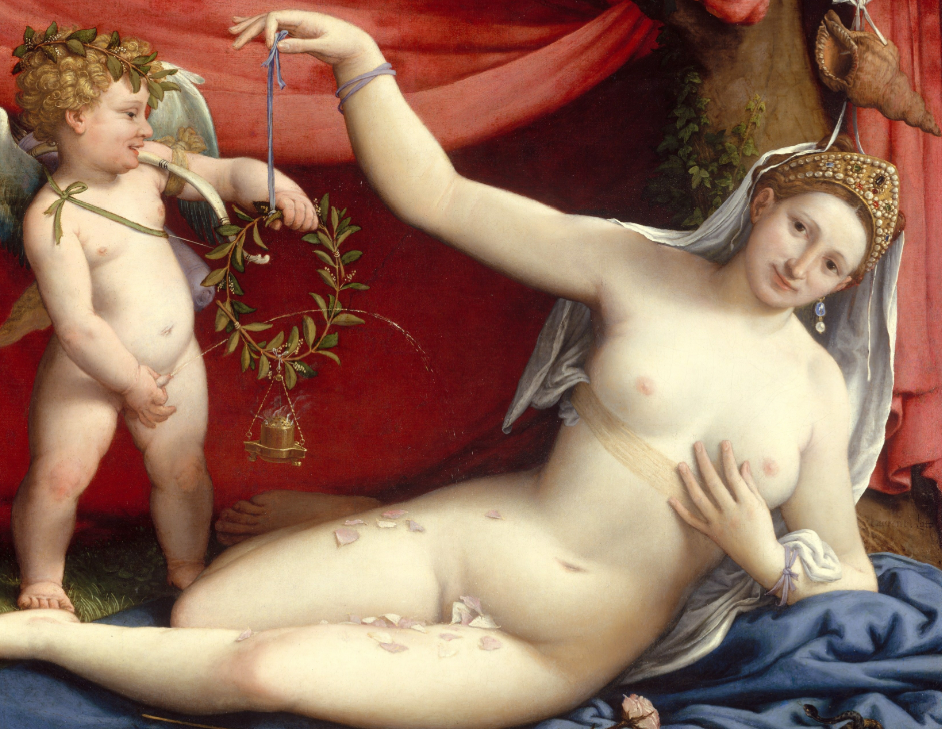
The roundtable explores the nature of love through multiple disciplines. Milan Kundera's concept that "love is a continual interrogation" frames the discussion, examining whether love constitutes a single emotion, a complex of feelings, or a neurochemical phenomenon. The event considers distinctions between parental, romantic, and other love types through historical, neuroscientific, psychoanalytic, poetic, and other analytical lenses.
Speakers


Watch
Media
Related Roundtables



Transcript
Framed by Milan Kundera's idea that love is a continual interrogation, this roundtable brings together perspectives from art history, psychoanalysis, philosophy, and literature to explore the nature of love. The moderator, Fred Sander, guides a wide-ranging conversation that examines whether love is a single unified phenomenon or a term encompassing many different kinds of experiences and attachments.
The discussion gives significant attention to how modern technology, particularly online dating, has transformed the experience of falling in love. Panelists explore the gap between encountering someone as an avatar or profile and meeting them in person, and how this process of fantasy and reality-testing relates to deeper psychoanalytic themes about internal images and idealization. A couples therapist on the panel describes how mismatched internal images of partners frequently drive relationship conflicts.
The conversation also delves into unconscious dimensions of love, including how childhood experiences and internalized images shape romantic choices. Literary and philosophical perspectives enrich the discussion, with panelists considering love's relationship to suffering, mortality, and the fundamental human need for connection and recognition.
Show discussion topics
- 00:00:00 Introduction by moderator Fred Sander, framing love as a continual interrogation through Milan Kundera's concept.
- 00:04:30 Opening reflections on the nature of love across disciplines including art history, psychoanalysis, and philosophy.
- 00:10:00 Discussion of romantic love versus other forms of love, and whether love is a single phenomenon or encompasses many distinct experiences.
- 00:19:03 The impact of online dating on love, including the gap between avatar-based fantasy and real-person encounters.
- 00:25:00 The unconscious dimensions of love, including how internal images of ideal partners shape romantic choices and relationships.
- 00:32:47 The moderator reflects on letting the conversation develop organically, leading to deeper themes about the unconscious and image-making in love.
- 00:40:00 Couples therapy perspectives on how mismatched internal images of partners create relationship conflicts.
- 00:50:00 Literary and philosophical treatments of love, including its relationship to suffering, mortality, and human vulnerability.
- 01:00:00 Audience questions and closing reflections on whether love can be understood or only experienced.
Show full transcript
00:00:00 today's Roundtable would be moderated by Dr Fred sander Fred sander is an old friend a member of this institute and who has been involved a great deal in teaching on teaching both here and at various universities Cornell and not Sinai also Sinai yeah he is psychoanalyst but also specializes in Family Therapy and some of his books are
00:00:31 up front there and apparently one of his books can be accessed for free on the web so that's it Fred thank you let's check see if this is working it's not working I'll try to speak louder until it works um I'm really delighted to have an opportunity to participate in the Helix
00:01:01 program I have on a number of occasions said to end you know we're hearing these interesting meetings and uh how come we never have a psychoanalyst as part of a round table so I think this is his way of either getting back at me or taking me seriously the second analysts for in this building might have something to say about the subjects that we cover here including the subject of Love we'll
00:01:32 find out so I did want to make a few opening remarks I I what is it especially exciting today is that the wide number of discipline the wide number of disciplines that are represented here besides psychoanalysis we have we have a poet and we have the curator of the European collection of the Metropolitan Museum I'll let them each introduce themselves whenever after I
00:02:03 say these opening remarks and we have a neuroscientist which is the latest angle on on love I don't think 10 years ago there would have been the neuroscientist yet on the I may have the time wrong um your research is I think about five years ago that it's published okay well whatever it's a new field it's a new Feel Love in the mind the question that we might raise in this discussion is is love in the heart or is it in the
00:02:34 brain or some other organ that we don't know about so uh and when I first learned that that I would be doing this moderating it just happened that that day in the New York Times it was a obituary about a man named Mr pugach and I must say I do remember the name from when he first was another notarized so so uh blatantly uh in the news when he
00:03:05 he threw some he had some lie thrown into the eyes of his beloved and um and he went to jail for that maybe 10 years or so he gets out of jail and the next thing we know is he marries the woman whom he'd virtually blinded and so I thought my goodness love goes in all kinds of ways I trust it's not the form of love we're going to spend too much time on today but it's true that love takes many many many forms and shapes and there's probably no limit to how far
00:03:38 love can go and we'll see some of that one in our discussion I I went over to the uh to the internet and I checked the subject of love and there were a number of categories of love one is was called quotes on love and there were 16 000 quotes on love I didn't go through them all but I thought two weeks later when we were going to have this meeting I looked it up again and there were
00:04:09 sixteen thousand five hundred so in just in the two weeks that I was checking the number of wherever these these quotes are coming from they just keep arriving and adding to the information explosion um now I was concerned in this discussion today that the topic is so uh you know something everybody has some strong feelings about and the field is already the 16 000 quotes tells you already how
00:04:40 how far and wide the the subject goes and I was hoping that in this discussion we would have some degree of focusing on the subject of love so that we're not completely all over the place even though the discussion conversation we have will take us not far afield but hopefully they'll be overlapped and uh among the five of us and will there'll be time for discussion at the end there's a possibility we might have one
00:05:11 or two questions before the end so that you have a chance to be heard um I uh so I'll just start with Steve Klein to introduce yourself and to tell us about a little bit about the heart and poetry Michael I still love you I and I don't know if if love is the heart of poetry I think that um
00:05:43 I think it's an act it's the way that that one might act love but I think that probably goes in a lot I mean the wonderful thing about if you take on poetry it's a vocation is that you get to address a lot of um you know a lot of different kinds of things um but I think that it's it's it's certainly not out of fear that one writes poetry um which I think is I'm haunted by this sort of definition I heard many many years ago by Emmett Fox which said which talks about if you're not feeling love
00:06:15 you're feeling fear and that basically we in One Way Or Another We're feeling one of those emotions all the time so I always think of poetry as the way to keep the aperture open toward the love Direction and not it it's a place to let everything happen and not a place to to it's not a place for self-censorship and I think any place that is not about self-censorship is about love I think Fred wanted me to say a word or two about yourself oh I'm Michael Klein
00:06:45 I'm a poet and a writer I teach writing in the graduate program at Goddard College in Vermont I've written three books of poems um I wrote a book of essays called the end of being known which is about sex and friendship and I wrote A Memoir Club track conditions which is about my experience grooming a Kentucky Derby horse in 1984 who died and I'm so I write about a lot and um I I have a third book of poems that just came out in January called The Talking day
00:07:18 I'm Andrea Bayer I'm the curator of Italian Renaissance paintings at the Metropolitan Museum and I'm here because of because I was the curator of this exhibition art and love in Renaissance Italy and actually I did think of an anecdote that I wanted to begin this discussion with because the point of this exhibition was to bring together as wide a variety of objects and paintings that had made
00:07:49 during the Renaissance that celebrated those great ritual moments in people's lives betrothal marriage the beginning of a family and in fact we wanted to call the exhibition something about marriage marriage in the family Etc and the powers that be it the Met made us do a survey and they found out that the word marriage was such a turn off that they would not allow us to proceed with that in our title
00:08:21 and so they encouraged us instead to use the word love and my colleagues some of whom were much more academic than I am we're appalled by this because there was so little love in Renaissance in Renaissance marriage Arrangements that they felt that we were in some ways distorting but distorting the conversation however I ended up seriously disagreeing with that point of view and I was very happy that love was
00:08:52 in the title and if I have another two minutes I'll just tell you a great Renaissance anecdote you can probably all bring to mind the beautiful Titian Venus of urbino in the eufitsi that painting was done for the Duke Guido Baldo de la rovere in 1538 and he wrote a very famous letter to Titian in which he says don't sell that nude lady to anyone else um and that's the way he describes it um but to me the thing that was so
00:09:24 touching and interesting about that story guidobaldo de la rovare at that moment is married for in a dynastic marriage with someone he had had no interest in and in fact who was prepubescent when they got married but he had been in love deeply in love the year before he was forced to marry that lady and I just wanted to read to you his letter to his father briefly briefly for two years now I've spoken at length begging you that in giving me a wife it
00:09:56 would seem that in this act the principal matter is to satisfy me given that I carried and still carry such a love for the lady Clarice this is Clarice due to her qualities and her manners to let me have her would give me such extreme happiness and not to have her would cause me such infinite sadness so I beg you with all my heart if you have any regard for my sanity and health satisfy and concede me this favor knowing that in her is my all
00:10:26 well her his father said no her mother said no he was married the next year to an 11 year old and then bought the Venus of urbino to put in his nuptural chamber so love is a complicated story in the Renaissance too it was modest and not telling us that the show she curated uh can be found on the web for getting a lecture on it just looking up to the title of love and art in Renaissance Italy and you'll be have
00:10:58 a chance to hear her entire lecture on the show which is now five perhaps five years old Lucy actually I'm Misty Brown I'm a neuroscientist I I've worked for about 40 years at Einstein College of Medicine the most my most recent work has been human of early stage intense
00:11:35 you have to understand that the system had to kind of love there's you know there's the passionate love there's companion love there's a lot that can develop after after event it encourages there's parental love we chose to look at early stage intense romantic look you're going to see any effects in your brain the receiving methodology we've had functional MRI
00:12:07 um but we knew that Romans that early stage romantic love the kind of romance that Andrea just read about can affect people's lives tremendously affect their behavior tremendously after all Edward the VII stepped down from the Throne of England in order to marry well Simpson so romance can affect our lives
00:12:41 and it's a big Force even though some people it can be a big disruptive Force especially in the Renaissance and especially in Asian societies they don't trust it because bottom line is I'm a neuroscientists studying first romance that intense for you because part of the reason I did that first because I was pretty sure I could
00:13:13 measure something in the brain methodology we've done also because I knew it affected life so trust me we wouldn't even think about it it changes us marriage it's the way we pass on our genes so much of our life actually revolves around Falling in Love and I also have an eye the eye of the Anthropologist to one of my collaborators is Helen Fisher an
00:13:43 anthropologist and the idea that Romance is a developed form of a mammalian Behavior to pursue preferred mates but the romance isn't just a human thing anyway so I'll stop there I don't think you need it I think that one wasn't fun yeah thank you for having me my name is Dan Slater I am a writer and a reporter
00:14:17 and uh yeah um so it's sort of a funny story about why I'm here I I was uh I was a lawyer before I became a writer and I was the legal Affairs reporter at the Wall Street Journal up until about four years ago when I was laid off and uh I uh you know the layoff happened to coincide with the end of a relationship so it was a lot to handle at one time and I was seeing a therapist and she
00:14:49 said to me well some of my patients fed luck with online dating somebody should give that a shot and after several sessions I finally you know I took her advice and I got on to match.com and I started doing online dating and that you know began to become a focus of the sessions uh and she was asking me out well you know what are the sites almost like she was using the sessions to get information out of me to pass on to her to her patients because she'd get asked about online dating and and and she said
00:15:21 to me uh she said well maybe one day you will write a book about this and as I was saying downstairs I I said there was no way I would write a book about this um but um after a few more things happened uh one of which was finding out that my mom and dad met through a computer dating service in 1965. I I started to get serious as a researcher and a journalist looking into the online dating business and how it was affecting modern relationships so a
00:15:54 product was at as a book that I published last month it's called Love in the Time of algorithms uh it was excerpted in the Atlantic magazine um this last month and so I've been out speaking about the book so I come at this I guess from a slightly different angle there's a lot of psychology in the book there's a lot of business reporting there's a lot of narrative but really it's a book about how this technology has come to mediate the way that we meet and discover mates
00:16:26 now and so that's the reason I'm here no it's an interesting story because I I'm not my boyfriend online and we've been together for 10 years and what's interesting can I ask the site can I what was that what was the the website yeah it was called it was part of lava light or lava it was some bumps from men it was I mean for gay men it was for a man line I can't remember and there was a sex part and there was a relationship part and I put my profile on all of them because I
00:16:57 didn't really know what I didn't know that you could actually have that you could actually be looking for a relationship but didn't necessarily have to do with all those things I did not have a relationship for 15 years and the only reason I went online was because I was convinced by an ex student that you know I I had been off it for a year and she said try it again you might just get paid dirt and I did it the next day I met this guy okay so what happened was that we were going back and forth for about three months and I and I sat down with Marie Howe who I'm actually here replacing today and she said you have to meet him immediately I said why and she
00:17:28 said and you're making it you're making somebody up even though they are for all intents and purposes proving them their existence by these amazing emails I mean I really found right we both writers and that was really how was happening and what was interesting is sure enough as soon as we met it actually like we I had to force it to work in this very strange way I was gonna give I had to give it a chance because I knew that I was up against my
00:17:59 imagination and when it was physically presented to me it was like he looked nothing like I thought he would look we actually didn't even exchange pictures because of that because I need to get mattered you know matters a lot so I just say it's it's such a and to be you know to still be there after 10 years I have to say it's a different kind of work and in this day and age I think that we've become it's interesting I think we've become people who are willing to do the kind of work that we've never my parents
00:18:31 would never have done that I mean when you told me that when you said your parents man and that's like who does that like 20 years ago I mean it was a very different way of courting and I'm not and what's also fascinating is how do we and this might be a question to I mean how do we acclimate to the to to to um using different phenomenology around state which which meeting somebody online is not you know it's it's very different than than having an instinct
00:19:03 for somebody that you've met at a majority for instance so so I think you know one of one of the ways that online dating makes a difference is that you are sort of meeting uh you know like an avatar person before you're meeting a person themselves and and one of the many results of that is that you invent an idea in your head of what you know he or she is like um and then of course at some point you have to actually go meet them and you have to sort of um you know align those two things and for some people that can create a lot of
00:19:35 disappointment because if a fantasy becomes very intense then you ultimately have to reconcile the person with a fantasy and and that can be a disappointing process but I think that's part of a learning curve thing I think the people who do online even for a while they learn hopefully to get past that um yeah I was saying to Lucy before we started that I think one of the great things that online dating is doing is that it is presenting people with some opportunities to fail um at least they're getting out there
00:20:05 and meeting people and having relationships and having failed relationships and hopefully learning from them and hopefully making a better selection down the road as a result so I don't know if I've answered anything that you nobody's interested but then again what is the authentic self that meets the avatar Avatar the Avatar is just a way of media okay the Avatar me I mean you know unless for you romance love and companionship means sitting in a room
00:20:37 and imagining people which I think for 99 of people that's not the case right ultimately it's about meeting someone right so so the way I think of it is that in a way the technology is just a discovery tool and you know I think the goal for most people should be to get offline as soon as possible yeah um you know no you're not spotting them across the room or you're not spotting them in a class or on the subway or in a bar or whatever I think for some people that feels very strange because we've
00:21:08 you know become so used to that way of meaning but it's really it's just a discovery tool and and so I don't think the profile matters as much I think the profile is one of those things about online dating that that is sort of a superficial difference it's a fun thing to focus on because it can be funny um and it can be the source of uh of of sort of a lot of fibbing about yourself but but ultimately you're going to put that aside and you've got to go out and I think it's interesting that if you way
00:21:39 way before any of this could have taken place one of the things that both of you are describing as sort of the idealization that you idealize yourself and you idealize the person with whom you're communicating on with Island dating until you can no longer do that because you're confronted with the actual person and have to relate to them but this actually on a completely different scale is of course the basis of much of Renaissance ideas about love and and embedded in poetry and so on that in fact it's best not to meet that
00:22:12 ideal love and many of The Poets never did did meet that ideal level they saw them in church and invented an entire thing about who they were and how great they um and how they epitomized all of these ideals but when they met them it would be a completely different thing and in fact when they met them they usually were very happy that they that those great ideals were married to someone completely different and they didn't have to deal with them on a day-to-day basis but it is in a way it's
00:22:44 the same kind of thing that you overlay on somebody it seems to me what you said that you study romantic love but from what I hear first there seems to be the issue of interest that whether it's on the Internet or in person or whatever there has to be interest then there is a term you didn't use and I wonder why you chose not to use it which is infatuation and then you came to romantic love which
00:23:17 different people have different definitions of so I thought maybe so for my definition I like comes from Elaine Hatfield for romantic love and it's the intense desire for emotional Union with another person Unity did you say emotional Union Union with another person that intense desire for emotional Union that's that is how romance can begin and certainly what I'm talking
00:23:48 about some you could use the word infatuation it can start out that way where one of the things that we asked people who we were interviewing to become subjects in the experiment the most important question was what percentage of the day do you think about this person right now most of the people who were part of this study said kidding I can't stop thinking about them you know but uh they're I can't sleep you know they're they're totally obsessed with the other
00:24:19 person that doesn't last all that long usually I mean you can't you can't not sleep um people who are in love in the early stages often lose weight that's one of the that's one of the symptoms too for for being in love uh you have to it has to moderate a little bit and a little bit of attachment sets in because you have to go to work and do other things and and and build a home actually uh
00:24:56 you can call infatuation I guess but it it what's interesting to me one of the interesting things we found I'll just tell you is that for people in that stage when they looked at a picture of their beloved their sweetheart their romantic partner I thought you know maybe it would activate parts of the brain that have to do mainly with cognition or you know recognizing something attractive about
00:25:27 the other person so remember they've already fallen in love with the person fantastic was the area of the brain that was active was deep in kind of a reflex level part of the brain it's called the brain stem it's a reward system that neuroscientists had identified but at a very primitive level of the brain I'm totally oh dare I say the unconscious level but I'll say non-verbal level maybe anyway uh
00:25:57 part of the brain that is not just human at all part of the brain we share with other mammals and uh it's this primitive system it it's shared with our our sense that water tastes good when we're thirsty you know it's it's like thirst and if you remember being in love as a matter of fact poetry I think uses the word thirsty right I hunger after my beloved
00:26:28 I'm thirsty for you you know that kind of that is a poetry and literature often describes very well what the kind of findings that that we saw in the brain as we look back but there was so what we say is that it activated part of the reward system that mediates basic drives like hunger and thirst to that area actually it's another area that we found was
00:26:59 activated by the attractiveness of the face you know so you can you can maybe sit down at a coffee shop with someone see them the first time and you have a reaction to them and there's a they you know the face is attractive in a general sense there's a beauty that that we all see in art you know there's a um and psychologists call this the difference of wanting and liking
00:27:31 so you can want someone right and that can be goodness knows that the face has to be somewhat attractive to you but there are other things and maybe it does have to do with your experiences with a primary caregiver and there's something about that person that reminds you of them but you focus on that person you want that person versus liking them to start with and maybe and liking can turn into wanting actually but that the brain studies
00:28:04 identified very nicely these two different systems is interesting to me I'd be very interested to know how much of that liking side is inherent to one person or is really conditioned by cultural norms so that to begin to come back to the kind of descriptions of Beauty in the Renaissance the same kind of beauty is described
00:28:36 over and over again so you can imagine that first of all people tried to look like that by you know plucking their hair and dyeing it blonde and plucking their eyebrows and so on women tried to resemble that um but men seemed in poetry at least to respond mostly to that and are they responding to something it's inherent to themself or have they somehow been trained over time to like a certain kind of face a certain kind of
00:29:07 body what some responses today to like ourselves and so what we we like to I mean we are at the psychoanalytic Institute here so can you talk a little bit is that a cute is that a cue for me to say so one of the things I found when you know I interviewed over 100 online daters um for the you know for this and and uh um one of the things that I would hear over and over again would be you know the tales of sort of you know as we were
00:29:39 saying earlier the ideal and the sort of inventing the ideal early on um and then having to kind of reconcile the reality with the ideal but certainly at the beginning of love when you're feeling an intense romantic love one at least in my own experiences and the experiences that a lot of people I interviewed for the book was that you know you'd meet someone who you liked and part of that intensity was you know sort of inventing an ideal oh my God this person's amazing this is the they you know they do this and that and she's
00:30:09 funny and and all this and then over time of course that starts to dissipate and then you say well you know what she actually she leaves a lot of dishes in the sink and uh gosh and I really wish that she would take her shoes off in the house when she comes in you know whatever your thing is whatever your little and and so the ideal starts to the ideal no longer exists the ideal is kind of shattered and and I think that with online dating one of things online dating allows you to do is is become addicted to that ideal over
00:30:40 and over again because just because you can meet more people it's Gotta you know I want to feel that again I want to feel that infatuation so I met a lot of people who would kind of you know the serial online data the person who always was looking for that kind of next early fix you know I don't first of all I don't think there is an ideal I think that's the problem to begin with and I've fallen in love with people that I'm not supposed to fall in love with by in terms of what I think I like or I desire and much of it has to do with desire I also think that if it's real love there has to be a spiritual element to it in
00:31:12 other words one of the best believe it or not the best definition I've ever heard for this is by Scott Peck who's not my favorite writer but he said this great thing that love was being engaged in the spiritual progress of somebody else without insisting that they satisfy you and I think and and I and that definition it seems to me it can be carried over in a wide array of many different things that happening it could be physical or emotional or I mean I think that that covers a lot of ground even sexually I think it can cover
00:31:45 ground but sad the idea of getting something back in a relation in a love relationship I think is where it gets screwy I really do I mean and particularly when you have love for something that is not a person I mean I love many many things in the world that have nothing and the other thing I was thinking of is I got a letter from a wonderful writer named William Maxwell you were talking about animals I mean there's nothing greater on this planet than that glove I mean can we all agree right there I mean this should be an
00:32:16 Animal Planet and we should be the Guardians of the animals I really believe that and there's this wonderful letter from William Maxwell who said that um he read my book and it was we were going back and forth and about horses and he had this Horror Story that he wanted to tell me and he said when I was 17 I fell in love with a mayor named Diana and because this is a true love story never saw a hurricane well I I just wanted to I noticed that I've been relatively quiet as a
00:32:47 moderator and there's a number of reasons for that one is that I was aware that if I didn't say anything a little bit like an analyst in the quiet phase uh the the conversation seemed to be moving in the direction of uh sort of I think deeper issues and themes that involve the human being and and I I thought well I could let this go on and be before long we'll have the ID will be on the table but uh I I do want to uh first of all say that Lucy when you said
00:33:17 you know you apologize for using the word unconscious you don't have to apologize for for bringing the unconscious into into our conversation the the uh aspect of falling in love and being in love and relating in general has to my way of seeing it always involves images that people have of the other and they either want to find that image out there somewhere or if they don't find it they will try to create that image some
00:33:50 image they have within themselves of what would they would feel most comfortable with and then they will try to induce the image of the other in in images that they have of that person of course it gets further Complicated by the other person similarly has has images and that's where my profession comes in because when I as a couple's therapist almost always the problem presenting problem is the image that people have of one another doesn't fit the person who they're with and that
00:34:22 seems to me the human conditions there's no there's nobody who's going to be a symbiotic twin or be exactly the way you want them to be or to be the same as you and so I did want to bring that up as uh how do you avoid that trap there's someone well there are a number of ways to do that uh in in the therapeutic World there are two ways that that can happen when in the traditional psychoanalytic framework a
00:34:55 patient comes in and begins to trans transfer feelings onto the analysts that are totally sort of in their head in the in the analyst then tries to interpret what what image are they trying to create in the in the analyst is it some version of a sibling or a parent a father a mother and by gaining some insight into that they can say well this is something I have to keep keep my eye on that I don't fall into that trap that you sort of suggest that we all fall into now when I
00:35:28 see a couple I in some ways it's somewhat easier to me because each party is projecting onto the other person some irrational parts of themselves and one can do two for the Press of one so to speak the transferences are going on both ways and so you can you can then begin to examine that and help them also get greater insight into who they are what they're about and who they want to
00:35:59 be before when you were telling me about your analyst said to you uh you know there's a book in there I thought to myself my analyst never told me there was a book that made me you know I didn't have an analyst who's who told me that I was gonna I wrote a book anyway but but I wasn't told that I had a book that might come out now that's that's a that's a different intervention that that your analyst career coach so but this goes on in the analytic and in the therapeutic room as well that is
00:36:31 there transverses and counter transferences between the patient and their therapist and hopefully the therapist is not overly uh filling the room with his or her transferences but anyway I was just you know struck by how almost everything we say It ultimately brings up our own way of being in the world not Stephen but uh Michael Michael Steven is my son
00:37:02 I knew somebody lots of transferences well you asked me I told you yes so Michael you you had a lot of affects when you were talking that comes from who you are and how you what you think is a normal or a regular way of being in the world it's not the same as the other people in the room it's it's your it's your it's who you are right so uh that's
00:37:32 what I think the psychoanalysis has to offer people that is to examine themselves at the same time that they are examining the world and who they're with and what they're doing and it's on the process of self-examination I think it's on that ground when people are most themselves that you fall in love but you know what I'm having a problem with is that everybody's talking about something else I'm not so sure you're all talking about love to begin with I'm not understanding from your definitions What
00:38:03 is love he's talking about dating and thoughts you have about the person before you have met them you are talking about meeting the person and maybe losing all those thoughts that you had or not losing you are talking and saying it was a good thing that some of these people in fact didn't meet the women because if they had met effort worked out and would have been and when you talk about it you talk about reward centers and that is present in animals and and so I'm not so
00:38:35 sure and you talk about varieties of love you mentioned a number of them so what what is it you people think love is is it Sex Is It Love Is It Love and sex is no sex at all what is this I really say and I'm not being simplistic I really I did say what it was I think a number of things it's the opposite of fear and it's not it's not demanding that somebody it satisfies you if you are in a relationships can't be the opposite because there are a lot of people who
00:39:07 are full of anxiety but also think they are in love or love I want to comment on what you said and you can't imagine how kind of from the brain studies how true some of the things you've said may be and if the next round table you're going to be talking about fear and you'll have
00:39:38 Joe Ledoux here he was the one who really discovered the amygdala plays a big role in fear now there's another thing that happens in the brain when people look at their beloved at their romantic partner there's one area of the brain where activity goes down tremendously in everybody and it's in the amygdala it's in the amygdala which we know plays a big role in mediating our feelings of
00:40:09 fear now anxiety too but anxiety can be is is different right and you can certainly be you can have all these emotions around love of anxiety and and you can be sad you can be euphoric you can have lots of emotions around love my idea is that love is best described as a drive a drive toward another person and and with that comes let me tell you some interesting data we we just got
00:40:40 we did a study of people they happen to be in China oh they were in love we scanned them four years ago so they were deeply in love and we called them four years later to say are you still with that person and we weren't sure that anything would predict you know we were looking for predictions so would there be a difference between those who were still together
00:41:11 compared to those who had broken up one of the there turned out to be a difference I was stunned it was real but it's so consistent with some psychology because one of the things was parts of the brain that are associated with negative judgment showed a decrease in activity it's one thing that's interesting but the other thing that addresses what you said is that there was a decrease in activity of
00:41:43 parts of the brain and I would have to summarize a lot of stuff that have to do with our sense of self and what it looked like people were doing was actually first of all not judging the other person negatively but secondly also in some way suppressing their sense of self and it does indeed the psychologists know a lot about this they call they call it incorporation of other in the self a lot
00:42:15 of people who study romance and relationships and there's even a scale for incorporation of other in the south you know and uh you're incorporating someone in your sense of self some people think that romance is actually a very fast expansion of the self self-expansion that's a great thing my my colleague art Aaron who's a psychologist who studied love all of his career his email addresses at
00:42:49 self-expansion.com but so self but also perhaps the ability to indeed put your needs kind of last even the other person first and and by the way I just have to say one other thing because you mentioned animals and I grew up on a farm with horses actually and love dogs and and animals um
00:43:21 one of the things that I actually did for myself was to scan myself to when looking at my beloved dog okay um but so what was the reason it was different it was different from looking at my newlywed husband you know but why this ventral tegmental area that is in the brain stem that is this area of the brain we share with other
00:43:52 animals was not activated although I would have I was surprised what does that say about what that starts it's not the same drive and it's not the same complexity because the dog accepts anything you know perhaps also I know that my my myself and and my survival is not dependent on her whereas for for my
00:44:23 husband I now after doing these studies for 10 years or more I come have come to see romantic love and attachment as part of our Survival Systems we take them for granted you know also I've studied the motor system in neurology we take Standing Up Against Gravity for granted we take love and attachment for granted but they are actually essential for our survival it is my way of looking at it that's a big illusion
00:44:54 it's a big allusion to take it for granted that the love is there and just unconditional uh in your own research I think you also look at people who fall out of love yes and and what's the what's the other side the falling love that is falling out of it will fall out of love well uh I mean the other night I watched the metropolitan's version of Othello some of you might watch this and you know
00:45:26 here you're watching a man who's who's so unbelievably in love with Desdemona and shortly within you know just a short period of time Iago has him questioning that love and before you know it he hates his wife and is about and he proceeds to to murder her so I think we can't have this discussion without looking at the dialectic of love and non-love and love and hate it I'd like to yeah but I'd like to jump in there
00:45:57 too first of all I don't want to be held accountable for what my Renaissance people thought about each other that's not my own personal feelings about love I prefer to meet the people that I that I idealize but but it's very important actually in the whole Renaissance system the the the the cruelty of love the opposite side of it and so in fact if they had been confronted with your evidence I think that for most people in the
00:46:28 Renaissance they would say that proves that our system is the best because what we are looking for to what we're looking for to build is a um is a system of life that guarantees the survival of the people in it and that gives them that kind of trust in faith in the next day that they did not find an extreme romantic love what they found was an attachment that attachment led to that kind of
00:47:00 up to a solid base for love for ongoing love and for family and what they feared the most was the cruelty of love the Betrayal the loss which of course for women was catastrophe that if you could not put your faith in in the actual family building side of of love so they when they would have looked at the picture of their loved one you know they would have
00:47:32 wanted that to be someone who was going to be there the next year the next year the next year and then that would have been something that would have led them to a satisfaction in life and to an avoidance of fear you know we put a lot of faith in real in romantic love and the hope that it will continue or so it seems to me I'd like to bring up another play actually Sylvia the goat is a play that that Edward Albee wrote and in which uh a uh
00:48:02 a man falls in love with a goat and uh during the course of the play if someone asked him well why did you fall in love with the goat how could that be he said it was the look in the goat's eyes yeah somehow they were there's some kind of eye contact that was made and at least that's the that's what Alby gives is the the motives of falling in love there's something about the eye contact which of course as an analyst I'm listening to this and thinking aha what I haven't said yet in this in this
00:48:32 symposia is that the Symposium is that falling in love as Freud said is the reef is refining a love object that is one one infantile infantile experiences dictate largely what happens later in people's lives they may not want to believe that but uh the infant house sexuality has its way of finding itself in the adults in the adult World whether it's on the on the Internet or whether it's
00:49:06 a letter writing between between people actually we're talking about how our parents met my parents met via my mother's brother putting an ad in the paper in uh you know in 1910 or something that was that was an early form of online dating and you know of course that here's where sociology and anthropology coming we alluded to our cultures play a role in all of these questions as well we we're
00:49:37 we're going to have an anthropologist here this afternoon as well there are a number of other disciplines we don't have the whole field to ourselves anthropologists have a lot to say about what happens at any particular period of time like in the Renaissance arranged marriages outnumbered marriages by choice so there's no one kind of theory that's going to explain everything there's going to be a series of different factors that make for what happens at
00:50:08 any particular time in our own history say something about it I'll be for just a minute he writes the most unlovable creatures on the American Stage I mean and it was interesting that you brought up that particular play which I actually think is his best play but look at his work he doesn't he knows nothing about romantic love really it's what he's about that's what his pleasure about it's about the cruelty of Love well he's not maybe he would say that's not what he's writing about he would say
00:50:38 many things I did an interview with Edward Albee and you know I felt like I was sitting to remain imposter to be honest with you I never felt like I was getting the truth well to tell you to give you an example of how I think there was some truth in that play as the play moves on you learn that George when he was a teenager it was in an auto accident in which he ran over his parents and killed them
00:51:08 and then Martha we learned that Martha when she was a young girl her mother died father remarried and her stepfather her stepmother also died so here you have two people who had loss of their one parent or two parents in their early years so what do they end up doing they ended up hooking up with each other for a lot of other reasons and they don't have a child except for the one that they make believe so here they are because it's dangerous to have a child a child will kill you sooner or later so I
00:51:40 mean I don't think that there's no truth in that place they love each other I I think uh I I you know I I knew when we were going to meet that there was going to be no agreement about what love means what a lot of things I think it's one of the most misused words in the English language and and I was hoping that one of the things that would come out of this Symposium is that we we give this word up it's not a word that means very much except to the what we want it to mean and how we imagine it but what
00:52:12 about love of the world I disagree I'll just have to go on records yeah you disagree with what yeah because that's what you said this is what you're asking romance and love is something very specific I think we can be very specific about it I think we can describe its behavioral symptoms very clearly a certain kind of love and and attachment s mentions for all of these yeah but then we have we have parental love and
00:52:43 we have exactly platonic love we can be very specific about that populations we can be and be specific s and I think and we see it in Behavior we can describe it behaviorally I think to each other quite easily and anything that you see in Behavior or any difference and there are many there may be many types of love but if you can describe it behaviorally you know there's going to be a different brain system there also mediating it and
00:53:15 and I think one of the things that actually Neuroscience can help to do is to help us with these definitions for them to realize we can come up with definitions for these things well I think we can we can make correlations between the code 8 nucleus lighting up and some kind of grooming Behavior between either two animals or two humans you can correlate them but you can't say anything about what's causing which and and whether you decide to call it Love is a matter of
00:53:46 definition not whether you're causing it but it depends upon where it is now for example if I had found that everybody's prefrontal medial prefrontal cortex was active in this study I would have I would have a very different story to tell you or maybe no story the fact that it was in this primitive part of the brain gives me more to tell you about it and why it may be so hard to control when when you're when you fall in love and by the way so romance romance can indeed
00:54:19 bring pain and it does and there's nothing like heartbreak and as I even whole cultures are afraid of love but the fact is for many people when when they are in a relationship and they were in love and they stay together and sometimes even in arranged marriages you you do fall in love after after you get married that romance period often plays a critical role in keeping the couple together uh they can remember it when things
00:54:51 aren't so good you know I I think that romance does play a role in attachment later too and so I do think what if there's never any attachment then you go on then you go on to somebody else no no no you can certainly feel Romance and or sort of you know the uh the uh you can fall out of love love have anything to do with with with the definition so like if I'm in it for we
00:55:23 can't hear you hello hello hello yeah I was just asking uh Lucy if the result of the relationship has any effect on what sort of Love existed so if it winds up being a week-long relationship or 50 or marriage uh does that fact then affect what actually happened from a neurological perspective and yeah
00:55:54 between between the people or is that or or is the love at least from your perspective analyzed as a separate I'm not sure I understand your question so what what's the what is the reason to be in love is there is there a reason for it yes it's part of the human reproductive strategy you have sex now wait a minute yeah I take issue with that it's not I'm not reproducing nothing but no but you have a partner who is making you safer it's okay it's
00:56:25 even though it's it's known even um you know there have been a lot of studies that suggest that people live longer when they're in Partnerships and and you're safer when you're walking down New York City it's survival yeah you're safer when you're walking down the street when you're with someone else you know so it's it's not just it's it's part of the reproductive strategy and part of the safety strategy but an important an important it makes the romance very unromantic it's not to do
00:56:56 with reproduction um we even when you when you're free of it and I'm not talking about our society right now remember I'm talking about the evolution or even human evolution before there were such constraints uh that romance was there romance often um one way of looking at it should I say here's a working hypothesis okay okay that um
00:57:28 you've got sex which just uh you have to you have to have the capability you know and sex brings pleasure too besides being reproductive but we do need to reproduce to survive as a species okay we just do okay but it's a different issue but no no oh no it's not necessarily because you've got you've got people but then you've got romance that keeps you keeps you focused that's what I'm saying but they do it because it's part of a larger societal they do
00:57:59 it for many reasons yeah they do it for lots of reasons aside from some innate feeling that they're that they won't be a person so you have you have your individual timeout because I I knew this was going to happen no I just I think I think we should keep it open I think we should be I'm not being heterosexist either I don't mean to sound heterosexist but I'm just saying or whatever excuse me there a lot of us there are a lot of assumptions that are being made here by all of us us one is that falling
00:58:31 in love is good for our species and it helps with reproduction and survival that's no longer true it's these are are going to do well by increasing our population and then as far as you're talking about reproduction uh you know when you're a teacher as Edward Albee says the kids will ruin you that's the opposite but when you're teaching students you're doing a form of reproduction there as well I mean if you take it in a narrow
00:59:04 production of of infants that's not the only kind of reproduction that there is is reproduction of of students there's reproduction of students I think they all went off you might want our techies went home just when it was getting good too yes you're absolutely right I like that definition so you put yourself down by saying I don't I don't reproduce nothing that's just not true okay I mean uh we all reproduce in different ways and
00:59:36 hopefully we're producing a positive way yeah no no no I'm fine nurturing nurturing but yeah you know where I was going when I before too I'm just saying I think it's I think it's a loaded word and it if we do if we make it more open that's great if we all know what the definition is that we're all using fine that wasn't the initials let us say that specifically just for Reproductive purposes there is no need for love
01:00:08 you can have sex and have kids without having love for the person with whom you have sex so love in that way that's why we're shut down nothing's working we're all going to have to speak louder Just just imagine oh no here it goes here it goes are we back yes we're back it's like the Super Bowl you know the lights are off that's why that's why I think that there
01:00:40 you go that's why I think that it becomes a kind of just turning around and around because we don't start with proper definitions of the term and there are so many varieties of it and it's not even clear what we mean when we talk about love that it has the kind of correlation that you talk about for example you gave the egg that when somebody is in love sees the face of the Beloved the amygdala
01:01:10 quietens them if he sees the face of a familiar person where there is no danger the amygdala would quieten down so we need to be experiment was comparing those two but it does quite an intent so we need to be more I think precise in terms of defining it especially from the Neuroscience point of view because Neuroscience is what's going to Enlighten us about some of the biological aspects of this but of course we don't only have to deal with
01:01:41 Neuroscience it's an event that happens in life and we need to see what is it about but maybe it's the adjectives that help us I mean we are a little bit fixed right we have been a little fixed so far in this on romantic love and actually I'd be very interested to know whether anyone in your field is doing the same kind of work on parents looking at children and what and you know that's also survival that's also building attachment and so on
01:02:11 um and what what would differentiate neurologically what would differentiate that from a romantic impulse they're quite specifically especially it's interesting that oxytocin for example which is also called milk letdown Factor you know it's very important at childbirth oxytocin appears to play a big role in the brain to mediate these attachment feelings and
01:02:42 behaviors that we engage in as as parents and also later in the relationship with a partner I'll call it uh yes it's people are investigating this and it's different from romance it's using different brain systems and and mainly different neurotransmitters or chemicals or hormones too you have different different things involved so and to go
01:03:15 along with that when you were speaking about your the group in China and going back four years later and seeing how they had progressed let's say so then by then that extreme romantic love was probably pretty much played out for most of them so then either they had split off from each other or they had built some other kind of attachment so what did that look like I'm not so much talking about the splitting off those people probably were ready for new
01:03:45 romantic love but the people who were attached but not so energized anymore so that too the attachment seems to be it's a little more complicated in the brain it's it's higher up in the brain it's not so much this reflex level it's uh but it's still part of the reward system by the way but it's part of the reward system that's getting much more information from cognitive areas these frontal areas of the brain the
01:04:17 attachment system is much more dependent upon uh probably your your experiences with that person uh you're not just memories about perhaps primary caregivers but memories about with that person what you've done um your your evaluation of them you're constantly it turns out we're constantly making evaluations about the situations we're in the people who we're looking at and and uh what we might get from it actually but
01:04:49 the this yeah this whole idea that is that attachment is quite different more cognitively based certainly more complex so does this satisfy you if you put different adjectives in front of the word love then you have then you have it depends romantic but it depends at what level of discourse you were talking about if you are talking about poetry and you want to use love to communicate
01:05:20 something that appeals to you feels that you're expressing something and communicating that appeals to the other then it doesn't matter exactly what the definition of Love is when you move gradually towards psychoanalysis for that matter and towards Neuroscience where you're talking about the workings of the mind and the Brain then the ways you distinguish them and you define them become very very important for example
01:05:51 is maternal love the the same as romantic love right so heard that it's not right so it becomes increasingly more important depending on where you are so so that's all I'm trying to say that we need to be no we don't need no matter which way we look at it it's multifactorial so uh we we can anyone can study a level and and get clarity with it but you can only measure one one level at a time and then
01:06:24 there are other levels that you can't study at the same time that you're setting one level so uh and I would bring in here from a scientific point of view that we we live in a world of scientific uncertainty we we cannot know the truth about everything through science and I doubt that when Obama's playing for 10 years of mapping the brain that we're going to know very much more than we know than Shakespeare or some poet can tell us about love so let me tell you I have a colleague named
01:06:56 Samir Zaki who was one of the other very first people to study romantic love and brain systems of romantic love he says and literature and from the past that really help Neuroscience inform Neuroscience about love and kind of and how to interpret what we see remember a neuroscientist really thinks that all of our behavior
01:07:27 is based in a brain system right and that it's all of behavior is physiological some level all right so literature is just a and poetry is really is it's just a reflection of what's going on in our brains but I have to because poetry has been mentioned like 20 times in the last 10 minutes I just have to ask if that's true yes what everybody's saying about poetry why do so few people read it
01:07:58 it's an interesting question except the people who write it generally that's only a very recent development because I think that's a red poetry at home but in the Renaissance and all the way through to Virginia Wolfe's family where they all read poetry sitting around at home at night I think it and and I happened to be married to someone who's Russian and they read poetry to each other when he was growing up so you know well into the 1970s it's definitely an American but what would you say about
01:08:30 all the popular songs that all the kids are listening I think they're all about the fact that if you don't have a partner you're nothing no that's what I think is it I mean the Supreme say you know whenever you're near me I hear a symphony is that poetry to you no it's a song lyric that's not a bad song lyric it's a pretty good song but is it anywhere close to poetry I think I think more people are why is this song why is a song not a poem because it's a song but a promise the song as well I just
01:09:01 could sing your poem and have a have a guitar or whatever it would be a song sing this no everyone leave but I mean and it's you know I mean I don't know if there is that but you know it's rhyming it's fun very short phrases yeah but I think song lyrics get I think song lyrics yeah I think it's they're in more of a hurry than even a poem is and they generally I mean forgive me for saying this is less symbolism you're right I
01:09:33 mean it's not the same but it's really wrote lyrics if not we're no longer with us there aren't a lot of great lyricists in the world and let's face it right it is it is it is different but there may be some I'm just trying to think I'm not sure we're not there aren't as many people maybe reading poetry now but I think there's some poetry in people's lives in in music lyrics for example absolutely and I'm not saying that I mean God forbid wives are empty but I also think it's an American phenomenon and if you go to other
01:10:05 countries in the world you will find apologies very valuable people will stand online out of a bookstore in the rush sub when a new book of poems comes out they need it as they need bread but not in this country and the reason not in this country is because people don't want to deal with their feelings most of the time and poetry is about filled with their feelings they don't want to face what they're feeling that's why look at this that's technology
01:10:47 you know like go to Dr Ruth this is a plea to go to Fred well uh first of all I want to say about the audience that you've been I'd like to say about the audience that the audience has been extraordinarily patient and uh and uh hopefully absorbed in the the uh the noise that's been going on here at the round table but we we do like to hear from the audience and so I thought maybe we'd have a few questions for 15 minutes or so and then
01:11:18 maybe we could have a chance to respond and you have to go to the mic when you have questions hi um I was very taken Dr Brown with your description of love and to me it sounds like a very addictive thing yeah and so I was wondering if you could talk about that and whether any research is being done between romantic love and addiction because it sounds like it hits the same
01:11:48 brain areas that addictive substances hit so indeed thank you for bringing that up it's a plant she's the platform because when we first started doing these studies I actually that was one of the things I was interested in because I thought there were commonalities and I and I predicted brain areas would be involved that weren't we knew were involved in addiction so of course because of the clinical relevance the drug addiction studies were done first
01:12:23 it was very similar so there's ventral tegmental area that I've told you about that's so critical to romance and is really the drive and reward system is also also active when cocaine abusers are given cocaine and they feel high now when you're heartbroken think about it you're even when you're heartbroken you can be even more obsessed about the person and even more in a way addicted to the person and you must be near them and you're constantly
01:12:54 seeking them and that it was under the condition of heartbreak that we saw that the the drug addiction systems really become involved so what actually I was asked to go and speak at the National Institute for drug abuse what one of the things we really came up with is we were a kind of Round Table like this was that uh the systems for romance may be the natural it's the natural system that the drugs hop onto you know and and activate
01:13:26 really strongly but the reason we're we get addicted to drugs at all is because we have these natural systems for addiction that's the system that's being used when you when you abuse drugs uh it we need that system there we need to be addicted to some things we need to be addicted to other people for protection we we need these these attachments there Casanova syndrome a true addiction
01:13:58 ah so and so you mean by Casanova yeah pardon yes you know Don Juan Casanova syndrome is is it is it true is that a true addiction then the Casanova syndrome where you have where the person goes from one person to another to another to another always falling in love always falling in love Spitzers and then immediately moving on
01:14:29 it's a little like cooking they're constantly getting the dopamine Russia I think from that other question that she there's you can be addicted to love so you want to constantly go back and get you know fall in love again but what I'm saying is that the that that system for most of us is is there for a very good reason um and the natural system is we are naturally addicted to each other which is is nice and so we keep
01:14:59 seeking we keep we keep going on these dates and keep going online to to try to find someone and eventually people do heartbreak is for there for sure but that addiction well there's a lot of Merry-Go-Round too and online dating I mean you meet a lot of people who they found a good person and they can't seem to make it work and uh one of the reasons I think it's is it's become easier to not make it work right and you know this new expanded pool and all the technology we have to
01:15:30 meet and I think it's more and more important for people to understand who that it's so much who you are if you are the kind of person who can suppress negative judgment and put the other person first you're much more likely to make a relationship work we're going to have to try to keep these questions shorter and and the answers yes Steinberg around the psychoanalyst and a family and couple therapist so I'm just
01:16:02 wondering if other people in the room and I know Fred's work very well and really respected and using my teaching for many years and what I'm thinking of is you have more in common than than is led to believe one of the thoughts I have is through the biological model is very Freudian and and you do bring in the unconscious uh libido love and then there's Fairburn the social drive and I and here
01:16:32 and and Fred brings in developmental and it works together now when you're talking about the capacity to fall in love is one thing in the capacity to stay in love and maintain love is something else and that's a very important paper also by Otto kernberg who does the range and Fred is sort of alluding to that and it's really important now when you have attachment and it is disruptive and insecure and all the stuff that we're all
01:17:02 aware of with Dan Stern and Beatrice Beebe and a lot of work that's being done what you do find is that the infant who has is wired up and this is the research wired up so that the attachment is is loaded if you will with Strife or whatever and comes out developmentally and affect and cognition as you get older in repetition and so we can really hear if you want to pull it together in some way that it can be a tension
01:17:34 between these two spheres but you could bring it together so you're wired up makes it hard later to let yourself have all that you could have if things had been different and I think biologically we are wired or set up to connect whether it's in the social fabric kind of way or it's in the if you will sexual area labidinal and the species going on it all works together and I think it's this is room then for an integration from what we're
01:18:06 listening to thank you next question lady here is in line whether they should comment and I have a very short comment in in defense of Sciences I myself as researcher in music cognition and professional pianist there is a beautiful line by Pushkin about music that among the pleasures of life music
01:18:38 differs only to love and music is a Melody but love itself is a Melody they are dealing with two very different fields while art and music gives us knowledge in highly condensed form science has moved by very short but very small steps towards toward knowledge and learning about very intimate things to learn about ourselves it's it's a difficult
01:19:09 Pursuit and in order to understand the complexity we really have to be very intuitive so I don't see any conflict in studying very complex things in Sciences it's just because this sphere of love and sphere of Music they both suffer from this attitude that we cannot explain everything about love everything about music but it's not what we expect from Sciences today we expect learning
01:19:39 by small steps about who we are thank you thank you could I could I that was yeah that was very lovely but if I could also say something about music and actually one of the things that we haven't really gone into but which would have been which would be a very interesting further discussion here is how the senses really play into the initiation of love and in the Renaissance it was strongly believed that there were two senses that led most
01:20:12 directly to the sensation of love vision and hearing through music that music was the accompaniment of love and this is why you have so many pictures in which there is a loot player playing to Venus and and so on that those two senses were the things that were most closely connected to the feelings of love this lady and then this gentleman she was waiting yes
01:20:47 I think this has been a wonderful discussion that could go on for hours and hours and hours having spent 43 years as a relationship and couples sex therapist I really and I'm sure you know as well as I do that the brain changes with trauma and that's what the speaker before said
01:21:17 and that what most people have some form of trauma which to me makes me wonder why they didn't want marriage and that thing because there's so much trauma and fear of attachment out here especially New York City and did you talked about love being fear and you answered it so beautifully by
01:21:49 saying if you grow up and attach with fear your love is going to be fear the reason I'm standing here to say something is I'm starting with the 20 year olds in art society that I think we need to know more how we were imprinted as children when I was at the world economic forum and ran workshops everybody had to answer the question
01:22:22 what did I learn about relationships by waxing my parents and that somehow is the answer to how do I attach which I think is the same as love I I have a a couple where he is an antique dealer and his wife says he loves this and takes much more than he loves her so I don't know what that
01:22:54 means I think this is an important discussion but I think we all I should be able to ask which one of you everyone in the room here how were you imprinted with luck for somebody that you can never have and then with the extra they turn around you dropped them
01:23:26 because the intimacy becomes too much are you somebody who likes to be invaded and abused are you somebody who abused somebody that is the love imprint that we all have and we should know about and be more conscious of thank you foreign you know I just want to say that I think one thing that's very important is we all for self-knowledge that we all have
01:23:56 different attachment Styles really too and and different and personalities that that are biologically based also even even kind of genetically and I think for especially for the younger generation coming up and dealing with these kinds of dating situations I think self-knowledge becomes even more important and knowing your attachment style whether you're an avoidant or or an anxious attachment I mean I think I do agree that a lot of the answer to that isn't exactly what you said which
01:24:28 is to look backward at the experience and and maybe you know the biology may have less to do with it than you think okay okay probably not surprising that uh In This Crowd I'm another psychoanalyst and couples therapist more years than I I care to count um I I agree that we need definitions I hope what I'm saying is in no way
01:24:58 against defining but I think that it's a problem if when we ask what is love that we treat that as a noun and look for some kind of separate definition with a frame or an edge around it it seems to me that love is a process and it keeps changing even between the same two people and it's a developmental process what's more and it goes through a lot of stages that may begin with
01:25:30 infatuation or some kind of erotic chemical response may begin with an awful lot of projection I think that's always there and then may head into romantic emotional Union and people might live together try to make an everyday life together through that and then there's a developmental stage that I think is as important as any other and I would call it disappointment because there's a fall into
01:26:01 disappointment with a couple just as there is a falling into love and when you get to disappointment that's a very very important kind of choice point because how people treat their disappointment is going to tell everything about whether they might grow together into a more mature kind of loving or wind up partying into self-preservation and a change from abundance into scarcity and a sort of darwinian
01:26:33 struggle for control of the relationship and whose needs get met so and it goes from there so I think and then it has Walter Benjamin once said the important thing is not love at first sight it's love at last sight and that's that stage of growing old together and facing each other's mortality so it's a long developmental process and I think we have to be very careful not to be reductionist and say love is of
01:27:03 this or that thank you that's true hi my name is Maxine zeisman and I was married to a member of this Society Israel safesman who died 27 years ago and I'm also a psychoanalyst at the the New York Freudian that's become contemporary psychoanalytics I I wanted to say very much what the last person had said
01:27:35 because I was lucky enough to find a soul mate and no one has talked about a soul mate or kindred spirit and I I found him because when I was 15 years old because he was in total contrast to my parents marriage my parents was had a very conflicted angry my mother hated the
01:28:08 marriage was very depressed constantly was running away uh and I found someone who had strength of character who was totally capable of being there and I knew this exactly when I was 15 years old because when I was five years old I very clearly understood what a terrible marriage was and why they what
01:28:40 they couldn't resolve seemed to be so simple and they were unable to resolve the conflicts so I found I found someone who was that soul mate and it is really to have that kind of lasting lasting love there I used to get five calls a day saying I love you Mackie which is pretty lovely you know so you can have that kind of luck I think it is
01:29:13 luck also to find someone you know who has those kinds of characteristics I mean and able to be there in a total way trustworthy with the uh um you know caring about Society other oriented all those kinds of good qualities so in some ways it is it is a matter of luck I've never found anyone else
01:29:52 there's another question are there any more questions before we close it was hard after the last testimony too okay I'm not doing a test where to go but I'm a psychiatrist too of course and I have a lot of patients who have a rhodomania which we didn't touch upon today but a rotomania is when a patient falls in love with someone usually have a higher social status and they follow them around stalking behavior so Dr Brown you should study these people because they're full of I think dopamine
01:30:25 and different kinds of chemicals and exactly it's these systems on you know it's all overdrive overdrive so they might be good for your studies so right I just thought I'd add that that's right the topic was loved the interrogation of Love am I correct is that the topic well I started to think about it you mentioned music
01:30:55 what is This Thing Called Love you mentioned all the other emotions whether it's kindness whether it's horny whether it's whatever we have I'm in the mood for love what does that mean we have the liebeest out you know what that does so we're always thinking about love it's a force it's an energy it's something that's invisible and you never know when it's going to happen I do believe luck
01:31:27 it plays A Part but I think we need to think about where we are today in this culture unrealistic expectations because the media is killing us with all this crotch stuff and everything else I beg to deal with my friend over here who thinks that only in Europe or in Russia or in France do they understand anything about love and read
01:31:58 in my profession I get calls all the time saying don't tell me about this utopian I don't want to hear about series just give me a great love story when you get back to me with a great love story we'll talk everybody's still looking for a great love story we don't have a Shakespeare right now we don't have they didn't have any good love stories no I'm not talking about sonnets I'm talking about wonderful expressions of love
01:32:28 poets today The Poets today are reflecting our society we have a society that is not it's dealing with Terror it's dealing with sexual annihilation of women we're dealing with trafficking we're not talking about the beauty of the uh and the museums of Reuben's women and gorgeous men and the Adonis and David we're talking about slaying killing so it's very hard to take this beautiful Force that's still around us and grab it and see each
01:33:00 other and look at each other I would like somebody to talk about the force of love will you be the example you be the example it's it's Universal people read about it but we have illiterate people what are we going to do about that well we have we still have we we should look back to uh Cupid because although we have made Cupid a sort of silly figure Cupid of course in mythology is
01:33:32 an unbelievably powerful figure who shoots his arrows you don't know where they're going to go you don't know who they're going to hit once he hit his own mother Venus and she fell in love with the Mortal Adonis who she could not save that that Force which until recently was seen indeed as something so overwhelming that could strike at any time at to any person in a in a way that could not be controlled
01:34:04 you know is something that we should all be thinking about the power of it the way that it can turn our lives upside down the way that it can and turn for good or or for bad I mean it it is there and we need to maybe help our children both get the very positive aspects of that and also realize the importance of it realize the importance of it you knew about the imprinting of a child earlier I think that's very very important
01:34:36 okay all right well that that's uh I think somebody said we could go on for a few more hours but uh goes on and thank you very much for your participation thank you thank you
01:35:25 solely um
01:36:10 thank you for a lot of people