The event focuses on "Plaintiffs in Paper Robes: The First Ghazal of Mirza Asadullah Khan Ghalib." Speakers examine the poetry of Ghalib and the ghazal form by analyzing the opening verse of his first ghazal. "An Urdu ghazal consists of a series of miniature poems, each two lines long," allowing exploration of the entire genre within a concise framework.
Speakers


Watch
Media
Transcript
This roundtable features Frances Pritchett and Mustafa Menai exploring the poetry of Mirza Ghalib and the ghazal form for an audience largely new to Urdu literature. The speakers trace the ghazal's origins in 6th-century Arabic verse through its Persian period to its flowering in Urdu, explaining the genre's unique structure of autonomous two-line couplets that function as self-contained miniature poems.
The discussion centers on a close reading of the opening verses of Ghalib's first ghazal, demonstrating how these compressed poems generate extraordinary richness through multiple layers of meaning, conventional symbolism, and deliberate ambiguity. The panelists explore the deep connections between ghazal poetry and Sufi mysticism, the tradition of the mushira (poetry gathering), and how gendered conventions in the genre have evolved. The conversation also addresses the challenges of translating Ghalib into English, the continued vitality of ghazal performance through modern media, and concerns about the future of Urdu literary culture in an increasingly English-dominant world.
Show discussion topics
- 00:00:04 Introduction to the poetry event and background on the ghazal as a literary form originating in 6th-century Arabic verse.
- 00:06:22 History of the ghazal genre, its migration from Arabic to Persian to Urdu, and the tradition of the mushira poetry gathering.
- 00:12:44 The conventions of the ghazal: the male lover's voice, the unattainable beloved, and the genre's characteristic themes of transgression and liminality.
- 00:19:02 Personal connection to Urdu language and poetry, and how gendered references in Urdu poetry have evolved over time.
- 00:25:21 The relationship between Sufi mysticism and ghazal poetry, including the spiritual symbolism of wine, drunkenness, and ecstatic experience.
- 00:34:55 Close reading of Ghalib's first ghazal, examining how the miniature two-line poems create layered meanings in very few words.
- 00:44:25 Analysis of specific verses from Ghalib, exploring questions of divine authorship, mischief, and theological ambiguity.
- 00:50:45 The popular performance tradition of the ghazal through singers like Abida Parveen and the continued vitality of ghazal singing via radio, TV, and internet.
- 00:57:07 The sociolinguistic challenges facing Urdu today, the role of English, and whether Urdu literary traditions can survive language shift.
- 01:06:54 The inherent untranslatability of Ghalib, the relationship between ghazal poetry and visual art traditions like miniature painting, and audience questions.
Show full transcript
00:00:04 okay so I should just speak I can okay all right so we're gonna we're going to get started um my name is David pollins I'm head of the Poetry committee here at Helix and I want to welcome you to the first poetry event in our tradition series uh a series which will be devoted to the appreciation of literary Traditions that are less familiar to a general audience uh for future events in this series we have begun preparations to organize programs on the Palestinian poet mahud
00:00:36 Darwish on Native American Poetry on Modern yish poetry and the literary beauty of the Quran you know I wanted to make a general announcement to um that we wanted to apologize for the cancellation of the round table last week on love which has been rescheduled for next Saturday and uh upcoming in the Helix series is the topology of fear uh what's the date on that March 9th March 9th on March 16th
00:01:08 we'll have the first event in our Legacy Series in poetry a series that's dedicated to the work of English language poets our first event is a discussion of the Poetry of Elizabeth Bishop and includes Bonnie Costello Alice Quinn Lloyd Schwarz and Jee Valentine we're currently planning an event for the fall on John Dunn and his influence on contemporary poetry and that's being co-sponsored with forom University and the New York Public
00:01:39 Library I want to thank the members of The Poetry committee who are helping to prepare our events they are Heather dubow Rachel hattis enry LaVine Patrick Rosal and paully Rosen wake today we're very fortunate to have Francis pritchet and Mustafa manai with us to talk about the Poetry of Gab the Great 19th century poet of the erdu and Persian literary Traditions he was a preeminent Master of the poetic form that I used to call gazal but now know better and pronounce
00:02:11 guzzle Mustafa mani's lecture of erdu at the University of Pennsyvania South Asia studies Francis pritet is Professor of modern indic languages in the department of Middle Eastern South Asian and African studies at Columbia University she presides over a wonderful website devoted largely to the Poetry of me and galib which we will have the opportunity to view today as our two presenters guide us into the world of gallet before turning the floor over to
00:02:43 our presenters I'd like to draw your attention to a charitable Foundation that is special to them the hos Foundation if I pronounce that correctly which is dedicated to providing opportunities for education and empowerment to the girls of Pakistan I'll distribute some information about the foundation in the hope that you will find it worthy of your support I now turn the presentation over to Mustafa and Francis well thank you very much David that's a really nice introduction and um
00:03:14 we appreciate your coming out on a on such a very pretty Saturday afternoon because I know for most of you this is an intellectual adventure and not something that you're already familiar with or interested in so that deserves more credit and and more admiration for her intellectual curiosity and and Outreach so we'll try to make life interesting as best we can for the next hour and a half um I would like to begin by just reading a brief little historical and analytical presentation
00:03:46 about the guzzle just to touch on touch on a number of points that will help you sort of feel oriented about it and then we can move on and and discuss any of the any of the um particulars in and look at one verse um I know the the viewing angle isn't ideal but on our screen back there we have the one photograph ever taken of Mira galib the great poet that we're going to talk about today um this was was done in 1868
00:04:16 and he died in 1869 and in 1868 photography was just coming to Delhi where he lived and in his letters you can see there are references that he makes um um to how oh his friends had urged him to go to have a photograph made but the photographer hadn't come he expected him to come to his house not to go to a studio and it was too much trouble and who who minded but then there was another occasion and so finally the photographer did come and it's very moving because we have all
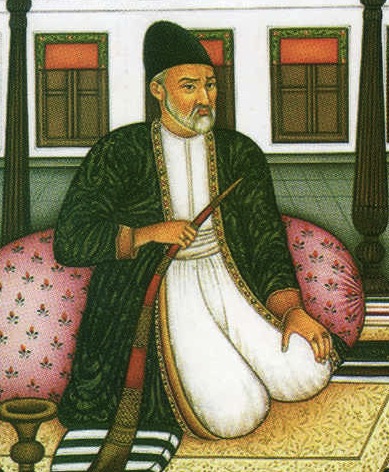
00:04:47 sorts of miniature paintings of this man let's just take a brief look and you see it's a different world when you move into the world of miniature paintings you are you are you know one at one more remove from our world and you have to imagine the background and imagine the kind of poetic and painting and artistic uh conventions that are being used um these are all just interesting bits and pieces
00:05:18 from my website I'm I'm just showing them for fun but this is they these these early photographs were pasted onto like visiting cards and you would give them as momentos to your friends so this is a visiting card that had been preserved in the family of of a friend of mine for a long time and it's very faded but this is the the best access we'll ever have to what galib actually looked like then we have of course the later later Visions by modern Pakistani writers of what uh what they think about galib or The Impressions that they have
00:05:51 and here is an an art student um whom I know has imagined that galib would appear on a Pakistani rup note not although that actually hasn't happened but but he's just experimenting with the the view in a in a sort of free free ranging way but let me let me just give you a little background about the um the genre and the poet the word guzzle means something like conversations with women
00:06:22 like the genre itself it originated in six 6th Century Arabic verse early Arabic pule revolved around two broad themes the rakish celebration of wine women and song and the elic lament over Lost Love by the time the guzzle passed into Persian from the early 11th century onward this second theme had come to have mystical overtones separation and suffering were at the heart of love and the faithful longing lover was even a
00:06:53 kind of martyr through Persian the medieval guzzle also came to develop major traditions in Turkish and Udu nowadays among these languages the guzzle remains alive only in uddu if we focus on the classical that is 18th and 19th century gzel in uru the two greatest Poets of this tradition were Mir Muhammad Taki 1722 to 1810 and madah Khan galib 1797
00:07:26 to 1869 for normally speaking a guzzle is a set of two line verses they aren't technically couplets since in most of them the two lines don't rhyme and in a couplet usually the two lines rhyme ideally there are there are to be an odd number of them and ideally the number is to be something like seven or nine um could could we make the sound louder would that help would that make it easier sir is it okay okay um they these
00:07:56 verses share a strictly defined Arabic derived quantitative meter and at the end of each verse they also share a common rhyme syllable and after it usually a common repeated refrain word or words as well beyond this the verses of a guzzle share only the larger guzzle Universe of stylized characters scenes actions and images a guzzle in short is a series of semantically independent
00:08:28 two-line mini poems that have a strong formal Unity but usually no particular Unity beyond that thus in performance oral reciters and singers freely rearrange the verses of a guzzle and almost always omit a good number of them the first verse of a guzzle commonly incorporates the rhyme and refrain at the end of both lines instead of only at the end of the second line if it does this it's called an opening verse there's a special name for it mutl
00:09:00 under oral performance conditions this feature enables the listeners to perceive the formal structure of the guzzle more quickly and we'll illustrate this when we when we look at an example later on the last verse commonly includes the poet's chosen pen name if it does this it's called a closing verse a makta both these features reflect the guzzle expectation of oral performance the traditional venue for oral performance was the mushayra The Poetry Place Sher is poetry sh is
00:09:32 the poet mush is the the performance of poetry uh the mushira consisted of a smallish group of patrons connoisseurs Master poets called ustads and apprentices shards most mushas were based on a well-known pattern line announced in advance so that everybody's guzzles composed in this pattern were formally identical sharing meter rhyme and refrain this formal identity made them extremely comparable to each other so that individual achievement stood out
00:10:05 very strikingly recitation of the first line of a verse was always followed by a long pause full of praise and comment from the audience after which the first line was repeated and then finally followed by the second line this style of presentation created a time period when the audience had access to the first line but not the second with possibilities for creating suspense misdirection surprise and so on that became major factors along with complex
00:10:38 word play in the development of the guzzle Poetics poets recited in order of increasing seniority because the emphasis on apprenticeship over time and the required Mastery of technical skills made it apparent to the the organizers of mushas that the senior most poets must be politely assumed to be the finest of course sometimes they weren't so their tensions were created there um everybody had a small notebook in which
00:11:10 he and we have to say he because women very rarely attended mushas a small notebook in which he quickly jotted down verses that struck his fancy for a later discussion with friends famous poets were often the rock stars of their day bands of their apprentices were even known known to Riot when they encountered each other in the streets of Lucknow although the majority of guzzle poets were upper or middleclass Muslim men guzzles by women by people of other
00:11:41 religions including Hindus scks and Christians and by people of workingclass backgrounds are amply documented all poetry is made out of other poetry but not all poetry is glad of it the guzzle however Delights in its huge treasury of early verses the very origins of uru poetry included macaronic or mixed Persian uru lines and verses the classical training for a poet included memorizing literally thousands of verses by earlier Persian and uru
00:12:14 ustads there were various technical terms for the deliberate or inadvertent use of another poet's line or idea or image if deliberate it was either a tribute or a challenge or usually both if inadvertent was it a creative coinci idence an Innovative development or a vulgar imitation and was every usage of the early Masters sacred or should modern idiom have legitimacy as well mushas functioned as technical workshops in which issues like these could be
00:12:44 publicly debated at the most basic level the guzzle is the firstperson voice of a passionate lover who laments his lack of access to his beloved this lover is always construed as masculine in some verses the Beloved is very clearly feminine as for example when women's clothing veiling Etc is mentioned she is then either a corisan or an inaccessible lady in Pera in other verses the Beloved is very clearly masculine as when the
00:13:17 beginnings of the CSH adolescent boy's beard are said to appear destroying his androgynous charm in most verses the gender of the Beloved can't be decided for sure this undecidability is partly due to the brevity of the verses and to the emphasis on the Lover's feelings rather than the descriptions of the Beloved in Persian it's also due to the nature of the grammar verb endings don't vary with gender in uru the Beloved is always treated as grammatically
00:13:47 masculine and ultimately this abstractly masculine gender is also due to the desire to keep open a mystical sufistic reading in which the supremely powerful and irresistibly beautiful Divine beloved is the real object of desire since an erotic Pursuit Of God especially by a male lover is not only supremely transgressive but also bound to end badly the lover knows from the beginning that his passion is doomed and
00:14:17 will destroy him but he doesn't care since it's so much more powerful and beautiful than anything on offer in this flimsy transitory real life thus the Great metaphors of The Lover's condition are the universal mystical ones of helplessness Andor Transcendence and the four biggest are not surprisingly you'll recognize them if you know anything about mystical poetry drunkenness sex Madness and death and here's where we connect with no doubt psychoanalytic
00:14:49 interest too the stylized settings of the guzzle world the Garden the desert The Wine House the prison and so on and its Supporting Cast of characters the Rival the messenger the doorkeeper the advisor the aesthetic Etc are all carefully calibrated to accompany this Passion Play some Modern readers in South Asia have worried over the depiction of the Beloved as a beautiful boy the implications of pederasty distress them but if the Beloved can be
00:15:21 envisioned as a beautiful boy or a corisan he can also be God and plainly the guzzle lives in a world its own and thus is the very reverse of autobiographical for if the Beloved is a denisen of that guzzle world so too is the lover who can speak as a caged bird a hunted animal a naked madman a drunkard or as himself after his own death this is one of the enjoyable parts of the of the guzzle the lover is doomed he dies but it never stops him he
00:15:52 doesn't shut up he keeps right on right on composing poetry about his what happens after his death uh um the point is the transgressiveness the liminality the rush to break out of this flawed doomed limited worldly life into a larger truer Universe of passion The Moth flying into the candle flame is thus one of the guzzle emblematic images the burning melting self-consuming candle itself is another and the blossoming Rose whose smile is also her
00:16:25 death warrant as she blooms is a third the classical guzzle world with its aristocratic patronage and its famous ustads was killed off in the aftermath of the rebellion of 1857 guzzles nowadays in uru are often either obscure and Elite printed in small poetry journals or else popular and personally expressive or even filmy composed for Bollywood movies modern mushas too though they still exist and
00:16:56 though they happen all over all over North America in including quite a number in our town modern mushas are greatly changed they are public performances like concerts presided over by popular MC's who adjust the performances to the mood of the audience to some extent these mushas constitute a middle ground for the guzzle between the elite and the popular in which it can continue to survive the there is also now English guzzle to add to the picture
00:17:27 um it's become a popular genre in in recent decades and a very a very um influential and fascinating book called ravishing disunities by the late aash Shah Ali is a very good point of entry for the English guzzle so I've studied the guzzle for my most of my scholarly career but otherwise I'm an outsider I'm from Arkansas um I started studying Hindi at
00:17:57 20 and and or the at 22 um so it's very nice that uh we also have here A Very extreme Insider my friend Mustafa manay who is of course not only an Insider as as a South Asian but also he is an Insider as a direct descendant of a well-known U poet called Amir mini who was a junior contemporary of galib and in ghalib's old age the young man Amir Mini often helped him
00:18:29 write his letters and acted as a secretary to him and so we have actually a sort of blood connection here so I'd like to ask Mustafa what he would add to what he would add to this description or or what he would change sure thanks a lot friend and uh first of all just as uru has the ability to really absorb uh so many different words and philosophies and styles from all over the world I would say that you're not at all an outsider because uru has embraced you
00:19:02 with open arms just as you have embraced Udu as well um and thanks a lot for your um introduction and um I would just say that yes just as Fran made the point that uh she's had um she's had a scholarly connection to uru and its study which of course is very deep and very expansive um when I had um an experiential connection to it before I had a scholarly connection so I was um
00:19:35 when I was coming off age and really understanding poetry I was reacting to it on an emotional level which of course is the experience that most people have of poetry rather than studying it to begin with um and so the the experience of galib and poetry uh in general is at a very deep emotional level as well and so an emotional understanding based on one's uh life experiences on
00:20:08 personality on one's um psych psychology personality Etc comes first and then after that because the gazal can be and gazal poetry can be interpreted on so many uh levels when you start studying it more meanings Etc come uh come come to light um and just because I was experimented in in the modern times so I would say that yes the gazal definitely um had Growing
00:20:39 Pains was battered by the outrageous slings and arrows of Fortune Etc but it does survive um it has changed quite a bit um although the the formal structure of the rhyme and meter Etc Still Remains as well but a lot of new themes have been infused into it um uh and I believe that that process would not have been as robust of of innovation if it were not for galib uh because galib I feel was a
00:21:10 major uh innovator in terms of using the same kinds of classical metaphors and vocabulary but infusing new themes which were coming from his personality as well as his as well as well as his times as well um just a small point about when Fran had mentioned that the first verse is called a matla and in true Udu literary um tradition even that is is a
00:21:42 beautiful word play because matla also means the sky and so figuratively the first share of a gazal when you call it the matla you can poetically think of it as the sky the rest of the shares the rest of the couplets are descending from it after that and so that that sets up a whole range of poetic images as well um and um even one thing that has also changed is the grammatically masculine
00:22:12 reference in in Udu poetry has also evolved and changed as well so now in these days and times you find a lot of um women ports um and they use the feminine gender as well as the the masculine gender um according to however they prefer to apply it as well um and yes without further Ado I think we can get more into then are there any special questions I
00:22:44 mean I I think we're we're basically planning to have a question period afterwards but is there anything anybody would would like to raise or to to ask at this point since we're a small group it seems that we should be informal did you have a question just um translation of the word said conversations with with women with women that's what I yeah there's there's another atmology um that that attributes the word to the dying Cry of a gazelle but I think that's a sort of folk folk
00:23:15 atmology right there is the word gazala as well uh which I think um friend you might know better it does that refer to a deer well there is there is gazelle has a cognate for for gazelle in in U but but I think that the atmology is a folk atmology okay you com on the RO of sism in this form and
00:23:47 also aru best of the from this region of the world and does he fit into this Tradition at all he also to himself drinks absolutely actually it's interesting about Omar kayam because we we think of him through Fitzgerald right um we read the rubayat of Fitzgerald the quatrain um translated from Omar kayam but it's one of those very free translations that we nowadays would call
00:24:17 transc Creations so actually Fitzgerald wrote an original poem in English that was very Loosely based on Omar kayam and it was far more successful in English than Omar ever was in in Persian um and in fact I think penguin has one of the Publishers has put out literal translation of Omar kayam and you can barely recognize the the Fitzgerald um approach you can you can really see that he's taken a lot of Liberties as has happened with roomie um by some measures
00:24:48 roomie is now said to be the most popular poet in America uh but he's popular in the translations of Coleman barks and of course if you actually look at roomie um in persion um the the difficulties I mean these many difficulties are smoothed out and many things are ignored or or um altered in in getting into what makes Americans feel good in terms of modern poetry um let's oh every question uh I recently learned that uh sism may have originated
00:25:21 among a g and uh at what point did these religious prohibitions begin I'm I'm not used to associating drunkenness and such with spiritual Muslim anything statements Muslim statements so when did we it goes back very far in the
00:25:51 tradition um and it's the there is also a very nice back and forth sort of you can always flip the coin and look at the other side effect um because you you find that the lover is transgressive because he loves it he's he loves his own beloved more than God he loves his he calls his beloved an idol and he worships his beloved and uses very explicitly religious terminology for his beloved and he he gets drunk and he runs out into the desert and and Carries On like a crazy Mad lover but of course his
00:26:24 love his beloved may be God and so we have the picture of the the the lover with his clothes all ripped up drunk Lying by the side of the road and the pious Shake goes past him on the way to the mosque and snear at him and averts his eyes because he thinks of this reprobate as a very unsatisfactory badly behaving person but of course in the guzzle world the lover knows the real inward Joy of of the presence of God and the pious person is just observing the the letter of the law but not the spirit of the law so it can always when we see
00:26:56 the lover madly drunk and car carrying on in a sacrilegious way um it can be both sacriligious and it could be a a sign of real absorption in in God and of having the fuses of your mind and heart blown by contact with God because after all every everybody's this this goes to mysticism and Sufism in general every claim or attempt that you can comprehend or feel in your heart and your mind the presence of the power that made the
00:27:26 universe is obviously it's inexpressible and it's also impossible you're going to blow up and so the imagery always comes from outof control areas of human life um drunkenness Madness Sex and Death um and this is this is true in in almost every mystical poetry that you can think of that it it fries your brain and it blows up your heart to try to encounter God but of course that doesn't stop people um so the Poetry is always balanced on that tension of Doom and ecstasy and and and suffering um so it's
00:28:00 it's a it's a remarkable and all this in little poems two lines long so it's a it's a very um powerful genre what would you what would you add to that Mustafa right no and I I would say that yes um going back to the chronology of of Sufism that uh it the earliest known sufis um I feel would be around um a couple of centuries even before roomi uh the tradition I think had started it may not have come to be known as Sufism itself uh but it had started
00:28:33 and um the in Sufism uh actions can lead to philosophies and philosophies can lead to actions as well so the physical manifestation of uh uh drunkenness and Sex and Death uh can be can be the result of of certain philosophies Etc or they can then compel a person to think a certain way so in on the philosophical plane there were um very um established
00:29:04 and still evolving philosophies such as and and stages of mysticism called f and Baka and so these are all for instance is the unity of of existence Shah holds that um God's um existence is separate SE and man's existence is separate as well and F is sort of the the last stage
00:29:36 or the second last stage I should say of um um of Oneness with with the Divine and sort of uh Nirvana if if if you would um where things began to to change as going to your um question about when the prohibitions ETC um came in and how the the what we see today in in the media and um in the public eye in general this view of this brand of Islam
00:30:07 that may be called vahhabi ISM for instance a very strict Orthodox fundamentalist kind of strain so the strain I I feel was was always there uh but yes it was not as um as as powerful or dominant or as galib excuse the pun as it is now also means dominant and and sometimes overwhelming as well uh and so but these things also seem to go in in in historical Cycles so there were
00:30:39 throughout the centuries over a thousand years various time periods various areas where yes the the current uh practice of Islam as put forth by the Taliban for instance uh was dominant um but there are large large pockets of uh of of Muslims uh I would say who are still in the majority um who still hark back to the to the more um po poetic and romanticized form of Islam than than the
00:31:10 Orthodox form that we see today let's let's stop for a minute with the and with with our general discussions and just take a a look at the specifics of of one guzzle just if you bear with me I think it'll be worth it for examples so I I maintain a website here and you can look up any of any of gb's guzzles there's 234 of them and they contain um 1,459 little two line verses and this is guzzle one and
00:31:41 it has all sorts of extra things that go with it uh that most of the guzzles don't have uh it also has as all the guzzles do have the power for you to decide whether you want to look at the website in u script or in the Hindi script because many people nowadays in India don't know the uru script but they're able to read the same content very nicely in in dagri script so thanks to one of my really good graduate
00:32:12 students who knows how to do these things with JavaScript you have your your viewing choices um so this is this is diacritic such as is convenient for most of us and this is the first guzzle in galib divon it has five verses and the you can see that every verse ends in C right so that's the refrain it means of and every syllable before the C is ear has the form of ear sheka Shamira
00:32:45 etc etc and that's the rhyme syllable which is compulsory the refrain is optional but the rhyme syllable is compulsory and then you can see that the first verse has the rhyming elements at the end of each line that makes it a mutla and that means that in an oral performance once you'd heard the rhyming elements twice you could tell how much was rhyme and how much was refrain and until you'd heard them twice you couldn't so this is a preparation for oral performance and then the last verse
00:33:16 very commonly contains uh the pen name of the poet and so here it is um and it's a way of signing an oral poem you work your pen right into the right into the last verse in the bti tradition in medieval Hinduism we have exactly the same sorts of of devices including the the pen name at the end of the verse to to be able to sign an oral poem and the first the first verse of the first guzzle is particularly interesting and the reason I chose it for for today's
00:33:48 talk because I knew we wouldn't have time to look at much and in a way it's the most interesting guzzle in any poet's Devon the Devon is the full volume of his poetry because it's the only one for which there are extra expectations because it begins it begins the Devon and so many works by traditional Muslims always begin with some sort of hum some sort of Praise of God and so it's very very strong expectation that when you when you prepare your divon for copying hand
00:34:21 copying by a a scribe or for a publication um and galib got his poetry published he was right at the right at the first decades when it was possible for a poet to get his own Theon published so he did um and you he he knew that the expectation was that the first verse of the first guzzle had better be in Praise of God everybody expects that it's just how it's supposed to be so he himself created a very clever way of not quite fulfilling those
00:34:55 expectations but not too conspicuously flouting them either I'm just I'm just hesitating on this because I just want you to think that if you go home and are interested in this you can look at these they're completely open to the public and every verse has its own commentary page and this one has a particularly long Bunch because the commentators have argued about it a great deal but um every verse has a lot of some of them have pictures just because I like pictures but um but this is the kind of thing I've provided for him and it's a a
00:35:26 study site for my work and it also aims to provide lots of materials and resources for the guzzles for people to study them even if they don't have a University Library at hand so here is a very close a very close study of this one verse so nsh here's the definition right um nsh means a shape of painting a picture a form etc etc the nsh and then faradi farad means complaint and aadi
00:36:00 means one who has a complaint and in legal terms it's like plaintiff in English which also means one who has a A plaint or a complaint so the picture or the form is a a complainer a plaintiff of whose mischievousness of writing so that's our first that's our first um line and of course writing the word for writing has the meaning also of setting at Liberty
00:36:31 which is why we talk about t Square when we talk about the the Arab Spring it's not about writing it's about Liberty so you can see the the multiple possibilities here and Adam Moy remember you only get the first line and then you have to wait and you can't look ahead you have to there's a narrative students call this the authoritarian narrator that you're stuck you can't look ahead so the shape is a plaintiff of whose mischievousness of of writing um why
00:37:02 don't you go ahead and recite it nicely Mustafa of paper K is the paper of paper is is the Garment of every form face countenance
00:37:33 shape of or in the picture so obviously people asked galib about that what is this paper business what are paper garments and he had to reply in a letter so here is his reply which is my translation from the uru um and you can see that he's used to being asked questions like this because he says U first listen to the meaning of the meaningless verses meaning at the beginning of his letter to someone he's
00:38:04 going to answer some someone's complaint that several of his verses were meaningless and he does he answers it for several verses but one of them is this as for Nadi that's this verse that he's going to explain in Iran there is the custom that the Seeker of Justice putting on paper garments goes before the ruler as in the case of lighting a torch in the day or carrying a blood soaked cloth on on a um bamboo Pole to protest an injustice thus the poet
00:38:36 reflects of whose mischievousness of writing is the image a plaintiff since the aspect of a picture is that its garment is of paper that is to say although existence may be like that of pictures merely notional it is a cause of grief and sorrow and suffering and the commentators have complained the the early and authoritative commentator um famously said that's a meaningless verse that's very bad and the other commentators disagree and so forth but you can see
00:39:07 how cleverly framed it is because it doesn't attack God but you would certainly not call it a praise of God either it presents itself as a naive question gee I'm looking at a picture and I noticed that all the shapes and forms in the picture are wearing Robes of paper so they must be plaintiffs must be seeking recourse against Injustice and so against whom are they seeking recourse so you you read after you hear the second mistra you realize the Bas
00:39:39 sorry MRA means line after you hear the second line you realize the basis of the first line that once you have seen a picture and thought about all those paper garments that those poor static helpless people in the picture are wearing um then you realize that you may wonder who's m mischievousness of writing are they complaining of that they were drawn badly because obviously a figure in a picture has no power of movement it can't control its looks or its appearance it has no volition it
00:40:09 looks like it looks as though it's moving it looks as though it has human attributes but it actually doesn't someone has mischievously drawn it or mischievously drawn it badly it's very hard to tell um about that so there's a lot of word play here of of words for writing and drawing and and paper and such but this is an extremely famous uh verse it it was used um no faradi was used as within slightly transformed form within his offit as the title of of a
00:40:42 collection by Fe Ahmed Fez who is a very popular modern uru poet um kind of the favorite poet poet of a lot of pakistanis along withal um so everybody has been a everybody has been a galib fan in U literature ever since kind of officially a galib fan um and or almost everybody there's yagana who hasn't but most everybody has and um this verse is known to everybody who knows anything about galib so it's a good verse for us
00:41:14 to look at and just to see how what tiny little poems these are and how they have to make use of lots of resources to make a powerful effect on us even though they're only like 15 or 20 words long so this is this is our first look at our first look at the verse which is sort of raw material for discussion so do you want what would you add Mustafa um sure I'd say that um the uh Indo Persian languages uh
00:41:46 tradition you could call it is that uh a lot of uh words have multiple meanings and shades of meaning as well which uh lends us such uh beautiful uh complexity and multi-layered to uru and and Indo Persian and Arabic poetry as you can see from France's website that just you get that there are so many different words um for just one word and you can literally take each word and plug in a
00:42:18 different meaning and shade of meaning and come up with a different interpretation or a slightly different shade of of meaning and experience as well um so that's there and um I would say especially on um on the point of galib choosing this as the opening verse of his D so we know of ghalib's personality and his through his life as well that he was a a a very self assured person and
00:42:49 you can see his personal as well as poetic conceit as it were to choose this couplet over there um and ironically we can also see we can interpret it in terms of irony as well because as he's asking the question of whose uh mischievousness is this n creation of he himself is the person who is actually writing he is creating the N himself so
00:43:19 in a very tongue and cheek way he is referring to himself as Divine as God as well and especially if you take the meaning a shade of meaning of shi as not just mischievousness but wanness uh and the meaning of as setting free by the act of creating something you are actually setting it free or creating it you are actually um freeing it from your own mind um you can also see the the the
00:43:54 a lot of shades of meaning coming coming in there so he could be referring to himself as well and it it reminds me of of that line from um from from from King Le um as flies to want boys are we to the gods they kill us for their Sport and so you can see of that in there as well and Fran is right this particular couplet has been debated endlessly as well but you should notice
00:44:25 that of course the first line is a question question and so it does not say it it's it's perhaps a naive question gee who has done this mischevous or bad writing or drawing um I don't know and so if anybody says it's God it's we who say it's God it's not the the speaker the speaker simply asks a question and in fact there's there's a lovely rhetorical feature of the guzzle that's that's that's um a common trait especially in in um galib and me the two greatest Masters the preference for insh
00:44:57 over speech and this is a sort of rhetorical distinction that exists in in um Persian poetic Theory also kabara is gives you it gives you information like the sky is blue is a kabaria statement and in shya statement would be is the sky blue how blue the sky is I wish the sky were blue uh perhaps the sky might be blue if the sky were blue and etc etc
00:45:27 so almost any almost anything that's not a falsifiable informative statement is called in shayya and it opens so many possibilities because a first line like that um it could be an an exclamation also oh my how extraordinary why are all these figures in the picture wearing paper robes or it could be an innocent question of someone who really has no idea or it could be a cynical question yeah who are they complaining about you and I know who they're complaining about don't we so in a lot of these little
00:45:59 two-line verses the tone is everything but you have to provide the tone because nothing in the verse tells you the tone in which it is to be recited so you may hear it recited if a very small number of people would ever have heard galib recite that verse so when you read it on paper which is how most people encountered it um every time the per someone recites it you have to recite it in in in in a tone and that that guides the interpretation too you you inevitably help to create the verse
00:46:30 yourself and that's part of the the fascination and enjoyment of these tiny little tiny little poems that are partly doit yourself and so you have to work extra hard on them and that enhances their meaning did you have a question is he uh concerned in some this to me by the way seems almost like a going flung down in the face of whatever reader may take offense or not but is he concerned throughout his work with in slipperiness about language so many poets have ellot
00:47:01 says when I Zen poet says if you say one word you go to fast as an arrow so is that something about language itself he wasn't worried about going to hell because all the guzzle poets knew that the themes or the mmons of these verses were given by the tradition so if he wrote a if he wrote a verse that said said oh I tear my clothes off and run around in the desert getting drunk no one would think that
00:47:32 was an autobiographical statement everybody would realize that was just an expression of the the themes of the guzzle world and he was speaking in the voice of the Mad lover who essentially is the inhabitant of the guzzle world so there are lots and lots of verbal devices that he used and he certainly cared about them and people have tried to analyze them and figure them out ever since but there's no indication that he had a lot of anxiety about them he even in his in his Generation Um he certainly
00:48:02 had he was controversial because a lot of times earlier guzzle poets had gone in for like straightforward love poetry you know lyrical romantic sweet adorable nice and then he brings in sort of like John Dunn you know the metaphysical poet he brings in the flea and writes about the flea that bites his beloved John dun does I mean or the drawing Compass image that are not smooth and romantic they're kind of lumpy and cerebral and metaphysical so I think that galib is more like dun than like any other English poet and he he delighted in
00:48:35 using awkward edgy um unheard of kinds of word and image play and he he was he had many detractors but he also had many great admirers he was very famous for his poet poetry and his and his letters also in his um U and Persian ones both so there's a lot there's a lot to be said on this subject and um God knows any of you who are interested can probably find more information than you want on my
00:49:09 website did you did you have anything to add sure sorry goad if you could answer it briefly a big question what are the origins of the gazelle uh the deer or the poem the poem um well uh it it started in Arabic I'm not I'm not so good on this because I do not know Arabic um so it started it grew out of longer forms of poetry it was one part of an introductory part of of a
00:49:43 kind of longer genre in Arabic the time frame um shortly before the coming of Islam so like the sixth Century um and and um it really was a minor genre in Arabic but when it came into Persian then it exploded and became extremely important and became um a major form of of literary romantic and mystical expression in Persian and then in Turkish and and U also so it's never
00:50:14 been a big deal in Arabic but it did begin in Arabic yes uh I was surprised to hear you say that it was no u performances of vles are no longer uh that popular uh because there was a woman who was known internationally as a CLE singer I think she was Egyptian I once work with uh who
00:50:45 died some years ago in her 70s Kum right yeah yes and uh you know internationally there was a great passion G and all and I had the impression that u h singers were sort of like rock stars well now in uru this can be the case but I believe um Kum saying um modern poems that were not guzzles or older poems that were guzzles I really
00:51:16 don't know does anybody know Arabic and know what um um Kum used to sing I I don't know Arabic but I had a patient who uh was was a great great ADM of who also had politicals not always ones that on the left but my impression was that she was singing about popular and not particular she talked a lot about love a lot of broken heartness lovers you know
00:51:48 all kind stff but I don't think body she made a lot of a lot of I'd say that I mean the kind of uh ground that U galib broke and and set up uh then gave gave way to a lot of evolution in uh in the way that mushas are held their frequencies uh the way that the that the way that Udu poetry is sung how it's read how it's practiced
00:52:20 the whole range of experiences so I I believe I I agree with with friend when she says that yes mushas are not as popular today as they used to be and mushas are the a gathering of poets who are going to be reciting their own work primarily so there is that performance and yes the the their frequency at least in in Pakistan and India from what I know and have experienced has gone down and um I would
00:52:52 say it's to a large degree it's because of um the the times and the pace of life now um and the modernization process Etc that's going on in these in U speaking societies um there's also of course the big question in in Pakistan the big issue of security as well um things have not been very stable for the past two decades or so so there's a certain risk to having large Gatherings uh and having
00:53:25 people be in one place and mushas were usually held uh during the during the evening and night hours Etc so that's one reason for that as well performance wise there are singing performances of poetry as well so more along the lines of umum and individual uh singers who were very who became famous for singing U poetry they have found um um outlets and uh uh survival through Modern media
00:53:56 so through the intervention of radio and TV and now the internet you find that gazelle singing performance of the gazal live on as you witnessed like the the opening gazal that we had that was playing when you were walking in was by a singer called tat mmud who was singing it a good 30 40 years ago uh if not earlier than that but because of YouTube we have those as well um but yes even on that um
00:54:28 even on that side of performance things are getting tougher in terms of the sheer number of people who are now practicing the the classical art of gazelle singing which is also and gazelle would then uh be be fused with the with the whole science and art of Indian uh classical music which has its own which is a whole science on its own uh and interest and patience in acquiring that art is also going down
00:55:01 but now with the intervention again Evolution keeps happening so now you have this mixing of of Pop genres coming into contact with classical Indian music and um modern Udu poetry coming into contact with with classical and sort of a mish mash occurring and something new uh coming out of it so if you ask uh members of of the younger generation especially in Pakistan um if um if Udu
00:55:32 music they would call it uru music um is alive and well there you would definitely get get a very affirmative answer even if they they do not listen to it much um and there's of course also the regional folk influence as well in the regions of India and Pakistan Udu is of course just one of the languages that that is spoken it's the official language of Pakistan and the official language of five states in India but then there's a myriad number of other languages that are spoken and they all
00:56:02 sort of interact with each other flow uh in and out of each other and new things come out of those as well people people have said a lot and and perhaps you folks know something about the Hindi uru split um of are they two languages or one are they kind of a siese twin um compound or what and there's been a lot of tension of course because Hindi is the official language of India and or is the official language of Pakistan and yet they share a common grammar and a large amount of common
00:56:36 basic vocabulary and then they have two different sources for their fancy vocabulary and two different scripts but um the real threat to both of them in my view is English now South Asians are picking up English at an astonishing pace and the really sad thing is there is as as Mustafa said there's a long and strong tradition of being multilingual in South Asia not in a pretentious way but perhaps you would speak one language in your village and if you went to Market in a neighboring town there would be a different dialect there and if you
00:57:07 were a highly educated man of an upper class you might have a separate language that you would use for for diplomatic or or literary purposes um but so you would think that English could be sustained along with um you know at least one South Asian language but in my observation this is not happening my friends who are Udu Wallas or Hindi Wallas who are really interested in these languages and literatures their kids have all been sent to English medium schools meaning the medium of instruction is in English and they have
00:57:39 tried very hard to make their kids fluent in Hindi or Udu with varying success but if you go to the kids' rooms and look at what they're choosing to read you know it's English and if you put two of those kids in a room together you know they're going to be speaking English to each other I mean it's a it's it's a a big um uh problem for the future of this language at a at a at an elite level because um of course they may know Oru for speaking to servants or something like that but their fancy education their literary and artistic uh
00:58:11 vocabulary and thinking often happens in in English and so this is the high-end side of of uru where if you don't have a good background in grammar and and a sense of the meter and the poetry and the persianized vocabulary it's very hard for you in fact the most the most heartfelt letters of thanks I get are from South Asians living in the west who say thank you for your website uh I always wanted to understand the Poetry of galib and I never could but you've
00:58:41 explained it all in English so now I can and um it's it's it's just something that's happening and then the migration of the guzzle into English is kind of fascinating too because of course it's what is it in English it doesn't have the meter so is it the guzzle or not a whole set of questions but new things are happening all over the place and so we might as well celebrate and and enjoy them but never but the definitely English and South Asia is just becoming uh it's with every generation it's it's absolutely taking over and I don't know
00:59:12 what the the future will hold but but this is a very very strong Trend and I don't see any any Retreat from it or any counter Trends do you uh no I I wouldn't say that there's a retreat from it um I would say that again there is a process of sort of um uising it or or englishization
00:59:56 as we although that language is more than just the words in that language it's a whole set of historical and cultural experiences and values um that come with it as well yes poetry culture what percent of the population did that audience represent was it WID just the particular Echelon
01:00:28 how many women read read it or who were the people that were reading it who is talking to well head was it going over so that be that it could be you know presented without problem or was was a political there were apparently some political problems
01:01:08 well remember most of them were not reading it because because most people were illiterate for one thing but certainly in gb's Delhi and in Agra where he was born and lived before he moved to Delhi um this kind of language the what hindustani or what we now call uru was a lingua franka increasingly Persian Persian had been the elite language of the Mogul court but by by the time galib was living there um the British were in charge and gradually the balance was shifting away from Persian toward the
01:01:39 local languages and so and so many people would understand this poetry and in fact there are anecdotes in tusas about how it would disseminate because there would be mushas where poets would recite their latest verses and of course that those mushas would be servants um serving serving the the food and drinks and taking care of people and so instantly the servants would pass the word on because these things are so short and if you know the meter system and the language they're very memorizable and very recordable so the dancing girls would know them
01:02:10 immediately and have them memorized and the dancing girls and the musicians would want to have the latest uh verses and they would arrange for disseminating them and it there doesn't seem to have been a a problem because remember most poets were not as complicated as GB so most of the time people were doing more straightforward love and longing poetry or perhaps mystical mystical poetry but it wasn't exceedingly difficult or complex or inyour face hard the way gb's verses often were right and there was
01:02:42 also the the aspect of being uh very alive to the preferences of one's Patron as well although galib was exceptional in that as well that he was was a very self assured person person and he could get away with a lot that um other poets could not because um again in in 18th century India you could the only way that you could be earning your living by your pen was if you had patronage from a
01:03:14 wealthy Noble or an emperor and were associated with their Court um and so uh even if you were not writing something for the court uh you still had to you you it carried a little bit of risk if you wrote something that uh would not be well received by our Patron then yes you were really um writing yourself out of a livelihood kind of thing and but of course because of his stature Etc was would would be given a lot more leeway
01:03:46 than uh anyone else would and he right he he got into some some troubles as well um so yes so so the short answer to your question would be that yes they were writing primarily for uh the the the courts and people who of socioeconomic and educational status who were associated with the courts but that does not mean that their their poetry was not understood by people outside of that Circle very
01:04:18 sure question yes I'm fascinated by the multiplicity of meanings in and I and and the depth of or the layers of um interpretation that allows for do you think that's a fundamental factor in the formation of this form of poetry that it can be brief but very resonant at the same time would it have worked as well with another type of that's such an an interesting question I'm I'm glad you you asked that um in in in the strong
01:04:49 sense since uru guzzle comes right out of Persian guzzle in fact the the birth uru gazel was part of the death of Persian in India people kind of took all the the devices and the structures and the meters and the the the technical and and genre features that they loved in Persian and started doing them in uru and then they didn't need Persian anymore at that point people were starting to feel that Persian was an alien language in a way that they hadn't before for for a lot of reasons so in the strong sense it came right out of
01:05:19 Persian but there are so many things that you can do in in uru because of things that we can't because of of constraints that you don't have that we do have in English that it's it's it's quite striking for example we you don't have capital letters and the kind of punctuation if you if you see punctuation in modern deans of G which you do it's imposed by a modern editor they put English style punctuation into gb's poetry which is of course quite ridiculous because he certainly would
01:05:50 never have done that or have wanted that to be done but there is also a lot of things like um in in in English we can we have to make a distinction between the sky is blue and is the sky blue it's it's because of the inversion in uru you have you know as and there's a yes or no question marker in front n but it can also be colloquially omitted so asman nah can register as a question or an exclamation um if you wish as well as a a statement
01:06:22 so there's a lot of of of features that are very well mobile ized by by G and other poets but especially by G to create multiple meanings in these little tiny poems and I don't think you could do it as well in certainly you couldn't do it as well in English and that's why translations of galib as a rule just fail um I have a couple of guzzles with anthologies of translations so that anybody who wishes can compare and see what the translators have achieved um you have to honor them because they're bound to fail because but it can't be it
01:06:54 can't be done but you can see my translations are totally lousy and clunky um and they're just meant to help push you back to the uru with more understanding they're not remotely meant to be literary um and no doubt there are things we can do in English that that you can't do in uru but there's a lot of things that you can do in U partly because um you have a different word you instead of prepositions you have postpositions so instead of saying in the house you say house in and so at the ends of sentences and at the end of
01:07:25 lines you also have your verbs there so it's easier to rhyme in uru than it is in English because your verbs often have common endings that make all verbs in a certain tense easy to rhyme with each other and postpositions end can end the line that postposition c that means of and so it can be of this and of that you know of writing of a picture but since the of comes at the end it Rhymes and in English you'd have to say of the picture of the writing and so you can't get the same facility there but of course you
01:07:57 know there are um it's it's hard to make any meaningful comparison because really nobody has tried to do what galib did exactly in English but we do have other effects I think a a fascinating com um analysis to your question might be to compare uru to with the Native American languages uh for instance the the the Hopi um language spoken by by the H Indians um um also did not have uh had a very
01:08:27 Loosely um constructed sense of time uh which you see in in Udu is also very different from the concept of time in English so for inst in U we have the same word one word for yesterday as well as tomorrow um and I it it would be a a fascinating line of inquiry I I haven't done this and I don't know if anyone else has has done it or not but I wonder if someone like Native American poetry in in in as as it was written would that
01:08:57 be would that remind one of Udu poetry or not simply because of the the way that the the the words were constructed Etc and in U um as well it's it's a syllable timed language uh as well in the sense that the syllables are approximately of the same length and so they occur at approximately regular intervals as well as well so you don't find one very short syllable but with one very long syllable as well which
01:09:29 also adds a lot to the rhythm of of the of the Poetry as well so there are stresses right because when you were reciting this opening verse I could hear there were stresses you introducing that right I was introducing right because it was my own sort of uh um bias and internalization of my own experience as I was growing up it was I was reading it the way that I had heard it recited and the traditional way of reciting it as
01:10:01 well and the the meter has has the feet are there as well so u a lot of people would would recite it as whereas I was reading so I was actually adding those I can I can add an interesting little highlight
01:10:31 here uh my friend Ralph Russell a very um well-known writer in the field of of um uru literature and the author of the best book on on gb's life it's called galib life and letters by Ralph Russell and his collaborator kid Islam but he also was interested in meter and I've I've made a little handbook to teach people meter and put it on my he also made a handbook to teach his students meter but he had a slightly different approach but for this particular meter um he had an English
01:11:04 folk song that he thought corresponded to it oh my darling Oh My Darling Oh My Darling Clementine and this meter is um but of course the difference is we have stress me in English of a very flexible and and disputable kind whereas the meter here is strictly speaking it's supposed to be quantitative so that a
01:11:35 long syllable is supposed to take twice as long to say as a short syllable um not to go higher or lower or more or less stressed so that you have the opportunity to do as you like with your voice um provided you're keeping to the time um structure of it and some people ex extend that privilege very far of my two main oad one of them recites very elaborately you know caresses the words and my other wad snorts when he hears
01:12:07 that performance and he considers it improper and one should just recite plainly plainly and let the words do the work uh but of course we don't know how galib recited so also oh please let may add to that so um especially in this there are many instances when you go and you read the the m and then the m and you go back to the m you would read it differently I would almost guaranteed for this particular that when he read them the last chair you would come back
01:12:37 to this and you would read it differently you would interpret it differently you would stress on the words that if you had no idea what the what the rest of of the the as were and much more than that I would say there are great many verses of galib because the real poetic unit is the verse and not the guzzle that after you had heard the second line you would go back and reread or reand in your mind the first line which is really a way of making a two-line verse feel like a three or four line verse because you have to go back in your head and
01:13:09 reinterpret the first line which is quite spectacular oh Sor sorry this is a little interdisciplinary first I I just was thinking of the BS of ancient Persia the kind of song way of speaking you know when when they told the story of Alexander the Great or whatever but I'm also being a painter I'm also thinking of the Persian Miniatures and the Indian Miniatures and the compartmental compartmentalization of
01:13:39 little images and the way they interact with one another and the very tight structure they're involved with and the metaphors that are involved between a cloud and a dragon in the water I mean there are certain signs and I wondered what is the what interaction did the painters or I guess it's the whole culture but what I mean it's an interesting analogy that there you know these interactions that take place do you have any do they relationship between the Miniatures or anything or you know anything in that area anarie
01:14:11 Shimmel actually used a very nice image um when when people used to complain that oh the guzzles uh themes were too hack need and and boring and we needed to give up the guzzle and start writing much forms of poetry in U um she compared classical guzzle and its themes to paintings of of mjnon in the desert you know the lovers Lea and mjnon uh majon ran off into the desert and became a naked Mand man cared for by the animals when he couldn't get his beloved
01:14:43 Lila and so painter after painter has painted mjnon scrawny and naked hanging out in the desert being taken care of by the wild animals but every painter as as anarie shimel said would show his individuality by small touches so everybody painted the same scene but the great painter painted it differently had had some extra thing or some trick of the light or some new way of framing the the figure of majun that that made it all the more memorable because then it
01:15:13 stood out from the similar paintings of everybody else and that's I think something like that happens when you all use the same mmons uh the same themes that your treatment of the theme becomes much more striking um if you've got something original out of it against a background of of sort of wellestablished tradition but there's also something inherent then in the structure of the language and in structure of the images because they're so highly uh tur and tight and and they're Miniatures they're
01:15:43 Miniatures yeah and each little image has a universe within it and yet it also the whole as a large so I wondered something in the philosophic tradition or where you know this this this concept of structure it's so so deep in that middle you know in the southeast Asia yeah do you have a do you have a a sense of where this could go um I I'd say that yes it it it's a it's a great observation and and
01:16:14 honestly yes I I haven't thought too much about it but again just yes thinking of um the the poetry and the art as and and the visual art as as it was occurring U then yes there are like you could say that the art is is very poetic and uh the The Poetry is very very visual as well and um I really um but can can we say that um for instance
01:16:45 if we look at at at Western Art and and Western poetry that the same kind of that are the images and the the language structure or the poetical structure Much More Much looser like what would be an example of that it's not as I mean romantic painting maybe and romantic poetry you could make some analogies but this is so tight deep within the structural the very thing the building blocks are so have such a interaction
01:17:15 with one another because I mean I've always been struck by the Persian miniatures by their um their telling telling stories that unfold unfold and then go off the borders you know but they're still so you know but they're still so you know enclosed and at the same time escape the border and I don't think this happens in the Poetry doesn't does anything ever escape the structure go off I mean leave the structure um yes occasionally it it does and now you you
01:17:46 find it happening more and more as the gazel structure itself becomes looser or poetry is is written in in other formal structures other than the gazel so yes especially for instance in postmodernist Udu literature yes you find a multiplicity of uh images that uh may not be connected with any kind of deliberate intent on on on the writer's part um as well the time
01:18:17 most I think at that time is on the itself oh is is you mean they're connected the writing and absolutely well think about how English poets now complain because up until recently English poets could assume that everybody knew the King James Bible and the imagery from the Bible and they had a common set of of you know stories that everybody knew and names they could refer to and
01:18:48 comparisons they could make and that was also informed European painting of course there were so many paintings of biblical scenes and and um such poems or poems from the ilad and the Odyssey in the classical tradition but now um an English poet where does he or she go to get common imagery it's much harder in the in the culture now because we just don't have that same body of guaranteed uh guaranteed known material I mean what do we have Star Wars I mean it's it's a it's um it's a a touchy a touchy
01:19:19 subject right I mean on the subject of Star Wars there in in as and you mentioned shahama for instance so there were these there's a long tradition of epics uh and and epic Pros in um uh Indo Persian literature as well just as there is in in Western lit so you have King Arthur's steals Etc in U you have the the D Amir Hamza which Fran actually has done a lot of extensive work on and it's funny you mention Visual Arts and poetry
01:19:49 because uh the um the emperor Akbar in 1600s in India had commissioned a whole panel of paintings that are just depictions of scenes from the dastan Amir Hamza as well and so yes in a way the the written word sort of dictates as well what will be painted and how it will be painted as well um and uh now I I wonder if if the reverse can happen as
01:20:20 well I mean I I know a lot of U literary Works which have been painted but I don't know about a lot of paintings which have actually been then written about in terms of like has there been a poem written on a certain picture or not in inese experimentation
01:20:52 years artic woman has said has have there been any contemporary or older experiments with language itself this language being modified from an artistic point of view or interpret that culture sure actually and I believe Fran is probably looking for the link to the calligraphy I'm looking no I'm I'm I'm looking I'm I'm going to
01:21:22 look for um the uh um because in that caseb commented about painting it's the one case that I know of give me a minute to to find this and yes so calligraphy definitely there's there's a long tradition of U uh calligraphy in um Indo Persian Indian culture as well and yes there were different styles uh as well I'm not sure if the Styles themselves were um
01:21:55 were influenced by the particular language or not but yes that that that is a question worthy here's a present a present for you and any other art art history fans here is the one the one um verse about which galib explicitly commented in in painting terms just look at what he said and then we'll look at the verse he says ra of course has the meaning of opponent that is to say ardor is the enemy of proper possession
01:22:25 the proof is that which is the real name of the Lover majun he was mad therefore he was called majon which means possessed by Gins so is the Mad lover who in life wandered around naked remained naked even within the veil of a picture the pleasure of it is that majun is always pictured with his body naked whenever he is pictured but of course this is atypical is the only case I know where he actually um interpreted his own verse in terms of of of painting but but
01:22:56 this is a neat case because remember you'd only get the first line AR in every color mood mode aspect it literally means color but of course it has related meanings of All Sorts turned out to be a rival or enemy or opponent of SOS which means something like U dignity proper possession being a Bourgeois kind of thing um and when you hear that line you have no idea what's
01:23:26 going on it's a very abstract statement and it's incomprehensible it's uninterpretable so then you have to wait at the mush after the poet has read the first line and then everybody says V Subhan Allah and and starts praising him and maybe they make him repeat the first line and there's a big interval when you're trying to think of what the second line would be only when you hear the second line um is there's that same word that we saw in the earlier verse we we were looking at May means Veil it's like the word
01:23:59 people use in English p u r d a which they pronounce Pura sometimes but it's PARTA it means being in a curtain or being behind a curtain even this is even in the curtain of a painting turned out to be naked or emerged naked so uh in other words or the figure of mad majun who ran off and lived nakedly in with the animals in the desert was so
01:24:30 opposed to all civilized Bourgeois Urbane existence that um even in the pera of a picture which ought to Veil him or or cover him like a paper garment as we saw in the in the other verse we were looking at even in the PARTA of a picture which ought to make for modesty he turned out to be naked and galib is very pleased because he's created that nice little effect that he feels is very enjoyable and that surely the um the
01:25:02 mushara hearers probably probably enjoyed it as well because nikla can mean turned out to be but it also can mean literally emerged so it can actually mean even in the part of a picture emerged naked as though he was so much breaking so much concerned to break down the the dignity the and pompousness of UA life that his his um incisiveness just cut through um all the Pomp and Circumstance that
01:25:33 surrounds him even in a picture so it's a lovely it's a lovely verse and it's it's it's anchored to the depiction of of in the wilderness let me interrupt for a moment I'm sorry I me to Only Got U 5 minutes left and I'd like to uh pass around this material on the hos foundation for people to take a look at as we're finishing oh that's lovely of you it's a it's a wonderful foundation and and we know we know the people who are running it and every penny goes right to women's education in Pakistan it's not a big organization buying Range
01:26:05 Rovers for a lot of outside experts coming in it's people working with local schools right so people can make a note of their website if they want to it's interesting my initial question which was answered directly and then up by this woman also the question of the vulgarity you know sex death nakedness in a way it seems as if this this type of Po was a breakthrough in terms of Permitting people to talk about things that you
01:26:35 weren't really supposed to talk about and using proper language to talk about stuff that was not proper so I'm suggesting that this kind of was a a as I said breakthrough in the language first of all being able to talk to and about women is that was was that a sort of controversial thing of itself talking about women talking about women's the
01:27:05 effect of a woman on a man the devastation of you know being rejected and all that right right and yes with with the caveat that yes it was uh many times uh within the veil of the masculine gender but everyone knew to interpret it as both as well and yes I completely agree they did use their poetic license to very good and very intense effect to talk about uh these
01:27:36 things you know and um to really um link them as as Fran was mentioning earlier that you know the these were mystical themes um and even in this um um couplet over here the the the the interplay of PARTA and Ora of nakedness and hidden it's always the the the native speaker or reader will automat almost subconsciously be drawn into the contradiction between the the hidden
01:28:09 what what we really know do we really know anything going to to decaron philosophy Etc uh as well um but yes I I do feel that uh they did use their their their poetic life I was saying uh to to to talk about things uh that weren't the topics of of everyday conversation in Pros for instance between a couple of people who were just chatting in the marketplace for
01:28:41 instance you not my it's not my impression about this I don't think the for example the most uh find drinking and so on is from from not from many of the others andry and the idea is never been that is kind of expressing what couldn't be Express because the society didn't allow
01:29:12 it since everything was in symbolic everything he writes is symbolic it's not literal drinking has nothing to do with actually drinking symbolic of um a change of level of Consciousness right is there any neoplatonism that I se through in in all of this I mean I'm just thinking now of you know that the Greeks you know could it have something have come through um
01:29:45 sure yes it it could have because uh in in the Middle Ages uh you know the there was a whole flowering of Andalusian and south southern Spanish moish culture and the Arabs are famously um supposed to have rescued Greek science and philosophy from Oblivion while Europe was going through its Dark Ages I mean these These are of course very loose time periods and categorizations thinking of the queen of shba and Song
01:30:15 of Solomon biblical you know it was supposedly for the love of God but also you know both human love physical but Beyond love oh yes definitely right definitely so so there's hardly any poetry in The Classical period which talks just about um sex or drunkenness or death just on their own as phenomenon it's always tied it's always a road a metaphor for a broader um achievement of
01:30:46 Consciousness or dissipation of oneself into the Divine hole well I'm afraid we're going to have to stop um I know for myself I feel like a door has opened into a wonderful Mansion thank you so much thank you