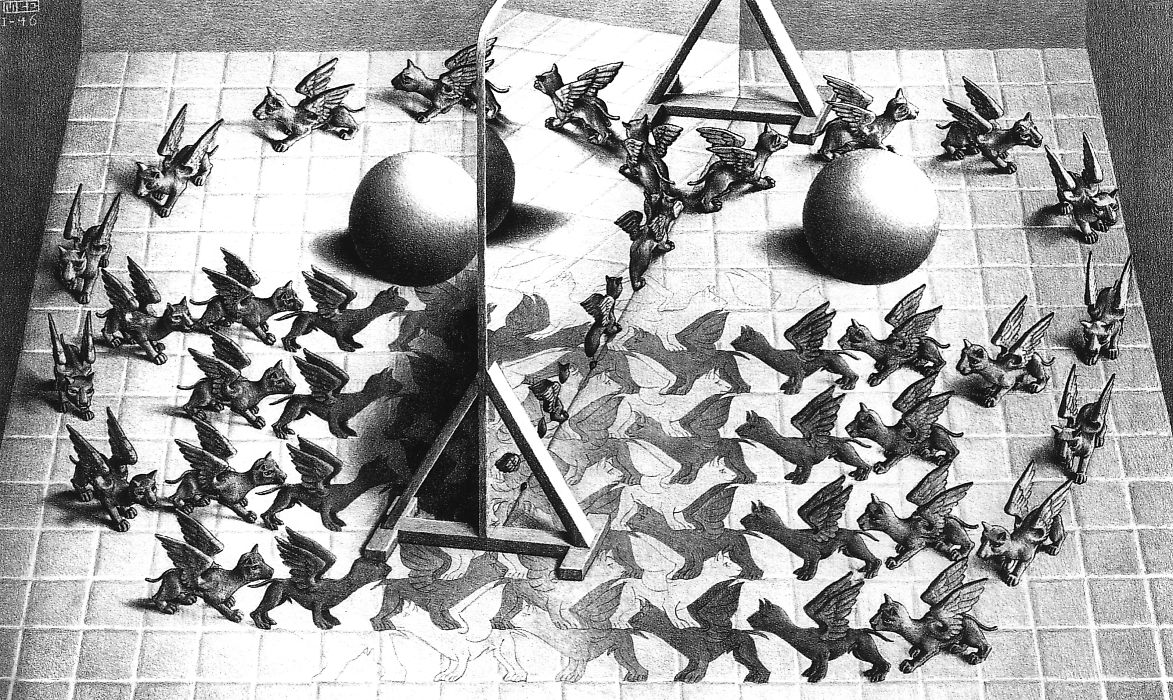
The question of what the world in which we live consists of is as old as mankind itself. In philosophical jargon, this is the question of the ontological basis of reality. With the growing success of physics and other sciences, the idea of one fundamental ontology, that of particles and fields, became dominant as a physicalist version of ontology. However, as every hegemonial view creates alternatives, this one does too. This roundtable addresses two of them: (1) the Platonic idea that mathematics is prior to the tangible world of our experience, and (2) the idea of a tiered ontology, where each of its levels can achieve legitimate ontological significance. Both views reject the fundamental ontology of physicalist accounts, but they do so in different ways that will be discussed in this roundtable.
Speakers


Watch
Media
Related Roundtables


Transcript
This roundtable explores the question of what reality consists of and whether mathematics provides privileged access to its fundamental nature. Proposed by Beverly Zabriskie and Harald Atmanspacher, the discussion traces how mathematics became the dominant language for describing physical reality while questioning whether this dominance reflects genuine ontological primacy or a particular historical and cultural development.
Panelists examine the provocative claim that the world does not exist, understood not as nihilism but as a challenge to foundationalist ontology, the idea that there is a single fundamental level of reality from which everything else derives. This connects to growing skepticism within the natural sciences about reductionist approaches and the recognition that different domains of inquiry may require genuinely different ontological frameworks.
The conversation ranges across mathematical Platonism, process philosophy, relational ontology, and the role of consciousness in constituting reality. Panelists from physics, philosophy, and psychology offer competing perspectives on whether mathematical structures are discovered or invented, and whether alternative realities, including psychological, aesthetic, and spiritual dimensions, deserve equal ontological standing.
Show discussion topics
- 00:00:30 Introduction by the moderators Beverly Zabriskie and Harald Atmanspacher, framing questions about the ontological basis of reality.
- 00:07:00 Historical overview of how mathematics became the dominant language for describing physical reality, from ancient Greece to modern physics.
- 00:14:48 Critique of fundamentalism in ontology and the growing doubt in natural sciences about the notion of a single fundamental reality.
- 00:15:52 Defining ontology as the systematic investigation of existence, and distinguishing between different methodological approaches.
- 00:25:00 The claim that the world does not exist as a challenge to foundationalist ontology, and what this means for physics and philosophy.
- 00:35:00 The relationship between mathematical structures and physical reality, including debates about mathematical Platonism.
- 00:47:00 Alternative ontologies including process philosophy, relational ontology, and perspectives from non-Western philosophical traditions.
- 00:58:00 The role of consciousness and observation in constituting reality, drawing on quantum mechanics and phenomenology.
- 01:10:00 Audience discussion on whether mathematics discovers pre-existing structures or creates frameworks that shape our experience of reality.
Show full transcript
00:00:30 [Music] okay intersession director of the center before we get going on today's program that was proposed by Beverly Zabriskie and Harold Othman sparkers I'd like to tell you what we are planning for spring of next year so far we have planned
00:01:00 three roundtables one will be on data versus discourse humanities in the age of big data the other would be on the ethics of AI machine learning and the last one would be on the general subject of memory looked at from various perspectives Beverly will take over from this point and introduce the speakers thank you [Music]
00:01:32 welcome welcome the persons in this room are one of the three audiences for this program there is also a livestream audience and there will also be a YouTube audience going through the years so I'll remember that if you get up and ask a question or make a remark you will be recorded out of infinitum and that's taken as a release that we are allowed
00:02:03 to use your question in your presence in the YouTube video so welcome to all three audiences to this day I'm a Jungian analyst EDD gave me permission to say that in this hallowed building and tells you what an ecumenical mind he has and Jung said that if he ever came back to another life he would study prime numbers that's how he would spend his time and he urged all of his
00:02:33 followers to do so I have not done so so the closest I get understanding mathematics is by being around Minds like in this circle and so I think that's a pleasure we'll all have today so thank you all for agreeing to come and to be with us in Alma especially to you you stepped in at the last minute because stephanie was ill so thank you Alma did not intend to be here this morning and here she is spontaneity and
00:03:06 courage so Harold and I were talking about this as a possibility and he suggested the title mathematics and other realities so that's what we'll be speaking about today and it's a spontaneous conversation there's been no preparation and it's meant to be scholars and intellectuals who hear each other and then get into an exchange Harold is a senior scientist at the Collegium Javed see'em at the University of Zurich and the Polytechnic in Zurich
00:03:39 after a PhD in physics at Munich he worked as a research scientist at the Max Planck Institute for extraterrestrial physics then he served as head of the theory group at the Institute for frontier areas of psychology at Freiburg his fields of research of the theory of complex systems conceptual and theoretical aspects of quantum theory and mind matter relations he's the president of the Society for mind and matter research
00:04:10 and editor-in-chief of the interdisciplinary journal mind and math last summer I went to Harold's conference on the science of consciousness in interlaken he said it was one of their smallest conferences it was 620 scientists from around the world discussing the matter of consciousness and where it emerges from and scientific perspectives on that Mustang GART
00:04:49 research is the interplay between politics and mathematical rationalities her second book accountable democracy mathematical reasoning and representative democracy in America 1922 now examines how mathematical thought and computing technologies have impacted electoral politics in the US and the 20th century she investigates how changing computational practices from statistical modeling to geometrical
00:05:19 analysis insinuated themselves into the most basic definitions of fair representation of the American electorate nothing could be more timely than what you're working on in pure abstraction mathematical thought and high modernism forthcoming she invests excavates the influence of axiomatic reasoning on mid-century American intellectual thought she's a junior fellow of the Harvard Society of fellows and a pre-doctoral research fellow at
00:05:50 the Max Planck Institute in Berlin yes that's true you are now a professor at Columbia that was not added to this Michael Harris has become a mainstay intellect of the helix group here he's a professor of mathematics at Columbia and is on extended leave from the University Perry
00:06:21 Diderot where he taught for twenty years he was professor at brand he's got his PhD from Harvard he's organized in co-organized more than 20 conferences and workshops and his field of number theory and until 9 2018 directed the European research council project arithmetic of Otto morphic motives fantastic I have to find out what it means but I know it's fantastic
00:06:51 he's visiting professor pare has been a visiting professor at Bethlehem University in Palestine and he's been an exchange scholar at the second stakhanov Institute in Moscow he's initiated the project of science for people Nicaragua and Nicaragua and london-paris number Theory seminar his book mathematics without apologies when the prose award in mathematics and he is contributions
00:07:23 to the Langlands program maybe you'll tell us what that is he won the Grand Prix Sophie Scherman de blackademy in Sciences in 2006 and that's he asked me to condense his introduction because it was not too long so many accomplishments hairy field is a silver professor and university professor at NYU before that he taught a Princeton USC and CUNY Graduate Center he's the author of
00:07:53 science without numbers expanded edition and saving truth from paradox as well as numerous articles in the philosophy of mathematics and logic his science without numbers defends the view the one can develop physics without assuming the existing the existence of mathematical entities and he's been working in the philosophy of mathematics less on the existence of mathematical entities and more on the objectivity of mathematics
00:08:24 what you're going to prove today Chris McDonald McDaniel has a BA in philosophy from Western Washington University as PhD in philosophy is from the University of Massachusetts Amherst he's been teaching at Syracuse University until 2019 and is now professor of philosophy at Notre Dame his publications include the books the fragmentation of being and this is
00:08:56 metaphysics which is forthcoming topics and metaphysics ethics in the history of philosophy welcome Chris it's one of the founders of new realism he studied in Heidelberg Lisbon New York he has held the chair since 2009 for epistemology modern and contemporary philosophy at the University of Bonn and at his appointment he became Germany's
00:09:28 youngest philosophy professor now I just heard you upstairs tell the others that now there's a younger one I was the youngest full professor at main pursuit for one month at the age of 24 21 and just won the Fields Medal last year so apparently of attire yeah so that's the reality of mathematics someone comes along younger right he's
00:10:03 also the director of the International Center for philosophy and bombon as well as the multidisciplinary Center for science and thought he's held faculty and visiting positions at many different universities including NYU and he's written popular books about philosophical issues his book why the world does not exist has been translated into 14 languages sometimes we wish that was right right so I would now after this long pause ask Harold to open up
00:10:34 the discussion and thank you for your patience as opposed to mala G so I thought it might be a good idea to start with a very brief maybe anecdotal piece which illustrates to everybody what ontology is all about what a pistol mala is all about and then we might go from there in my example my anecdote of course
00:11:05 comes from the history of my own fields from Jennings it goes back to the early 1930s it goes to Ireland to Dublin it's at that time I went rolling I was working at Dublin and he was often visited by his physic physicist colleagues like in this case I mean sure they honor Heisenberg and Paul Dirac so Heisenberg at the rock just took a little walk after the lunch you know out
00:11:36 of out of Dublin in the Hills nothing else I hope and then they they come over such a such a hill and in the valley they see a huge herd of sheep and Heisenberg says look Dirac these sheep are all short and Dirac he was known as a very meticulous thinker so he had to analyze the statement before he could answer and then he said well Heisenberg
00:12:07 at least on this side being and knowing right so I don't I don't think I have to explain that but being you know this is the notion of philosophy which ontology deals with so ontology is about existence when you ever marry we make it in existence statement and philosophy this is about ontology whenever you make
00:12:39 a knowledge statement it's about epistemology and I think many Sciences in the 20th century have seen a tendency to build up an ontology which many of them call a fundamental otology which in physics would be about the existence of particles as kind of building blocks for the universe everything else like for instance biology deans or even up to neuroscience
00:13:11 it's actually in some way in one way or another reducible to these particles even though this program is of course not completed but the assumption is in principle this is the way to go and you know when I still was a student I have a PhD advisor who could still tell me that chemistry is not yet understood physics so the hope was really to take all of chemistry back into physics and the research program for instance of microbiology or molecular biology is set
00:13:45 up in the same spirit just produced in the smaller parts even in Euro science there's the neuron doctrine where people think they're you can understand everything in the brain but once you understand how the neurons operate and cooperate so this research program is the program in all these fields to build up the kind of fundamental ontology we have the notion of ontology so there's only one fundamental sort of being said everything can be reduced to that now
00:14:18 and interestingly the second half of the 20th century voices here and there came up and these voices became one more who sort of doubted that this is really working so it's a kind of which we see today a kind of development in which people at least in the Natural Sciences that's what I can talk about really start to doubt this notion of a fundamental ontology and talking about fundamentals of course raises
00:14:48 immediately a resonance with fundamentalism much broader than much in a much broader sense so this round table is also is to some extent a round table that could be an honor how it works how it well developed it could be a kind of critique or traces of a critique of fundamentalism generally I mean in physics and in the sciences we we see that anyway and I am really curious to hear from all of you how you think about
00:15:21 that you want to do round sure maybe whoever yeah yes well yeah I can say a few words about you know the meaning of those terms how I understand them and then how this relates to this you know claim that you've lacked that the world does not exist which is you know shortened or like it slogan for saying that we shouldn't even be foundational lists in
00:15:52 ontology itself which I think it's not identical to physics but you know just a few words about that how at least I understand those terms so I think ontology is the systematic investigation into the meaning of existence or depending on your methodology just into existence right so it might be good idea to think about the meaning of existence statements to approach existence so that could be that good methodology that's why I'm saying it or just into existence
00:16:22 and entomology is the discipline which deals with the nature and scope of what we can know about what there is however I think that of course the two you know cannot be thoroughly separated because trivially knowledge exists right so and and what we've learned from you know just the development of modern natural science is precisely that there's a sense in which the universe and suffice it's the observable universe is somehow
00:16:53 intimately tied to it's no ability by a creature such as us for the trivial reason that our best and maybe only way but you will tell me about that to know anything about the observable universe is by way of interfering with it right by intervening that's you know you don't know the universe I pray all right maybe there's something that you know about the universe without experiments such as that the universe is the universe or maybe some more demanding things but anyhow so you know I think that one of
00:17:25 the things that we actually learned from the development of modern science is that we need to take into account that no us exist within the universe so this is something I would also like to discuss with some people here right that seem to be paradigm cases of very demanding knowledge claims where we precisely cannot just distinguish between episome ology and ontology in that need way oh I
00:17:59 have opinions about the universe but none of them is is legitimated by my professional expertise I'm going to keep them to myself instead I'm going to talk about what existence might mean to a mathematician because it's a word that is used systematically and yet as far as I thought about this for some time I in its youth the youth and tells no
00:18:31 metaphysical commitment whatsoever this is certainly how how I understand it now there are versions or interpretations of the foundations of mathematics say 100 years ago people might have thought differently that there is a need to to found mathematics on something as metaphysically metaphysically transparent but not so many people think that way any any more and when the word
00:19:06 existence is saw that a typical mathematical statement begins there exists such and such another typical opening for mathematical statement is let X be something when you analyze that of course this is this is just really really a performative gesture is saying this is how one one opens the the the the discussion if you analyze let that's a--that's an imperative now who is who
00:19:36 is to whom is that imperative addressed it's nobody who's reading it is going to object or is going to prevent this from existing right so this is just a way of talking and you might say that mathematicians have managed to develop the coherent system of communication in the absence in in spite of the the disadvantages of natural language the fact that so that's that's a first first approach and the other thing I would say
00:20:08 is that um at least over the past well maybe 50 70 years mathematics has been increasing the detectives of mathematics has been increasingly dominated especially in my field a number theory by the fact that our imaginations our expectations have outrun our ability to verify them so there are large programs people in which people are working the the aim of which
00:20:41 is to construct objects whose existence what in whatever sense one wants to mean that and again I don't think it's it's it's metaphysically very significant but there was existence has been anticipated so there's that's to say there's a series of conjectures that such and such a structure should be invoked to explain the what has already been studied and in terms of something more so this is this
00:21:15 is this is a different disk part of the discussion I don't want to get into it but something that one might call more fundamental although in a sense is the opposite of more fundamental as that would be used by the physicists so for example Pedro salsa was given this position became the youngest professor in Germany on the basis of his contributions to constructing a theory kind of theory that had been anticipated that explained many many of the
00:21:45 phenomena that had been or the the mathematical theorems that had been developed so I think I should just stops here have to I guess um the two things that I want to say is that I I come to it so I come to this question for a little bit from a different perspective what I'm interested in is the question how a question of existence ideas about ontology in specifics for students specifically in mathematics have changed over time right so what Michael are just talking about the question about
00:22:15 foundation right so we know that interest in the foundation of mathematics really at the end of the 19th century in the turn of the 20th century really started because of the discovery of non-euclidean geometry right so part of what interests me is how new mathematical developments new idea or new research project call into question what are already cannot existing assumptions that people and mostly am both philosophers but are also thinking about mobility turning himself our thinking so this is kind of the the
00:22:48 question that interests me is how are these ideas about ontology of Postum ology change over time in relation to research itself and then to get to this question that you are saying about the ontology and epistemology it's it's I was I was very interesting because one of the things that I've been thinking about for a long time is that in a way mathematics there is no distinction between ontology and epistemology I mean I know saying I know it's a big claim I mean I'm throwing it on purpose out there but if you take something let's
00:23:21 take something like that notion that there exists a four dimensional object right four years for four centuries mathematicians did not technology this is something that's even possibility it's only in the 19th century that this idea that the four dimension exist further national space right exists comes along and then first how mathematician learn to think about the four dimension also then shapes what is the existence of a four dimension is there is a way in which there's the the way people think about the ecology and
00:23:53 the way of thinking about the technology are so linked in mathematics and I'm surrounded by philosophers so I I kind of want to throw that back at you and you know how to make distinction historically and even right now so I don't do philosophy of mathematics but I am interested in the existence so I assume that's why I was invited here so I did because maybe one thing is a couple questions just as a person coming the outside of this then
00:24:25 maybe I'll just enter into the discussion or downstream people are consider I'd only tell when we are using a notion of existence that is metaphysically comital or not you might think when you're doing mathematics you don't care whether or not in the end of the day the numbers that you're talking about are the functions or what not really exist there might be something that's not relevant to your concerns as
00:24:55 a practicing mathematician but you might still wonder does the fact that I don't care mean that I'm not using a notion of existence that's committal or is it that I just don't care whether I am using incremental motion may I interject because I have a it's not a joke it's a true story I was one of the reasons I'm here is the first things that happened my career as some of the mathematician was invited to talk about
00:25:28 things other than mathematical I was invited to review a book for the notice into the American Mathematical Society and within the book I made me I had to read a fair amount of philosophy including Heidegger at the time which Heidegger yes written by a mathematician but he well well well studied mathematics people don't forget that some degree in mathematics and theology which kind of explains what's going on so what so what I was thinking about
00:25:58 this I was at a conference in Minster and I was sitting at table speaking beer with some of my colleagues and they were discussing the reality of the continuum right there was a German an American a French so the the Frenchman said you didn't believe the real numbers exist these are all very successful
00:26:29 mathematicians by the LifeStraw and they all work in number theory the Frenchman said no it just doesn't believe it doesn't doesn't doesn't doesn't stop them from working with them the Germans said well he doesn't believe that they exist individually but as a I as a collective some if they had some sort of collective existence and the Americans said not only do they exist but he can show you one anytime you come to his
00:26:59 computer screen he could just he just make them exist so all of them are doing mathematics the same kind of mathematics reading each other's papers when that sense I would say there's no if there's a medical fit metaphysical commitment it's something that escapes any of the people do who would supposedly be committed and so I would say that if a commitment is not conscious it doesn't count that some objects are positive
00:27:38 some seem to be discovered based on mathematical research others one starts by positing so even the idea as you say Amma a four dimensional space was originally sort of put out there as a as a almost like a prescriptive and then later it seems to be an existent and maybe that's a little bit about what you were talking about the beginning here's this edge between the being of the depositing of it and then the discovery of it is more of a epistemological issue I
00:28:08 suppose so Chris look what you provoked do you want to carry on huh so I liked the idea of physics as fundamental mental that Harold started with in an in in in that particular the idea that particles and fields are
00:28:39 fundamental which seems to you've gone out in recent versions a recent news about quantum mechanics I also I also like Michaels idea that in mathematics [Music] mathematical identities don't exist in
00:29:10 the same way that physical entity do that the existence in mathematics is a special my my early work was trying to put these together so there's no there's no problem when he just consider pure mathematics of just saying well basically any consistent theory is fine
00:29:43 there is an issue though about the applications of mathematics and so in particular and people there there was a time at least when when when that people argued that the same reasons for for believing in particles and and fields
00:30:14 also were reasons for for believing in the existence of mathematical entities because the idea was there the reason for believing in mathematical entities is that all our beza series postulate them but all our best theories are foreign related and have a mathematical language so they also postulated mathematical entities and so
00:30:47 so the same the same argument that applied to other particles in and feels all told hard to mathematical entities sigh and when Chris can come conclusion I mean I I wanted Michael see that that basically in whatever sense mathematical entities exist it's just because there's
00:31:18 a consistent theory in in following them so a a bunch of my work has been trying to reconcile so least two things and the in in the initial stage it was trying to show that you can actually formulate the physical theories without positive just related mathematical entities and in more recent years it's kind of taking a different turn but but the but reconcile
00:31:52 the views of the two of you mentioned it's been sort of a a major project of my working in fourth grade mathematics well let me just you know just relate to what the mathematicians sort of so to speak but they you know the the idea of non-committal or something when you talk to you know you mentioned that conference room last year one of the keynotes because there was guess who roger penrose roger penrose is actually boss he is an
00:32:25 accomplished mathematician and an accomplished physicist and Roger Penrose would I mean he's completely clear about his belief that mathematical objects exist and not only in in the sense of let X be or something like that ten years earlier we had a conference with a lock on our is totally serious about mathematical objects exist out there and this is interesting also but respect
00:32:56 another debate the debate between the question it's mathematics discovered or is it invented and of course all these people have written a lot about this and I only want to want to say that it seems to me simply due to the existence of these people that somehow the question is still unresolved and I mean as you know they're physicists like whatever you know David Boies George Ellis who now say mathematical objects are the prime cause of falls for the universe I
00:33:26 mean George things causation is primarily from mathematical objects to the material energetic system of the universe and he's it's not that he's a you know either an incompetent mathematician or an incompetent you know physicist because he wrote the standard book about space-time was Stephen Hawking in 1973 so yet I think he knows what he's doing in the technical field but he believes that right and David Deutsch is also not like a zero figure in quantum computing and he also argues that you know he thinks
00:33:57 the major mistake that the philosophers that he's surrounded with at Oxford is that they do not get this is an interesting sociological piece of evidence right so there are those and there are those mathematicians and physicists right so that apparently it's not sufficient to be either good mathematician or physicist to just to finish what I wanted to say originally the idea was actually also to have max tegmark here max tegmark has written this book you all know it in which he claims mathematics is not only existing
00:34:31 in the sense that it is a basis for physics but it also exists per se I mean the book's title is the mathematical universe it's exists per se and everything know if you would put a kind of evolution of existence then mathematics would be the first thing that exists there in his belief I mean I'm only I'm only throwing this around you know it's a little bit hard to buy I mean max tegmark is an extremist in this year.this in this case but I don't know invention or discovery
00:35:03 can I can I bring it back to history just just because I always find it useful so I think that a lot of the problem session but the issue at stake about discovery and not to say the discovery and the relation between physics and mathematics in terms of existence is again something that becomes a real problem only in the turn of the 19th century and early 20th century it was even if until then people believe that mathematic arises out of
00:35:34 them anyway all right out of them out of the world what if if a mathematical concept understood is an abstraction right but the notion of a fundamental triangle was an abstraction from you know all the individual triangles that one have seen right that's the basic idea so if you think about mathematics destroys mathematics exists obstructed is it something that comes from the world then the notion that mathematics then applies to physics and that you need to physically be mathematics and physics is not as problematic right it's only once at the turn of the 20th century wants you the
00:36:06 mathematicians and philosophers believe that mathematics is no longer bound by the world if mathematical is ideas are not just descriptive of what's out there for that ended the philosophical question but what's the relation between physical mathematics become as troubling as it is for us today right so it's not to say there's an answer just to say that that itself at least or here and itself that's kind of a history that's a thinking fight and think the gluten what
00:36:36 was the question of internal century help us kind of think we do a little bit about how think about this question about existence and the role mathematics and I'll just say one more word about it Tournament century mathematicians really I mean there's a lot of mathematicians that really cared about it and their ideas so people like George beer call for example or Caitlin as well they were thinking about what is it now to say that mathematics applies to physics right what is it say now - with a nice if the thermite doesn't come out of the world its own obstruction for the world
00:37:06 how can you think about it and and the argument at the end of making initiative building on curve and I'm children's idea of axiomatic mostly but the argument that their end up making is that the the difference between a number and you know an electron is not one of a kind but of degree that it's all abstractions all the way up and right immediately reduce and it's not tilted numbers terms are
00:37:38 two different kinds so again this is all still contested at a given moment for particular reasons so even even in the case of say mid 19th century never like rely on differentiable manifolds so there's I mean if you really think that all that exists is physical space in its contents there's so the way you
00:38:13 standardly explained and differentiable manifolds introduces things that are not in the physical space because it introduces the tangent spaces and so if you really think that all there is is physics then you might think that well you you really need to be able to really describe the mathematics of differential
00:38:45 geometry without going into the tangent space but just using the curves in the space itself and probably that can be done but there is at least a technical challenge and so maybe maybe you think this challenge isn't really worth doing because because the tangent space is a fairly simple I do
00:39:15 but but it just depends really on your attitude to how much I do is a shinu or are prepared to think is is okay some of these formulas are used as analogies and if that's relevant to what you were starting to say Chris in terms of the other realities that are somehow related to all of these these ideas and elements
00:39:48 can you say a bit more about what you mean by analogy well I'm just I mean coming back I know that there's all sorts of analogies that are drawn from physics and drawn from mathematics by people like me who don't really know what I'm talking about and yet I'm talking about something that has to do with existence and experience and and I thought you were sort of approaching that realm in what you were saying earlier the question was these
00:40:23 Trident Ray's was a question of how how we can tell whether a theory is committed to some genuine entities or not and I was suggesting that it's not sufficient to simply look at some practitioners who are disavowing commitment to say that the theory isn't committed and maybe the kind of antidote that you
00:40:53 people that you both mentioned further ill for the further illustrate that point because you can have successful theoreticians who disagree on whether or not the theory is committed to the entities in question so I think I think it's it it takes a bit of work to figure out what what actually are the metaphysical consequences of a given theory whether it's in mathematics or physics or whatnot it's it could be that there are some people that don't care
00:41:24 about that and so it's it's irrelevant to the the primary things that they're working on but yeah that you know like you need a lot of philosophical theorizing right to state exactly what is at stake when you asked for instance say the discovery versus invention distinction so there's a very broad tendency and I think this is a mistake in ontology so it's a we're not an option it's a real mistake but you know it's it's it's a mistake that many
00:41:54 people make I call this naive ontological realism so according to naive ontological realism you think that you're really committed to something that it really exists if it's my independent right so you think of it in terms of you know how things were before there were mines or how things are if you abstract away from the fact that their minds right so remarkably you think that the hallmark of existence is what I call the world without spectators take the spectators out and what's left that exists right that is I think problematic to the as a criterion for
00:42:26 existence trivially because Minds exist right so your views their minds they should matter and then there's matter and that this shouldn't be mental and sort of whatever is in on this side is the existent stuff and the other thing is kind of at a non-existent or has to emerge supervene or do things that are not fully existing I think then you already got into like philosophical trouble and some ways of formulating some versions of formulating the discovery versus invention distinction for mathematical objects or in other
00:42:56 fields you know sexual objects have similar you know great similar problems you know dream objects you know a dream of a certain unicorn you know then you know did you discover two unicorn or did you invent it you know they're similar problems there and the thing that quite often you know if we don't settle the these purely philosophical issues beforehand then we get easily confused I think that's really a contribution that philosophy will make there and you need me you know why right you need me like a trained on Tala just to be like a really
00:43:28 good mathematician or physicist these are you know orthogonal capacities are saying no no well in physics usually the practicing physicist is not concerned with these questions at all in in most cases I mean philosophy of physics we have exceptions of course right but the practicing physicist if you ask him to our ontology he was either not understand you or he will close the door and then keep you outside you know because he is just he's he goes into his own lab in the morning switches
00:43:59 or the pubs and makes his spectra and then he analyzes them and that that's that's the work of 99.9% of people working in physics in physics then there is this remaining 0.1% who are actually interesting interested in these philosophical questions and you know the advent of quantum mechanics actually erased the attention of this 0.1% you know because in quantum mechanics the
00:44:31 first time in history of physics the measurement itself becomes a problem it didn't happen before and and why is this so it is so because I don't know I don't go into all these formal details but conceptually speaking it is so that the state of a system that you measure has to be understood differently from the state of the system as it exists on
00:45:01 tically before you measure it and that the additional complication is once you measure the system you extract information so this is an epistemic process but at the same point you act back on the system so that it becomes so that it moves into a into a state of being the antic state in which it was not before so the information that you extract it's actually already outside outdated when you read it out somehow and that's that's a complication that
00:45:32 you that you never had before and that drove people crazy in physics in the or in the early days of quantum mechanics until in the 1970s some philosophers of physics our tribe and others came up and really saw how they can conceptually solve this riddle with the introduction of antique and epistemic States which is now when you go to Perimeter Institute at other institutions everybody talks about gee I'm sorry mr. Manzo this is help this has become a standard notion in the
00:46:04 interpretation of quantum mechanics an interesting a case actually because they are it becomes important otherwise you've confused everything all the time if you don't make that distinction and if I don't know whether this is now really a philosophic whether this is a distinction that philosophers might understand and something that has really to do with ontology and epistemology or whether this is again only another kind of practical use of the notions let's
00:46:35 see what I mean so I measure honor was different I mean even even pretty quantum I mean our measurements do always disturb the system I mean and you can say okay well well you can reduce the disturbance to a small amount more
00:47:05 more than in quantum mechanics but I think the disturbance by by a measurement is certainly not itself novel what I would have a thought of this is the real problem about measurement in quantum mechanics is that the early formulations of the theory took it as this this special process
00:47:36 that wasn't quantum mechanically explained so I mean so so there were supposed to be this more or less general law of quantum evolution but then it was supposed to be broken by a measurement even though measurement presumably is a
00:48:09 physical process so so how how could it could it could it measurement break the general laws and I think I'm I think we're on the same I I do I do think that in in recent years there have have become attempts to to to resolve this problem I'm I think I would
00:48:41 have cited John Bell as then is the business that made the greatest country we talk about these measurements now and we can reduce the interaction to it to an extent that is off that it's almost becomes becomes invisible anymore but I completely measure that is always an interaction that's right right but in quantum mechanics it turned out as a problem and you know of course you are right that the measurement does not follow the laws of unitary evolution that's what you're mentioning you need a different law or at least in at least in
00:49:13 the early theories they both said that law didn't hold but also didn't offer a serious all alternative the law that did hold let me just mention why I still think that is an important conceptual difference because what do you come up with equality means is I mean the important insight that sequence of measurements makes a difference well we
00:49:44 call it non commutativity of observations and so on that can be easily understood actually by the fact that when you make a measurement and you change the state when you make the second measurement of another observable then you make that measurement already on State which means that when I worked when you invert the sequence of measurements to get a different result right in that sense it becomes important and really at the basis even as the mathematical basis of the theory in the
00:50:15 de facto mathematical is that to say even in starting when you talk about measurement then pretty much all the time you are talking about a measurement with respect to a theory which is based upon properties presume properties of the real numbers the first real common reality really nothing is more real nor less real than than the real numbers the word real was introduced in an intensity to draw a distinction with the imaginary
00:50:47 numbers which were very problematic and even I didn't even realize this until yesterday that even Cauchy invented the theory of complex analysis of wrote somewhere that he would have preferred not for there not to be imaginary but but that's but and what were they are there or not with everything they come up in the no processing he equates why the real number well the real numbers were invented just maybe I give that
00:51:19 away but I'll say discovered as I said people use these things in this indiscriminately for the purposes of physics and to allow and to make it possible to to get past the pre-socratic paradoxes of continuity and so things were fine things were fine there were people were working with me on numbers except that there was no there was no axiomatic complete axiomatic theory
00:51:51 until the middle of the nineteenth century and then it turned out that the axiomatic theory was it was settled but then these real numbers are properties that people couldn't understand and they the pointing funding from the crucial point was the discovery that the Continuum Hypothesis will undecidable you don't know how many real numbers there are in fact you can it's up to the theoretician
00:52:21 to decide how many how many real numbers there are so I may be right now actually I wanted to make an apology to set theorist excited I've written an article in quanta in which I suggested that set theorists were concerned about the kinds of foundations for set theory that were used and by number theorists in proofing for example from Oz Last Theorem the vasila there was some controversy around that in that mind I actually learned by
00:52:53 interacting with set theorist that this is not at all they're concerned they were not trying to establish rules for car wave to do and if any set theorist sir for watching they were not all interested in establishing rules of some people not set theorists were concerned and I'm not sure where this were for this this controversy anyway that's the upshot is that has to may be to move to
00:53:27 the 21st century yes you know that's now yes well we're not going to project the these same questions remain unsettled in a sense that is to say what kind of foundations for set theory do you want and it so happens that the kinds of mathematics that are being developed not in fact in part in order to provide
00:53:58 mathematically two coherent explanations of some physical theories there's some some things that are being developed in in string theory in particular involve going beyond the axioms these Urmila Franco axioms of set theory so on inaccessible Cardinals and so then the question is who decides who decides what is what the foundations
00:54:30 might be what are the foundations of mathematics well it's becoming more and more popular to develop theories to use theories that are based on the presumption of existence of existence in this sense that one works with some of inaccessible Cardinals what that means there's big big sets that are much much bigger than anything one can produce by the intellect one has to do this by their call inaccessible because there's
00:55:00 no reason cannot establish their existence on the basis of the axioms even including the existence of infinite sets they're much much more infinite in fact they're something called the higher arc there's a hierarchy of different kinds of infinities in which weird of us won't want to stop within the hierarchy well the the always the only historically reasonable answer to that question is that mathematicians are going to use whichever kinds of foundations what for set theory that
00:55:32 provide the answers to the questions that they that we consider to be reasonable and important few of the comments is this distinction between the philosopher and the mathematician and what sort of connect what do you think maybe the mathematician of yourself don't have certain kind of commitment but you know that's what this company but I'm gonna try to push on that just
00:56:05 because I'm here and why not and just ask can you even go click I mean what do they mean to go behind and beyond the mathematicians themself right I mean the example is Michael just gave there's one in which the mathematicians are the one that getting to a point that they redefine what the foundation or the question of deciding in France to do correctly right you need to read the question again what's the foundation on which the theory builds on right so the the were in
00:56:36 kind of questions about the existence always come from the practicing mathematicians or I mean the innocent question or I mean physicist you can think about as well so what is even a separation that you're between them the Philip the philosophy and them they're kind of accommodations well you know mathematics is a discipline with its own rulebook including a sociology you know what counts as evidence it's you know like a whole discipline that you can characterize an manifold ways and souls philosophy and they sometimes in the fat intersect in the history right sometimes big time Plato Aristotle some
00:57:08 sometimes like super big time canto on set theory right then a little less right now right so you can describe those curves and philosophy it's just one of those disciplines right so and then philosophy to something else and so it would be of course an interesting question right I mean contemporary ontology is like a very well developed field right it's there's a lot happening in ontology and meta ontology and metaphysics and meta meta physics and how they relate right so that's its own development and these feels like intersect and very interesting ways and that always remains to be explored right
00:57:40 with what's going on in contemporary mathematics my experience talking to my mathematics friends and colleagues is that indeed there's a very widespread pragmatism when you talk to you know very high level mathematicians they would say there's a sense in which right now we care less right so you know and and and then there might be an interesting question about why this is solved right so why in the field is this the case right but I think that what we
00:58:10 need to bear in mind when we ask these questions about philosophy and other disciplines this is often this often goes unnoticed in particular in the Anglophone world because there's a different very different way of thinking about the philosophies you know position in the academic division of flavor but in my neck of the woods you know we think of philosophy as just you know another discipline just one of the sciences so I think you know so that's why you know if you ask me I think you know we all if you do philosophy off and then that's another
00:58:42 discipline say mathematics or history of course mathematics oh I understand you it's a I'm not trying to say that the philosophy has no place there was not really the really question was try to say how do you explain the relation when you think about the specific question right about ontology of and we're talking here but ontology mathematics now then how do you understand the relation between the philosophy and the mathematics is again you start me right how do you can understand that the way in which the ideas that are arise from mathematics in inference the kind of
00:59:13 philosophical debates or the other way right I don't think that there's obviously there's two ways yes it goes two ways yeah yeah the question was ready to say how do you understand that tradition yeah I would ask Michael finds and Skinner the way in which Michael developed his relationship you know towards a set theory and I would want to know whether you would you know so there's a view let's just call it you know mathematical tool ISM and you know I'm heavily simplifying but you know like roughly it go would go something like that look there are very different
00:59:44 you know it depends on the foundations that you choose right so there's really there's a sense in which you can just choose your axiom system this is something we learned from metamathematics of the second half of the 20th century right and and then there's this mathematics and these are the mathematics and the the the choice between the axioms can be you know in terms of like elegance there can be all sorts of mathematical internal criteria for why math imagine mathematician would say I go for this rather than that right and then this kind of pluralism would just mean that there's no you know that
01:00:16 this would raise a for instance for me a philosophical question yes they even a universe of mathematical entities you know if we interpret the contemporary mathematics realistically right so so even if we think that there are Commodore you know given mathematical pluralism is there like a universe of mathematical objects given what mathematicians know right now that's something that would come to my mind but this would also depends you know like we have a leading philosopher petition here so I don't know how hon
01:00:48 tree looks at this skill you will describe this discourse right so just I view myself as a pluralist here and and so just sharpening the issues slightly in the end in terms of the example that Michel raised about so Michael said that the Continuum Hypothesis is undecidable I mean in in some senses radically
01:01:19 understate things in that you can give almost in the answer you wanted to what it sizes and it will be consistent with the rest of the axioms of yeah but so so a version of the pluralist view that that that I kind of like is that there really is no serious question what is
01:01:51 the real size of the contender you armor there are basically any any consistent answer is perfectly okay and the idea of of asking which is the right one is just a rung headed way to think about it and that this marks a serious difference between mathematics and physics where we're basically there is the right
01:02:24 answer even if we don't know it I'm considering that there might be in a later time Oh reason to choose yeah fine right now maybe actually because the Sun rises was just established to make set theory work of all the news useful and if they had right a bit more right but but but what they do is they offer aesthetic criteria for for saying
01:02:59 well you know it's it's a prettier theory if you make the size of the continuum the smallest possible or the second smallest or or whatever and and different people offer different aesthetic criteria that you mentioned support employment geology partly about to be described perhaps this way and then using both of the dimensions and how does that decision get made and is
01:03:30 that an aesthetic one or are there other considerations well so I'm not sure I understand the question eight I mean one thing which I think may be your question but but probably isn't but but so so a
01:04:03 series of differentiable manifolds are developed using the theory of the real numbers and the the different answers to the size of the continuum give you different pictures of what the real numbers are alike so but so there's a separate question as to how much objectivity there is about say lines in
01:04:38 physical space but II but even if you thought it was completely objective what the size of infinity of the of the lines in in physical space was that doesn't really settle the the size of the continuum as mathematicians tend to view it because because mathematicians tend to think
01:05:08 well mathematical reality is it's one thing physical reality is something else of course we we we've got to our conception of the mathematical real numbers by thinking about physical space but still there are different things it could turn out in empirically the visible lines aren't anything like the real numbers I mean it may be there just looks like the rational numbers but but
01:05:40 the mathematical realist thinks well that doesn't tell you anything about the real numbers each other that shows that the physical lines needn't correspond to the real numbers so so even if there's a question as an objective question as to the size of an infinity of physical lines I think that the typical mathematical non pluralist is going to
01:06:13 say well there's no obvious reason why the answer to the question of the size of the genuine real numbers has to be the same as that that that popped up in some of the commentary in the last maybe 10 minutes the knot of pluralism you know if the in
01:06:49 the sciences when you look at the development of the sciences I mean in physics it's the paradigm example but the others tool talking about ontology always had I think historically speaking the the apart or brought the implicit request not only to talk about something that exists but actually to talk about one thing that exists not many levels not not pluralistic one fundamental ontology and of course this has good reasons I mean for physics one of the
01:07:21 interesting reasons behind that was actually that physicists try to formalize mathematically and in mathematics you can very powerfully do that symmetry principles and and this is the symmetry increasing the symmetry always has a kind of taste of the unification picture unification picture leads to one fundamental ontology now this this fundamental way to look at things also created the idea that in
01:07:54 physics this is actually a by-product it's secondary but it's created by the fundamentalisms let me speak let me say that everything can be reduced to this fundamental level so all of the descriptions like thermodynamics hydrodynamics physical chemistry can somehow be reduced and of course then we have to explain in detail what we mean by that to a kind of elementary fundamental ontology and I think this program has I mean it from the very
01:08:27 beginning it was of course not realized to its full extent but people were thinking in principle this is doable and now in certain areas we know for sure that it's that it's not working that way we know no I mean this is still not covered in the textbooks but we know that Ramada miss cannot be reduced to statistical mechanics I mean what I'm saying is the knowledge that we have at statistical mechanics is not enough to create
01:08:58 thermodynamics and the fact that Lord Kelvin and other sportsmen they think they have this heuristic gas of this of the relation between the kinetic energy of the molecules and the temperature was completely heuristic we only understand that really fully since the 1970s through quantum through quantum field theory and and developments by Olaf Hogg and others this is algebraic quantum field theory only at that lifetime hundred years after the heuristic guess it became
01:09:29 possible to build a bridge really in a mathematically profound way and then it turns out that you in order to make the bridge it's not enough that you know that you know the lower level the mechanical level you have to it you have to select a context at the higher level and implement that at the lower level and then you can make the bridge formally in the formula sound manner so this is in a way an example for a kind of pluralism because if it is if this is
01:09:59 so then you have to assume that the temperature of a container of gas is also a property that exists in the automatical sense in physics it cannot be fully reduced to the topic and to mechanical properties I just made that more for ya I don't I don't know if it makes it just my you wanted to think to
01:10:30 say but but I I would like to be convinced a moral tale of course because yeah okay pretty nice to work I believe this picture because the everybody knows what temperature is and everybody knows what the motion of molecules somehow is and it's a it's actually a simple example which I wanted to use to really talk about now to get
01:11:04 the discussion into the pluralism saying and and I think for us in physics we in some way we have to talk about this kind of deep-seated conviction that everything goes back to the particles yes question about other reality maybe you don't want to answer this because much more radical than more than the emergence of temperature as the subject properties of the notion that you can actually quantify over all possible
01:11:35 anthologies and then there are I don't know how seriously physicists take the notion of multiverse but is that that is that is that but what is uh but I but people certainly do talk about it quite a lot this is a different idea of pluralism because if you if you go that way then you have you have all these
01:12:06 levels of description that I want to have as pluralistic you have if you double the pluralism in each universe you have them again and in the next university of all of that again and this is the I know this is an interpretation of quantum mechanics which some people appreciate I don't I want to switch the register a bit to get more to the other realities because from the outside mathematics number Harry the notion of real truth the reality is carried by by the numbers
01:12:39 whether it's polling numbers or you know how many people believe such and such and and I think it's had a profound effect on our society in our culture and Alma has written and worked on the whole idea of how numbers get used in terms of the political scene and I mean I think you maybe don't realize the amount of authority that we on the outside of your world project onto number and I'd like
01:13:09 to understand that a little bit in terms of how it affects the other realities not just what the other realities are is that of interest to you Alma to me interest but I'm a company I mean I should say just that there's a I wonder I wonder to what degree this to conversation relate to one another I think that you're absolutely right to the degree to which the reality of so there's a very famous book in the
01:13:39 eastern mathematic called by Ted Porter called trusting numbers which really deals to this question really of how making a numerical argument have you know one in a sense why why and he has I mean the argument is much more complicated than this what the history the details but this notion that like you are saying that numbers have a certain kind of a numerical argument has certain kind of validity that other sort
01:14:10 of argument might not have but I wondered to what degree I'm asking that back I mean totally that relates to the ontological question of a number I don't know right I mean is it just a convent the numbers used as conventions here when people make argument based on kind of numbers or is it really has to do with the other question that we've been talking about until now which is down the existence the real existence of numbers so I'm kind of going to throw that back
01:14:40 I would have thought that the reason why numerical arguments that use a lot of numbers tend to sound more convincing is just because they give the appearance of precision and oftentimes they are more precise so it's clearer to see what the the argument is that's not a very deep observation I suppose but a minute's it's what this precision that's I think a deeper question why is precision important or if you have electrodynamics
01:15:20 and you solve it on a problem then you get a solution and the experiment coincides with that solution let's say in five five stitches after the comma and and and after that if you measure further then it deviates now you do quantum electrodynamics you get the next three to eight digits correct in that in that sense precision might be an important thing to test your theory precision in terms of numbers by the way yeah no I think I think the way in which
01:15:52 we as physic mean it is them theoretical physics or mathematical physics the way in which we apply let me say mathematics has nothing so much to do with numbers it's really what we apply is the is the is this structure it's actually a qualitative feature but that goes into them into the physics when you come from math and then of course when we solve it and we have equations you can have an equation and then it sits there but then you want to solve it and then you know you put in initial conditions and all
01:16:23 this kind of stuff initial conditions are not something that I think mathematicians do so much with they just have to form a structure I mean yes I think we would find more precise organs more compelling because a more precise statement is more easily there's one for
01:16:54 which it's more easy to figure out whether or not it's incorrect yeah and people that are willing to assert responsibly who are responsible of making assertions will be willing to assert statements that are more easily falsifiable proportion to the degree to which they have evidence for them and so that in an ideal culture we wouldn't ideally try to state things that have a degree of precision proportionate to our evidence for them and maybe you know
01:17:27 we're not obviously we're not there yet but given that that is something that we can imagine as an ideal it wouldn't surprise me that looking outside we think oh this is this guy saying something sounds very precise you must have really good reasons to say it like what Derek said at least on this side can I bring in another reality wearing see I think that some of these ideas of opposition and the truth breakdown quite quickly right I mean take most of the things that we all believe to be true such as there's a
01:17:58 certain amount of you know there's either finite or we're clearly finite but you know I don't Otto even number of people in this room right or hear this either even or number of people here right now that is in some sense not very precise it's not quantum mechanical fine resolution because from the quantum mechanical standpoint is going to be hard to find the people here right but it's perfectly all right and objectively true and completely unproblematic and just true that there's either a naught or even number of people here even though probably no one in this room or not all scientists together in the world
01:18:30 right now can tell you what one person is because we don't know what unifies an organism etcetera etcetera right so I think they're like very good exceptions to the rule that a scientifically rigorous statement that's not what Chris intended right with precision but I think that if if the scale of precision that we deploy and thinking about the objectivity of truth etc etc right is modelled along the lines of the progress of modern mathematical physics then I think we run into very serious political problems and so if you know like social
01:19:03 problems cannot be tackled in this way clearly not now so you know like if we wonder you know the unification of physics and reduction is a hard enough problem but going from there to like making a real prediction was going to be the next president of the United States of America right there are very very many gaps right that you cannot fill out we can fill them out as a world almost and try all right right in a in a group of you know like here we can maybe figure out whether we should be reductionist about social facts or not
01:19:35 right but in the real world you know where this stuff matters there's going to be a different form of precision right so and I think that it will be ultimately you know probably very problematic on the real level of social facts well political facts to think that you know decision procedures there should be mathematical or that's answered n different kinds of position an example that one of my you know professors and philosophy always gave for this you know the relativity of precision problem is simply this right I
01:20:06 mean you fall in love with a certain person right and then there's a degree of resolution of that person's phase in which you can still recognize the person and follow them off etc right if you come too close and you look at you know like whatever you know molecular details then then the object that you're dealing with in this particular case simply dissolves so I think there's no you know there's no absolute certain thing you know precision and that is the that is you know like be precise and then you're
01:20:38 more likely to say something true I think quite often if we said if we are precise mathematically we're going to say something false yeah not in mathematics right of course there's not a point about mathematics but we don't only think about mathematical objects if we think about them at all some of you
01:21:12 indicated that you believe that mathematical objects exist them in the real universe and Roger Penrose max tegmark now notwithstanding the fact of the matter is that we describe the physics of the real universe with abstract concepts like Euclidian or Romanian geometry and differential equations and these are all based on
01:21:45 abstract concepts that do not exist in the real universe point the line plane a manifold even a particle do not exist in the real universe so my question is can any one of you give me an example of a mathematical object or more specifically a geometric object that you believe exists in the real universe then you would tell I mean I
01:22:18 would have a question for you I would say I need a better grasp on what you think is a real the real universe because for some people this is real for some people that may be real well if you let's start with the most basic object in mathematics a point in geometry a point does a point exist in the real universe mathematician who thinks about mathematical realism in the sense like Roger Penrose does yes yes well my math it's mathematical realism but it's not physical realism there's no
01:22:49 such thing as a physical point race racism exists but it can't I don't believe that it can be described mathematically I believe I believe in existence but my question is using mathematics to describe exactly the
01:23:21 existence of real objects is a fallacy it's an approximation at best even I want to say if you I mean as I do actually have a pluralistic world view then I would say biological species exists in biological reality physical species exists in physical reality mathematical species exists in mathematical reality minds exist in mental reality and Free Will exists in free will reality I don't know you know
01:23:52 oh yeah but my question my original question was I thought that some of you agreed with people like Penrose and tegmark that mathematical mathematical objects actually exist in the real universe uh-huh well that the real universe consists of what we call mathematic apologize this is what's not the idea just brought this up in order to have something to discuss right I'm not I don't know some of you said that you do
01:24:23 believe with the question okay I have two questions for you the first is is there any work on whether this issue is decidable so as you said there are crucial issues in mathematics that have
01:24:54 been decided that we have discovered are not decidable and I'm wondering whether you feel that one can look at this question from the perspective of is it won't be possible ever for us to decide this issue is there any work going on in that arena or whether mathematical objects are real or head so this and the second question is this we are creatures formed from evolution we believe and
01:25:29 there is some sense in which that limits how we can see the world and I'm wondering if there's any work on whether that inherent blaze will affect the type of beliefs that we can come up with and the types of reality that we can come up with and whether that then plays into the the question of whether this is decidable so they're two related questions well I think there's a lot of
01:25:59 work I mean a philosophy is like there's going to be youth landscape I don't know about philosophy of mathematics whether there's like a prominent like skeptical position right now where someone would say that you know the answer to to certain ontological questions and philosophy of mathematics is somewhat unknowable or undecidable it's clearly not a prominent view I don't know if this but you know funny I think for any beginner so that's that landscape is very rich and the other venture you know this there's of course a huge literature
01:26:31 and discussion about that I mean most recently now I think people are debating the Donald Hoffman book the case against reality right so this is a nice you know case for for I think your second question you know the most recent version of neuroscience has discovered for such-and-such a reason we cannot know reality I think this is nonsense but it's a very widespread kind of argument I didn't understand your answer
01:27:02 is whether there is serious work specifically on the decidability of this question of the philosophy of mathematics question yes I don't know that's I would ask if you have to ask somebody else which collects dialogues between a mathematician I mentioned the name before Allah Khan who isn't
01:27:34 convinced convinced plainest in that sense with with a brain research person job here shows you and and they they talk about this issue and it's a discussion it's it doesn't resolve of course there are two there are two points which they try to make over 250 pages and at the end you decide I'm sorry okay this is you know that probably right sorry you know that book
01:28:06 but if you if you go by the authors con co n NES and so that's you find it okay well this I'm always bringing in the another issue but it relates to rural ISM and it relates to painting in particular and also to the question previously painters have particularly always thought they want to find the truth or do they want to find the truth within the world of painting and early on in painting the Renaissance they
01:28:38 sought for linear perspective for Anatomy for understanding the body and as painting evolved they became more and more involved in this very issue of what are they searching for are they searching for a similar or similar to din the world or are they searching for something ontological in terms of internal or external search and I think right now is a very pivotal time in the arts and particularly in painting which I know where there is a lot of confusion about the motivation for the creation of
01:29:09 works of art and there are painters more in the in the 40s in during the wartime where they explored topological space they went against non non non Euclidean space and they attempted things but then when they dealt with it they didn't deal with it probably with the true logistics of the way a physicist or mathematician would deal with it but it's very much a pivotal issue do we do we follow what we what we are searching for internally in
01:29:41 our internal brain structures or are we looking at the world precisely in trying to reproduce the world obviously painters are not you know long no longer need to reproduce the world and go that way they once did so I came today because I'm very fascinated by this very crux of problem ontology and epistemology in which many painters have arguments about with one another about what they're trying to do I I don't know if you can even begin but just that just some of your thoughts maybe on the possibility even of an art
01:30:14 form entering any of these discussions okay I just say there are actually have been work on that have argued that the colors from the moment of the turn-of-the-century is a modernist transformation but there is relation between the modernist transformation in both arts and mathematics specifically something about the work of jeremy grade external mathematics that actually made the link specifically that this sort of question like you say about what is mathematics about what is painting about
01:30:45 etc are actually quite similar so there have been I don't know but I can't answer the question right now I can say that they have been works that looked at this moment in the turn of the century and made that comparison directly as well yes yes part of exactly yeah yeah I mean I recommend the forthcoming book by this gentleman ardent object of the debate between Graham Hammond was the book that I recommend and Michael Freese about this issue you might find that interesting so there's a whole recent
01:31:17 trend and ontology of art you know which relates to that you know so that might be interesting looking you know Michael freed set the tone for a long time but they're like recent ontological trends or some philosophy of art that might speak to that question because traditional aesthetic theories don't really hold in terms of what the real problems are now or even in the middle of the 20th century yes yes that's why that's like a whole new light strand of theorizing about this which of the art world goes by the title of speculative
01:31:49 realism so you might find that material interesting one small one small thing it might be interesting to look in whether or not there are analogies in the philosophy of music so music it's a tone structure it has there's structures that musical pieces exemplify and there are similar questions about the ontology of music so is the is the symphony the the physical performance is at the physical inscription on the paper
01:32:21 or is it an abstract object that's represented by those things and that's why what in the same Symphony can be performed in different places if it might be that because the nature of music is more easily detachable from particular performances of it in a way that a painting doesn't seem to be that the the questions will seem more parallel if we're considering those art forms rather than architecture would be another one to think about here where we
01:32:58 hear we learned that mathematicians or physicists don't spend that much time worrying about their ontology many physicists I think mathematicians would say well that's good and we need to we'll look at it and if we're interested in it we might look at it the question is is that a good prescription for painters or artists as well should to be spending a lot of time thinking about the ontological implications or is that really what art is about there's a good idea where a bad idea to focus on that should they do that more of it than mathematicians or physicists say I'm not sure I knew that
01:33:29 similarly what would you how does the following sound to you you know philosophers are currently discussing whether they should spend any time on doing mathematics right I think this will be like a bad headline and I think similarly the other headline is equally bad mathematicians now this and physicists now you know think that they should do less ontology I think equally bad you know and just go back to the great moment you know we you mentioned the foundation foundational crisis and quantum mechanics etc you know Einstein wrote you know like one of my colleagues
01:33:59 we just moved him from Caltech he edits Einstein's papers he spent a lot of time reading neo-kantian philosophy literature writing reviews which are not published it with the Einstein papers etc and so forth for the other great figures and that might not have been a coincidence and often physicists right now worried about the grand unification and when it's coming and then they are doing honestly speaking in combat metaphysics like max tegmark I think this is terrible metaphysics what's going on there Hoffman is just and and so you know you can't do bad metaphysics
01:34:46 and see I mean I agree with you and then typically what physicists have you know learned to say is when someone does metaphysics and all it's all automatically bad physics or bad metaphysics but there's very helpful metaphysics also of course someone mentioned the name of John Bell I don't know you imagine John Bell came up with actually two metaphysical assumptions and then he derived for one of the assumptions classical local reality an inequality by which you can test whether
01:35:18 this assumption is right or wrong so you can make you can make empirical tests that are motivated by metaphysics but then it has to be good metaphysics yes of course I think I think with artists or with painters it's really the study of the brain because I don't think it can really be controlled what they're thinking in categories I think very often that the arts come closest to an attempt at some kind of unification of the intellect and so therefore it's very
01:35:49 hard to say well don't think about this only think about that because the act of creation is an exploration and a search for where they stand and where how they relate to the world so I I think the divisions are very dangerous in terms of creativity and probably in science too if you go deep into it I don't know I'm sorry I don't want dominators but since we are talking about all right now it's I this is not directly about ontology and episode but
01:36:19 it has to do with it there was this German artist to us made Riddick who was ridiculed by many people Joseph boys Joseph boys had really he had a philosophy called philosophical talent to some extent and in terms of his actions he did this action art even here in New York in New York City the the the the reaction with the coyote I mean I don't what what what boys did conceptually was he undercut the subject/object distinction because he as the artist made himself an object
01:36:52 of his own art by the action so this is this is I think remarkable it's a great idea just to show people that it's not that here's the artist and here is the painting he just puts himself into that room and decay together with the coyote right and and he does it in such a way that people were standing there and looking through the glass through the window and wouldn't go away for hours because they thought something must be happening nothing happened except he was
01:37:26 lying there with his I don't know you know all these these stuff that he usually brings with him and then there's the coyote you know that was amazing and people were of course is a big they were getting angry because they were expecting something and nothing happened but they didn't go away amazing now see you really had this talent to do something that is philosophically highly relevant in a way that affects people that was just I mean I'm just you know
01:37:59 is a good place to look for history of the of the value attached to precision because there are different periods when a precision is considered an important value but then it doesn't always mean the same thing and in fact it can take opposite meanings and there's also this is not unrelated to the history of objectivity as as analyzed in The Book Of Destiny Galison which again with the valence objectivity in that case is the value
01:38:31 but what it means takes is becomes moves to its opposite form on time yeah I just want to say also as far as ontology in mathematics there is a small group of mathematicians who are talking to philosophers it's called the N category cafe and the it's been online for quite some time the original motivation was precisely the the some concern or not necessarily concern about the development of mathematical practices
01:39:07 that were not based on on the axioms of set theory specifically that were and they but what I've noticed is that this there's not any much interaction between this this circle which includes mathematicians and philosophers and physicists and the rest of philosophy so there's a lot of reception contact ontology in Europe and France in particular of category theory as a matter of fact so that idea I've also like happened to have written something
01:39:38 about this so yeah there's you know then that's just a little more there but yeah so that issue you know like given that the so category theory was you know like people became aware of this interaction with mathematicians yes connections actually with some of the founding fathers actually in the program mostly in the French context okay I'm familiar various different
01:40:08 fields this is because the people category theorists who were working we're talking to the French philosophers were category theorists yeah it was that was what they did they were not now there were somewhat isolated within mathematics yes this is something different I had a question about history and it was mentioned that in popular imagination the fourth dimension at the beginning of the last century and then when I was the kid watching TV watching Twilight Zone I think his name was
01:40:40 Serling he talks about the fifth dimension and now we're in the internet age and we were during the introduction we talked about the three audiences the audience in this room the audience beyond this room the future audience that might be looking at the archive of this event and many of us who are observing and participating right now maybe in that audience right because
01:41:13 when this is uploaded we can all look at it so I guess my question is about the the culture and how the past president future is changing so quickly and how our our participation the technology is accelerating that and there's a buzzword post truth I'm sure we've all heard that and what that could possibly mean so I guess my general question is about what does all this how is this impacting our
01:41:44 culture and our our imagination and our politics sort of a broad question and if there's anything you know now that you did not know at the beginning of this conversation I would be very curious about that thank you I know that I have to draw some of my projections onto mass that's very important and also I've been thinking about Daniel Kahneman's endowment principle how much what we endow is
01:42:18 having value because we know it or we have it changes our perception of it and its value in the world and throughout this conversation I've been thinking about that that whole endowment principle idea I actually wanted to ask you that later tonight what do you think of Don Hoffman's book but now I know
01:42:48 reality crisis the Center for the human being in the digital age it's a large international research network which spans disciplines here at NYU University of Tokyo picking University and Paris and Cambridge in the future and and so it's deals with all these post truth etc phenomena on various levels so I think that yes let me be very brutal about this I think that some of this Hoffman Stan material is you know what people worried about here in the 90s in particular in philosophy about you know
01:43:20 post-modernism and so forth giving up the truth and Richard Rorty and so forth I think the kind of incoherence what really people worried about this has now infiltrated politics neuroscience but other disciplines too you know like rovelli with the way in which Rovelli speaks about physics and nobility I think it's the same so I think that's like a whole I call I call the this climate of misbegotten conceptions of knowledge through kantianism you know it's the worst of the co and the worst of Kant
01:43:51 and it's also crazy confu can't it's also you it's a valgus form of Nietzschean ism and I think Donald Trump you know like if you look at this you know and it's the forest of what needs to cause the blonde beast and I mean there you know everything that we worried about you know decades ago from philosophies like you know now this has come become a principle almost everywhere and I think there's a lot of work for philosophers to be done and in many in in Europe the contemporary
01:44:23 philosophical trends therefore often associate with the label of realism new realism that just my word and speculative realism and this realism and that realism and the reason why in particular philosophers in Europe have you know moved to the realist can broadly speaking right is you know resisting that we have our own version of it you know the in Germany the Christian Democrats find since people don't think about this you know you think about the far right when you think about problem political problems with Germany but we have the Christian
01:44:53 Democrats that's nasty I shouldn't have said that well I did say that was the last question we will have one one last now well I suppose this has to do realism in Veda there there are these forty aspects well one is yoga and there was this Patanjali who cognized it for chapters the third chapter is called city si DHI and
01:45:25 Sanskrit often translated as perfection power supernormal ability attainment cities are listed as things like levitation walking through walls invisibility strength of an elephant being in multiple bodies at the same time knowledge of past and future knowledge of a contents and nature of other people's minds challenges to our understanding of reality and Veda deals
01:45:59 with these seven states of consciousness neuro physiological states of consciousness beyond the first three being wakingdream you've seep so we've been talking a lot as about mathematics has kind of a one application of mathematics is to describe physical reality but here you have a physical reality which is you know right here I mean in the room and some of these things actually exist which doesn't seem to be challenged so
01:46:32 what are your thoughts about this this knowledge has you know quite serious history and maybe I can't say two things about this there have been attempts to actually in some of the labs particularly in the u.s. even in Princeton to demonstrate phenomena like this and much of that has been shown to be some experiments haven't been done
01:47:03 well design some experiments and they'll analyze them so I'm doubtful about that material but still there are other situations in which these cases happen spontaneously I mean not under laboratory conditions and then my first reaction would be is that really something that fits into the range of validity of physical theories I mean we I think we all agree that the world does not only consist of consist of physics
01:47:34 and physical reality right there's more to defend than that and for instance what we do not understand at all up to the present day notwithstanding all our neuroscience and brain and stuff and so on it's the relationship between the mental and the physical we don't have any clue we can measure correlations but we don't know where they come from what they do and so on I don't know what science will bring us when we understand this better I'm not saying that we can explain this or this all that but I'm only saying that it is maybe not the not the best
01:48:07 reaction to try and ask physics to explain that because it may be may go far be but physics is designed for its to explain so well thank you everyone for an excellent afternoon and I'm looking forward to looking at this for years to come on YouTube [Applause]
01:48:38 [Music] [Music]
01:49:10 yeah [Music]