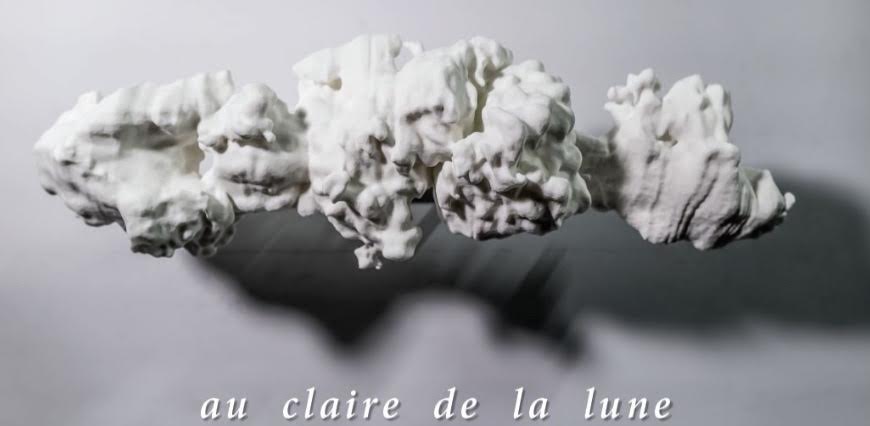
The roundtable culminated a Creative Turbulence art exhibition displayed at the New York Psychoanalytic Institute (June 9-16, 2018). It brought together artists and scientists to explore "the last unsolved problem of classical physics, turbulence," examining experimental visualizations, theoretical implications including emergence of complex structures from chaos, entropy, quantum fluid dynamics, and condensed matter.
Speakers

Watch
Media
Related Roundtables

Transcript
This roundtable brings together physicists, artists, and a perceptual psychologist to explore the intersection of art and science through the lens of turbulence. Enrico Fonda, a physicist studying superfluid helium, organized a collaborative project pairing scientists with artists to create works inspired by turbulent phenomena. Dana Karwas describes her process of capturing ocean wave data with a phone sensor and transforming it into sculptural forms that convey the emotional dimension missing from standard scientific visualizations. R. Luke DuBois discusses data visualization and the challenge of making scientific phenomena viscerally experiential.
Katepalli Sreenivasan argues that deep beauty exists in both science and art, illustrating with Euler's identity, Hokusai's Great Wave, and Robert Frost's poetry, all of which share an admixture of order and chaos. Denis Pelli provokes discussion about whether scientific understanding enhances or diminishes beauty, polling the audience on their emotional responses to the exhibited artworks. The panel largely agrees that deeper understanding amplifies rather than destroys aesthetic experience, using the Blue Marble photograph of Earth from space as an example where scientific instrumentation revealed something profoundly moving.
The discussion turns to the physics of turbulence itself, from Leonardo da Vinci's pioneering drawings of water vortices to the unsolved mathematical challenges of predicting turbulent flow. Sreenivasan speculates about parallels between turbulent dynamics and thought processes in the brain, noting that both exhibit poor temporal correlation and sensitivity to environmental conditions. The conversation explores universal human attraction to flowing water, evolutionary explanations for aesthetic preferences, and the fundamental tension between objective scientific description and subjective artistic experience.
Show discussion topics
- 00:00:19 Introductions and Enrico Fonda describes the project combining art and science through visualizations of superfluid helium and turbulence phenomena.
- 00:02:55 Dana Karwas describes her wave data art project, capturing ocean wave motion with a phone sensor and transforming the data into sculptural and visual forms.
- 00:09:42 Discussion of the collaborative process between artists and scientists, how data transitions from objective measurement to subjective artistic expression.
- 00:14:00 Katepalli Sreenivasan argues that beauty exists in both science and art, using Euler's formula and Hokusai's Great Wave as examples of aesthetic power.
- 00:19:44 Denis Pelli provokes debate about the definition of art versus science, polling the audience on whether artworks in the exhibit moved them emotionally.
- 00:28:05 Whether scientific analysis of natural phenomena enhances or diminishes their beauty, with the Blue Marble photograph of Earth as a case study.
- 00:41:14 The history and physics of turbulence, from Leonardo da Vinci's water drawings to the mathematical challenges of predicting turbulent flow.
- 00:50:22 Universal human attraction to flowing water and landscape patterns, connecting aesthetic preferences to evolutionary psychology and survival.
- 00:57:46 Technical discussion of different classes of turbulent flows, quantum turbulence in superfluid helium, and whether turbulence models could illuminate human thought processes.
- 01:20:03 Audience questions and discussion on the relationship between beauty, constraints, subjective versus objective knowledge, and the oscillation between scientific and artistic ways of knowing.
Show full transcript
00:00:19 tunity to enjoy the exhibit it will continue on display through this Saturday and you can check the helix Center website for details so I'd like to introduce our participants in tonight's roundtable creative turbulence to my right is Dennis Pelle professor of psychology and neuroscience at New York University his right is Enrico Fonda postdoctoral researcher at the NYU Tandon School of Engineering next is
00:00:52 Dana chorus artist and lecturer integrated digital media of Department of Technology culture and society at the NYU tendin School of Engineering next to her is luc du Bois composer artist and performer co-director of integrated digital media and director of the Brooklyn experimental Media Center both of the NYU tendons School of Engineering and joining us shortly is Capelli Sreenivasan professor department of physics and a karate Institute and the Eugene kleiner professor of innovation department of mechanical and aerospace
00:01:23 engineering and Dean of the Tandon School of Engineering and University professor all at NYU so with that ladies and gentlemen buckle your seat belts were about to encounter turbulence perhaps Enrico you can start by telling us a little bit about and I was doing research from quantum vortices which are quantum tornados that lives inside the
00:01:54 superfluid helium which is a liquid helium at very low temperature which has macroscopic quantum order and so these videos were really kind of interesting and we had the publication about it and some press release that was really interested by the by the public they were asking strange questions even about it and seeing that it really inspired the fantasy of people about the project so we thought it might be interesting also to see it in a light that it's different
00:02:25 different compared to the scientific area and so my includes in some artistic side so with that idea then we decided to incorporate also some artists to collaborate with scientists to get together a show and so we get together with Luke Dana president to set up this show and so we had you can see some of the artwork before the quantum vortices you've probably already seen are those
00:02:55 the the research should have been done before and then there are some other one like work by Dana maybe you can tell us great so the piece I have out here is the one in the corner called immutable swell and it was something that I was kind of thinking about for awhile but ended up putting together last summer when I was near the ocean so the piece was born out of both my fear of the ocean and my love of it and I'd always
00:03:28 look at the ocean at night and try to understand well what was happening and why it was maybe more for you fearful at night to look at it then during the day or even swimming in it and I started looking at different models of ocean waves just to try to look at the data and understand it in a new way kind of in the same way that maybe in other projects I would look at maybe a thunderstorm through Doppler radar or through false image coloring you know you see the red area and there's a ton of rain or you see kind of like a green
00:03:59 area and it's maybe not as scary but then if you look at the thunderstorm itself outside you can really feel it you can see kind of like the synoptic meteorologists looking at the sky before newer numerical modeling came around there was kind of a direct observation of knowing that something was coming and I kind of took this departure from the normal scientific inscription that is very trusted so I'm looking at Enrico
00:04:29 because he is the scientist here among us and I think that menu yes so just thinking about kind of this going into this project kind of thinking about new ways of kind of experiencing scientific data by still using it and using collection methods that were somewhat scientific so for this particular piece I took my phone and it has a accelerometer and pressure
00:05:00 data and location data and I wrapped it up in multiple levels of waterproofing attach it to a fishing pole at first and cast it out into the sea on interro Massachusetts and watched it I actually swam out a few times and then with the fishing pole and cast it during the Eclipse for the summer because no one was in the water and I didn't want to disturb anyone so I was by myself way out there and I floated with the phone back and
00:05:31 the fishing pole just trying to kind of and I was scared it was deep I couldn't I'm very terrified of the water and I ended up letting the phone go back and forth as a sensor to to shore and then this happened multiple times and I took that data and it was recorded at a hundred Hertz so there was dimensional data of me with the phone at first and then the fishing pole and the phone in the water so I was able to collect over 500,000 data points of waves coming in
00:06:04 to the to the shore and breaking on the shore so then I took that data and brought it through Python and kind of traditional ways of visualizing it and started to play with the form so what is a dimensional form of this how can I get this invisible kind of direct experience of floating in the wave exported into some type of dimensional observation that someone could look at and emotionally feel that that's what it feels like to be floating in the ocean
00:06:36 because all these wave models I was looking at they were missing this dimension of emotional connection to the thing itself like when I look at a model of a scientific wave and there's very beautiful models and they can show you hundreds of different things and a hundred hundreds and hundreds of thousands of different ways I couldn't I didn't quite ever say like oh that's what if that's what it feels like to be in a wave so I wanted to play with that so I took all those data points and put them in a dimensional
00:07:07 model and just extruded them into it was just a cube that I kept twisting and twisting and twisting but you can start to see the shape of the wave as I was hitting my body or as I was hitting the sensor itself so I had it as a very complex model which is what the image is and then I took the challenge of printing that with a machine back into a form which is what you're seeing out in
00:07:37 the in the hallway oh you should come join so really it's a question of scientific how do we get beyond traditional scientific vernacular and inscription that is very trusted and often looked at by a professional and it becomes it can translate into the public or into other research and people trust that data scientific data and how to use other kind of visualization tools kind
00:08:10 of in the spirit of Edward Tufte but breaking that even further and trying to get to a new way of looking at something or a new way of feeling something that is a phenomena that we all experience and it's a break of kind of these scientists looking at this phenomena separate from the thing itself and I know that's not possible at certain scales so if you're looking at something at a macro scale or micro scale or if you're looking at the Mars rover there's no way that the person observing that is ever going to be able to see that data with their naked eye so I'm very curious
00:08:40 about kind of coming up with new ways to look at it in an unmediated unmediated almost like caveman way of looking at something or feeling something it's anyone look heading looking at it said that they could feel the wave yes once I told him it was a wave they they could understand it as a wave yet it's a beautifully romantic and you know my favorite my favorite art science overlaps always haven't seen that's very human to them so like I love that whole
00:09:12 like you throw your phone in the water when you have a terrible breakup right that's like that's like the throwing the water you know and and and it's just anything with like Rafael's piece and they're the idea that it's like an utterance it's just like a very human natural thing and we're somehow leveraging what we understand about physics to show it to you and I don't know I think that's new that's really cool that's a really good way to bring it home you know yeah regarding visualization of data also they work by
00:09:42 collective motion by David McLeod and Percy did the professor at NYU showing this collective motion of particles that are interacting with each other and create this fluid like form that was in the theme of the the whole project was fluid and and also that was a visualization of data but interpreted to the eye of the artist in the beginning in fact the I was overlooking the
00:10:13 interaction in the beginning there were a lot of back-and-forth of data between the artists and the scientists because the artists side the date of the science it wasn't good wasn't looking good for some reason and so it's something to be consider what is looking good or not but eventually they've found something that was meaningful both scientifically and aesthetically according to the eyes of the artist and those decisions become
00:10:43 completely subjective so there's this moment where the there's a kind of a testing process I think that the artists go through with whatever data they're working with especially if they're working with scientific data or any data set or any phenomena that there's a moment where it shifts to maybe how they're they're looking at it and potentially discredits in the scientific scientific realm but offers something else that maybe the scientists won't be able
00:11:15 to reach so that's that's a really interesting space to work in when the data or the phenomena you're looking at when it's transitioning into this kind of subjective space of the interpreter or the new inscriber they're also speaking to sort of like the the shared aesthetic qualities and experience that they're that there's it resonates between the artist and the scientist that they're experiencing something on a
00:11:45 similar level mm-hmm it's kind of like the guess from the 1984 this in history from the exact date but when the naturalist would go out and look at new land or they'd find new species and they would take notes on so these scientists be taking notes on what they saw and they would go back and they would hire an artist that could draw it better than they could see get these like beautiful Alice's with species from the beginning
00:12:15 of time that were unable to be photographed because that didn't exist yet but this dialogue that the scientists had to have with the artists to tell them okay the you need to draw it like this because if the the scientist who wrote it might have just looked like a cartoon so there's a kind of a communication that has existed for a while between artists and scientists trying to realize or visually interpret the phenomena but Leonardo would
00:12:50 consider painting and art I mean sorry a painting of science yes because he because if the instrumentation needed to be used in the painting so he would in Leonardo's time he considered painting the science also because the painter had a divine mind he could see things away God good so there was an ultimate truth and what Leonardo is after his professor is Sreenivasan hi
00:13:20 oh that's that's that's okay we're glad you're here did you have some thoughts that you wanted to present yes yeah yeah
00:14:00 go for it yeah I wanted to say thank you thank you it's new to me yes thank you my years are not the right size so the when you think about science and art I know that these are quite often deemed as two different sets of
00:14:32 activities and in fact there are immense differences but on the other hand if you go a little bit deeper now all my friends tell me that the sense of beauty and also its ability to evoke emotions are sort of very similar I wanted to illustrate to you one or two things here is the most beautiful equation in
00:15:03 mathematics now why would you say it is most beautiful it's not apparent to people who are not trained in mathematics so what it does is it's now of course in 1748 it combines by very important quantities since this nice where zero as you know is just the a quantity to which if we add anything the
00:15:33 quantity eight remain the same and that's the so called additive invariant and one is something you multiply anything with it will still give you the same thing and PI as you know is the ratio of the circumference of the circle to its diameter and it has been computed to twenty quadrillion a place that is not million billion trillion quadrillion 20 times and it
00:16:04 still has no pattern and it keeps going there is no end to it I as you would all recognize is a square root of -1 which is a strange quantity and E's so-called Euler number which also has been computed to 500 billion places and it still continues ad nauseam but somehow when you combine like this all of that is somehow gone all this complexity that you see individually is totally gone and
00:16:34 you have this extraordinarily simple formula due to Euler and it is likely e equals MC squared or some very similar thing that people know so of course you will have to learn a little bit about appreciate how to appreciate this and that's part of what I think is in appreciation of art literature or anything like that and the other one next one you all recognize this this is the wave can you can you go to the next
00:17:06 one this is the Great Wave off Kanagawa in Japan when Japan was for 250 years or removed from the rest of the world it basically developed its own skills in art in all kinds of other human endeavors and you can see the wave the huge wave which is now known as the rogue wave in the literature reports now capsized and there is the Mount Fuji at the very back with snow
00:17:37 on it and there are all kinds of scientific emotions that this will produce for us if you if I could go on at it but I will not do that and the third one which again all of you remember this lovely little part of the bigger poem the woods are lovely dark and deep but I have promises to keep so he walking that he has a responsibilities that he can't take himself off from going into the woods
00:18:08 and enjoying them and minds to go before I sleep and miles to go before I sleep you can't omit the fact that the last line has been repeated twice and repeated and so it is really extraordinary set of emotions that this will bring to bear on whoever reads it and the last one is the topic of the conversation today about turbulence and and its beauty and what it has for art is just a jet that is coming down you
00:18:40 can see tendrils and vortices on all of them somehow combined in some very complex way there is an admixture of order on the one hand and chaos on the other to me that evokes again extraordinary sense of beauty an extraordinary set of complex ideas and and to me therefore these illustrates somehow the kinds of things which I will not spell out for you I think that science has in a in all its major
00:19:11 endeavors its utilitarian and therefore people sort of don't understand that beyond the utilitarian aspect of science there's all kinds of beauty in it and that's what really gives rise to a satisfaction of doing something worthwhile and if truth and beauty can never be equated to each other well maybe there is something to it that's all I wanted to say well perhaps it speaks to your interest in the
00:19:44 psychophysics of beauty I thought I wanted to join this discussion so I'm a psycho physicist I study perception by behavior and most of my work is object recognition how we recognize things that we read but a new line of my research is trying to understand the experience of beauty so
00:20:14 in in thinking about what we would talk about tonight I thought there was a danger that we might all agree so I tried to pick something that we might disagree about so I'm going to take a position that perhaps others will want to differ from well that's what will argue about so so the theme tonight is
00:20:44 this magic show that Enrico organized about combining art and science and I suspect we all more or less agree about what science is I would making up a definition I would say something about an attempt to reach a mathematical understanding of something that's subject to test by prediction and experiment you might disagree about that but it seems more likely that we're going to disagree about what art is and
00:21:15 so I looked up what Wikipedia gives us definition of art and I can't quite expected it but it gives it conditional on the year so let me just read it it's only a couple sentences 'm art is a diverse range of human activities in creating visual auditory or performing artifacts artworks expressing the author's imaginative or technical skill intended to to be appreciated for their
00:21:45 beauty or emotional power ok that seems reasonable and then it goes on to say until the nineteen seventeen century art referred to any skill or mastery and was not differentiated from crafts so we were Dana brought up da Vinci earlier and you were suggesting about that division and it's according to Wikipedia I think he wouldn't have made any distinction but his paintings and his engineering are all art they're so
00:22:17 art here in the sense of artifact made by man right but he would also say it's science he he would Leonardo thought that painting in his era role as science Jose as instrumentation and also those two words might distinguish these activities yes and that's like legacy it won't now when we say like liberal arts so so my sense is that the spirit of this show is actually a 17th century perspective of treating art and science as not having
00:22:48 any division and that they are demonstrating a mastery to share an appreciation of the topic so one of the things that if we're going to try and and parse would be actually whether the artist had the intent of producing objects that who had the purpose of being appreciated for beauty or music motional power okay that's my position
00:23:19 I'm hoping somewhat disagree I would argue I mean being the person that created an artwork right show perfect dates I mean I've really struggled is this is this an art workers it's just a really fancy visualization of some type of phenomena and for me as I'm not sure if it's art in my mind like I I know it's an object I made I'm coming also from an architecture background in it it fits in a sculptural format and it was
00:23:51 printed on really beautiful paper and it's this inkjet print but I'm I really struggle as someone creating and playing with this data as an experiment as I'm going through it in the process of just getting from the data set to what you see out there cuz I'm a former body surfer and so I could resonate to your comments about how attractive and frightening the ocean is yeah and how how you had the
00:24:23 the frustration in looking at a lot of other visualization work about waves that failed to convey any of that emotional energy and that you were that that that that missing bit was part of your motivation doing your piece yeah trying to see I was seeking some way to view I guess for myself which would be kind of I think that would tip me over into the realm of an artist yes the process yeah oh and also haven't
00:24:53 served no purpose or consequence except for other people to look at it or myself to look at it and be like okay that looks like a really pressurized experience of what I'm trying to share well flooding anyone else know when when you made your peace I think you collaborated several of them active and then were you trying to produce
00:25:24 something that would produce an experience a beauty in the observer or or some other strong emotion or did you have a different purpose so I I was collaborating on the scientific parts I was not actually having a goal of producing something was in the mind of the artist that particular task in to deal with that but there was a research about a concept behind for example the work by Raphael Asano hammer it was well this concept of the words staying in the
00:25:56 atmosphere forever he tried to con supplies that conceptualized that into a form of art an object and he actually tried different kind of pieces of art but some of them didn't work out well like you wanted and so eventually just one is was eventually finalized like the one who was here the 3d printed of the flow of air of someone speaking so in this case there was a concept that wanted to be expressed and I think also some form of beauty but
00:26:28 you have to ask the artist because I cannot speak for him okay so I'm gonna push too so I saw the piece and I'm very interested in the concept of how it was made and I I was interested in seeing the form but I wanted to ask can we do a show of hands and though in the studio please so how many people were moved by the 3d visualization of the speech the the pressure pattern produced by the
00:27:00 speech okay and how many were not moved so a sense of it of a strong powerful emotion that overcomes you you should you should we ask the question haven't defined it sorry usually we ask the question ask it again
00:27:31 now that we've defined okay so so shall we vote again so how many people were moved by the visualization of the speech pattern and how many people were not moved about 50 50 so that means a lot of people here were moved so that's a successful piece please I don't remember the precise words that keeps you at one time but I think he said something like this if you begin to get into
00:28:05 nitty-gritty of things you will sort of detract from its beauty that is to say you go to the ocean you admire these beautiful waves but once you began begin asking well at what speed are they going out of what angle are the propagating and what kind of drop patterns it produces and so on it's thought that it diminishes the beauty of the whole thing on the other hand there is another view which says why why would you do that the
00:28:36 object that you saw before is still exactly as formidable as it was before in some ways but now having asked these questions you have a deeper insight into the into the phenomena that you are admired before we'll know Engle is build the knowledge somehow diminish the beauty of the object now that's something that many people think is what happens that is to say you see the sunset it's so beautiful but
00:29:07 once you begin to ask well what's the spectrum of the sunset you know our angle is the Sun setting etcetera it somehow seems to become mundane but I don't see that that's how it should be treated at all so in fact there is a speech pattern which you might abstractly admire but once you somehow make a pattern out of it you begin to say is this what it is and then you somehow lose interest or lose your ability to relate to this to the mystery that you had before and to me that
00:29:39 somehow looks even though I was not terribly impressed when I raised my hand for the second category and I think the fact that you somehow make it more concrete make it more understand will make it more more expressible in terms of quantitative things does not diminish the beauty of anything else oh I know that's my personal prejudice my sense depends on the teacher so many of the
00:30:09 works here are produced by physicists and I am reasonably sure that they love physics and that the more they study physics physics doesn't become less interesting or less attractive by the process of study but there are some teachers who kill topics in fact what I was told as a graduate student was the purpose of your writing a paper is not kill the field and that is to say not say the last word on it but actually to
00:30:40 enhance the interest of others so it could be carried on further so I I think you are absolutely right and some teachers can kill the interest somehow present as a finished product and then you have no interest in it anymore I think that comes back to maybe what I've seen a little earlier about this kind of knowledge formation around the topic going to the teacher or even the beauty found in the data the quantitative data and there's I think
00:31:13 the artists and I think that what Raphael and some of these other artists are trying to do is essentially calibrate that quantitative information towards beauty again so it's starts as a phenomena it gets removed from the phenomena into the numbers numbers and then there's these kind of calibration techniques that are really specific to the artists and those experiments and
00:31:43 calibration of kind of resurrecting the beauty back out of the data to be to be experienced isn't going to kill dicks to kill the looking at a sunset because even if you take a photograph of a sunset that can never explain what you're actually seeing any photograph or any painting compared to what you're seeing and with your naked eye and it goes back down for me it goes back to this kind of human or naked eye
00:32:15 observation of being able to look at a phenomena there is the you may find that somehow there is an abstraction of something that is evocative and that's what the art is him to work on the point is that that's the kind of freedom that a scientist probably does not have in some sense so you might say therefore they are somewhat different that is to say the abstractions should still in
00:32:45 science satisfy certain rules which we think are right and now this constraint somehow is the heart of the matter of the distinction between these two these two activities now I'm not sure that if you train yourself a little bit that this requirement or the constraint that you have certain loss that you have to obey in how you abstract things and
00:33:16 have you described them and and all that now I'm not sure that it should diminish the beauty of the of the enterprise that's my own own thinking on this but I know a lot of people think that the fact that you are constrained somehow the fact that you do not you cannot write down any arbitrary equation or or something like that they will somehow kill the originality creativity beauty etc on the other hand
00:33:48 the fact that you can describe something in nature in some quantitative ways is such an extraordinary phenomenon it's we have no right to doing any of those things I mean we are humans we somehow we seem to comprehend everything that goes beyond us the universe how can we tiny specks of dust on thee in the universe I can comprehend something so universal so large and so inspiring so
00:34:18 to me it looks to me it actually enhances and adds Beauty to the whole thing rather than diminish diminish it you can say how beautiful is this but then you want to really go a little bit deeper little understand a little bit more why does it diminish anything why does it diminish the sunset I mean that's one position let's say that's one I take just because of an example of
00:34:49 maybe a fun example that everyone can relate to so when in 1972 we had the where do you borrowed another time so we're all familiar with the the view of Earth from space blue marble and that was a photograph that was taken by astronauts on Apollo Apollo 17 no 11 yes
00:35:24 sorry no facts right but anyway the point is that this this single image of Earth was taken by a camera sent back down and the intent of the image wasn't by the the astronauts to just take this grand image of the the earth that we we we knew it at that time and still know it they just it wasn't part of the mission plan so they took this photograph it came back down and NASA
00:35:56 flipped it so I guess when it originally arrived on the film it was taken with the South Pole base you know so they flipped it and then they color corrected it a little bit and then that got put out into the world and that had an effect on the the astronauts who saw it and other people who've been in space the overview effect at some emotional kind of shift that happens by looking at something from afar but they can also happen to people who just see the
00:36:27 photograph so that's kind of one example of a phenomena or maybe there's like an emotional addition to this we don't have access to that phenomena with our own eyes it comes through a camera so that kind of that's one example where it's like a surprise that happens with the technology and the science and the instruments allowed us to take this image and people by just seeing this had emotional surprising reaction that was maybe mirroring what the astronauts were
00:36:58 feeling or if they've learned about this feeling you know that there's no borders there's this kind of earth not from space but earth in space and how that image could have an impact so I think that's like one example stunning the beautiful yes I agree and and and the way it was the trip it was doing on your mind was part of it yes yes I I do think that there is potential to have these dramatic emotional experiences through just one
00:37:31 image we're showing people something that they thought they knew and it in a strange way doesn't look like the toy worlds but yeah like we thought we need the plan and yeah we all the political lines are missin of scale you know and that's the same thing with this with a lot of these things it's like you know you can say you know you think you know the ocean but I'm going to show you a different way did I know the ocean or the weather that I've instrumented the ocean or that I've experienced the ocean
00:38:02 right I think I know how speech works but I don't actually know how speech works at all you know like the government yeah this whole like you know which way do you come in on a problem right it's really I don't know I always think it's really interesting like trying to figure out these categories I was trained as a musician right so like you know John Cage you know has this kind of cannae riff that just music is just organized sound right but it's been another way of saying it is the complete opposite of it has nothing to do with sound at all music is emotionally
00:38:33 manipulating people with physics algorithms and data right it has nothing to do with anything with your ears right so look at the might at the micro-level instruments or physics should you know there's things we're running on physics then we like sort of add keys and chords and scales as our algorithms and then at the macro level you have a whole piece as an information stream right so you can make music in a million different ways that have nothing to do with your ears if you can just sort of change the terms of the definition and that's what I think is always exciting about this work and
00:39:04 that's one with you and when like Enrico and I first met I like really enjoyed hearing him riff about you know the recent the the physics research you work on because like you were talking to me about like how it sounds do you remember this you're talking about the spirals and like they make cracking noises yeah and you're sure yeah and you were showing me this video and I was like that's amazing it's like there's like you know this little like Yanis is a nachus piece and every you know strand of helium and like if you could just get
00:39:36 that out of there we could like make some kind of crazy you know I don't know saying that they you know could really evoke it I don't know it's maybe I could remark on your comment on music music is you save disorganized sound in some way it's not the organization at all that matters which also you said but I want to say it in a different way it's how different parts of music relate to the other parts how many part really
00:40:07 relates to the integral whole that's what really is important in science to it is not the individual facts that are important it's how they relate to each other and that's without really relating to each other it's really just an isolated fact and that's not of any consequence in in terms of in terms of ear discussing so one definition of beauty would be how each this is Heisenberg who said this how one part
00:40:38 relates to the next part on to the whole and that's really what music is and why it is special after all the notes are not that complicated and even if you listen to Mozart it's a very different type of thing yeah the conversation seems to be more laminar than turbulent so I'm wondering if maybe we could transition and talking a bit more about the you know the turbulence that at these projects also from the world
00:41:14 actually also related to the project it was we are working on right now we are looking at right now and it's about the confusion and creation about turbulence so the turbulence comes from the Latin word verb turbo which means to agitate throw into confusion and we use for the first time by first time by federal in his lupus and Agnes failed to describe the water stirred up by the lamp that in created
00:41:45 polluted the water by or to the wolf but then was used by Laurel DaVinci to describe the turbulence actually of water and was said to polenta was the word describing it and he actually was one of the first one really getting some big insights about the turbulence and again turbulence until its chaotic random and it's the motion of fluid and
00:42:16 he compared the motion of the fluid to the motion of hair and he painted all these nice vortices and described a cascade of vortices goes from the large scale to the small scale and so he had a profound insight also just by observing it and he also put some very important question regarding the nature of turbulence the creation of turbulence how it maintains and how the case that are still open remember this question
00:42:53 who will read this turbulent priest orator remember this we will rid me of this turbulent priest yeah who was this guy that's the first use of the word turbulent as oh you remember this in the cathedral is it man it's referring to thomas moore yeah yeah that's before Thomas Moore it's this Henry it's King hands yeah yeah [Music]
00:43:23 yeah this is a police that he got he really killed and Peter O'Toole actually played the role of the of Henry and and then what's this other guy who was at least Taylor's husband twice I forget his name yeah Richard Burton mr. Burton yeah yeah yeah he played the role of the priest anyway so we will leave this time decades it sounds bad yeah same idea
00:43:55 priest you get whacked cuz they talk up to the Kings right so that's yeah yes so far as why turbulence is really important is this as I I see it physics has generally for a very long time taken one object at a time like for example an atom or an electron in controlled circumstances and has studied its properties and you can measure let's say the charge on the electron to I
00:44:26 don't know ten decimal places or whatever number that is but it so that that's how physics has really gone for many many years but it turns out that when you cannot isolate objects but the objects begin to interact with each other then it becomes extremely complicated and this is how chaos came into being for instance when let's say three objects interact with each other
00:44:57 you can no longer predict how their evolution takes place in our long-term so in turbulence the essence of the phenomenon is really interaction the interaction among its constituent matter which could be vortices it like Enrico said it could be whatever else so in reality most of what we observe around us is really interaction among many components humans interact with each other government interacts with the
00:45:28 citizens in some way businesses interact financial markets are interacting the all the results of some my interactions so the real question is when these things interact in some complicated way like that is there some fundamental truth behind behind these interactions if I it may be statistical in nature or somehow or the other that will transcend the real specific details of the phenomena you're looking at would the
00:46:00 finance mark financial markets have some properties that transcend the details of the financial market and would relate to what let's say a flow of turbulent turbulent motion of fluid as so that's the question so the ultimate question for many of us who work in this field is really to discover within quotation marks if there are such rules that transcend the specific details of the constituents that interact with each other and if it is if that is the case
00:46:32 that would be spectacular I don't know that that is the case each time we think we have some understanding of this Universal aspects of it we take one step back and we just find that that's not exactly right and so it may well be true that there are at some level they are probably similar if you take the power spectrum of not only financial it let's say the signal on the and from The Wall Street stock market it may have some
00:47:04 resemblance or turbulence as a matter of fact they have a been a lot of people are studied this but you go deeper one step deeper this Mirage of universality somehow disappears if it doesn't disappear exactly but it will say that they are not really exactly the same you go one step deeper you sort of figure out that really they're even more different so it's like peeling onion one level at a time it looks like you have
00:47:38 okay you peel one layer and say okay then next layer is there etc but you go to the core there maybe right I mean unlike Apple which has a core onion maybe doesn't so the fact is we don't know whether there is such a universal set of rules but there are indications that there are but if it is true that would be a spectacular discovery that would really have great consequence intellectually a utilitarian
00:48:11 way and everything else that would be why we would study of course we we know if you understand it we can save fuel on aircraft and make the Jets less noisy and all that we understand that - I think that's also very important but at the bottom as a person interested in the physics of it the mathematics of it that's really what drives us so we write papers on the universality of such and
00:48:42 such and next paper we are not so sure so I am me exaggerating a little bit but that's how it is I wonder I wonder if you have more to say about the mentions of beauty in relation to her balance the turbulence was fun the relationship between turbulence and beauty was
00:49:13 founded the painting by Van Gogh in somehow orange in the stairs night was they found that the probability of difference the difference of between the luminosity of two points in the paintings is the same of the probability of the difference of the velocity of two points in the fluid flow of turbulent so and this was they found that that it was mostly in the period where van Gogh was mostly chaotic in his mind when he was upset and almost crazy I mean
00:49:46 and while the period that was more relaxed he this characteristic of turbulent motion in his paintings was not there we have a diagnosis for Van Gogh we analysts don't like to apply diagnosed people we haven't I think for me at least in thinking about beauty and turbulence it reminds me of a study I recently read that across the globe
00:50:22 different painting landscape paintings were put in front of different types of people to see if there was some type of universal beauty in landscape art and the the consistent beautiful image that each culture had identified was a landscape that had these following components in it so it had some view of the sky some green some greenery some trees some type of path and some type of
00:50:56 moving water feature so this goes also to my other comment that I'm going to say that often spaces this goes back to my architecture the pattern language you get anyone know about the pattern language oh it's kind of an architectural Bible that has different patterns you can put together for designing a space for example windows need to be on two sides of a room those are the types of the rooms that people like to hang out in in different houses etc talks about curb height and they're kind of cute patterns but also if you
00:51:26 you can design an entire community around them and my favorite one is that people are most happy when they're near moving water and flowing water and this always makes me think about spaces that are successful like Bailey Park here on the anyone familiar with Bailey Park it has a water feature or even in front of the secret under so all these kind of water and moving water even at the we're
00:51:56 not this could be the layperson just looking at it but it's about being near water that has psychological and positive effects on humans that's why we all go well it also makes one wonder about the evolutionary significance of its potable moving water as opposed to still water and as opposed to ocean ocean water is potable and must have adaptive meaning - you know and that's kind of the canino you wonder
00:52:29 about the connection between aesthetic perception right and making judgments about survival right there's a really wonderful book that I think came out this past year called blue mind by Wallace Nichols and they have a conference about bloom I about the psychology behind being near water and effects of water on the human it's a really wonderful book but it the author himself puts sensors on his body and
00:53:01 like jumps in the water and swims for miles and but they're more physiological sensors so that's trying to figure out also how he feels and if anyone wants to check out that book it's been a very one of my favorites that I've read in the past year blue mind may be related but it is not excuse me so I grew up I was brought up and grew up in an interior
00:53:31 part of another continent and the first time I saw the ocean I was probably 16 years old for me what was most beautiful was the kind of environment in which I grew there were mountains Rocky Mountains and not huge trees it never bothered me about that much so we until I came away to let's say New England and something like that I didn't
00:54:03 quite really have a great admiration for greeneries are flowing water or anything like that so my sense of what is interesting is so admirable somehow changed it changed I mean in fact on some other matters I mean I had a certain sense of what constitutes beauty in women I mean it with no disrespect at all but now I'm
00:54:34 in a totally different environment how many years my concept of what a beauty in women is has changed altogether yeah if not altogether I mean to a significant degree so in some sense I the question for all of you is whether all this is really not as deep as evolution and things like that but it is maybe more controlled by your environment how if all I know is where I grew up I don't know that I would
00:55:06 appreciate some of the same things that I do now so it's may not be as deep as one things may not be wired in your in your evolutionary means well that's the question I had for you actually oh it's well this was just something I was observing and the results came back that these features yeah I'm more like you like I I grew up in the Midwest so there's no ocean I like a big muddy
00:55:37 river and rocks but there is something that's kind of a the ocean is more mystical or like it has a level of mystique for me that is is that shifts between day and night even because we look at the ocean at night they're like there's no color so you just can see the forms especially on a night with a full moon you can really understand where the waves are coming from how far they're
00:56:08 coming and it's um it's unbelievable to see the ocean at night but also I would never go in the ocean it has anyone gone swimming in the ocean at night like way out and this is scary yeah that's seems there's fear and that at least for me in the that's what that pieces a little bit about these things we can't get I didn't see that I didn't see stars like a full night sky stars till I was a teenager I grew up I grew up in cities with with
00:56:38 like there's so much light pollution so I thought like stars was like oh there's like four of them you know and then I went and I had a I took a like a road trip my sophomore year in college or something like that to Vermont and then the Sun set and I was like wait a minute what you know and and that was like this really amazing you know thing where you know you see something just that you thought was kind of manageable and simple and it turns out to be incredibly inspiring and complex gives you a little
00:57:10 bit of perspective that was my like Blue Marble moment it was it was backwards though but it was that like you thought you needed the planet and then you definitely didn't know the planet you're like yeah so when people do cross-cultural studies on aesthetics one thing that comes out as a universal is a preference for curves over angular's and angles doesn't disprove it being cultural they may just be cultural commonalities
00:57:46 returning to turbulence for another minute or so so we all know that flow through a pipe is turbulent very often the jet exiting from an aircraft is turbulent the oceans are turbulent the air quite often moves in turbulent ways so there are two different views of
00:58:16 looking at turbulence in a certain sense what happens inside the pipe is quite different in from what happens inside the ocean because there is friction on the walls and the pipes are of finite length and all of this kind of stuff and oceans although there are was they're so far away from the main activity that the walls may not have any effect therefore one line of inquiry is to study each of
00:58:50 these classes of turbulent flows on their own merits so one becomes an expert in turbulence in pipe flows another becomes an expert in turbulence in ocean etc or but there is the second part which I made allusion earlier which is to say yeah there are specific aspects that are in in fact different from one floor to another but is there any a sense of the turbulence so to speak that transcends each of these real
00:59:20 specific things and what is that and if it is true is it a good model even going more general is it a good model for studying the interaction among many components a large number of components in some nonlinear way nonlinear way that you can sort of forget about the details of where you started so that's the line of inquiry but what I'm thinking about turbulence
00:59:51 how it's how it's embodied by by humans that are feeling it upon them themselves out there as an airplane when you're on an airplane or you kind of understand this movement and I think one journey through turbulence through many different layers of turbulence could be the human experience or how it's impacting something that can be that can be felt my brother is actually a
01:00:21 aerospace engineer and his PhD was how turbulent flow goes over the wings of jets and makes all these crazy models of it so for him it's just about you know like going and being in a win machine and observing it and he actually has like a little jet that I think runs off of algae fuel just is like a pet in his garage but just kind of trying to
01:00:51 understand this the way he's looking at it as a model or through computation or through air and and when we're flying with him he loves it like when we're we're an airplane this game tossed around in Colorado or ever like it's like flipping upside down he's like this is awesome but I think that it's about that kind of is there way that there's an embodied experience maybe not through human but other species or other like birds or
01:01:24 other entities that are living that are being impacted by this himself or herself yeah presumably in human mind at any given any given interval of time zillion thoughts fly through I'm saying
01:01:55 it in not in any real rigorous favor so many many thoughts go by one thought does not continue in the next instant etc so there is very poor correlation between what you think now and what you might think next minute especially for people who haven't concentrated down there mind too much see in turbulence to something like that happens that is to say there's only
01:02:28 finite correlation between what happens here and what might happen a little bit later so I have often wondered whether in fact there are models one can make models mathematical models that have finite correlation I you know if you are a yogi for instance you concentrate on one thing for hours on end and the same thought but most people are not most people are you know just fleeting thoughts enhanced by the complexity
01:03:01 enhanced by the environment around oneself so it may be that there is some deeper model one can actually tell I have wondered sometimes between how the mind works and how let's say it will be land flow outside of the human's work that might be very interesting and you are interested in mind and and how it works and this would be a very fruitful
01:03:34 line of dialogue at least until we decide it is useless do you have any any speculation as to what some of the underlying so of course there are spatial characteristics you know the mind or the brain let's say brain and mind are two different entities I understand presumably they are very strongly related even though they're separate so there is the spatial structure and then there is a temporal
01:04:07 variations that take place and somehow these are all connected to thoughts and one should be able to somehow connect them and at least at a level of speculation it would be worth or thinking about so there has been quite a bit of work on the EEG and with thoughts there that's parallel to what you're suggesting so when we are asleep there's
01:04:42 a very strong alpha rhythm and then when the person's awake you get less rhythmic behavior yeah I don't know what kinds of correlation links you get before you can't predict yeah I haven't done any energy works I'm not sure yeah very interesting my son Maps the brain and using FM our
01:05:15 fMRI machines and then he tries to understand the relation between patterns on the one hand and functionality on the other I'm not even sure whether the ideas are very properly formulated well fMRI isn't very good for this because it has a time constant of 6 seconds it's it's not directly measuring neural activity is measuring the blood response and so you don't really get temporal
01:05:48 dynamics out of it Maxo machine so it so I think so easy an energy both respond fine and yeah and they would be fine for looking at that yeah there we delve into the quantum dimensions of turbulence there are discussions quantum turbulence is this turbulence that happens in super fluid which are which is liquid helium at a temperature below two point Kelvin
01:06:20 2.17 Kelvin and it has microscopic quantum order so there is quantum mechanical effects on large scale and you have these vortices that instead of being all different sizes like you have in a normal flow they are quantized so they are all the same and are all multiple of the certain quantum of circulation which are certain quantity and are again of atomic size like you saying in width but macroscopic in length they interact in different
01:06:53 ways and you've seen if you've seen the videos of quantum words there you've seen the way the motion they have and it's very important for many reasons in the order of the dissipation of the energy in the quantum turbulence and you have this mechanism which is called reconnection when two vortices get together they get together they exchange tails and then they separate and you probably have seen also if you haven't you can look them later at this
01:07:23 mechanism which is again central to the mechanisms of dissipation and dissipation is important because in you wouldn't think that in a fluid which is completely without friction you will have any dissipation but in in action in fact you have also dissipation in a quantum fluid and so that is also one of the reason you would like to study quantum turbulence to see how dissipation compares between the classical and quantum flow could I maybe
01:07:56 just make it less technical than Drake onset at ordinary room temperature and pressure etcetera the fluids that we know air and water and others they do not have any quantum mechanical properties are they do everything is quantum mechanics but it somehow gets smeared out so it doesn't really matter so we are always looking at water and
01:08:28 air and things like that where there are these vortices but each vortex spins differently that is different in the magnet that you can associate with those vortices will all be different they can be all over the map so there is no restriction of any sort and so studying the interaction among them which is really one of the primary objects of turbulent studies and becomes a little bit more complicated because you have so many dissimilar objects that are interacting with each other but it so
01:09:01 happens that if you take a fluid that can remain in a liquid form even at very low temperatures helium is the only one that remains a liquid if you go below about 2.7 Kelvin everything else freezes and it becomes a solid but this one for whatever reason remains remains in liquid and then quantum mechanical effects begin to show up somehow and
01:09:34 this is what you are saying long-range order and things like that the manifestation of this emergence of quantum mechanics in fluids there one of the consequences is that these vortices which in room temperature were all very dissimilar and things like that they become really harder the circulation around them that it's a the strength of these vortices are all identical therefore one thinks that somehow in
01:10:06 studying the interaction of identical objects will be much easier to understand and in fact if there is any element of truth to what I was saying earlier that really interaction among elements is really what matters to understand turbulence not so much what the objects themselves are then the promises are the thought is that going to quantum mechanical temperatures lower temperatures where quantum mechanical vortices become become manifest it would
01:10:39 be easier to understand and it would be easier to simulate on a computer it would be there for leaders to understand that is really of interest to us which is turbulence around us and inside us as well and Enrico was so this quantum mechanic quantum vortices have been around as thoughts for a long time Fineman actually was the one who proposed the existence of his quantum
01:11:11 vortices and then there was some flurry of activity on this but nobody had seen these vortices for a very long time so my graduate student Greg Dulli was the first one who actually observed these vortices and Henrico actually followed him and he made many improvements on how to how to visualize them and then also interaction among vortices which is the part that he was talking about earlier I
01:11:44 think we're gonna open it up to questions from the audience and you could step up to the microphone and say your name and and like you talked about fluid dynamic equations and the different aspects of that so it's heat and viscosity and pressure and what's
01:12:14 fluid therefore things in velocity velocity right okay and and so these are the equations that you're using to map out turbulence on an airplane wing or whatever and they're nonlinear and my question is really can we think of those four dimensions of fluid dynamics metaphorically in in a sense if these
01:12:45 are the components of creating turbulence in gases and liquids is there something is it can can we play with that metaphorically and thinking about art and the creation of art that's that's the question [Music] repeat the questions so can these equations for term turbulence be
01:13:15 metaphorically thought of as art or in art or well there isn't right well there's an interesting art project in which some artists took the stock market
01:13:47 data and remapped it to a very believable mountain topography and they rendered it perfectly Michael in the jar Michael najjar yes and so they spatialized the the information and these equations in a certain way sigh I do think that there are opportunities to when use the word spatialize the
01:14:18 information into some type of known representation so it could be landscapes or could be color could be many things so there's endless opportunities and I guess that's the problem with arts because there's hundreds and hundreds of ways to look at it but there's something that I think crosses over between the two and that might be showing that showing something that's invisible like
01:14:50 bringing visibility to it so I think that's where the metaphor would start for me at least if I was to look at this I mean I was to look at turbulent flow over an airplane and I can look at what my brother's doing or I can these what us excited of I think what Enrico said about the tail switching didn't you say something about tail switching I mean just like thinking about that that's like that's crazy and wild and this kind of uniformity that happens below this temperature and helium that the Trinis mentioning so
01:15:20 there's so many ways to make this more visible in different ways but the interesting thing about the piece out there is you can actually see it and it's a camera to take maybe a higher level stab it your question like you know one of the things that that I've been working on a lot is problematizing this cultural moment that we live in where we sort of live in the era of the of the quantified self e right we have
01:15:52 it we have all these tools around us around instrumenting our lives right I've got five things on me that are measuring me right now all right I've got my this thing has told me of my heartbeat and how far I've walked today I've got I've got this thing with all my email all this stuff and I think to shree nice point about like you know these these very simple interactions add up to things that we can't predict right and and that as a metaphor for like humanity and life and all this stuff is
01:16:22 something that I think artists you know have have this lens on it is worth like valorising and preserving the idea that it is that it is complicated I have a I have a self-portrait that I made once where I took all of my email right so like about half a million emails something like that and you know so like every email I've sent in like 20 years or something like that and I took all the names everybody I've ever emailed with stuck them you know kind of in the
01:16:52 middle of a visualization and ran and ran a it's called a forest directed graph right I run a physics equation on it so I blow them all up and give everybody gravity based on how long they've been emailing each other how much they've been emailing each other and then I would use sort of sentimental analysis on the email on the name so if if I say I love you you're heavier to me right and what happens is it ends up making this constellation of my life right where there's kind of this mainline complex and it's very messy yeah it
01:17:25 looks like it looks like a big graph it looks like a big graph of everybody I've ever talked to and I hand read all the names so it's not quite as you know it's not quite as digital is maybe I make it sound but like there's the that thing of you know these very simple things adding up to things that are really complex can be so I'll interpret you a question the following way if you take a gas flow gas
01:17:58 has zillions of molecules zillions is not a word but still and so each molecule must have some effect on how the flow happens but it just so happens for most purposes you don't need all these zillion things you only need as you said five variables pressure density velocity etcetera and so in general when you are looking at very multi-dimensional phenomena it may very
01:18:30 well be that they're only small number of things there are of interest and importance for us and that's what you happens in fluids and that's what you said so the question now is whether in other human endeavors there may be many influences that are happening on tarter an object or a person but really how many of them are important and if in fact this huge multi-dimensional space
01:19:00 can somehow be reduced a small number of dimensions certainly in financial market every investor how he or she gets into the market will have some influence on the on the behavior of the stock market but actually maybe not all of them are important maybe what happens to Apple may be much more important somehow and so if you know if small number of things it's conceivable that you can get and that's the purpose of S&P and all this business that's what they do right so
01:19:32 you might ask there for an artist when she works on something whether the multitude of influences that you think might influence the production of an art are they really important are the multitude of thoughts that happen inside the brain inside the inside our own world we'll all of them matter probably in some way every little thing will have
01:20:03 some little effect but is it only that there are five or ten or whatever variables that really control what happens it may be as you said look it may be the technology of the moment it may be the the cultural background it may be the political environment in which you live I don't know I mean are you our upbringing are the tensions that you had when you were a child maybe there are only a small number of things like that and that would be interesting
01:20:33 to explore or of course I don't know the answer but I think I really like the question anyhow yeah I simply elaborated my understanding or the sir painter so I don't have as much background in science but I felt that painting or art was a little bit minimized here in its methodology and I've spoken before and probably have said some demon things like that word
01:21:04 beauty has to be reconsidered how it's spoken about because for the most part artists most when you read artist's writings they don't say I'm working toward beauty this is not what they say their motive is and so what then is the artist trying to do and I there were some topics that came up that began to touch on it like subjective and objective the relationship of science to the subjective and the objective the relationship of art is a little different now science you mentions has
01:21:36 constraints and I like that but SoDo the arts they have languages and languages change they're complex but they still have some constriction and so if you think about painting for instance they've dealt with these issues but in a very different way space and time for instance the futurists were very interested in the concept of time the Cubist's are interested in space and so within that framework they try to devise a language things are more complex today
01:22:09 and art is really not the thing in itself it is a building block just like Sciences toward a relationship between the self and the outer world and to define how science says that is where the difference lies what is the relationship between a scientist and the outer world the subjective and the objective and what is it in the artist and the artist is an individualist the scientist is - but in a different way
01:22:40 I mean Cezanne said I'm just a link in the long chain of development of my spatial concepts my way of creating a lab [Music] I just want to speak up a little bit for the arts because can you tell us what you tried to do as an artist to me are you realist or abstract and I find those questions ridiculous I am interested in
01:23:14 states of mind and the Kirikou spoke about it and he called it stimulant and in Indian music they have raagas and things but states of mind I don't know maybe it's more in the realm of study of the mind I don't know quite how in science you would deal with such a factor but I'm interested in states of mind and ways to I consider myself a poet painter so I I'm interested in
01:23:45 words in as equivalence in shapes and forms the way a poet would be alright that's but I do feel that there needs to be a lot more bridges today there were bridges in the Renaissance but there needs to be a lot more bridges today about the complexity of the problem and it can be discussed but it's very difficult because we have to get a language set up for that that's so different about today there are so many
01:24:15 pictorial languages existing there are so many varieties of what art is today it's extended beyond the canvas into the space you live in I mean it it has ranged all over so we no longer can speak that there's only painting and someone will be doing a performance and they'll say that's an artist so we have a lot of it's a vast topic now in science I don't know if you have the equivalent of one group of scientists
01:24:47 can't relate to the other group but once in a while something happens in science that is a concept arises and it'll collapse a number of things which seem so disparate in the beginning and now they are all sort of they're talking about the same in art I don't know if that happens I totally agree with you or what you said that it has become I came because the idea of turbulence I think fixed form is a problem both in the visual world probably and in some
01:25:18 way in in the sciences and I think artists are struggling with what you know form in spores in space and you're the irrational elements and the unknown elements and there's a lot of well it started really with abstract expressionist to try and explore the inner life and try and explore the inner life they got into a spatial realm that was also in diff'ent undefined in terms so I think the languages are you know what you just said it's it's whether
01:25:50 we'll find a universal language I don't know if we want to I think the excitement in art is the x-factor in which you don't know if you want to find the answer to X but it's the journey that's important and I think artists are very involved with journey more than anything yeah it's not being there but they process the becoming becoming instead of being there is really the essence of science is the contemporary world the journey and the
01:26:21 and yes very much thank you so I teach English at school and so one of the things that uh teaching in terms
01:26:53 of to class courses on teaching both pretty much dealing with sort of like the idea of like what is art in terms of like somebody's gonna ask question isn't the job of both science and art to alert us to to alert us and extend our understanding of meaning and then thinking of meaning in terms of like what is the archetypal you know that
01:27:24 extends beyond time and space and then how does the archetype will extend to our current collective unconscious or the current zeitgeist I mean one of the things I was thinking about like when you guys are talking about turbulence and if you can speak more to this isn't our understanding of sort of what is chaos or what is turbulence or what is even confusing
01:27:58 just sort of where we are at the moment you know and isn't that isn't that sort of understanding of like I was looking at my notes here like complexity of modernity the same thing in the sense that like complexity is modernity is always moving and therefore complexity is always moving and therefore like what
01:28:29 we don't understand and what we come to understand is also any takers I'm not sure exactly what you are asking you saying actually so the in chaos what what happens is you start with certain
01:29:03 types of initial conditions that is you know one is born certain way one's color is that etc but all of them gets forgotten in a certain short period of time that's the essence of chaos that is initial conditions get forgotten and the evolution really leads you so far away from where you started that it doesn't matter and then you have the complexity
01:29:35 the complexity comes in by the interplay of this this forgetting about initial conditions and the relation to relation of that to the environment so I think we are talking about words roughly the same meaning although it's not entirely obvious so now after that I lost track of your thread and thread of your question so please repeat it for us
01:30:23 understand it seems like before hmm really trying to deal with like what is this what is this in science yeah how is the artist similar and it seems to me that oh they need to record your voice it seems to me that sort of like the
01:30:53 pursuit of like this will the job of the scientist as well as an artist is to sort of capture the current moment you know like the artist you know as an English teacher you know I teach that you know Mary Shelley is as a sixteen year old sitting down and capturing the Industrial Revolution through Frankenstein you know and you have all
01:31:25 of these artists over the point who's sort of capturing our current understanding but it's so complex you know and also like science kind of it seems to me that the scientist does that as well like if they only work so to sort of like come from TS Eliot like I can only work from the school of English that I have that I've built up to this point and it seems the same for the science but you know I think your question is so large that it might it
01:31:58 might be something that you can also maybe you know address after so I think we would all agree that there is this challenge of anyone working in areas which are trying to achieve understanding of dealing for example with this very complex world were in and professor Srinivasan was pointing out some similarities between art science so I would like to add to that some important differences between art
01:32:28 science and that one of them is that one concept of one truth this came up actually just before we met with Rob because he in psycho analytics they allow for multiple truths some people laugh with it thank you thank you but it's a defining quality of most of modern science that we only allow one truth and so a proposition is
01:33:00 either right or wrong and we work very hard to show it's right well actually people propose things then everyone tries to show they're wrong but in the process you've been often create new things that are slightly different that will withstand all the attacks and that concept of having one truth I don't think really has a parallel in art and many people think that the the ability of science to make progress most of our modern technology comes from that method
01:33:31 of reasoning of thinking that the world is one way and that we must prove things and so it's a very different way of thinking and working thank you like my seniors I'm sorry so one of the senior questions for this year was like charts the death of the like the progress
01:34:03 towards the death of the meta-narrative from like the classic period to the postman postmodern period you know and so with the post modernity we we had that sort of at this point questioning of like exactly like this idea of the ultimate truth like the meta-narrative right and it seems that with with science you know cuz we talked about the fact of you know the Copernican papers which were you know 200 which were published and then 200 years you know
01:34:36 under the Pope until like finally released which with even with science you had this sort of constant challenging of you know like with Einstein challenging Newton and all these other things right thank you you know we can continue the discussion ever I want to just leave time for able to ask questions anyone has hello I'm Bob Langan I'm a psychoanalyst with
01:35:08 the white Institute and I'd like to go back to the Euler formula which I had never seen before so we showed that you said how beautiful it was strike me is very beautiful too I didn't understand the item with all of the exponents and so on but that plus one equals zero so it's an equation you take away one from the left side and take it away from the right side and you have
01:35:38 the exponents equal zero minus one now mathematically of course you ignore the zero but you can also pause and ask that question how can you take one away from nothing how can nothing have anything to take away from it right and what this brought to mind in relation to the rest of the topic about turbulence and how things change was the heart sutra in
01:36:10 buddhism which essentially is emptiness is form form is emptiness a big paradox right how can form be emptiness and emptiness form well you know I think a related aspect of this is impermanence that everything is changing all the time that it's not just the breath forming that weird shape it's the clouds of our thoughts appearing and disappearing just like that it's our bodies going you know
01:36:41 it all depends really the dimension I think that was left out or not emphasized so much as time you know if you speed up the clock everything's gone before you know it and you slow it down and it seems like we're here you know with a certain degree of constancy but everything is affecting everything else there's the Brownian motion of every month of the molecules and our ears everything is disappearing while it's reappearing creation you know it's like at the quantum level two things are here and then they're gone you know or they're gone and they're not
01:37:12 gone and they're here and they're here so I think there's something that some actually almost universal about chaos and the turbulence of existence that gets touched on with this and I wonder actually if the if the emptiness is form form emptiness seems relevant to any of you in this regard this is not only
01:37:45 prevalent in Buddhism and Hinduism and things like that but also in physics if you take a photon which is the source of light is it a particle or is it aware it's a particle sometimes it's a wave sometimes so I think all of these things come because we are trying to describe nature which we really don't understand that well and we have a certain language we have a
01:38:15 certain framework within which we try to describe them and it's always inadequate especially in the context you said you know Weis doesn't reach there your eye sight doesn't reach there you don't know what what you're you I mean by you I don't mean you particularly we don't know really what reality is like we only have an image of reality and we construct that image through a language that we have we are aware of and this language is totally inadequate when you
01:38:47 go very deep and I think the example you gave is one of them in my opinion we just don't really know what the reality is thank you any other questions this will be our last last question I think like a little bit like the discussion was down to
01:39:19 human beings and art I believe are regulated by something that we call conscience so we are aware of ourself what we say our thoughts even if we don't control them while in nature in physics we assume that like there is not a reading is more objective we as we our traditional image of science is more objective it's more objectives not relating to that subjectivity so what is the situation
01:39:53 are we looking at science as an objective science while in reality there is like a huge subjective part or our thoughts our processes are instead controlled by science and so doesn't exist the conscience is just like our illusion some of us work in brain science so yeah it gets murkier so you
01:40:25 know part one can take situations in physics that seem very objective than black and white and then you can get situations in physics that are become harder to describe and we've touched on some of those but you can go into biology and you can say okay we're going to use magnetic resonance image and we're going to induce oscillations of the molecules and see what kind of radio waves we get out and from that we'll be able to draw a picture of the brain and
01:40:57 when then we can see how brain activity modifies that we get these patterns that we start making but actually if you're interested in understanding human experience you still have to talk to the people and ask them what they felt so some people are very interested in finding what parts of the brain are most active when we had the experience of beauty and there's some argument about them and so you know one can develop rigorous methods that that we use to try and draw
01:41:31 inferences about perception based on subjective reports of participants and so I do that could read a my lab and and it's pretty rigorous color vision is pretty well-established now and we understand that color vision is a three dimensional space and and some people work unconsciousness I happen not to but it's obviously an important phenomena in our lives but I'm not sure that it
01:42:04 really raises that much of a philosophical problem in my work environment it's a technical issue consciousness gets very slippery good the first time you ask someone ask you whether something is conscious it seems like a clear question that tenth time it it's asked it starts to seem like a weird philosophical question does have a clear answer doesn't exist like that
01:42:34 because so exists just because it happened at some point the like that number of like molecules unites in a certain form and process a certain number of like electrical stimuli the general I generate like heart what we call art and it's not related to any subjective unique essence of that human being you know if you take that's what I
01:43:07 was trying to say earlier if you take a similar constituent elements but they interact in different ways you will get a different outcome the base may be the same but you will get a different outcome the the essence of the question you asked it seems to me was you're saying science science there is a clear distinction between the observer and they observed where is in art that is not in fact it is it's the mixture of the two that makes it all the same but you are answer
01:43:41 quite rightly was you know what at one's time seemed very subjective can in fact be formulated now in a more objective way or what appears to be more authoritive there are still some issues that you cannot tackle but maybe we will make more progress and so the real answer is maybe there is this distinction maybe that's because we don't understand it well enough maybe you are right who knows I don't know the answer and but I think we are making progress in
01:44:13 trying to link the two that's how I see it anyhow as an artist I've kind of worked through him oscillating between objective subjective my own conscious experience so for example I have this one piece that's about an earthquake I was in the Tohoku Tohoku earthquake in Japan and I felt it with my body and I wanted to make a work about it because it was an experience it was unforgettable and it was very personal so I my first instinct was go find the
01:44:45 data and Shinjuku where I was find the sensor and try to look at that data in a bunch of different ways to understand the movement again so I experienced twenty to thirty experiments in different software animating cameras animating particles taking the XYZ data looking at it just as a typical seismic reading and I finally realized that it was movement over time so I was able to generate a curve like a really dense
01:45:17 curve and almost looked like it the molecular level like a bomb it looked it was terrifying to look at but it still was distilled and and it was still the data that was ruling so I needed to rip that back into a subjective experience again even though the data was objective at this point it had been removed so I brought it back and I I did a gestural painting of what I saw in the data so it's like this kind of oscillation between so that's meant I'm dealing with all the time is someone
01:45:47 making work trying to trying to solve that and I don't think ever well but it's a really enjoyable space to work through this kind of oscillation between subjective objective personal looking at something at a the way a machine would look at it but that can never replace like what it what it felt like well on on that note we'll have to leave things with some the beauty of some of these uncertainties which make them perhaps all the more beautiful I want to ask you
01:46:19 to join me in thanking our participants Thank You Luke Dana extremely Dennis and especially Enrico who who spearheaded the organization of of this event and thank you so much