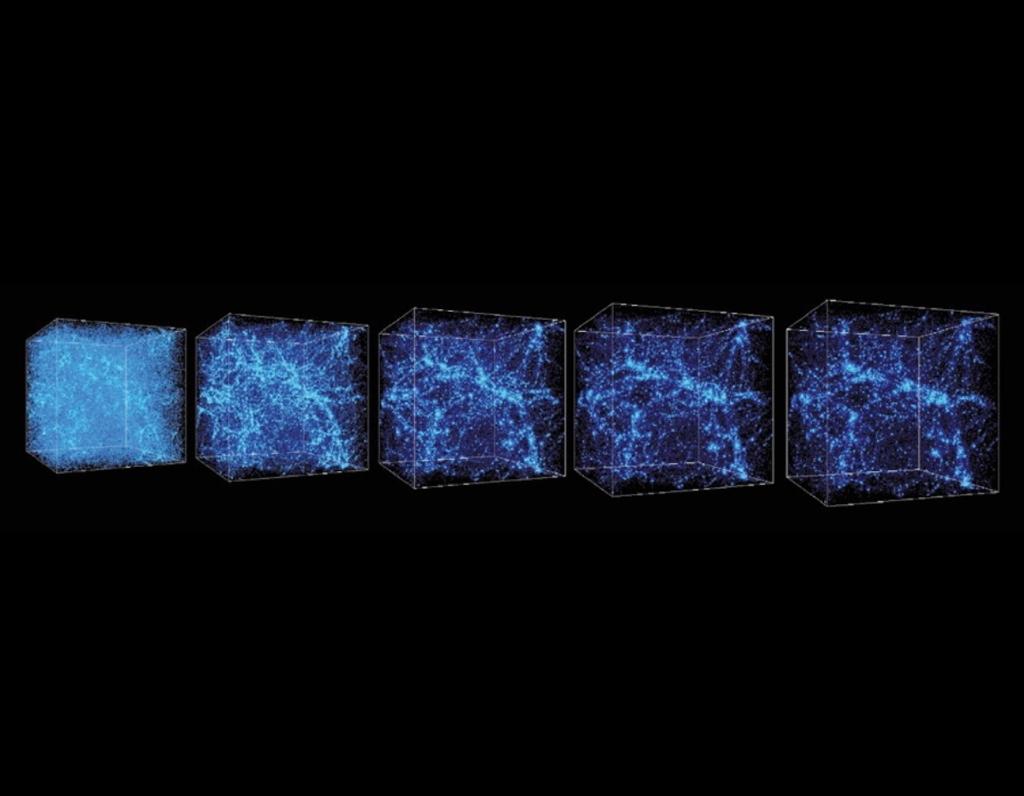
The panel explored the concept that "we have been living in a sort of metaverse all along." The discussion centered on the notion that the Universe functions as "one giant algorithmic computation" with information as the fundamental substance, and examined whether we might inhabit a simulation similar to The Matrix.
Speakers

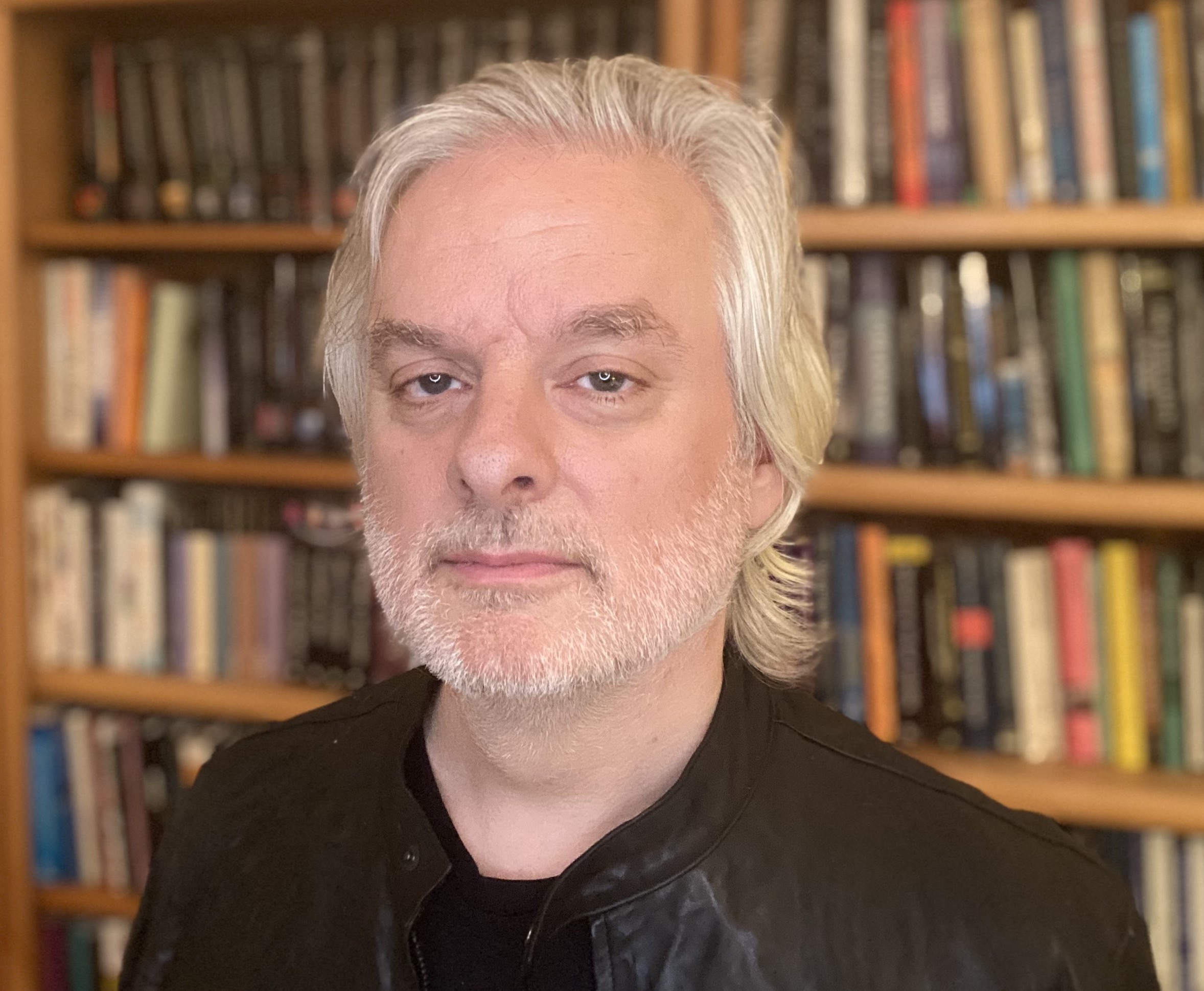

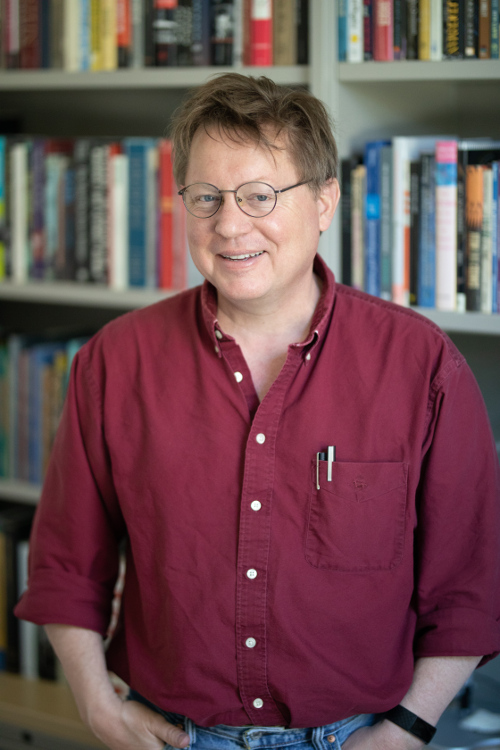
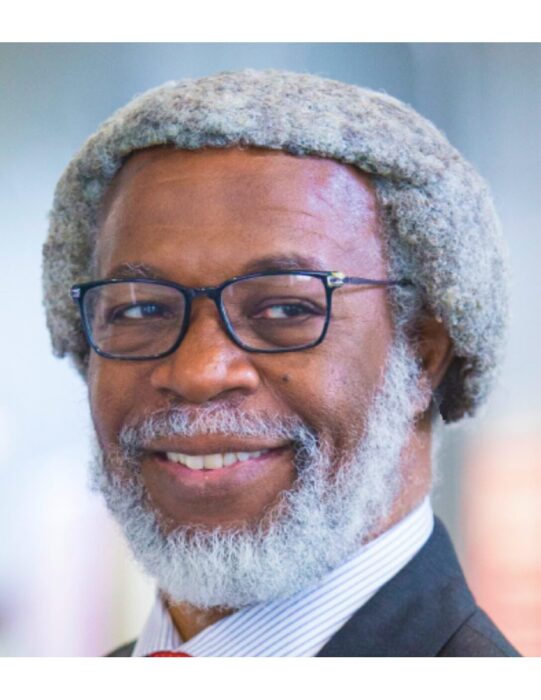
Watch
Media
Related Roundtables

Transcript
This roundtable brought together physicists, philosophers, and a psychiatrist to explore whether the universe is fundamentally computational or whether we might be living in a simulation. The discussion traced the intellectual lineage from Plato's Cave through John Wheeler's 'it from bit' to Nick Bostrom's simulation argument, with panelists carefully distinguishing between the metaverse as a virtual world we create and the simulation hypothesis as a claim about fundamental reality.
David Chalmers and other panelists debated the epistemological implications of perfect versus imperfect simulations, noting that a perfect simulation is empirically indistinguishable from reality and thus unfalsifiable. Sylvester James Gates described finding what appear to be error-correcting codes in string theory equations, which generated public speculation about simulation evidence. The discussion explored whether space might be emergent, whether mathematical structures are discovered or invented, and how the extended mind thesis suggests we are already becoming hybrid computational beings.
The conversation took an unexpected turn into psychedelic experience and altered states of consciousness as relevant to questions about the nature of perceived reality. Panelists invoked Kant's recognition that perception is invariably shaped by cognitive structures that may have nothing to do with things-in-themselves. The discussion concluded with reflections on the limits of scientific claims about ultimate reality and the role of imagination in extending understanding beyond what physics alone can reveal.
Show discussion topics
- 00:00:03 Introduction of panelists including David Chalmers and Sylvester James Gates, framing the question of whether the universe is fundamentally computational.
- 00:07:51 John Wheeler's 'it from bit' hypothesis and whether information is the fundamental substance of the universe.
- 00:13:01 Distinguishing metaverse concepts from the simulation hypothesis, with historical roots from Plato's Cave to Nick Bostrom's simulation argument.
- 00:20:46 Whether laws of nature might evolve, and the philosophical implications of living in a simulated versus fundamental reality.
- 00:28:42 Evaluating evidence for and against the simulation hypothesis: perfect versus imperfect simulations and Cartesian skepticism.
- 00:36:27 Space as potentially emergent from something more fundamental, the role of mathematics in describing reality, and cultural evolution of mathematical ideas.
- 00:46:52 The regularity and continuity of physical laws as possible evidence for or against simulation, and error-correcting codes found in string theory equations.
- 00:52:03 The extended mind thesis, the internet of things as cognitive extension, and the sense in which humans are already simulated creatures.
- 01:02:31 Psychedelic experience, altered perception, and the relationship between consciousness, simulation, and Kantian epistemology.
- 01:15:33 The limits of scientific claims about ultimate reality, the role of imagination beyond physics, and closing reflections on what simulation concepts reveal about knowledge.
Show full transcript
00:00:03 oh hi good afternoon everyone uh welcome back to the Helix Center and our conference on coding and the new human phenotype this is the fifth of four round tables the previous four have been I think fantastic and I welcome our audience out there to check out those four uh round tables that are
00:00:34 available on YouTube this afternoon we are excited about our cop our our topic which is the universe is the universe a metaverse and we're going to hear more about that and what that could possibly mean because maybe the title is a bit opaque perhaps not but I want to tell you something about our participants before we proceed um Elias dakwar Dr doc where actually helped conceive some of this uh idea of the entire conference on coding I want to thank him for that he's taking part
00:01:06 today as one of the participants he's an associate professor at Columbia University College of Physicians and surgeons and general psychiatrist he has been researching novel treatments for addiction for over a decade and the support of several brands from the National Institute Health a special focus of his research has been evaluating sub anesthetic ketamine infusions for cocaine use disorders in both laboratory and clinical settings as well as investigating ketamine infusions as an
00:01:37 adjunct to mindfulness-based treatment of mind-body practices motivational interviewing and other behavioral Frameworks for alcohol cannabis and opiate use disorders he has a more general interest in the impact of contemplative and non-ordinary experiences and of the interventions that might occasion and cultivation of well-being Christopher fuse is a professor of physics at the University of Massachusetts Boston who specializes in Quantum information
00:02:08 Theory and Quantum foundations he is an author or co-author of over 160 scholarly pieces one of which unconditional quantum teleportation with h.j Kimball's experimental group was voted a quote Top 10 breakthrough of 1998 unquote by the science by the Elders of science he is a winner of the international Quantum communication award and a fellow of the American physical Society he is most widely known for the development of
00:02:40 the quantum interpretation known as cubism cubism where quantum theory is not seen as a direct representation of what is in the universe but rather as an aid to decision making in the universe where Nature's events have a kind of ultimate autonomy or creativity Emily Adam is a post-doctorate associate at the Rodman Institute for philosophy of science at the University of Western Ontario she received her PhD in
00:03:10 relativistic Quantum information from the University of Cambridge prior to that she completed the perimeter Scholars international program in theoretical physics and she did her undergraduate degree in physics and philosophy at the University of Oxford she works on the foundations of quantum mechanics and related issues in the philosophy of science and is particularly interested in approaches to physics which go beyond the time Evolution Paradigm encompassing a range of possibilities like temporal non-mocality retro causality and all at
00:03:43 once law so investor James Jim Gates Jr is a theoretical physicist he is a University of Maryland University Systems Regents Professor the John S professor of physics and a college park professor emeritus he currently holds the Clark leadership chair in science and serves as a professor of physics with the physics department as well as affiliate professor of public policy in a school
00:04:13 of public policy at the University of Maryland College Park Maryland Gates served on the U.S president's Council of advisors in the Science and Technology contemporaneously of the Maryland State Board of Education from 2009-2016 and the national Commission on Forensic Science from 2013 to 2016. he is known for his work on supersymmetry super gravity and super strain theory David Chalmers is University professor
00:04:44 of philosophy and Neuroscience and co-director of the center for mind brain and Consciousness at New York University he is author of The conscious mind constructing the world and reality Virtual Worlds and the problems of philosophy which was just released this year he co-founded the association for the scientific study of Consciousness and fill paper's Foundation he has given the John Locke lecture and has been awarded the Jean decoded the code
00:05:16 reprise he is known for formulating the quote-unquote heart problem of Consciousness which inspired Tom Stockman to play the heart problem and for the idea of the extended mind which says that the tools we use can become parts of our minds one minute let me take this sorry pay no attention to that man behind the curtain okay everyone uh welcome uh this is really a very exciting topic for us to
00:05:49 LEAP into and I hope we will make a leap so does anyone want to start off with a general sort of formulation of what it might mean for the universe to be a metaverse foreign well I'm willing to start first of all I would say it doesn't mean what most people think at least from my perspective what my own research has led me to do in this period is quite astounding I
00:06:19 started from a position of total skepticism having read about John Wheeler's it from bit which is you know the information leads to the existence that from that University we live in and I remember quite when I was young first reading it thinking what an insane idea so 15 or 20 years ago in my own research I found mathematical evidence of error correcting codes in the in what may be the fundamental laws of our universe ideas related to strength Theory are
00:06:49 correct and so at that point I concluded that if you think about this stuff long enough you too can actually become crazy ideas Associated that the information is a sort of an elemental aspect of the universe um is is that true is that a good way to put it uh I I don't know um so I'm a disciple of John wheelers that that you just mentioned I did some
00:07:21 undergraduate work with him and um his thinking went through various stages um he started I think when when it was finally realized that um that black holes were inevitable wheeler started worrying that that somehow every law of physics could ultimately be transcended so for instance it used to be believed that baryon number was a fixed quantity in the universe but she threw baryons
00:07:51 into the black hole and the number of baryons decreases so what was once considered law of physics was transcended by black holes and um so he he went through this phase of thinking well this has transcended that is transcended and he was left with a position of where he would say uh there is laws but the only law is that there is no law because they're always ultimately transcended so Law
00:08:22 Without law was one of his his slogans and after that he started thinking well if the universe isn't um made of of particles or fields or even geometry because geometry can become singular what must it be made of and that's where he somehow landed on the idea that it was information um and so I took that as my starting point but then ultimately I sort of worked
00:08:52 away from that because it uh on apologized information in a way that I thought was unhealthy thinking so what we needed to understand instead was that the universe is the universe and then there are thinking beings in this universe and they use information and they use information in certain ways because the universe is a certain way but the information itself is not part of the stuff of the universe so one can
00:09:22 one one can transcend one's mentor yeah I also tend to be quite skeptical about the Year from the hypothesis because I think it fails to distinguish between what is in the world and the information that we receive about the world you know obviously we formulate physics on the basis of information that we have received and thus you know it's quite natural the physics we just formulate exhibits various information theoretic properties because it's the result of certain sort of epistemic constraints subject that agents like us are subject to our physics is going to
00:09:54 reflect those kinds of constraints it's going to reflect the kinds of information we can obtain but it doesn't mean that the physics is about information it just means the physics is formulated on the basis of information and thus it all it will naturally have information theoretic features foreign I think the metaverse actually has features that go beyond the simple hit from bit idea may have something in common I mean the I mean the metaverse standardly stands for
00:10:25 a virtual world that we create I mean Neil Stevenson introduced the term in His science fiction novel snow crash back in 1992 where the metaverse was a basically a virtual reality environment that people would go into with uh with headsets and the like I could interact with other people and live a uh at least a partly Digital Life and now of course the tech corporations have appropriated this idea and using it you know matters now using it as a as a label for the uh
00:10:56 for the ecosystem of virtual worlds that they would like to uh they would like to build so when I hear is the universe a Mount Everest I hear is our universe a virtual world inside someone else's Universe in the same way that you know the metaverse would be a uh a digital world a virtual world inside our universe and that would have elements of the it from bit idea in it because if our universe is a virtual world inside someone else's you know metaverse then presumably we're running
00:11:27 on uh on someone else's computers and there's going to be a level of a level of bits there but I take it but that idea though we're in a virtual world goes Way Beyond the hit from bit uh the it for bit idea the forbid idea it can be understood as saying there's a there's a level of digital processes in the uh in the constitution of our worlds maybe there's even a digital physics it's a interesting speculation maybe true maybe false but is the universe in the universe it's like it from bit on steroids there's a there's bits and
00:11:58 there's a there's bits that we are grounded within a uh a vast universe beyond it well how then how could it have been very appealing let's say to Wheeler and it was also what they would Ed Fred can also had written about this some years back um that so since we have mostly Skeptics here it seems about that idea of it from a bit that's great that's that seems like nice to have that sort of consensus but I like the idea
00:12:28 all right well Jim I'm interested in us sort of fleshing out just for the just to be fair and honest to the idea what what is it because I think the general audience may not appreciate well what does that even mean to say the universe is made up of information that seems like if you say it's made up of atoms there's quite a distinct you saw you brought up at Fred Kim Ed fredkin thought that the world was a program running on something the last time I heard him speak was the other the universe is a program running on the
00:13:01 other what's the other at well no answer so that I never found a productive line of thought um wheeler on the other hand didn't think that the Universe was a program running on anything so when he was saying it from bit he would even say that the only thing that's going on in the universe is higgledy-piggledy which was the first time I'd ever heard the term and I'd look it up an Oxford English Dictionary right you know that the universe is is
00:13:31 just sort of bubbling out of out of chaos but the stuff that's bubbling up is information in Wheeler's mind so they're very different World Views so the people remember there's no ether right I mean for a long time it seemed we couldn't do any physics without there being an ether yeah right and people said oh well there isn't but we still have these waves right I mean so can you is it is it fair to be too critical of him for not being able to come up with well what is I I
00:14:02 kind of oh yeah yeah is it is it fair to be critical for somebody who says I can't tell you what the medium is I I can't tell you what the universe is but it's running on the other hand you might say the mind of God and how is this more productive that would be my one the idea goes Way Beyond Franken though I mean I mean Conrad zusa who uh who one of the inventors of the computer back in 1943 he wrote Reams manuscripts on the idea that physics might be uh might be digital and that's what I take to be the core idea of it from bits just that
00:14:34 they're a little not physics which is somehow digital if for example as Stephen Wolfram is sometimes slow maybe our universe is a cellular automata uh running off um you know like the Game of Life bits interacting with bits at the bottom level that would be digital physics it would be enough it's probably true but it's not a crazy idea it's a perfectly sensible idea that physics could be digital can I um even push it back once they a step further so as I said when I in my own work found evidence for air correcting codes
00:15:05 possibly in the standard sorts of laws that follow from Einstein and uh Maxwell which is where we business make out living uh I had a hard time getting it published that we were finding Eric wrecking codes and this thing called supersymmetry which is an extension we've not seen in the laboratory but it extends mathematically another position that starts with Maxwell and Einstein and so when I wrestled with this one of the things that occurred to me is that
00:15:36 it's not just about the digital part because you can all in my mind you can go all the way back to Plato's allegory of the cave and ask the questions where do we fit in that story because I'm sure you're all familiar this is a famous parable about these individuals trapped in the cage that can only see Shadows on a wall and they perceive those shadows and the Shadows come from outside the cave and they perceive those shadows as
00:16:06 being reality but when exposed to actual reality they don't know how to interpret and readily what they're encountering and the psalm says to me it's really odd that this several Millennium Millennia year old idea has been partially realized and where physics has taken us a couple of thousand years later to me this is a very odd development but one of the things I would caution a group like this discussing these ideas is not to forget
00:16:38 what Einstein said about Galileo Einstein called Galileo the the father of physics because and this is Einstein's word he drummed it into our heads that the way we knew about reality is by measuring and observing reality and that if you don't have a proposition that leads to no measurable outcome it exceeds the definition of science well sort of like this idea that that's
00:17:09 a metaphysics you're dabbling in metaphysics but it's interesting that you mentioned these error correcting codes and I think well if a consequence of your view of the universe or your model of the universe includes error correcting codes that you're citing will say well that's a consequence I mean so you say more about that I mean is there a way to test that or is there are there implications of that idea that that might be relevant to you know theoretical physics today could I have a few minutes to think about that
00:17:41 you can ask some of our other participants to weigh it here I need to think about that for a second what has reminded me of is this you know this space-time interval and special relativity that most folks out there have read a lot about relativity may not appreciate if there's this geometry that's the space-time invariant that's a pretty cool mathematical finding and that does confirm a lot of what happens in special relativity most folks don't realize that that geometry is built into space line uh yeah I was gonna say that I think I
00:18:12 think Plato's Cave is a good example of of the sense in which some caution is required in making these kinds of claims because like The Observers and Plato is Kane you know we are presumably quite limited our ability to observe things and we are observing sort of Reflections on a wall rather than whatever is causing them and when you be careful and distinguishing between properties of that are sort of properties of the observations in virtue of the way in which we're situated and our own limitations versus properties that are properties of the world and my concern is that with these discussions about it
00:18:42 from a bit what's going on is that we're mistaking properties of our observations like the existence of certain sorts of epistemic limitations or entropy balance and so on we're mistaking those things for properties of reality uh we need to sort of keep in mind that used to make the limitations that apply to our own observations aren't necessarily Properties or whatever the observations are ultimately being caused by an original criticism of quantum mechanics uh yes that's that is one criticism yeah
00:19:14 but I think it applies outside of mechanics as well it's not limited to that particular domain challenged me a few seconds ago so I'm prepared Now to respond great so um when I I was part of a collaboration three mathematicians three physicists and we came up on this very strange Discovery for a few years afterwards I would get the question what does this mean and that's kind of what you you just asked me and this it has led me
00:19:45 personally to ask the strangest question in my career which is if the laws of physics involved error correcting codes and as soon as someone tells me they see a super partner in some laboratory they can I can make that assertion if that occurs the question is how in the world did the laws of physics get to error correction and to answer that question the only way I know how to answer that is to look at nature herself as a model and there's only one part of nature that I know
00:20:16 where air correction is discussed it's genetics and in genetics the proposition is the error correcting codes are put there by the forces of evolution and so the question translated to what I have seen is what does it mean for evolution to act on the mathematical laws of the universe I don't I can State the question I have no idea what the answer would be that's nice
00:20:46 there is an old tradition or there is a tradition maybe it doesn't exist So Much Anymore of thinking that the laws of nature might evolve and I mean we were talking about wheeler earlier wheeler thinking that the laws can be transcended ultimately there aren't going to be laws but there was an American philosopher uh named Charles Sanders purse who believed that the laws of nature could evolve and that laws of nature were
00:21:17 habits I mean there's even there's like a lovely story of purses explanation for Gravity was that in the primordial Universe things were going around some things flew out and some things sort of formed the habit of going around each other and that's that was the origin of gravity that it was a natural selection effect so uh so this this group of philosophers William James
00:21:47 Charles Sanders first John Dewey they were known as American pragmatists and they were perfectly willing to believe that the laws of nature could evolve and there's a nice I mean I'm just telling you historical things there's the great mathematical physicist Henry Point career his brother-in-law Emil putro believes that the laws of nature could evolve and blanket Ray wrote a nice essay of
00:22:18 about what could it mean for the laws of nature to evolve how would you have some kind of empirical evidence that the laws are evolving and he said presciently if if you see that your theory gives rise to a singularity then this must be a statement that the theory itself is telling you I can't go I can't go forever and I thought that was very nice but I mean you could ask yourself about the metaverse and say it's a and some
00:22:50 people do they hear about it they said that's a crazy idea and then you as a prominent philosopher and had written a whole book about it which means to some degree you take it seriously so why why isn't it a ridiculous idea why is it something to actually think about them from the metaverse is not a ridiculous idea the metaverse is actually something that people are trying to create right now in the tech corporations but and elsewhere we have
00:23:22 as we are but then there's a hypothesis so I distinguish The Meta verse which is about the virtual worlds that we create from say the simulation hypothesis the hypothesis that we're living inside a metaverse or a uh or a simulation science fiction you get it in um I mean you find it in the Matrix you also find versions of it potatoes Cape is not too far from a version of it Rene Descartes talking about the hypothesis that maybe
00:23:54 all this could be a dream all this could be produced by sensations produced by an evil demon yeah the idea that all this is a computer simulation is a successor to that idea why take it seriously well one reason to take it seriously is just the idea that there may be many metaverses many simulations created in the history of the uh of the universe maybe actually many more virtual universes their non-virtual
00:24:24 universes maybe even many more non-virtual people many more virtual people than non-virtual people I'm assuming because I'm assuming those virtual people are actually conscious and having conscious experiences like ours then um you say statistically what are the odds that uh I'm one of the the lucky ones at Ground Zero unsimulated I think postum is actually given a statistical argument that we should we should take this hypothesis very
00:24:56 seriously I mean and the fact that we're now actually creating these universes I mean we don't yet have simulated universes anything like that depth and detail of the physical world but no one would be surprised if in say a century we were we were getting pretty close to that the fact that technology is going there gives us alternately all the more reason for us to take this seriously as a realistic possibility so I don't Advocate the idea I don't come up and say yes we are definitely in a simulation but I take it it's a grand metaphysical speculation about our universe that we should take seriously
00:25:27 and interestingly you know it's continuous with the infrared bit idea that there's a level of digitality underneath our reality but of course it goes Way Beyond it sometimes I talk about the it from bit from it idea the other bits underneath the ends the apples and particles are made of a level of bits but underneath that level of bits there may be uh there may be so much more such as for example the world in which the simulation takes place so I think about the simulation hypothesis as a version of the it from bit from it idea
00:26:01 but earlier I spoke about the simulation hypothesis the hypothesis is exceeding the bounds of physics at least as I understand it and when I speak to the public in general because I've I've been many times to ask about this I just point out to people that if you take the simulation hypothesis seriously then ghosts are possible because if we're programs running on some underlying structure when that program is terminated as long
00:26:34 as the underlying structure is not damaged you can re-initiate that program that's a ghost and in my universe I don't understand how ghosts can exist are you guys making backups yeah I have concerns about the simulation hypothesis with a similar reason ah at least without a scientific context I think there are certain kinds of hypotheses that we just have to Prima facial rule out because they prevent us from using empirical evidence in the usual sorts of weight sort of way to confirm scientific theories and I think
00:27:06 that things like the formulated hypotheses this as well as related things like you know the average interpretation uh various things which significantly interfere with the relationship we presume ourselves to have with our evidence for our theories just need to be ruled out at the beginning if we want to do any science we should just you know those things that it could they could be true but we have to assume they're not true if we're going to do sensible science I just want to say some of us here are not scientists we're philosophers yes yes so I'm happy with that but certainly
00:27:38 within the point that you're trying to do science well it's funny because I think even in Descartes case you know people might argue that whereas he made a way he made a way out of this conundrum could it be that the entire our experience is generated by a demon Etc you know he made his way out by I think therefore I am and then the God's perfect and that's how I got out of that trap right but you could argue and I I accept this so that the the implausibility of that first anyway that's the way I take it yeah the
00:28:10 dad really did a lot of the heavy lifting and moving away from that some people think there could be evidence more versions of the simulation hypothesis maybe not for the perfect indistinguishable simulation but maybe say it's an imperfect simulation with with glitches Jim's colleague zory devotee and others how to pay for talking about you know what would it look like if we were in a approximate simulation that kind of cut some corners on the equation so that sounds some potential evidence there or if they're you know which was like in the black cat that crosses your path there's evidence
00:28:42 potential evidence for the uh imperfect right hypothesis with it makes it at least maybe continuous with science but once it becomes the perfect simulation that Descartes was talking about and indistinguishable from physical reality I guess at that point it becomes philosophy because there's no experiment you can do well yeah I'm from a scientific point of view it's the problem is not so much that there never could possibly be any evidence but more of that there aren't really sort of meaningful steps that we can you know we could take to go out and seek evidence we have to just wait for some glitches
00:29:12 to show up or but you know the people outside the Matrix who decide to take us out and tell us the tricks you know that those are those would certainly count as evidence for that hypothesis were they to occur but there's not much we can do to bring about those things happening as as practices you can run our computers really hard and really fast to try and strain them to the maps typically burn out those computers pull the whole thing to a whole people have suggested serious research programs like that well I don't know how serious that these kinds of probabilities also
00:29:43 have the consequence that you're looking back get empirical evidence to do things like try to confirm a theory like quantum mechanics is kind of pointless because the simulation people can make out empirical evidence do whatever they like and so there's no there's no point in Reading anything at all into one's empirical evidence if one believes that this is a viable possibility so at least within that kind of kind of domain those possibilities need to be synthesized I think and my colleague Dr Chalmers points out something that I've many times tried to
00:30:14 convey to people that if you believe in the perfect simulation than the programmers in that simulation fit exactly the traditional definition of Gods right and so one gets outside of the realm of science very quickly if you believe in that perfect situation that's a great illustration in my uh my book reality class of God creating the universe yeah she's a teenage girl in the next Universe I'm working on her working on her computer and all the uh
00:30:44 the galaxies and nebulas come from there so it may not be a traditional God to be creative could be all powerful could be all knowing about our universe but not particularly no particular reason to think they're benevolent or all good or all words well I think a reasonable a reasonable point back about the ghost idea that you cite Jim is that well whatever simulation assuming I don't know assuming we live in a simulation what everyone we live in there's going to be some rules and regulations about the way whether they're going to be standard ways we're accustomed to the
00:31:17 world and so no we don't have ghosts in our world and uh well whereas it would be possible we're at a computer program that goes in the world that these computer programmers let's call it maybe is the best of all possible worlds I'll quote with leidance right so they figured out that we're not going to have repeats in this world so we don't but that's one of the reasons we're not accustomed to we don't rabbits that speak either yes but one of the things you know all of us thought about quantum mechanics and guess is stochastic and
00:31:48 there's probability that we have you but I I have a hard time thinking about science where arbitrariness is totally arbitrary and again the perfect simulation hypothesis that teenage girl might one day wake up and decide to change her mind and allow in a thousand years for me to show up again now that might have some attraction to me personally but I don't think that's outside I see no evidence later this way in my life it's
00:32:18 science it's like that that our universe works like that but but I wonder if there's any pragmatic value in holding this I think silly believe because it you know it's not something you can invalidate but it might be that it gives some comfort to the Believers you know just as one finds comfort in religion do you find the comfort in the idea that that you're some young lady's toy
00:32:48 [Music] specific form of comfort maybe maybe there's a maybe it doesn't have to live here I don't know I think most people find this horrifying the idea at least initially oh my God we're on the Matrix the simulation none of it's real my life is an illusion I don't think that's the wrong reaction that yeah I mean it could turn out the learner simulation and if so life goes on this is still real I'm still having this conversation with you we're still you know I've still
00:33:18 got relationships um I still have I still have Community those are the things that bring bring meaning to your life but I don't find the hypothesis that's horrifying as some people find it I couldn't say I find that especially especially uh comforting it doesn't mean that we're all somehow at the mercy of this simulator as we are with the God and I've got to hope that this simulator is benign well surely you know if you were suddenly presented with good evidence that this were true this would affect the decision making processes in some ways like for me it would significantly reduce my faith that
00:33:49 the laws of nature are going to continue working in the way I expect I would probably stop predicting things in quite the way I usually do because you know the simulator could change their mind at any time whereas you know if I don't believe in a simulation I tend to assume the laws of nature are going to continue to hold in roughly the same way well we could consider the system one from the point of view of doing philosophy let's say uh we can consider it a very uh pregnant form of electronics because it we just talked about some other philosophers Plato and Descartes it's a way to stimulate our
00:34:21 thinking about well what do we think is the ultimate what is existence like ultimately and to me that is in fact the value of a scientists discussing the nature of reality with philosophers because in particular physics used to be natural philosophy before Newton came along and turned it into physics so physics in particular Bears a very very close relationship with the philosophy and so I think of the simulation idea although I find it sort of unacceptable
00:34:51 in the framework of as I understand the way our universe works in physics works I find it as a tempting driver to make me think more deeply about that and so I think that's the value as a sort of a hardcore scientist that's the value that I see in this discussion that it forces me to think deep more deeply and to try to find the errors in my thinking I think that's possibly sort of intermediate hypothesis which I find a bit more scientific um where you know rather than supposing that there's a higher Consciousness creating a simulation it's the idea that
00:35:22 you know maybe reality the underlying relatives is kind of very different from the way we experience it and our our reality is in some sense of simulation running on some very different kind of Hardware I mean you know there are have been various suggestions that you know maybe the world has less Dimensions than we think it does and that kind of thing and in a sense in that kind of picture there is something about our experience which is sort of simulated or illusory and I think that kind of that that kind of possibility seems a bit more more within the realm of science maybe the simulation speculation yeah I
00:35:55 mean can there are ways I totally agree there are ways of elements of this to be true without a full-scale simulation you could dial all the way back to the it from bit idea okay well yeah maybe there's just a level of uh there's a level of bits here generating our reality maybe there's something underneath the bits well we don't know what that is maybe it's not a simulation but maybe it's something else that's unknowable some people have speculated that might be Consciousness maybe uh the universe could be made of Consciousness underneath the bit cycle that it from bit from uh from Consciousness even if
00:36:27 younger that farther you know the idea that for example space could be emerging from something more fundamental than space underneath the space this is an idea that's increasingly taken seriously and uh in physical theories now the good kind of squares and quite interesting ways with the hit from good idea or the simulation idea the space we actually experience is somehow emergence and I think yeah thinking about all these Brands they start as initial metaphysical brand about physical hypotheses but you know some of them can end up turning into science
00:36:57 we we cycle around this this comes up a lot and it's come up in our other talks this weekend where um something like the term information which have seemed to be two-faced is one is like well there's what there is and there's what we know about what there is or that's a constant challenge for us and I mentioned you know the original struggles and stuff for many people ongoing struggles without interpret quantum mechanics um there's so but the interest and
00:37:30 information uh also I our understanding of it is that it also arose after Stephen Hawking made the suggestion about how entropy might be related to black hole formation and it's possible uh evaporation of black holes and and that fits into this holographic Theory I think also on my right I'm pretty sure yeah that's connected yeah yeah so I'm wondering about that going back to well what are the bits and why why do these keep coming up and what to say about Consciousness and what to say about the
00:38:00 universe I mean I have been thinking about entropy balance a lot recently in my recent research and that's the kind of the questions and I keep being coming back to is is precisely this question are these entropy bounds a feature of reality itself or are they a feature of our ability to get information about about reality um because what the employee band is supposed to say essentially is that within some region of space-time roughly speaking the information contained in that region is uh proportional to the surface area rather than the volume um and a lot of people want to interpret
00:38:32 that as a kind of an ontological statement about what's out there in the world but if you think space-time is discretized there's a sense in which it's natural that's a natural kind of epistemic constraint that we should only be able to get information out of a region in proportion to its surface area so arguably that that looks a bit like the kind of thing that's an epistemic restriction on our ability to learn things about the world rather than about what's really there so kind of it's an interesting question I think how we should distinguish between what features are of our observations reflect what is really there and which
00:39:02 features just reflect our sort of limited perspective on us can I uh take that as an Avenue to talk not just about information but about mathematics in general it's often when often comes across the state that mathematics is the language of the universe and that's something that I can't quite accept and I've said in other venues that it's the only human language that allows us to comprehend the universe at a very intimate level and it has several a hundred years of proving that but that
00:39:34 doesn't mean that nature herself uses that language so this emphasis on the distinction between what there is and our perception of what there is this is a very important thing to keep in mind I believe I think this is crucial when it comes to information because this word gets used there's so many different ways I mean there's information in the sense of something we know you know some facts that we uh that we have and then I call this some magic information I mean it's the original idea of information I've
00:40:05 got some information I know where the Helix Center is it's on 82nd street okay that's uh that's information that's something a person has or knows then this information as bits which is you know zeros or ones and so on these mathematical entities these things that might be out there in the universe and that's not necessarily tied to anything anyone knows that's just tied to what's out there in my book I call this structural information to distinguish from semantic um information it gets confusing because in contemporary like databases computer
00:40:35 science the web these two things go together people use zeros and ones the bits to code facts things we know but I think we've just really got to separate these things and it's a shame we've got the same word for these two incredibly important but totally different concepts and there's bits there's facts and these are really thoroughly different from each other yeah also sometimes when people say information what they mean is number of degrees of freedom or something like that which again is not the same as bits or uh semantic information necessarily so it'd
00:41:07 be nice to distinguish those things better I come as a kind of kind of structural information just it needs to be two you know the best two ways there's three ways there's tricks there's maybe there's even continuous information with degrees of freedom my degree of Freedom you could have many bits but they could be required to be correlated in certain ways the number of effective degrees of freedom could be much smaller the number of bits in your system I want to go back to this uh Jim's notion about the self-correcting codes
00:41:37 and whether or not it's a reflection and of course you didn't mean to suggest it's it is the survival of fit is strictly speaking or anyway it's not biological evolution it would be Evolution it'd be some other sort of evolution and of course there have been a lot of mathematical models applied to how there are self-correcting features of the biological systems and they usually do once again go back to theories about entropy and dissipation of energies Etc and
00:42:08 um you know I'm wondering whether that's a way to get a handle on in some way like well what would it what would it imply if the Universe goes through I'm I'm imagining yourself correcting uh change would be something moving away from what you think enter the way the entropy would normally would be functioning right so my comments were within the various tight bounds of looking at this thing called supersymmetry the mathematical super symmetry that's what I've sent my
00:42:39 entire adult life looking at and in those confines oh this idea about error correction there's only one I have an intuitive way in which I would never submit as a scientific paper and that is that it's my intuitive field that if there was something like this kind of evolution that we're taught that that would drive the presence of these error correcting codes into the mathematical laws that it has something to do with exactly this point about the
00:43:12 university evolving because in genetics right and genetics the argument is that air correcting codes are there because if you have two genomes one with error correcting codes and one without the genome with the error correcting code is more efficient at producing progeny because the one without produces progeny that don't survive and so something like that you know if you try to map that over to this picture then you get the idea that you know that this kind of evolution that you brought up a pancre talking about the universe alone that
00:43:43 it's maybe literally possible and that that would be perhaps why we could see this remnant of a set of error correcting codes showing up in the laws of physics I find that very attractive picture that the you know going back to this purse Charles purse um you know that the Universe kind of gets into a habit it got into a habit of expanding it got into a habit of having gravitational forces because perhaps
00:44:16 you know the the genome has made this a good fit for things at least for some for some amount of time and but of course there's always random variations let's say there is higgledy tickledy deeply in the universe things do change and when things change the the laws that are the most adapted to it you know hang around and the ones that aren't so well adapted to it
00:44:46 disappeared that's kind of cute uh going back to this other thing that Jim said about that mathematics is the only language it just reminded me of a of a philosopher I could never remember the name of um but I read about that philosopher in some essay by Richard Rorke I can't remember Richard Ward's name and uh we're already attributed to this philosopher the phrase or the slogan that the world is not sentence shaped
00:45:18 so you know you can you can write all you want about the world with the world itself goes beyond anything that you can write about it I think it's dirty dies it sounds like something you might say right yeah I've been accused by people like him well I think he tried to you know you know whatever provide some sort of background or substance his way of looking at their dad's work yeah
00:45:50 was wickenstein who said in the tractatus the world is everything that is the case this was like the world is a world of facts and to many people that suggested that linguistic picture it's not a popular view anymore I think the world is sentence shaped I was recently uh listening to a lecture by Michael bromov who was talking about Evolution and one of the million things he seems to have is mounted his fingers on uh he's really incredible and he said
00:46:20 you know evolution is actually very stupid and you know you just survive and die whatever and but um a lot of the models we use in creating computer models are we often think they're brilliant they do incredible brilliant things and in some instances they solve problems that we as biological entities can't solve and it's much faster for example Etc so one channel to the idea that we're in a simulation is that is that things move along very slowly
00:46:52 they don't change suddenly with sharp ankles or you know and again maybe that's because that's what we're used to they they change us faster as slowly as we're accustomed to and that's normal for us right but you know I all of us understood it if the laws of causality suddenly changed or there was some other kind of uh uh uh you know whatever those sorts of changes would be possible for a simulation I guess that's what I'm saying is that I think the simulators might be just be setting up the simulation like one simulations one at a time overnight
00:47:24 test out different laws maybe they're running a whole batch of black yeah a million different simulations just vary the parameters and the laws of physics and so on and they've let them each of them run out they have to come back in the morning check out the stats which ones and then they'll update that's how the laws of physics evolve by the way it's like okay hold on these ones produce interesting results so let's focus in on that let's focusing on those but yeah no reason why they need to be paying so much attention to every individual simulation that like the laws are going to change the backgrounds do we have for drawing any any inferences
00:47:55 about what methodology the simulators if they exist are adopting you know we don't seem to have any sort of starting point to imagine what their purpose might be or what they're trying to achieve so I don't necessarily see that we have good grounds in that scenario to suppose that they won't suddenly interfere because we just have no possible understanding of what on Earth they might be up to or what they're trying to do it's true God moves in mysterious ways certain simulators I probably have to know their character maybe you can assume they're kind of like us and then you'll get one
00:48:26 I just don't see how we have any any way to narrow down the space of possibilities if we allow that kind of possibility yeah that's not assume they're like us but then let's not assume they're like uh right when we couldn't do that either we couldn't assuming through any assumed or anything like that sort of Jr exactly Chris asked earlier whether or people is it possible we'll find some sort of comfort in this and I I don't know the
00:48:58 answer that either maybe they do maybe some people do others don't maybe partially we all do but we do know people find entertainment in it but I didn't know at least one instance where I think some comfort evidence of comfort that was exhibited um so in 2008 as I said I and a group of mathematicians and physicists found this very weird result took us three years to get the papers published by the way because we couldn't convince our our colleagues that we had done our mask
00:49:28 correctly but after a popular article appeared on this work in 2010 in the British Journal physics world there was an online comment by a young man of deep religious faith and he took comfort in this idea of simulation because it matched his conception of a benevolent God at work in the universe so some people have taken comfort from it you know there's a cute
00:49:59 story about Einstein it may be apocryphal or it may not you know Einstein is is known as the sort of arch determinist you know that uh the universe was is just happening and um that we really we as people don't play an active role in in the universe so a kind of fatalist anyway the cute story is that um
00:50:31 is that if you trace his his personal letters from the times when he was having affairs um you know on its life that he would take a very fatalistic stance in in the personal letters and then at times when when he was on the straight and narrow he would not use that rhetoric so very much so it looks like Einstein could find his own comfort in in the idea of a fatalist to keep it foreigners yeah I
00:51:03 had no choice I had no choice but to have this affair I think there are these studies that when people read articles about there being no free will that are a little more likely to cheat I think the devil made me do it um I wonder I was wondering when I would go back to the idea of the information the two-faced quality to it I wonder you
00:51:33 know uh you know Kant wrote a lot about how we apply a certain intuition when we look at the universe and see some things reflect back like space time and massive mathematical facts um I'm wondering because I understand David you've written some more about the extent in mind which is another sort of iteration of that approach like what can you logically derive from the fact that we are playing a role in what what how we see the universe do you want to say
00:52:03 something about extended mind well the extent of mind is probably the idea that the tools we use become become part of our parts of our mind so this is um something we've all gotten so familiar to with them so familiar with smartphones the uh smartphones stores phone numbers for me taken over from my memory it navigates for me it does planning for me so and as we live these increasingly digital loans so much of our minds is now extending out into these digital environments in this new
00:52:34 era actually of the metaverse uh where we're going to be pretty soon we're going to be wearing augmented reality glasses It'll recognize people uh for us when I remember everyone's names it's going to be yeah that's going to be useful and um yeah it's so meant for the Computing it's going to take so then the boundary between us and our environment is going to gratefully become become poorer and whether or not the physical universe is a universe of bits our minds may come to at least some considerable extent a mind
00:53:06 um it's partly constituted by these computer processes in our environment and then the mind in turn of course helps construct our sense of the world and that was that was the big idea for uh for Khan but uh so much of our ideas about reality come from you know in a constraint from the way our mind is built to uh to interpret the world but yeah the way our mind is interpreting the world is actually constantly changing and evolving as our brains change and evolve and let me just say I I really
00:53:37 appreciate your making the distinction uh between um a partial simulation let me call it that way and then the total simulation because the partial one feels a little bit more comfortable to a physical scientist like myself because I I need to as our colleague here I need to have the idea that I can falsify right this is a great definition one of the great definitions and of science is that it's about things that we can falsify that we
00:54:08 don't actually prove things correct what we do is falsify our belief systems and as long as is you'll give me that partial simulation I'm comfortable doing doing that however there's another aspect to the metaverse that you keep coming back to that I've been thinking about for a while which is the universe obviously I'm sorry as we take these uh external instrumentalities and let them grow then of course there's this thing that you know about called The Internet
00:54:40 of Things up there called the the internet of things right the other things that's out there it's all these smart devices that are embedded in things they have already become co-evolving because of us one can imagine that they will somehow internalize an evolutionary development of their own that we no longer control and of course that's that's a frightening idea perhaps but when you start talking about things coming our mind going into things you
00:55:10 have to also then of course ask a question about those things getting their own mind not to mention all these these AI systems these language models that I think you guys were talking about here this morning that are basically trained on on the text produced by us all of the internet so they stop for my basis of art so that they are internalizing elements of us which they then project into uh you know into their own mode as these language models got to be increasingly systems where interacting with yeah that transient
00:55:40 building of the world that started with us makes sense to them and who knows what of course there's already the eyes that do art you know we've been following these recent discussions of of AIS that produce art and I have to tell you that there's this one particular incident that I think we've all read about about human artists and the competition that turns out a piece of AI won the competition I don't know how many of you have actually looked at that image that was the winner I actually love it I mean it it elicits an
00:56:12 emotional response from me and I find that extraordinary simulation of purposes and this issue of the AI some other programs are controlling or creating the World building in the AI hypothesis is the computers
00:56:42 and programs we create are going to be controlling this because maybe both at once right maybe this is a simulation actually put together by AIS in the next time for him it's absolutely trivial to generate a simulation of a universe like this because they have so much so much processing power but I think you're right they're different they tend to be different uh potentially different ideas because if we are actually creatures of a simulation especially if we're in a pure simulation
00:57:14 there's a sense in which we are already AIS we are ourselves simulated creatures in which case we say turns out being an AI is not so bad David have you met my friend Mario and if you know him oh yeah I think it's the original metaverse it's a very agreeable World he's an agreeable guy he'll do whatever you asked me yeah he seems happy yeah have you seen free guy it's about uh it's about video game character he's basically a non-player
00:57:46 character in the video game all the humans coming in it's like hey we don't play characters we deserve right rights too this is real for us yeah it's pretty it's pretty interesting of the the idea that we may evolve along with the development of these Technologies is something I think it's already happened and some of us don't realize it because it's something it's been in the background we talked about this in one of our earlier uh roundtables namely that you know our
00:58:16 brains have not evolved uh apparently or involved enough to account for the incorporation of sort of reading and writing centers in the brain like the brains of of earlier humans before there was a writing system where this essentially the same brains but now we seem to have these modules of maybe we should have had a block about this too there are the the sort of nodule modules rather in our brain that are devoted to writing reading and sometimes one and
00:58:48 not the other um so there are cases where we've adapted to the these Technologies it's a technology so the brain is kind of an all flower it's waiting to be baked in any way the world may not be scent and shaped but the brain is sent in shape yeah some little some little bits of it are sentenced shaped at least that would have to deal with language yeah you know so what do you think oh why I I have to confess um
00:59:22 the the tedium of discussing what the universe really is is getting to me because you know I think we began with talking that foreign constraints the autonomy with which the universe or nature as you call it unfolds now that that puts us in a very difficult position as
00:59:54 far as being able to make any kind of knowledge claims about it um and I think the the technological fetishism that has infected this conversation pertaining to my simulations have to be somehow technologically mediated they're the simulation devices um while at the same time conceding that our brains are simulating things all the time by virtue of how we process information we should also consider that we we may be in types of simulation that have
01:00:26 nothing to do with technology that have to do more with our our myths the the way we kind of organize our understanding of one another our acculturation that that also creates a bubble of reality so to speak a metaverse that you know isn't or you know technological but a very cultural um you know centered and the challenges
01:00:57 of being you know ignorant human uh manipulated by power structures those simulations are also important to consider yes the the mind's construction of reality is itself a kind of a kind of simulation I mean you know so much so much in there so much in the mind this construction it goes back to your point about uh about calms I mean in a way it's it's not exactly the same idea the
01:01:28 world itself is a simulation based on a uh based on a computer but all of our experience of reality is actually it's a it's an interaction between the mind and the um between the minds and the world that our minds these days are so yeah so bombarded with somebody so many different things to try and construct things in a uh in a certain way and technology is part of that but it's by no means but by any means the only uh the only the only part of that
01:01:58 so there's a that's a quite different sense in which you know we could all be said to be living in a simulation we're all living to some degree in a world which is constructed by our minds and our minds talking about psychedelics can feel and see things under the influence of them completely differently so that the person feels totally different things about the world themselves reality than without them so they're layers of what what actually
01:02:31 or mind and our perceptions that our reality really is but you know well I think drugs in general can do that so can in our conversation um but I I speaking of hallucinogen specifically they they have um much like information two faces and there's a the way that they can conjure up cathedrals in the mind of
01:03:02 New Visions new experiences and can be pleasing for a moment can be potentially for some people in trapping complete psychosis but they can also move in a very different direction and dismantle the constraints of understanding of information processing that allow us to organize the world too you know there's a notion in Neuroscience of prediction
01:03:33 coding constantly throwing hypotheses out to the world our model of the world representing a best fit scenario of like an error correction so to speak but the errors aren't really with anything real it's to just ensure a kind of coherent map so they can dismantle that and the the map that we've constructed For Better or Worse is torn apart and there's a there's an experience of something else
01:04:07 maybe the other uh fed information or but there's there's a sense of something deeply unknowable uh and and that is speaking with um David about this earlier the enough ability that often is is described in psychedelic experience has also been correlated with much of the Improvement associated with them in
01:04:38 clinical settings this opportunity to perhaps relate to what is but in a way that isn't discursive that isn't information based that is is more primordial and relational can can represent for people who are struggling with ossified modes of cognition opportunity for making the way through the world in a manner that is perhaps less knowing but at the same time
01:05:08 fear you can always more aligned can I respond to the less sentences um as that was I've been sitting here listening to this discussion this is strikes me as a typical discussion of uh one of the two minds because at least this I've experienced life there's kind of two versions of me there's the rational version it's the one that basically does the science and asks the questions about the world and navigates my living continuing to live
01:05:40 safely but I'm also very conscious that there's this thing that used to be called the subconscious and at least in my career as a as a scientist I've actually seen these two things meet and they meet on the axis of creativity and Innovation because where do these new innovative ideas come from and I you know I point to for example the mathematician ramanujan who who accomplished extraordinary things in
01:06:11 number Theory and if you ask him where they came from he would tell you they came from dreams and that is not the purview of the conscious mind I was asking a few moments ago about well does it give people Comfort to think about this topic the idea of a metaverse and I said well I know at least it's entertaining and it's interesting to consider based on what you're saying lies also some people start using drugs to change their Consciousness for entertainment I mean
01:06:42 we actually call them recreational drugs right so that's one of their possible usages uses I really was interested in hearing what people thought about well what is it about thinking there's another level of being that we don't have direct access to why do people find that so appealing I think that's a really important topic I think for me I mean as a there's a slash philosophers it's important thing to remember because I think
01:07:13 one is it assumes that the late between what is observed and what is there is too direct that is liable to leak into a hole of confusions and misunderstandings about what the physics is really telling us and so I think that's something that as physicists and as scientists once you're not not sort of lose sight of the fact that we don't see everything we don't know everything um and we need to be careful to as I say to distinguish between then what what is what what facts are about are about our mode of access and what effects are about the world itself and how to not sort of allow those two
01:07:44 categories to get mixed up and cause mistakes we do live in a uh I like this yeah on the importance of the unconscious this kind of brings back that we do in fact live in a simulation quite regularly you know every night we dream and we enter into a simulation of our own of our own making a furthermore of simulation which is not generated consciously it's generated by our minds but almost entirely unconsciously and then we interact with
01:08:16 that uh with that simulation that was very often extremely real and extremely meaningful to us that gets us at the power the minds we've got to get to the mind's power to construct the world but also the power to actually constructive World unconsciously and that's really an extraordinary creative power and of course it's doing that every moment in our ordinary uh in our ordinary waiting line as well in our perception of reality it's just less obvious to us I I like the idea of extending our
01:08:47 thoughts to these I called it earlier like a sort of a thought experiment which may be one way of looking at the idea of there being a a simulation going on because there because of these Mysteries you know like some folks like to spend a lot of time thinking about that and what are the consequences of my thinking along these lines can I can I come up with something thoughtful creative might actually move physics forward but even if it doesn't it's a way for me to think about the world is a and it's a so it's an active creativity too and occasionally something good
01:09:18 comes of it so we know that famous thought experiments through history I mean Einstein I guess was one of the first to really said I'm doing a thought experiment here watch out now um and no it's like this is creative let me think about what it's like to sit on the lightning right and uh that's a that's a wonderful way for science to proceed and it's not what do you call normal science that's that's the creative part of science so I I'm really pleased that some people are willing to go at it and go at it and
01:09:50 go at it I think it's wonderful for all the rest of us I think the the question that's been haunting me is um whether it is possible to know so you know we've been talking about the very Illuminating findings in physics for example that um get us I think closer to the um the nature of how things might be but
01:10:21 if we take very seriously um kant's recognition that what we perceive and understand are invariably molded by things that may have nothing to do with the nature of things that there that it may be an entirely um human endeavor understanding of which Nature has really very little
01:10:52 to say um what position are we in can we make any real claims about what the world is indeed I'm inclined to think we can we can't I'm implying to think that one can't that um but I'm an American practices and James uh that you know we do what works
01:11:24 for we you know we try our best to do things and I'm inclined to think that the laws of physics capture more about our limitations and um you know so going back to the Evolution how how can the laws of physics possibly evolve D well one game you can play is to say well the laws of physics in fact are just an expression or codification of all my various limitations or us as a
01:11:57 species um we can't help but fall we can get around that without you know with a parachute or you know with a flying machine we ultimately can get around some of these things uh well we can't get past you know traveling faster at the speed of light well maybe that's an expression of our present day limitation but we are evolving species and our limitations may be different in the future less
01:12:28 limitations so maybe the law of you know the speed of light is a constant is something that can be broken if you know you don't say if you just take a different point of view that the laws of physics are are capturing um how best to perceive the world given what we've got right now and that's not a knowledge plane that that's just a statement of more about us practical reasons I think that the
01:12:59 economy 2 just made points to something that I try to keep in my mind and that I try to tell people about science that when a scientist makes a claim about some kind of ultimate statement you should take that with an extraordinarily large grain of salt because we in many parts of human thinking there's this notion of the truth I like to tell people when you're a
01:13:29 scientist you will change your belief in the truth at the drop of a fact so the word true for scientists generally is not what most people call the truth and therefore I think that that we need to be very very humble when we make proclamations that we know we know subject to our limitations and that's why I come back to this
01:14:01 I I definitely have a lot of Sympathy For The View that the laws of nature may have a lot more to do with our limitations than we realize but at the same time I'm skeptical that that can be the whole story because you know the very notion of a limitation uh presupposes the existence of some kind of like modal rigidity that like there are things we can and can't do and those remain sort of consistent in this over time and it doesn't really make sense to me that there could be such limitations if there's not some kind of background schema of laws or reality from which
01:14:31 those limitations arise so although I do think it's very important to recognize that the exact form of the laws we come up with probably have a lot to do with our own epistemic limitations I don't think that means we should we should Suppose there is no reality or there are no sort of background laws at all I just think we need to be perhaps a lot more careful than we currently tend to be to try to sort of tease apart the threads of our science which are about our limitations and the threads which are about whatever the sort of modal rigidity is which which from which those
01:15:01 limitations arise yeah I mean I think there is a little there's a world outside that's not a question and um and we can find out things about it you know the world you know you look at the world you look away you look back it's still there it uh it fights back the question is you know what can you know about it it seems to be the least know something you ever say about mathematics from science we can do something about something of its structure and so can we actually know it's ultimate nature I don't know I mean
01:15:33 you know this kind of comes up and thinking about simulation and so on there's underneath that mathematics underneath those grits there's so many different ways the world could be it could be Consciousness it could be another Universe it could be pure information it could be pure bits I guess I'm actually inclined I think we occasionally get little glimpses of the ultimate nature of reality not least through our own Consciousness and that maybe that's actually a glimpse of Ultimate Reality and who's to say that the company you know special moments of awareness whether through meditation or
01:16:03 psychedelics and so when they give you some some clearer awareness of that ultimate nature of reality I'm at least optimistic and it could be possible to know some tiny element of this but you know as president Hitchhiker's Guide to the Galaxy space is Big reality is Big it's bigger than us we can't expect to know all of it I think it's a sort of a mistake to to want to want to answer the question what is reality ultimately made out of you know I think that's not the
01:16:34 kind of question science really gives us access to but at the same time I am optimistic that science does continue you know increasing our understanding of things and there have been developments throughout the course of science that have while not telling us what the world is made out of at least giving us a better understanding of what that is structurally and and uh sort of moving from our way of thinking things that we thought were different and absolute that that we realized we're not so so I think that you know that there we can certainly learn things about Ultimate
01:17:04 Reality without necessarily learning you know what it's made out of or what the sort of fundamental stuff is I'm still wrestling with something you said very casually that there is a world outside of us what do you mean there's a world outside my Consciousness at least that is producing my Consciousness but please example of the tree in the club that uh you know you look around you come back oh the tree is still there the next day it wasn't in my consciousness
01:17:35 where was it so there's something beautiful God had the idea of the tree in the court the physics acronym is that it's you know there's a bunch of matter out there there's even the idea there could just be another part of my mind or a cosmic mind that I'm all part of it's that's uh that's out there and it's responsible for my experiences of the tree but at least there has to be something outside my Consciousness to explain all these regularities all these things so my Consciousness discovers it's also I think about intercept activity as well the fact that you know we presumably are
01:18:06 all conscious and we're all having experiences and we presume those experiences are related to each other in certain regular ways and the world outside is whatever it is that gives rise to the set of related experiences and produces these relations between our experiences that are kind of systematizable and you know relating us to each other in in ways that we can make sense of and one of the follow-up and something Emily just said and also what you said earlier Jim that um when you're doing science you get this idea of truth that's different from the one you might have come into with as a
01:18:37 naive you know a non-scientist or just a young person right that things like well what really is there in the universe and and I think some of us I think all of us probably agree well I don't know that's sort of a woolly question and we don't take that that seriously although we do look like we're earnestly pursuing it in some strange way I think there's uh there's a one of the interesting responses to your comment earlier Elias was that about the nature being something that we're applying uh models
01:19:07 of understanding that are not in nature they're part of us but but yes they are in nature because we're part of nature all right I mean to a degree you can say something about that um and maybe that's that's one way out of this part a partial way out of the conundrum I I think it's interesting that we do always want to pursue things like well what really is there I think that's human nature to ask that question and it may be slightly childish question I don't know I mean I think maybe it is but it's still something that fascinates us on maybe why we're thinking about the metaverse so we have to stop now because
01:19:40 I think there may I imagine are going to be some questions from the audience and so if anyone has anybody come up to the microphone so thank you very much for that fascinating panel my question is about eat from beat from it and artificial general intentions um you might be familiar with that concept it's basically not narrow AI but AI that will be a singularity and
01:20:11 could be the meta verse and then the point is that the heat underneath is us and you said before that the it underneath must be gold because you produce something without mistake that means are we God and if you take that even the third the metaverse will come to happen I'm curious about your reaction and Mr Cliff at the end if we're a god
01:20:44 um it is basically all the collect intentional programmers yeah and they produce the illusion and we are living in because that's the um artificial intelligence which is basically the metaverse that's basically the singularity that's basically the end station of AI so this is saying AGI this is the view on which AGI has already happened and the metaverse program was actually produced by an artificial Temple intelligence AGI is produced by us
01:21:18 so we are or the I mean the universe or the group of all programs I mean if the simulation hypothesis is correct we are already artificial intelligences somewhere General intelligences so we'd be uh we'd be agis already inside a simulation but I guess the thought is exactly the same could happen again once we create artificial general intelligences which you know could happen within 10 20 30 years on current uh given the pace of current developments it will then be in a
01:21:49 position to create the metaverse and a full-scale virtual world far better than uh than than we are so AGI is a possible route to the creation of metaverses of simulated universes absolutely and we will be gone we hope we got for those universes absolutely yeah we have to use that power responsibly I'm not interested [Laughter] yes
01:22:22 thanks for this panel um I'm always excited to go to a panel that where the question begins with is the universe whatever it's always going to be funny I had the benefit of being able to sort of check on a few things that were discussed during the panel the first of which was rorty Brody is of course famous for claiming that truth is sentence shaped and I looked it up the idea that the world divides itself into sentence shaped chunks that we call facts is Rory's critique of analytical philosophy which I think is interesting
01:22:54 because it's an epistemological question and as I was listening to this conversation it seemed to me that meta has come to mean almost exclusively simulation or simulative um whereas meta can actually be used in a couple of different ways one is of course to say that it's a simulation and I think this question immediately becomes tedious because even if it is it's still the same universe right a simulation is always exactly equal to itself so the way that which you would test in which you know it you would always how many layers of simulations of
01:23:26 simulations would it go back it's not an interesting question but um in terms of it of it not being so much ontological but epistemological meta can also be used to be like the thing about the things so metacognition is thinking about thinking meta-linguistics is language about language and this brings me back to John Wheeler who was very interested in the idea that the universe is observing itself so is there a way in which meta The Meta universe or the metaverse is the universe that observes itself and this
01:23:56 to me takes us back to the hard question of Consciousness which is to say art is our consciousness of the universe already a metaverse because it's the universe observing itself I like that I like that um and I don't know how to respond um I think I'm going to do Jim's strategy
01:24:27 of think about it three minutes and then maybe I can have a brilliant answer that I like the idea meta X is X about X metacognition that's cognition about cognition meta theory is theory about a theory buy those lights metaverse another verse about a verse the term universe is the one Crossing so the metaverse would be the thing that crosses itself so if we're back to the
01:24:59 sort of self-replexity it means to the side of right I mean that's what meta that's etymology of it maybe a short meta unit maybe short for meta Universe which is like Universe about the universe you know another image that John Wheeler used so I mean he's famous for having drawn and you for the universe with an eye with an eyeball on him um oh there's a lovely little spot in them in his he always carried a big notebook around it would take notes all the time
01:25:29 and then the margin he sketches this and he says uh I'll have to explain the story of how this came to me two days ago and then if you look at the notebooks you can't find you can't find the story we'll never know how it came to him um but there was another image that he used he he wondered whether the universe was a self-excited serpent self-excited circuit and I don't know if that has something to do with with um what you're talking about but he was
01:26:02 thinking of it as somehow being you know coming back on it's an aura boros or something um for a long time in the self-excitation excitation all right I should think longer you only took two minutes by the way I don't I cannot possibly come up with a good answer to that query but I think I would offer this as a thought so I'm 71 years old I've been studying a
01:26:35 piece of mathematical physics since I was in my 20s it's the same piece of mathematical physics that worries me now that we're being in my late 20s and I've thought about the universe this entire 40 40 50 years of life and to me as we delve in these kinds of domains between philosophy and physics and recognizing the relationship between these two Fields temporarily the oddest thing I know about the Universe goes apparently the evidence suggests it was
01:27:05 started about 14 billion years ago and this thing we call the big bang it had this period wording blew up from something much much smaller than atom to this thing we live in it underwent Transformations and space and time Stars turned on Galaxy's formed to me the oddest thing about the universe is that in this entire time frame it apparently only produces one copy of each of us to me this there's this extraordinarily mysterious and so they're trying to answer the
01:27:36 questions about the metaphors what I am driven to is in some sense why do I as an individual come to be in whatever this structure is to me that's the deepest question that I know that I'll never have an answer to foreign I think the idea that we are that's another way of saying what I was actually trying to bring up just at very end and we are a part of nature too so in that sense yes we are looking back on nature with our natural selves
01:28:09 any other questions [Music] talks about imagination is the physics of the Mind and I find that so beautiful because it's about trying to grasp reality but also know about all the probabilities I'd be so upset if we really understood everything about the universe because then what would we do with our imaginations and I just wonder how you
01:28:39 experience the difference between your speculations and just the play of imagination I'm willing to respond to that one as opposed to the hard question so one of the things that again when I talk to the public about how science Works starts with a statement that Einstein Einstein made he said imagination is more important than knowledge many people have heard this statement but there's a sentence or two
01:29:10 after that which unless you read them this statement can't be mysterious and it goes because uh knowledge encompasses all that we now know about the world but imagination encompasses all that we will ever know about the world and so for me one of the great joys of of being a scientist is to understand that my scientific knowledge grows the rational part that we've talked about as physicists grows
01:29:42 but the driving force of that is Imagination at the boundaries where we don't know things it's imagination that's driving the growth of that but subject to the hard test of nature that's how we grow in knowledge so um without the imagination we that process stops and Imagination is deeply deeply non-rational it comes from the parts of
01:30:12 me that I prefer one piece of music to another or another code there's nothing rational about that but that's what's driving my rational growth as a being understanding this universe imagination may not only exist at the boundaries of comprehension it may be implicated and comprehension itself and how we understand things the theories we formulate what we construct but it's at play all the time I see theories have like fossilized imagination as a something
01:30:43 that's kind of gotten stuck as an interplay between imagination and rationality because you're one imagines wild possibilities and then one applies you know rationality to them to ask us this does this make sense you know how how can this all fit together and once it pass down the possibilities that one has imagined to to arrive at something which is a sort of a viable Theory so they the book The two components kind of come together to produce something that is original it also makes sense until we imagine something else I have an imagination is both as you said more
01:31:14 than what we know now about the world I think maybe it's even more than we will ever know about the world because imagination is not just about this world physics tells us about this world imagination tells us about the vast space of possible worlds that we can uh that we can explore there's so much to know about that space that space of possible world that goes beyond this world even up to date everything we've said is nonsense about this world we've still described a possible with a number of possible worlds maybe that's in its
01:31:44 own way occur a million times I want to pick up on what Dr Gates said that in in Jacques cotton Mart's book where he interviewed scientists um Einstein also said every idea came to him as an image not as a theory and it was only his desire to relate and communicate that forced him to put it into theorems I think that's so beautiful because it's about what you've all been trying to do today in terms of
01:32:15 trying to relate to us and tell us what you think you know and what you know you don't know so I'm very grateful well that's great well I think that's a wonderful point at which we can stop I hoped it would turn out the way it did but this did exceed my imagination it was a wonderful wonderful and I'm glad there's that extra little bit of extra Surplus left over so thank you again everyone I hope everyone here enjoyed themselves as well