There is a question I hear in every room where clinicians and computer scientists sit together: "But can we trust it?"
It's a good question. It's also the wrong one — or at least, an incomplete one. Trust is not a binary. It is not a firmware update you install. And in medicine, trust has always been negotiated between human beings, not granted to instruments.
The Stethoscope Problem
When René Laennec introduced the stethoscope in 1816, physicians resisted it. The concern was not that the device was inaccurate — it was that it mediated the relationship between doctor and patient. A hand on the chest was intimate. A wooden tube was cold, mechanical, distancing.
Two centuries later, no physician would dream of practicing without one. The stethoscope didn't replace clinical judgment. It became part of it.
AI in medicine is having its stethoscope moment.
What My Lab Has Learned
At the People-Aware Computing Lab, we build mobile and wearable systems that measure health behaviors — stress, sleep, social interaction — passively, continuously, in the messy real world rather than the controlled clinic. Our work on StressSense, MoodRhythm, and more recently on LLM-augmented psychotherapy has taught me something that no benchmark can capture:
The hardest part of health AI is not the algorithm. It is the handoff.
A model that predicts a patient's deterioration with 92% accuracy is useless if the alert arrives at the wrong time, in the wrong format, to the wrong person. The clinical workflow — the human system — is where most AI deployments fail.
Five Questions for April 18
At our upcoming roundtable, I hope we move past "Can we trust AI?" and instead ask:
- Trust to do what? Diagnosis, triage, monitoring, and explanation are different tasks demanding different evidence thresholds.
- Whose trust matters? The physician's, the patient's, the regulator's, and the insurer's trust requirements diverge.
- What does failure look like? A false positive in radiology is annoying. A false positive in psychiatry can be coercive.
- How do we measure trust? Not with AUC curves but with adoption, adherence, and patient-reported outcomes over years.
- Who is excluded? If the training data doesn't represent a population, the model doesn't serve that population. Rumi Chunara's work on algorithmic fairness is essential reading here.
An Invitation
This roundtable brings together five researchers who approach medicine and AI from radically different angles — genomics, neuropathology, health equity, clinical deployment, and digital sensing. We will disagree. That is the point.
I invite you to prepare with our study guide, arrive with questions, and stay for the conversation afterward. The best ideas at the Helix Center have always emerged in the margins.
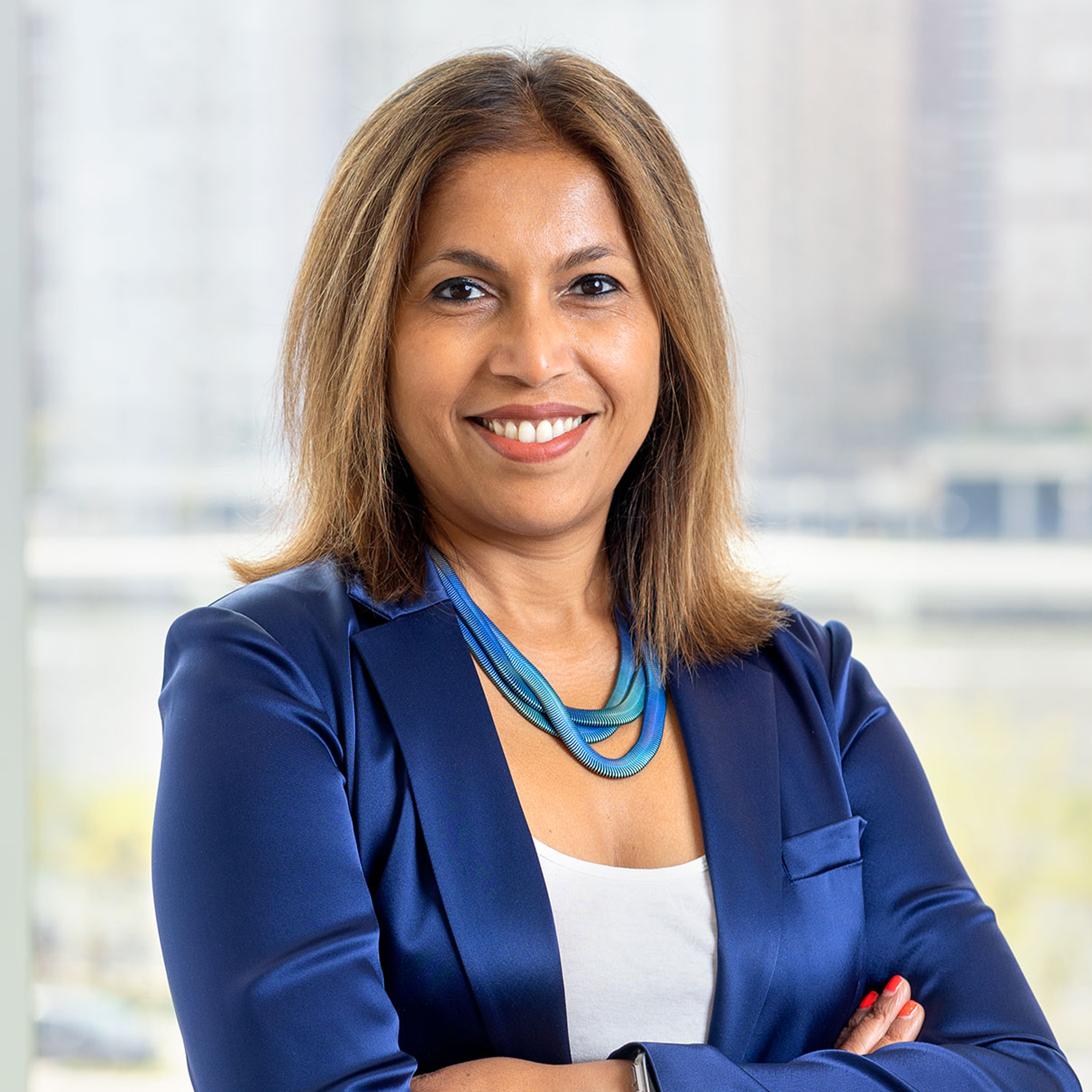
Tanzeem Choudhury is Chief of Health Innovation and Burnell Professor at Cornell Tech.
There is a question I hear in every room where clinicians and computer scientists sit together: "But can we trust it?"
It's a good question. It's also the wrong one — or at least, an incomplete one. Trust is not a binary. It is not a firmware update you install. And in medicine, trust has always been negotiated between human beings, not granted to instruments.
The Stethoscope Problem
When René Laennec introduced the stethoscope in 1816, physicians resisted it. The concern was not that the device was inaccurate — it was that it mediated the relationship between doctor and patient. A hand on the chest was intimate. A wooden tube was cold, mechanical, distancing.
Two centuries later, no physician would dream of practicing without one. The stethoscope didn't replace clinical judgment. It became part of it.
AI in medicine is having its stethoscope moment.
What My Lab Has Learned
At the People-Aware Computing Lab, we build mobile and wearable systems that measure health behaviors — stress, sleep, social interaction — passively, continuously, in the messy real world rather than the controlled clinic. Our work on StressSense, MoodRhythm, and more recently on LLM-augmented psychotherapy has taught me something that no benchmark can capture:
The hardest part of health AI is not the algorithm. It is the handoff.
A model that predicts a patient's deterioration with 92% accuracy is useless if the alert arrives at the wrong time, in the wrong format, to the wrong person. The clinical workflow — the human system — is where most AI deployments fail.
Five Questions for April 18
At our upcoming roundtable, I hope we move past "Can we trust AI?" and instead ask:
An Invitation
This roundtable brings together five researchers who approach medicine and AI from radically different angles — genomics, neuropathology, health equity, clinical deployment, and digital sensing. We will disagree. That is the point.
I invite you to prepare with our study guide, arrive with questions, and stay for the conversation afterward. The best ideas at the Helix Center have always emerged in the margins.
Tanzeem Choudhury is Chief of Health Innovation and Burnell Professor at Cornell Tech.